 Wednesday, November 25, 2026
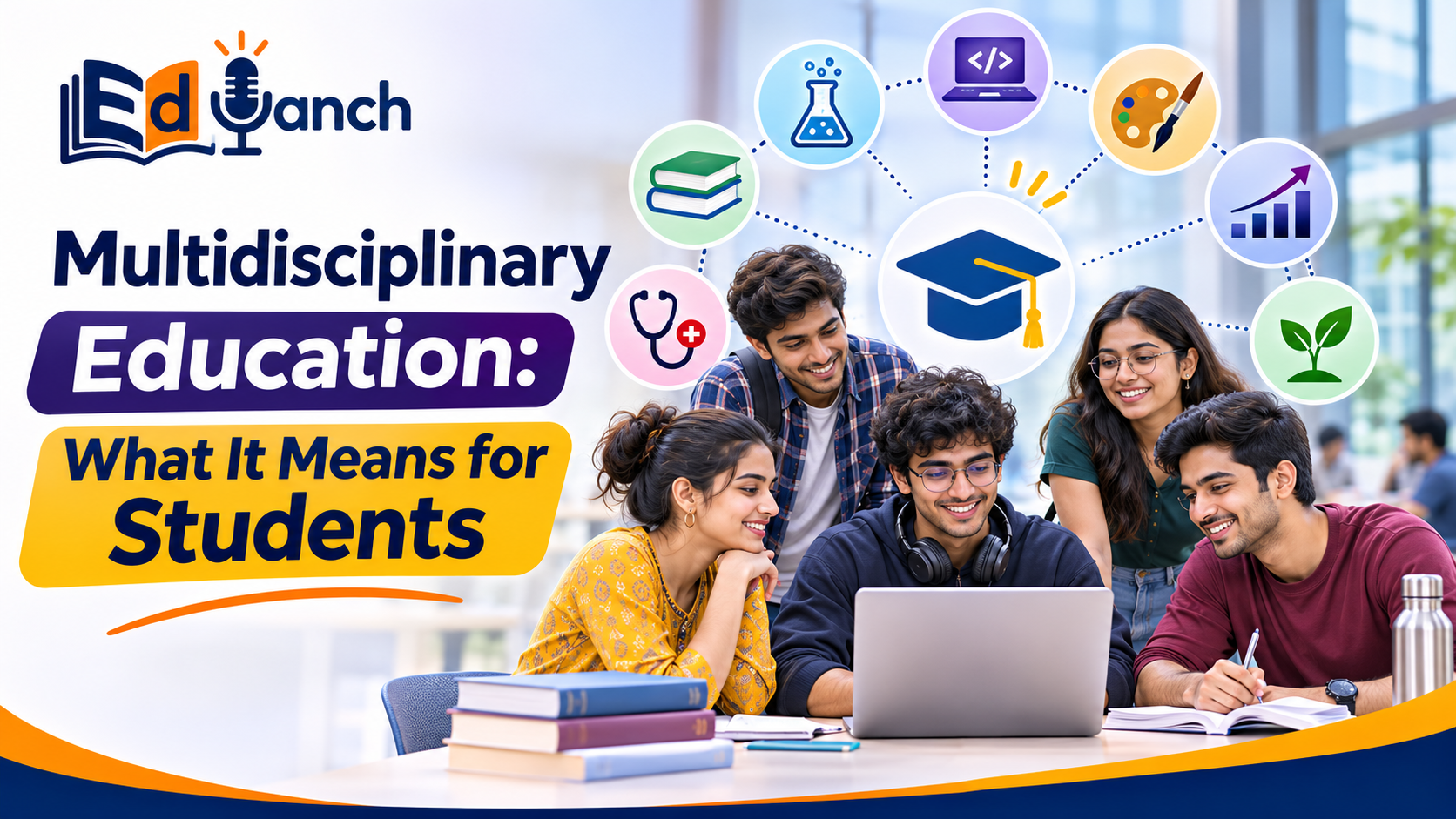
 Multidisciplinary education encourages students to learn across disciplines, building critical thinking and career readiness. NEP 2020 makes this approach central to India's education transformation.





Multidisciplinary Education: What Does It Mean for Students?
Introduction
India's education landscape is changing rapidly, and one of the most significant shifts now shaping classrooms, universities, and career paths is the rise of multidisciplinary education. For decades, Indian students were guided toward a single stream after Class 10, expected to remain within the boundaries of science, commerce, or arts throughout their academic journey. The idea that a student studying biology could also pursue economics, or that an engineering aspirant might benefit from studying philosophy, was largely outside the mainstream conversation.
That conversation has now changed, decisively and officially. The National Education Policy 2020 placed multidisciplinary learning at the heart of India's educational transformation, and universities across the country are restructuring their curricula in response. For students trying to understand what this shift means for their education and their future, clarity is essential.
Multidisciplinary education is not just a policy term. It is a practical and meaningful change in how students learn, what they study, and how they develop as thinkers and professionals. Understanding it properly can help students, parents, and educators make better decisions in a world where knowledge no longer fits neatly into separate boxes.
Understanding Multidisciplinary Education
At its core, multidisciplinary education refers to an approach where students engage with subjects, ideas, and methods drawn from more than one academic discipline. Rather than confining learning to a single field, students are encouraged to explore how different areas of knowledge connect, overlap, and strengthen each other.
The term is sometimes used interchangeably with related concepts such as interdisciplinary education, but there is a meaningful distinction worth understanding. In a multidisciplinary model, different subjects are taught alongside each other, with students drawing connections themselves. In an interdisciplinary model, the disciplines are more deeply integrated, often producing a new framework or perspective that cuts across traditional boundaries.
For most Indian students at the school and undergraduate level, multidisciplinary education means the freedom to study subjects from different streams together. A student can now combine psychology with computer science, or pursue economics alongside environmental studies. The rigid stream system that once determined a student's entire academic identity is gradually giving way to something more flexible and responsive.
This flexibility is not arbitrary. It reflects a broader understanding of how modern problems are structured. Climate change, public health, digital inequality, and economic development are not purely scientific, economic, or social challenges. They are all of these simultaneously. Preparing students to understand and address such challenges requires education that crosses disciplinary lines.
Multidisciplinary Education and NEP 2020
No discussion of multidisciplinary education in India can avoid the National Education Policy 2020. NEP 2020 is arguably the most comprehensive restructuring of India's education system in decades, and multidisciplinary learning is one of its foundational principles.
The policy explicitly calls for the transformation of higher education institutions into multidisciplinary universities and colleges. It recommends that all single-stream institutions make significant efforts to evolve into multidisciplinary ones. Under the new four-year undergraduate program framework introduced by NEP 2020, students can choose a major subject alongside one or more minor subjects from completely different disciplines. A student majoring in history can choose computer applications as a minor. A student pursuing a science major can add a minor in sociology or economics.
NEP 2020 also introduced the Academic Bank of Credits, a system that allows students to accumulate and transfer credits across institutions. This further strengthens the multidisciplinary model by making it possible for students to take courses at different universities without losing academic progress.
At the school level, the policy removes the rigid stream separation after Class 10, allowing students to choose subjects based on interest and aptitude rather than being locked into predefined combinations. A student can now study physics and history in the same academic year, or combine mathematics with music and fine arts.
The University Grants Commission has been actively issuing guidelines and frameworks to help institutions implement these changes. Several central universities and premier institutions have already redesigned their programs to align with NEP's multidisciplinary vision.
Why Multidisciplinary Education Matters for Students
The case for multidisciplinary education rests on several strong and practical foundations.
The first is the nature of the modern job market. Industries today are increasingly looking for professionals who can work across domains. Roles in product management, public policy, data science, healthcare communication, and sustainability leadership require individuals who can draw from multiple knowledge areas simultaneously. A candidate who understands both the technical and the human dimensions of a problem has a clear advantage over someone trained narrowly in just one area.
The second is the development of critical thinking and problem-solving skills. When students encounter ideas from different disciplines, they are forced to compare frameworks, question assumptions, and develop more nuanced ways of thinking. A student who studies both literature and cognitive science, for example, develops a richer understanding of how language shapes thought. These thinking skills transfer across every professional and personal context.
The third reason relates to innovation. Most significant breakthroughs in science, technology, and social progress have occurred at the intersection of disciplines. The development of modern biotechnology brought together biology, chemistry, and engineering. Behavioral economics emerged from the intersection of psychology and economics. Creating space for students to think across disciplines cultivates the kind of curiosity and creative thinking that drives innovation.
For India specifically, multidisciplinary education also supports the goal of preparing a large and diverse student population for a rapidly evolving economy. The country's demographic dividend is valuable only if the workforce is equipped to meet the demands of a knowledge-driven future.
How Multidisciplinary Education Works in Practice
Understanding the concept is one thing. Seeing how it actually functions in an academic setting is another.
At the undergraduate level under NEP 2020, a typical multidisciplinary program might look like this:
- A student chooses a primary major subject, such as economics or chemistry.
- The student also selects one or two minor subjects from different streams, such as data analytics or political science.
- Elective courses from the university's course catalogue allow further exploration across disciplines.
- Skill-based and vocational courses are integrated into the curriculum, often drawing from practical and applied fields.
- Research projects or dissertations may involve questions that span more than one discipline.
At the postgraduate and research level, multidisciplinary programs often bring together faculty and students from different departments to work on shared problems. Schools of public health, for instance, regularly combine medicine, sociology, economics, and public administration. Business schools in India are increasingly incorporating sustainability studies, psychology, and policy analysis into their management programs.
Teachers and faculty play a critical role in making multidisciplinary education work. This requires educators who are comfortable working outside the boundaries of their own specialization and who can facilitate conversations across disciplines rather than delivering content in isolation.
Challenges in Implementing Multidisciplinary Education
The shift toward multidisciplinary education is widely welcomed, but it comes with real and significant challenges that institutions and students must navigate.
Curriculum design is one of the most complex areas. Designing programs that combine subjects meaningfully, without becoming a superficial mix of unrelated topics, requires careful planning, faculty collaboration, and ongoing revision. Poorly designed multidisciplinary curricula can leave students feeling pulled in too many directions without gaining genuine depth in any area.
Faculty readiness is another concern. Many educators in India have been trained within tight disciplinary boundaries and may not feel equipped to teach or evaluate multidisciplinary content. Institutions need to invest seriously in faculty development and collaborative teaching models.
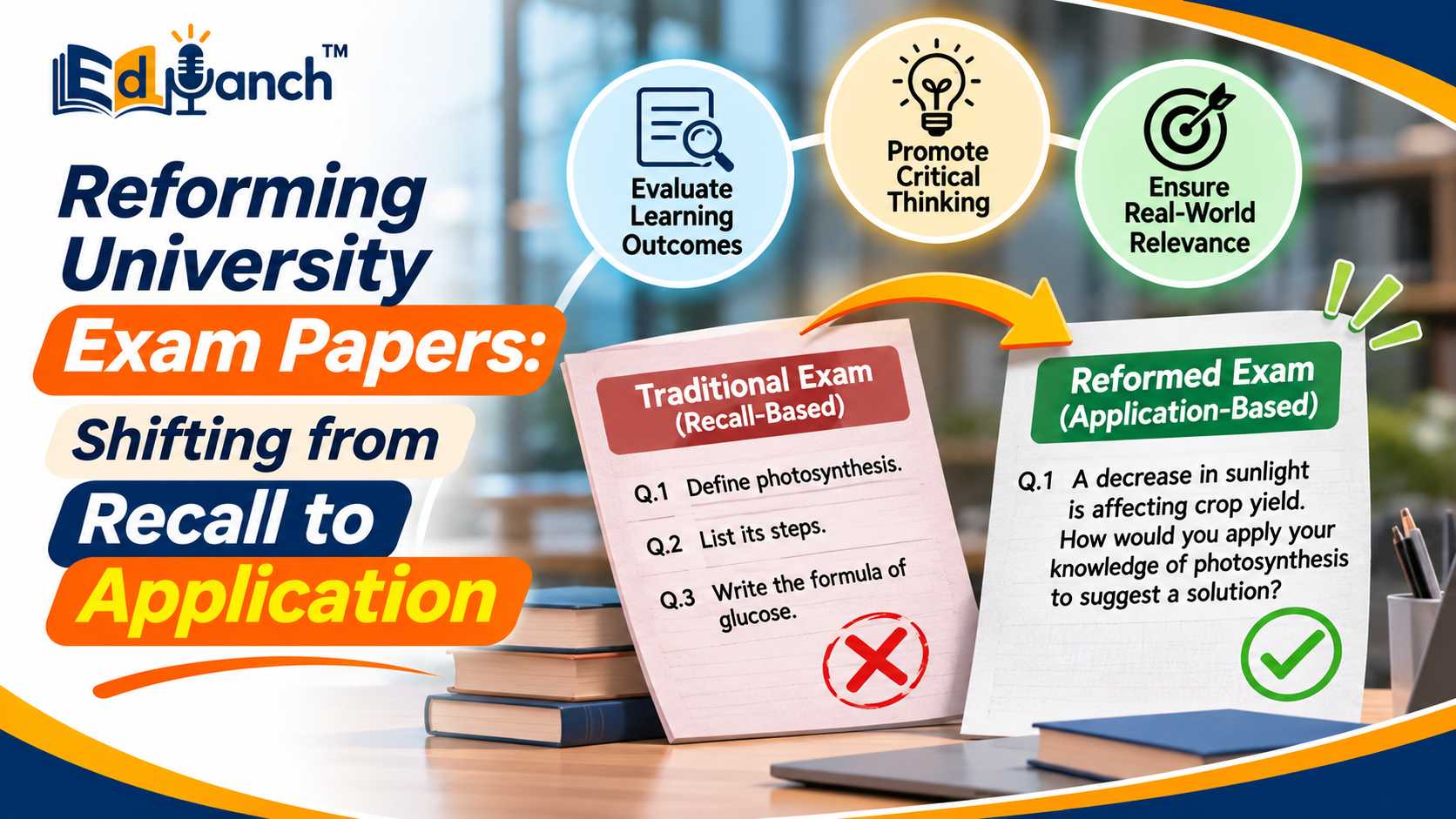
Assessment is also challenging. Evaluating student performance in a multidisciplinary setting requires assessment tools that can capture both depth and breadth of learning. Traditional examinations are often poorly suited to this.
Infrastructure and resource allocation pose additional difficulties, particularly for smaller colleges in Tier 2 and Tier 3 cities that may not have the faculty numbers, library resources, or administrative systems needed to run flexible multidisciplinary programs.
For students themselves, navigating a multidisciplinary curriculum requires a certain level of self-awareness and planning. Students who are unfamiliar with choosing their own academic path may feel uncertain when given more freedom than they are used to. Guidance systems, including academic advisors and mentors, become essential.
What Students and Parents Should Know
For students currently at the Class 10 or Class 12 level, the message from multidisciplinary education is clear and encouraging. The pressure to commit entirely to one stream and never look beyond it is easing. Students who feel genuinely curious about more than one area no longer have to choose between their interests.
Parents who may be unfamiliar with this model often worry that it means their child will end up with a less recognized or less employable qualification. This concern is understandable but increasingly outdated. Universities that implement NEP 2020 properly are awarding recognized degrees with structured depth in a chosen major alongside breadth across minors.
It is worth noting that multidisciplinary education does not mean avoiding specialization. It means building specialization on a broader foundation. A student who majors in biotechnology while minoring in entrepreneurship is not less qualified than a student who only studied biotechnology. That student is, in many contexts, significantly more ready for the complexity of professional life.
Edumanch regularly covers university-level course updates, NEP implementation news, and career-relevant education shifts to help students and parents stay informed and make confident decisions at every stage of the academic journey.
Frequently Asked Questions
Q1: What is multidisciplinary education in simple terms?
Multidisciplinary education is an approach where students study subjects from more than one discipline together, rather than sticking to a single field. It allows learners to connect ideas across areas such as science, arts, commerce, and technology, helping them develop broader thinking and problem-solving abilities.
Q2: How does NEP 2020 support multidisciplinary education in India?
NEP 2020 mandates the transformation of single-stream universities into multidisciplinary institutions and allows students to choose subjects across streams. The four-year undergraduate program, the Academic Bank of Credits, and the removal of rigid stream separation at the school level are all part of how NEP 2020 supports this approach.
Q3: Is multidisciplinary education better for career growth?
Employers increasingly value professionals who can think across disciplines. Multidisciplinary graduates tend to be more adaptable, creative, and capable of solving complex problems in modern workplaces. Many high-growth roles in technology, policy, design, and business explicitly value this kind of broad yet structured educational background.
Q4: Can Indian students pursue multidisciplinary courses at the undergraduate level?
Yes. Under NEP 2020, the four-year undergraduate program allows students to pick major and minor subjects from different disciplines. The Academic Bank of Credits further supports this by allowing students to earn credits from different institutions and combine them toward a degree.
Q5: What are the challenges of multidisciplinary education?
Key challenges include curriculum design complexity, faculty readiness, student unfamiliarity with the approach, infrastructure gaps in smaller institutions, and assessment difficulties when measuring learning across diverse fields. Strong institutional support and clear student guidance systems are essential to addressing these challenges effectively.
Resources
- University Grants Commission (UGC): Official guidelines and circulars on NEP 2020 implementation and multidisciplinary higher education frameworks in India.
- National Education Policy 2020 (Ministry of Education): The full policy document outlining India's vision for multidisciplinary, holistic, and flexible education at all levels.
- NCERT (National Council of Educational Research and Training): Curriculum frameworks and guidance documents for school-level multidisciplinary learning under NEP 2020.
- NITI Aayog: Research reports on education, skilling, and India's future workforce needs in a knowledge economy.
- Association of Indian Universities (AIU): Resources and updates on higher education reform, credit transfer frameworks, and university restructuring under NEP 2020.
Interlinking Keywords
Multidisciplinary education in India, NEP 2020 undergraduate program, Academic Bank of Credits, flexible curriculum India, interdisciplinary learning, stream selection after Class 10, four-year UG program India, holistic education policy, career readiness for students, education reform India
Last reviewed by:
Dr. Manthan Tripathi, Edumanch Editorial and Education Guidance Team on November 18, 2026.
Disclaimer
The information provided in this article is intended for general educational and informational purposes only. It does not constitute academic, legal, or institutional advice. Readers are encouraged to verify details directly with their respective universities, schools, or regulatory bodies such as UGC, NCERT, or the Ministry of Education before making any academic decisions. Education policies and institutional implementations may vary and are subject to change.