 Wednesday, November 25, 2026
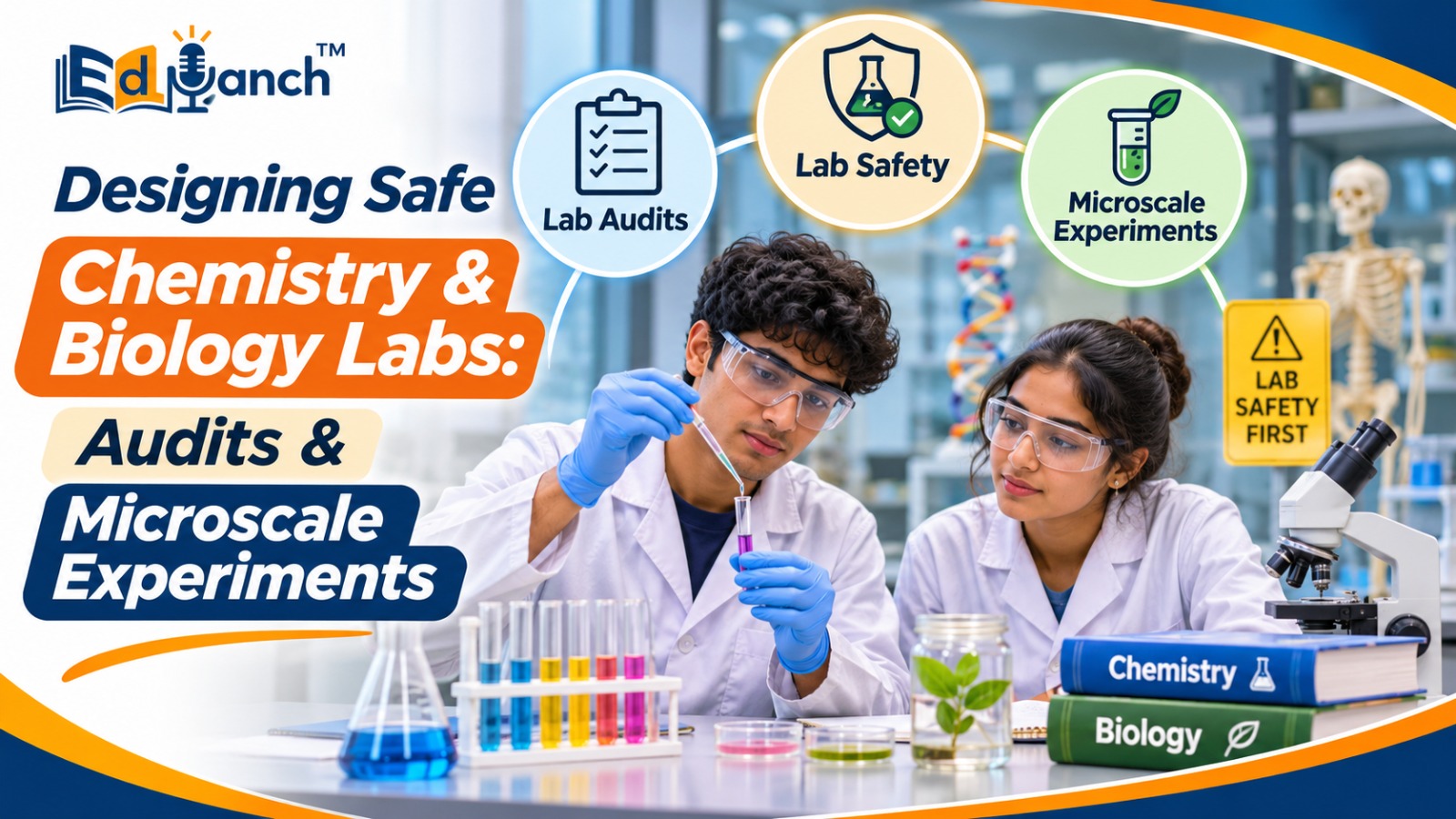
 Safe chemistry and biology labs begin with regular safety audits, proper equipment, and responsible laboratory practices. Microscale experiments help minimise chemical waste, reduce risks, and enhance practical learning experiences.





Executive Overview: Mitigating Acute Risk in Secondary Science Spaces
Secondary school chemistry and biology laboratories represent dynamic instructional environments where adolescent students interact directly with reactive reagents, open flame sources, specialized glassware, and biological specimens. While experiential inquiry remains essential for mastering STEM competencies, school laboratories feature distinct institutional vulnerabilities: high student-to-teacher ratios, varying fine-motor maturity among early adolescents, outdated mechanical ventilation, and chemical storage areas that have accumulated hazardous historical legacy stocks.
Managing safety in secondary science environments requires confronting several recurring operational breakdowns:
- The "Legacy Reagent" Liability: Many school preparation rooms house inherited chemical stocks: deteriorating picric acid bottles, elemental mercury thermometers, concentrated chloroform, potassium dichromate, or benzene solutions stored in corroded metal cabinets. These compounds pose severe risks of explosion, volatile inhalation, and chronic carcinogenicity.
- Informal and Reactive Safety Audits: Laboratory inspections often amount to perfunctory checks verifying the presence of a fire extinguisher. Facilities routinely lack operational verification of emergency eye-wash fluid dynamics, ducted fume-hood face velocities, chemical compatibility segregation, and personal protective equipment (PPE) compliance.
- Instructional Over-Scaling: Traditional practical manuals often specify macroscale experiments requiring 20 to 50 milliliters of concentrated acids or organic solvents. In a room of thirty students, this creates heavy vapor burdens, severe spill risks, and substantial hazardous chemical disposal costs.
Mitigating these hazards requires establishing a Comprehensive Laboratory Safety and Green Experimentation Architecture.
This framework rests on four operational pillars:
- Enforcing structured Occupational Safety and Health Administration (OSHA) and National Fire Protection Association (NFPA) inspection protocols alongside strict chemical storage segregation.
- Transitioning chemistry curricula from macroscale experiments to Green Chemistry and Microscale Analytical Techniques.
- Codifying Biosafety Level 1 (BSL-1) standards for microbiological exploration, eliminating human fluid extraction, and standardizing non-pathogenic culturing.
- Deploying continuous incident management, waste neutralization, and administrative safety governance.
1. Physical Engineering Controls and Facility Infrastructure Auditing
The primary defense against laboratory incidents is the reliability of physical infrastructure. Administrative safety rules cannot compensate for failed mechanical ventilation or inoperable emergency wash systems.
Emergency Wash Stations and Drainage Verification- The 10-Second Unobstructed Proximity Mandate: Emergency eye-wash stations and deluge showers must be located within a 10-second travel threshold (approximately 55 feet of unobstructed walking path) from any workstation handling corrosive, caustic, or volatile reagents. Doors separating workstations from eyewash units must swing in the direction of egress and cannot be locked during class.
- Plumbed Eye-Wash Fluid Dynamics: Eye-wash units must deliver a continuous, hands-free flow of tepid flushing fluid (16^\circ\text{C} to 38^\circ\text{C}) at a minimum rate of 1.5 liters (0.4 gallons) per minute for a full 15-minute operational duration. Systems that produce high-pressure needle jets are dangerous, as excessive fluid velocity can drive particulates deeper into the ocular cornea.
- Weekly Flush and Drain Maintenance: Emergency wash systems must be flushed weekly to clear biofilm accumulation, pipe sediment, and stagnant bacterial contamination from supply lines, with mechanical activation and drainage rate verified in an inspection log.
- Face Velocity Certification: Variable Air Volume (VAV) or Constant Air Volume (CAV) ducted fume hoods must maintain an average inward face velocity of 80 to 100 feet per minute (fpm) at a working sash height of 18 inches. Velocities below 60 fpm allow toxic vapors to escape into the room; velocities exceeding 120 fpm generate internal eddy currents that draw hazardous vapors out past the sash.
- Airflow Monitoring Instrumentation: Every hood must feature an analog magnehelic gauge or a certified digital airflow velocity monitor. Operating a chemical fume hood using a paper tissue taped to the sash frame violates modern laboratory safety standards.
- Baffle Cleanliness and Storage Prohibition: Chemical reagents, waste carboys, and bulky equipment must never be permanently stored inside an active fume hood. Cluttering the rear exhaust baffles disrupts laminar airflow patterns, creating stagnant vapor pockets that defeat the hood's containment capabilities.
- Master Emergency Shut-Off Controls: Secondary laboratories must feature centralized, wall-mounted quick-drop solenoid shut-off valves for natural gas and master circuit breakers for electrical benches. These controls must be located immediately adjacent to the main primary egress door, clearly labeled, and accessible without keys.
- Flammable Gas Detection and Sniffer Systems: Facilities utilizing piped LPG or natural gas should integrate floor- and ceiling-level hydrocarbon sensor relays wired directly to the main shut-off solenoid, automatically venting the space and cutting the supply line upon detecting leaks.
- Fire Extinguisher Pairing: Laboratories require dual fire-suppression options mounted within striking distance: one Multi-Purpose Dry Chemical extinguisher (ABC) for general, solvent, and electrical fires, and one Carbon Dioxide (\text{CO}_2) extinguisher for clean suppression of delicate instrumentation without corrosive chemical powder residue.
2. Chemical Storage, Inventory Lifecycle, and Segregation Protocols
Incompatible chemicals stored together in unventilated prep rooms represent a continuous institutional hazard. Chemical management must govern every stage of the lifecycle, from procurement to final disposal.
The Incompatibility Segregation MatrixAlphabetical chemical storage is extremely dangerous because it places violently reactive pairs beside one another (e.g., acetic acid beside acetaldehyde, or potassium chlorate beside red phosphorus). Reagents must be segregated strictly by reactive class:
- Inorganic Acids vs. Organic Acids: Inorganic mineral acids (hydrochloric, sulfuric, phosphoric) must be stored in dedicated, corrosion-proof, non-metallic cabinets. Organic acids (glacial acetic, formic, propionic) are combustible and must be isolated in a dedicated flammable storage unit or placed in separate secondary containment tubs to prevent exothermic esterification reactions.
- Nitric Acid Isolation: Concentrated nitric acid is an aggressive oxidizing agent. It must be isolated within its own dedicated secondary containment tray, separate from other mineral acids, and completely isolated from organic compounds, wood shelving, and flammable solvents to prevent spontaneous combustion.
- Flammable Solvents: Solvents with flash points below 38^\circ\text{C} (acetone, ethanol, isopropanol, ethyl acetate) must be housed in heavy-gauge, double-walled, NFPA-rated steel cabinets featuring three-point latching systems, liquid-tight door sills, and passive flame arrestors.
- Water-Reactive and Pyrophoric Isolation: Elemental alkali metals (sodium, potassium) must be stored submerged under dry mineral oil inside sealed, heavy-gauge containers, housed in a desiccated, locked cabinet away from water pipes, eyewash drains, or fire sprinkler systems.
- Storage shelving must be constructed of heavy-duty marine-grade plywood or chemical-resistant polypropylene; unfinished steel corrodes, while glass shelves crack under load.
- Shelves must feature a raised 0.75-inch front retaining lip to prevent containers from vibrating off the edge during seismic activity or physical impacts.
- Large containers (exceeding 2.5 liters) and high-density liquid acids must be stored on lower shelves, never exceeding waist height (1.0\text{ to }1.2\text{ meters} above the floor).
Every secondary school should run a comprehensive inventory audit to identify, isolate, and professionally dispose of high-hazard legacy substances through certified hazardous-waste services:
- Immediate Removal Candidates: Picric acid (which forms explosive metal picrates when dry), pure benzene, carbon tetrachloride, concentrated chloroform, yellow/white phosphorus, cadmium salts, sodium arsenate, and direct asbestos samples.
- Universal Safety Data Sheet (SDS) Access: A clean, updated physical binder and an offline digital repository containing 16-section GHS-compliant Safety Data Sheets (SDSs) must be accessible within the lab at all times, without relying on external internet connectivity.
3. Green Chemistry and Microscale Experimentation in the Curriculum
The most effective way to eliminate laboratory risk is to remove the hazard entirely at the curricular design phase. Microscale chemistry scales down reagents by orders of magnitude while preserving core quantitative, visual, and analytical learning outcomes.
The Principles of Microscale Chemistry- Volumetric and Mass Reduction: Microscale protocols replace 500-milliliter beakers and 50-milliliter burettes with 24-well or 96-well reaction plates, micropipettes, and drop-count titration techniques. Reagent usage drops from 20 to 50 milliliters per experiment to between 2 and 10 drops (0.1\text{ to }0.5\text{ milliliters}).
- Dramatic Reduction in Vapor Generation: Operating at the sub-milliliter scale slashes volatile organic and toxic fume generation by more than ninety-five percent. Many qualitative tests can be performed safely on open bench surfaces using spot plates, eliminating long queues for a single classroom fume hood.
- Thermal Reaction Containment: Exothermic reactions (such as acid-base neutralizations or precipitation events) carried out in micro-wells generate minimal heat dissipation, eliminating the thermal cracking risks inherent in macroscale borosilicate glassware.
- Electrochemistry and Galvanic Cells: Replace traditional toxic zinc-copper sulfate beakers with filter-paper strip galvanic cells. Students draw pencil-graphite or metal-strip lines on salted chromatography paper, generating measurable cell voltages from single droplets of 0.1M solutions without handling large volumes of heavy metal wastes.
- Acid-Base and Redox Titrations: Replace large hydrochloric acid and sodium hydroxide burettes with drop-ratio titrations carried out in 24-well plates using calibrated disposable pipettes, tracking endpoints with food-grade anthocyanin indicators (extracted from boiled red cabbage or blackberry skin) alongside standardized phenolphthalein.
- Ester Synthesis Modifications: Replace macroscale sulfuric acid boiling-tube esterifications (which generate hot, caustic splattering hazards) with water-bath-heated micro-tubes using benign organic acids and food-grade alcohols under strict micro-scale temperature controls (<60^\circ\text{C}).
- Qualitative Cation and Anion Analysis: Replace toxic lead, barium, and arsenic salt testing with safer transition metal matrices (iron, copper, calcium, magnesium). Precipitation reactions are conducted on laminated plastic spot cards, where students mix single drops and clean the surface using an absorbent paper towel, generating negligible waste volume.
4. Biosafety Protocols for Secondary Biology Laboratories
Secondary biology laboratories operate under Biosafety Level 1 (BSL-1) constraints. BSL-1 governs work involving well-characterized agents not known to consistently cause disease in immunocompetent adult humans. However, adolescent exploration requires deliberate operational guardrails to prevent accidental pathogen amplification and infectious exposure.
Prohibited Biological Vectors and Procedures- Absolute Ban on Human Physiological Samples: Experiments utilizing human blood (e.g., finger-prick blood typing), human epithelial cheek swabs, saliva amylase collections, or unpasteurized urine are strictly prohibited. These vectors present active routes for bloodborne pathogens (Hepatitis B, Hepatitis C, HIV) and opportunistic oral bacterial contamination.
- Safe Cellular Alternatives: Epithelial cell morphology should be demonstrated using sterile, food-grade onion epidermal peels, Elodea leaf preparations, or commercially prepared, permanently fixed histological slides.
- Safe Enzyme Catalysis: Replace human saliva amylase with fungal amylase solutions, malted barley extracts, or baker's yeast catalase reacting with 3% household-grade hydrogen peroxide.
- Closed-Plate Examination Standards: If bacterial cultures are grown to investigate ambient microbial presence, petrifilms or agar plates must be sealed with a double-wrap of Parafilm or vinyl electrical tape immediately following inoculation.
- The No-Reopen Rule: Plates inoculated from environmental surfaces (door handles, soil, skin touch) can culture opportunistic environmental pathogens. Once sealed, plates must never be reopened for examination. Students observe colonial morphology exclusively through the sealed transparent lids.
- Disinfection and Autoclave Decontamination: Before disposal, all bacterial plates must be autoclaved at 121^\circ\text{C} (15\text{ psi}) for 30 minutes, or fully submerged in a freshly prepared 10% sodium hypochlorite (household bleach) solution for at least 30 minutes to ensure complete decontamination before municipal disposal.
- Exclusively Benign Microbial Strains: Inoculation experiments should be restricted to verified non-pathogenic model organisms: Saccharomyces cerevisiae (baker's yeast), Lactobacillus acidophilus (yogurt cultures), or safe strain variants of Bacillus subtilis. Environmental culturing from public restrooms or hospital proximities is barred.
5. Structural Comparison: Legacy Chemistry/Biology Labs vs. Modernized Microscale Labs
Evaluating traditional secondary science spaces alongside an operationalized green microscale facility illustrates clear improvements in safety, cost, and instructional quality:
Reagent Consumption and Hazardous Waste Footprint- Legacy Macroscale Facility: Consumes high volumes (10 to 50 milliliters per student test); generates heavy volumes of hazardous aqueous heavy metals and halogenated wastes requiring expensive commercial collection.
- Modernized Microscale Facility: Consumes minimal volumes (0.1 to 0.5 milliliters per test); generates sub-liter annual waste volumes that can often be neutralized and stabilized in-house.
- Operational Impact: Lowers annual chemical procurement expenditures by seventy to eighty percent and significantly reduces hazardous waste processing fees.
- Legacy Macroscale Facility: High ambient chemical vapor concentrations; creates reliance on ducted fume hoods, causing student bottlenecks and classroom congestion.
- Modernized Microscale Facility: Negligible ambient vapor emission; experiments run on standard open lab benches using spot plates, micro-well grids, and drop-dispensers.
- Health and Safety Impact: Eliminates volatile organic and acidic vapor headaches, protects asthmatic students, and maintains safe indoor air quality.
- Legacy Macroscale Facility: Stores large glass carboys of concentrated acids and solvent drums; alphabetical or informal shelving; persistent legacy chemical stocks.
- Modernized Microscale Facility: Standardized GHS-compliant inventory; strict chemical compatibility segregation; automated expiration logging; complete removal of high-hazard legacy reagents.
- Risk Impact: Eliminates structural explosion, thermal burn, and spontaneous ignition hazards within the school facility.
- Legacy Macroscale Facility: Students work in large groups (four to six per bench) due to glassware and fume hood constraints; passive demonstration often replaces active practice.
- Modernized Microscale Facility: Individual or paired experimentation; every student actively handles reagents using personal spot cards, well plates, and micro-tools.
- Pedagogical Impact: Maximizes student autonomy, builds fine-motor laboratory confidence, and improves performance on practical assessments.
6. Phased Implementation Protocol: Institutionalizing the Safety Lifecycle
Transitioning an existing school laboratory into an auditable, low-toxicity scientific learning environment requires an organized, four-phase operational strategy:
- Conduct an exhaustive physical audit of all preparation rooms, under-bench cabinets, and chemical storerooms. Compile an inventory detailing container conditions, opening dates, quantities, and GHS classifications.
- Identify, quarantine, and red-tag all hazardous legacy chemicals (e.g., picric acid, mercury thermometers, heavy metal powders, chloroform, benzene).
- Contract an accredited hazardous-materials disposal agency to package, manifest, transport, and neutralize quarantined chemical stocks in compliance with national environmental regulations.
- Conduct fluid and mechanical tests on all emergency infrastructure: verify that eyewashes deliver continuous 15-minute flows of tepid water without injuring ocular tissue, and ensure floor drains handle capacity.
- Certify chemical fume hoods using digital anemometers, calibrate sash working heights, install dedicated airflow warning indicators, and clear rear baffles of equipment clutter.
- Restructure chemical storage according to reaction compatibility: install dedicated corrosive cabinets for mineral acids (isolating nitric acid), dedicated NFPA flammables units, and raised retaining lips on all open wooden shelves.
- Procure modern microscale lab equipment: 24-well and 96-well culture plates, porcelain and laminated spot testing cards, calibrated micro-droppers, and chemical-resistant reaction mats.
- Revise standard laboratory manuals across chemistry and physics: convert macroscopic volumetric procedures into drop-scale protocols (0.1\text{ to }0.5\text{ milliliters}), updating student worksheets to emphasize precision drop metrics.
- Replace toxic classroom reagents: transition to plant-based anthocyanin pH indicators, filter-paper electrochemistry arrays, and safe transition metal test kits.
- Formalize BSL-1 microbiology practices: establish sealed-plate protocols, install pressure-sterilization autoclave units, and explicitly update lab guidelines to ban all human tissue and bodily fluid testing.
- Conduct professional development training for science teachers, lab assistants, and school leadership, certifying staff on chemical emergency management, personal protective equipment standards, and immediate spill cleanups.
- Launch a digital laboratory compliance log: schedule quarterly physical safety inspections, weekly eyewash line flushes, and annual inventory reviews to maintain audit readiness.
Strategic Summary: Anchoring Scientific Discovery in Safety and Stewardship
Scientific inquiry should not require students to take unnecessary physical risks. Relying on outdated, macroscale chemical protocols in poorly ventilated spaces compromises safety and diverts financial resources toward hazardous chemical disposal.
By modernizing physical engineering controls like eyewash stations and chemical fume hoods, enforcing strict chemical storage segregation, adopting green chemistry and microscale analytical protocols, and standardizing Biosafety Level 1 microbiology guidelines, secondary schools establish a safe learning environment.
This balanced approach mitigates physical hazards, eliminates environmental liabilities, lowers operational costs, and models modern scientific responsibility. It ensures students explore chemistry and biology safely, building the practical competencies and confidence needed for future scientific study.
10 Frequently Asked Questions (FAQs)
Q1. What is the fundamental difference between macroscale and microscale chemistry in a high school setting?Macroscale chemistry uses large fluid volumes (typically 20 to 50 milliliters) and large glassware (beakers, flasks, burettes):
- It generates high volumes of chemical fumes, creates spill hazards, and produces large amounts of hazardous waste.
- Microscale chemistry scales volumes down by orders of magnitude (using 0.1 to 0.5 milliliters, or 2 to 10 drops):
- Experiments are carried out on laminated spot plates or 24-well culture trays.
- It cuts toxic vapor emissions by over ninety-five percent, slashes chemical purchasing and waste disposal costs, and allows students to run experiments safely on open workbenches.
Alphabetical storage places violently incompatible reagents side by side:
- It can store strong oxidizers next to flammable organic liquids (e.g., hydrogen peroxide next to acetone) or mineral acids next to water-reactive bases.
- If a bottle cracks, leaks, or falls during an earthquake or fire, these adjacent incompatible chemicals can react immediately, producing toxic gas releases, spontaneous combustion, or explosions.
- Chemicals must always be stored by reactive compatibility class (mineral acids, organic acids, flammables, oxidizers, and bases).
No. Using human blood in secondary school laboratories is strictly prohibited by modern occupational health and biosafety standards:
- The practice exposes students and teachers to bloodborne pathogens, including Hepatitis B, Hepatitis C, and HIV.
- Modern biology curricula teach blood typing using synthetic, simulated blood kits:
- These kits use non-biological chemical formulations that produce identical, realistic agglutination reactions when mixed with simulated antibodies.
- This delivers the intended conceptual and practical lesson safely, with zero infection risk.
Under ANSI/ISEA Z358.1 standards, an emergency eyewash must:
- Be reachable within 10 seconds of unobstructed travel from any hazardous workstation.
- Deliver a continuous, hands-free flow of flushing fluid for a minimum of 15 minutes with a single pull or push activation.
- Dispense tepid water between 16^\circ\text{C} and 38^\circ\text{C} (60^\circ\text{F}\text{ to }100^\circ\text{F}) to prevent thermal shock and chemical absorption acceleration.
- Deliver fluid at a minimum rate of 1.5 liters (0.4 gallons) per minute via gentle, controlled wash nozzles that clean both eyes simultaneously without damaging delicate corneal tissue.
While hydrochloric, sulfuric, and phosphoric acids are strong mineral acids, nitric acid is also a powerful, aggressive oxidizing agent:
- If nitric acid leaks and contacts organic acids (like glacial acetic acid), flammable solvents, or wood shelving, it can trigger spontaneous exothermic ignition.
- It must be housed in a dedicated, secondary containment container (such as a chemical-resistant plastic tray) inside the corrosive cabinet, completely isolated from all other chemicals.
Under Biosafety Level 1 (BSL-1) protocols:
- Once an agar plate is inoculated from an environmental surface (e.g., floor, shoe, coin), the dish must be sealed immediately with Parafilm or heavy-duty tape.
- The plate must never be opened again. Students observe colonial morphology, color, and growth density through the clear lid.
- Opening cultured plates risks releasing unknown, concentrated colonies of opportunistic environmental pathogens into the classroom.
- Before disposal, all sealed plates must be autoclaved at 121^\circ\text{C} for 30 minutes or submerged in a 10% bleach solution for 30 minutes to ensure complete decontamination.
An airflow face velocity test measures the speed at which air enters through the fume hood sash opening:
- It should be certified annually using a calibrated digital anemometer, maintaining an average intake speed of 80 to 100 feet per minute (fpm) at an 18-inch working sash height.
- Velocities under 60 fpm fail to pull fumes away from the user; velocities over 120 fpm cause internal air turbulence that can push toxic vapors out into the room.
- Staff should check face velocities daily via a digital sensor or built-in magnehelic gauge before beginning work.
If old, crystallized, or dehydrated picric acid is found:
- Do not touch, lift, or turn the cap of the bottle.
- Dry picric acid forms shock-sensitive metal picrate salts around the cap threads; turning the cap can cause friction that triggers a detonation.
- Evacuate the storage area, lock the door, and notify school leadership.
- Immediately call local emergency services, the fire department, or an accredited hazardous materials bomb-disposal team to stabilize and remove the container safely.
Natural plant indicators—such as anthocyanins extracted from boiled red cabbage, blueberries, or hibiscus petals—offer several instructional and safety advantages:
- They are non-toxic, food-grade, completely biodegradable, and can be poured down standard drains without chemical neutralization.
- Unlike synthetic indicators like phenolphthalein (which switches between just two states: clear and pink), red cabbage extracts produce a continuous range of distinct color changes across the entire pH spectrum (red, purple, blue, green, yellow).
- This provides a vivid, multi-step visual demonstration of acidity and alkalinity without using hazardous reagents.
Track three prioritized, operational metrics:
- Physical Engineering Compliance Rate: Verifying that 100% of emergency eyewashes, deluge showers, fume hoods, and master gas/electric shut-offs pass operational velocity, flow rate, and drainage tests every month.
- Microscale Curricular Transition Percentage: The proportion of chemistry and biology laboratory experiments converted from macroscale procedures (>10\text{ mL}) to microscale protocols (<1\text{ mL}), targeting at least seventy to eighty percent across all grade levels.
- Chemical Lifecycle and SDS Compliance: Auditing that zero unauthorized high-hazard legacy substances remain in preparation rooms, all stored chemicals are segregated by reactivity, and up-to-date Safety Data Sheets are accessible within the facility.