 Monday, November 16, 2026
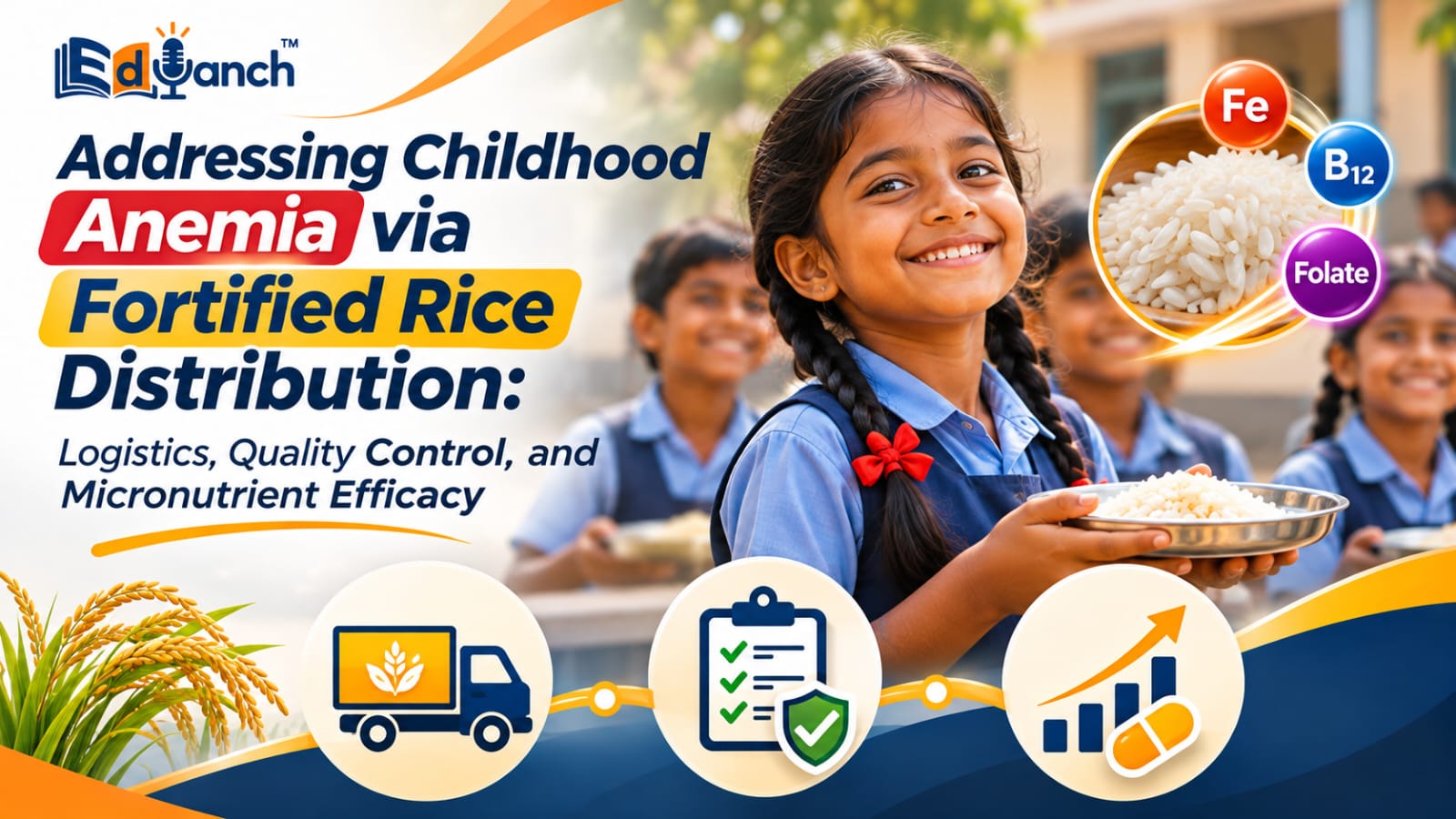
 Fortified rice distribution helps combat childhood anemia by providing essential micronutrients such as iron, vitamin B12, and folate. Effective distribution and quality control ensure better nutritional support for children.





Executive Overview: The Public Health Rationale for Rice Fortification
Childhood nutritional anemia remains one of the most pervasive global public health challenges, exerting a severe toll on cognitive development, physical growth, and immune competence. In regions across South Asia, Southeast Asia, and Sub-Saharan Africa, the primary driver of iron deficiency anemia (IDA) is the high dietary reliance on milled, polished white rice. While white rice provides an accessible source of caloric energy, industrial milling strips the bran and germ layers, removing essential micronutrients including iron, zinc, folic acid, and B-complex vitamins.
Traditional pharmacological interventions—such as oral iron syrups, prophylactic tablets, and periodic mass deworming campaigns—frequently suffer from operational bottlenecks:
- Adherence and Palatability Barriers: Liquid iron supplements possess a strong metallic taste, cause dental staining, and provoke frequent gastrointestinal side effects (nausea, constipation, epigastric discomfort), leading to high rates of maternal and child non-compliance.
- Distribution Infrastructure Gaps: Supplement distribution relies heavily on active primary healthcare contacts, missing vulnerable pediatric populations who lack consistent clinical access.
- Dietary Phytate Antagonism: In unfortified grain-based diets, high concentrations of dietary phytates and polyphenols bind non-heme iron, forming insoluble complexes that drastically impair intestinal absorption.
Large-scale food fortification (LSFF) addresses these systemic hurdles by leveraging staple food distribution networks as permanent micronutrient delivery vehicles. Delivering micronutrient-fortified rice through social safety nets—such as the Public Distribution System (PDS), the Integrated Child Development Services (ICDS), and school-based mid-day meal programs—creates an equitable, passive nutritional delivery channel that eliminates the behavioral barriers associated with daily medicinal dosing.
Operationalizing this public health intervention requires synchronizing four operational pillars:
- Utilizing advanced hot extrusion technology to engineer fortified rice kernels (FRK) that closely mimic native rice morphology and resist cooking losses.
- Architecting resilient, multi-tiered supply chain and blending logistics to ensure homogeneous distribution across central and rural milling ecosystems.
- Enforcing rigid, standardized quality assurance and quality control (QA/QC) protocols across manufacturing plants, blending mills, and retail distribution nodes.
- Evaluating the clinical and biochemical efficacy of varied iron salts, bioavailability enhancers, and multi-micronutrient matrix interactions within the pediatric gastrointestinal tract.
1. Technological Architecture: Fortified Rice Kernel (FRK) Manufacturing
Direct physical dusting or liquid surface-coating of polished rice grains is ineffective in consumer markets where rice is washed or soaked before cooking. Surface-coated micronutrients wash off into the discarded cooking water, resulting in up to an eighty percent loss of added vitamins and minerals. Consequently, modern rice fortification relies on hot extrusion technology to produce Fortified Rice Kernels (FRK).
The Extrusion Manufacturing Cycle- Pre-Mix Formulation: Broken rice fragments (a low-value milling byproduct) are pulverized into an ultra-fine rice flour matrix (< 200\ \mu\text{m} particle size). The flour is blended with a precise premix of micronutrients—typically micronized ferric pyrophosphate or sodium feredetate (NaFeEDTA), vitamin B12, folic acid, and zinc oxide—paired with food-grade emulsifiers, acidulants, and cross-linking binders.
- Thermal Conditioning and Gelatinization: The homogenized dry mix enters a twin-screw extruder where it is exposed to steam, controlled moisture (20% to 30%), and high mechanical shear. Under elevated temperatures (70°C to 110°C), the native rice starch undergoes complete gelatinization.
- Die Extrusion and Cutting: The gelatinized, nutrient-infused dough is forced through specialized brass dies calibrated to replicate the exact longitudinal and transverse dimensions of regional native grain varieties (e.g., short-grain, medium-grain, or long-grain Indica rice). Rotating mechanical knives slice the extruded strands into uniform kernels.
- Controlled Dehydration and Tempering: The extruded kernels pass through a multi-stage convective fluid-bed dryer, reducing moisture content from roughly thirty percent to a shelf-stable twelve to fourteen percent. Controlled cooling and tempering stabilize the starch crystalline matrix, preventing internal micro-cracking and retrogradation.
Hot-extruded FRK exhibits high mechanical hardness and thermal stability:
- Washing and Soaking Resilience: Because the micronutrients are embedded within the gelatinized starch matrix rather than coated on the surface, FRK retains more than ninety to ninety-five percent of its iron and mineral content following aggressive household washing, vigorous rinsing, and overnight ambient soaking.
- Boiling and Steaming Integrity: During cooking, the extruded kernel hydrates at an identical rate to surrounding conventional rice grains, avoiding premature dissolution, mushiness, or phase separation.
- Organoleptic Neutrality: When formulated with white, insoluble iron salts (e.g., micronized ferric pyrophosphate), the cooked kernels exhibit zero iron-induced fat oxidation, zero rancid off-flavors, and zero discoloration of the cooked rice bed, preventing consumer rejection.
2. Supply Chain Architecture: Blending Logistics and Distribution
Transforming central-level FRK manufacturing into nationwide nutritional delivery requires integrating kernel supply chains with industrial rice mills and public food grain distribution networks.
The 1:100 Industrial Blending RatioFortified rice is produced by blending manufactured FRK with normal, unfortified polished rice at an operational ratio of 1:100 (one percent fortification):
- Each metric ton of polished rice receives exactly ten kilograms of FRK.
- Maintaining this tight ratio ensures that each 100 grams of prepared rice delivers roughly 28% to 35% of the recommended dietary allowance (RDA) of iron for children, preventing both under-fortification and accidental toxic iron accumulation.
Rice mills operating within public procurement channels must be upgraded with automated micro-dosing and continuous blending systems:
- Gravimetric Micro-Feeders: Installed directly over the mill's primary grain output conveyors. These computerized feeders measure line speed and mass flow in real time, automatically adjusting the FRK drop rate to preserve the 1:100 ratio regardless of milling surges.
- Continuous Industrial Agitators: Rice falls through continuous paddle or screw blenders designed to distribute the denser extruded kernels evenly throughout the lighter native grains, preventing mechanical stratification.
- Bagging and Anti-Segregation Design: Transporting blended rice over unpaved rural roads presents a structural vibration risk: differences in kernel density can cause heavier FRKs to migrate downward toward the bottom of the burlap sack. Extrusion parameters must match the bulk density of FRK (0.80\text{ to }0.85\text{ g/cm}^3) to native polished rice to ensure uniform distribution from the top of the sack to the bottom.
3. Comprehensive Quality Assurance and Quality Control (QA/QC) Protocols
A breakdown in quality control at any node—from premix synthesis to retail distribution—can result in widespread micronutrient variance or public loss of confidence. A rigorous QA/QC matrix spans three operational levels:
1. Level-1 QC: The FRK Manufacturing Facility- Premix Verification: Certificate of Analysis (CoA) validation for each ingredient batch, ensuring absence of heavy metal contamination (lead, cadmium, arsenic) and microbial pathogens (Salmonella, Escherichia coli).
- Dimensional and Physical Integrity: Hourly automated sampling assessing length, breadth, translucency, and bulk density. Broken kernel percentages must remain strictly under two percent.
- Total Iron Content Assay: Quantitative testing via Inductively Coupled Plasma Mass Spectrometry (ICP-MS) or Flame Atomic Absorption Spectroscopy (FAAS) to confirm baseline iron concentrations match target label declarations (typically 2,800 to 4,000 mg of iron per 100 g of pure FRK).
- The Rapid Chemical Spot Test (Qualitative Verification): Field inspectors, mill operators, and warehouse managers execute a rapid chemical spot test using an acidified potassium thiocyanate (KSCN) or potassium ferrocyanide solution. Dropping the reagent onto a sample plate turns iron-fortified kernels an immediate, bright blood-red or Prussian blue, allowing quick verification of kernel presence within sixty seconds.
- The Transillumination Sorting Test: Counting the number of glowing, translucent FRKs across a representative 100-gram sample viewed over a high-intensity light box to calculate the actual physical blending percentage.
- Continuous Homogeneity Audits: Composite grab sampling taken from every fifth bag of blended rice, followed by laboratory digestion and spectrophotometric iron analysis to confirm the final blended iron concentration sits within the standard regulatory target (typically 28 to 42.5 mg of iron per kilogram of blended rice).
- Periodic unannounced audits of inventory stored in village-level Fair Price Shops (FPS), school grain lockers, and Anganwadi childcare centers.
- Monitoring storage environments for moisture ingress, mold proliferation, rodent contamination, and chemical degradation caused by prolonged heat and humidity exposure.
4. Micronutrient Efficacy and Pediatric Hematological Dynamics
The clinical success of fortified rice in resolving childhood iron deficiency anemia depends on the bioavailability of the selected iron compound and its physiological processing across the intestinal brush border.
Iron Salt Selection: Solubility vs. Sensory Trade-OffsSelecting an iron compound involves balancing intestinal bioavailability against culinary stability:
- Water-Soluble Compounds (Ferrous Sulfate, Ferrous Fumarate): Highly bioavailable, but they readily interact with rice fats, causing lipid peroxidation, metallic off-tastes, and rapid gray-black discoloration of the grain bed.
- Water-Insoluble, Acid-Soluble Compounds (Micronized Ferric Pyrophosphate - FePP): The global standard for rice extrusion. While chemically stable, unground FePP has poor intestinal bioavailability.
- To resolve this, modern extrusion processes utilize micronized FePP (mean particle size < 2.5\ \mu\text{m}). Reducing the particle size increases the surface-area-to-volume ratio, allowing the insoluble mineral to dissolve rapidly in gastric hydrochloric acid for efficient duodenal uptake.
- Chelated Compounds (Sodium Feredetate - NaFeEDTA): Highly stable and bioavailable in populations consuming high-phytate grain diets. The EDTA chelate shields ferric iron from binding with dietary phytic acid in the duodenum, dissociating only at the neutral mucosal surface to allow unobstructed absorption via the Divalent Metal Transporter 1 (DMT-1) pathway.
Addressing multi-factorial childhood anemia requires multi-nutrient formulation:
- Folic Acid and Vitamin B12: Essential co-factors for erythropoiesis. Deficiencies in folate and cobalamin produce macrocytic, megaloblastic anemia that persists even if iron stores are replenished.
- Zinc Oxide: Supports general immune function and cellular repair, acting synergistically with iron to stimulate linear pediatric growth without competing for duodenal DMT-1 receptors at fortified dietary concentrations.
Systematic community trials evaluating daily fortified rice consumption among school-age children demonstrate meaningful clinical improvements over six to twelve months of consistent intake:
- Statistically significant increases in mean serum ferritin concentrations (indicating recovery of depleted hepatic and bone marrow iron stores).
- Reductions in the prevalence of childhood anemia by fifteen to thirty-five percent across intervention cohorts.
- Reductions in subclinical cognitive fatigue, leading to measurable gains in classroom attention, working memory performance, and daily physical activity levels.
5. Structural Comparison: Micronutrient Delivery Strategies for Pediatric Anemia
Evaluating oral pharmaceutical supplementation, point-of-use home fortification, and centralized extruded rice distribution illustrates key operational trade-offs across public health interventions:
Patient and Community Compliance Requirements- Oral Medicinal Syrups/Tablets: High active compliance burden; requires daily conscious dosing, parental supervision, and active management of unpleasant metallic tastes and gastrointestinal side effects.
- Point-of-Use Powders (Micronutrient Sachets): Moderate compliance burden; requires caretakers to manually mix individual powder sachets into warm food daily, often resulting in inconsistent usage.
- Extruded Fortified Rice (Staple LSFF): Zero compliance burden; integrates passively into standard family cooking traditions without requiring behavioral changes, taste adjustments, or specialized dosing instructions.
- Oral Medicinal Syrups/Tablets: High cost per protected child; expensive secondary pharmaceutical packaging, short shelf-life stability, and high clinical distribution overhead.
- Point-of-Use Powders (Micronutrient Sachets): Moderate unit cost; relies on ongoing import of proprietary multi-layered laminate sachets and community health worker monitoring.
- Extruded Fortified Rice (Staple LSFF): Lowest operational cost per protected child (adds approximately 1% to 2% to the baseline bulk cost of milled rice); leverages existing high-volume state grain procurement, warehousing, and transport networks.
- Oral Medicinal Syrups/Tablets: Variable reach; limited to families who actively engage with primary healthcare facilities, public vaccination clinics, or specialized anganwadi centers.
- Point-of-Use Powders (Micronutrient Sachets): Moderate reach; dependent on primary healthcare worker logistics and regular household distribution visits.
- Extruded Fortified Rice (Staple LSFF): Broad population reach; reaches entire families simultaneously through universal food security programs, benefiting children, adolescent girls, and lactating mothers across both rural and urban areas.
- Oral Medicinal Syrups/Tablets: Significant accidental poisoning risk if high-dose pharmaceutical iron bottles are left accessible to young children in the household.
- Point-of-Use Powders (Micronutrient Sachets): Low toxicity risk; individual foil packets contain controlled doses designed to limit acute overdose potential.
- Extruded Fortified Rice (Staple LSFF): Minimal toxicity risk; the low physiological concentration of iron (1:100 blending) makes acute, life-threatening iron poisoning via consumption of cooked food practically impossible.
6. Phased Implementation Protocol: Institutionalizing Large-Scale Rice Fortification
Transitioning a state, provincial, or national food network into a functional fortified rice delivery system requires an organized four-phase operational strategy:
- Phase 1: Supply Chain Infrastructure Readiness (Months 1 to 3):
- Survey regional rice milling capacity, mapping central industrial mills with continuous output capabilities.
- Audit industrial blending machinery, certifying the installation of automated gravimetric micro-feeders and continuous mechanical blenders across licensed public procurement mills.
- Establish baseline regional prevalence data for childhood anemia, serum ferritin, and hemoglobin concentrations to serve as clinical benchmarks.
- Phase 2: Standardized QC Certification and Capacity Building (Months 4 to 6):
- Accredit testing laboratories with ICP-MS and spectrophotometric capabilities to conduct regulatory iron testing.
- Deliver operational training to food safety officers, milling technicians, and warehouse supervisors on the execution of qualitative KSCN chemical spot testing.
- Mandate that all procured FRK batches originate from food safety-certified extrusion facilities meeting strict dimensional and microbiological standards.
- Phase 3: Targeted Social Safety Net Integration (Months 7 to 9):
- Roll out fortified rice distribution through structured institutional channels: school feeding schemes and early childhood anganwadi centers.
- Monitor school kitchen logs to verify that cooked fortified rice matches regional color, aroma, and texture preferences, resolving early parent or teacher concerns regarding synthetic "plastic rice" rumors.
- Expand continuous blending operations across all commercial mills supplying the general Public Distribution System (PDS).
- Phase 4: Longitudinal Impact Evaluation and Population Surveillance (Months 10 to 12):
- Execute longitudinal community-level hematological surveillance, tracking hemoglobin and ferritin shifts across child cohorts over a 12-month period.
- Conduct periodic supply chain audits, sampling bags at peripheral fair price shops to assess kernel retention and evaluate mechanical settling.
- Publish annual fortification impact reports, fine-tuning micronutrient pre-mix formulations to target emerging micro-deficiencies across distinct geographic districts.
10 Frequently Asked Questions (FAQs)
Q1. What is the fundamental difference between coated rice and extruded fortified rice?Coated rice is produced by spraying a liquid vitamin and mineral slurry onto the exterior surface of conventional milled rice grains.
Extruded fortified rice is manufactured by grinding broken rice into flour, blending it thoroughly with a dry micronutrient premix, and passing it through a high-temperature twin-screw extruder to create entirely new, reconstituted rice kernels:
- Coated rice loses up to eighty percent of its micronutrients when rinsed or soaked in water before cooking.
- Extruded kernels lock the vitamins and minerals inside a gelatinized starch matrix, retaining more than ninety percent of their nutritional content through washing, soaking, and boiling.
These rumors stem from physical differences in density and behavior between extruded kernels and natural grains:
- Because Fortified Rice Kernels (FRKs) are manufactured from reconstituted, gelatinized rice flour, they are slightly less dense and occasionally float on the water's surface during initial washing.
- Furthermore, if exposed directly to an open flame, the concentrated starch and binder matrix burns and chars differently than a raw, non-gelatinized grain.
- This floating behavior is sometimes misinterpreted by consumers as synthetic plastic, requiring public education to reassure communities that the grains are safe, vitamin-rich rice.
No. The risk of iron toxicity from fortified rice is minimal:
- The standardized blending ratio is 1:100 (one kernel of FRK per ninety-nine grains of normal rice), delivering approximately 28 to 42.5 milligrams of iron per kilogram of uncooked rice.
- A standard pediatric meal portion (75 to 100 grams of raw rice) provides roughly 3 to 4 milligrams of elemental iron—an amount designed to safely fulfill 28% to 35% of a child's daily Recommended Dietary Allowance (RDA).
- A child would have to consume physiological impossibilities of cooked rice in a single sitting to approach acute toxic iron thresholds.
While ferrous sulfate is water-soluble and highly bioavailable, it is chemically reactive:
- When mixed into rice, ferrous sulfate reacts with trace grain fats, causing rapid lipid oxidation, rancid off-odors, and turning the cooked rice an unappealing dark gray or purple-black color.
- Ferric pyrophosphate (FePP) is insoluble in neutral water and chemically inert, preventing food discoloration and maintaining a neutral taste.
- By micronizing the FePP powder to under 2.5 micrometers, the physical surface area is multiplied, allowing the compound to dissolve quickly in stomach acid for efficient intestinal absorption.
The spot test is a rapid, inexpensive qualitative chemical assay using an acidified solution of potassium thiocyanate (KSCN) or potassium ferrocyanide:
- An inspector places a 50-gram sample of raw rice on a white testing tray and drops the liquid reagent across the grains.
- Normal rice grains remain unchanged.
- Fortified rice kernels contain concentrated iron salts that react instantly with the reagent, turning a striking blood-red or deep Prussian blue.
- This visual test allows inspectors to confirm the presence of fortified kernels in rural warehouses within sixty seconds without expensive laboratory equipment.
Yes, for the broad population, but individuals with severe clinical conditions require specific management:
- Children with Thalassemia Major or severe sickle cell disease who receive chronic blood transfusions already manage systemic iron overload and must avoid added dietary iron.
- However, individuals with Thalassemia Minor (trait) or the general population do not absorb excess dietary iron through normal homeostatic digestive processes.
- International health agencies recommend large-scale fortification because the substantial public health benefit of preventing severe iron deficiency in the majority of children outweighs the low risk of dietary overload, provided bags carry clear labeling for transfusion-dependent patients.
Reducing nutritional anemia has a direct positive impact on cognitive functioning:
- Iron is a mandatory co-factor for the synthesis of neurotransmitters (dopamine, serotonin) and the maintenance of myelin sheaths around cerebral neurons.
- Correcting subclinical iron deficiency improves oxygen delivery to brain tissue, reducing daytime fatigue and headaches.
- Clinical studies show that children who recover from chronic anemia exhibit measurable improvements in classroom attention, fine-motor coordination, memory retention, and school attendance rates.
Minerals like iron and zinc do not degrade over time; they remain stable indefinitely under normal storage conditions:
- However, added vitamins—particularly Folic Acid and Vitamin B12—are sensitive to environmental moisture, ultraviolet light, and high ambient temperatures.
- When stored in standard, clean, dry warehouses in breathable bags at temperatures below 35°C, extruded kernels retain over eighty-five to ninety percent of their vitamin potency for twelve to twenty-four months.
- Warehouses must prevent direct water leaks and ensure stock rotation using First-In, First-Out (FIFO) protocols.
Nutritional anemia is often a multi-micronutrient disorder:
- Iron deficiency produces microcytic, hypochromic anemia (small, pale red blood cells).
- Deficiencies in Folic Acid (Vitamin B9) and Cyanocobalamin (Vitamin B12) prevent normal DNA synthesis during erythrocyte division, producing macrocytic, megaloblastic anemia (fragile, abnormally large red blood cells).
- Supplying iron alone will not cure anemia if the bone marrow lacks the B-complex vitamins required to build the cellular structure of new red blood cells.
Take three prioritized operational actions:
- Mandate Automated Dosing at Empaneled Rice Mills: Require all commercial rice mills participating in public food programs to install automated, gravimetric micro-feeders and continuous blenders calibrated to the 1:100 ratio.
- Establish a Qualified FRK Supplier Registry: Ensure all procured Fortified Rice Kernels originate from certified manufacturing facilities that use hot-extrusion technology and pass third-party testing for mineral content and particle size.
- Train Peripheral Inspectors on Rapid Spot Testing: Equip local food inspectors, school headmasters, and warehouse managers with chemical spot test kits (KSCN) to verify proper kernel blending at Fair Price Shops and school kitchens before food is served.