 Wednesday, November 25, 2026

 NEP 2020 is reshaping Indian undergraduate education through flexible degree pathways, multidisciplinary curricula, credit portability, and skill integration, preparing students for contemporary academic and professional demands.





How NEP 2020 Is Changing Undergraduate Education in India
Introduction
India's undergraduate education landscape is going through one of its most significant transformations in decades. The National Education Policy 2020, commonly referred to as NEP 2020, is at the heart of this change. Approved by the Union Cabinet in July 2020, it replaces the earlier National Policy on Education from 1986 and represents a fundamental rethinking of how Indian students learn, grow, and prepare for their futures.
For millions of students entering college each year, the experience of earning a degree is no longer going to follow the rigid, one-size-fits-all structure that generations before them navigated. NEP 2020 introduces flexibility, choice, and a stronger connection between academic learning and real-world skills. It is a policy designed not just to reform curricula but to reshape the very purpose of higher education in India.
Understanding what NEP 2020 actually means for undergraduate students, what it changes, what it promises, and what challenges lie ahead, is essential for anyone planning their academic future today.
What NEP 2020 Actually Proposes for Undergraduate Education
The undergraduate education reforms under NEP 2020 are built around one central idea: that students should have greater freedom in how they learn and what they study. The policy dismantles the traditional three-year, single-discipline degree model and replaces it with a more dynamic framework.
The most discussed element is the Four-Year Undergraduate Programme, commonly known as FYUP. Under this structure, students can earn:
- A certificate after completing one year of study
- A diploma after completing two years
- A three-year bachelor's degree as before
- A four-year bachelor's degree with research, known as the Bachelor's with Research or Honours degree
This multiple exit and re-entry system means that a student who needs to leave college midway for personal, financial, or any other reason does not simply lose their academic standing. They leave with a formal qualification and retain the option to re-enter and continue their education later through the Academic Bank of Credits.
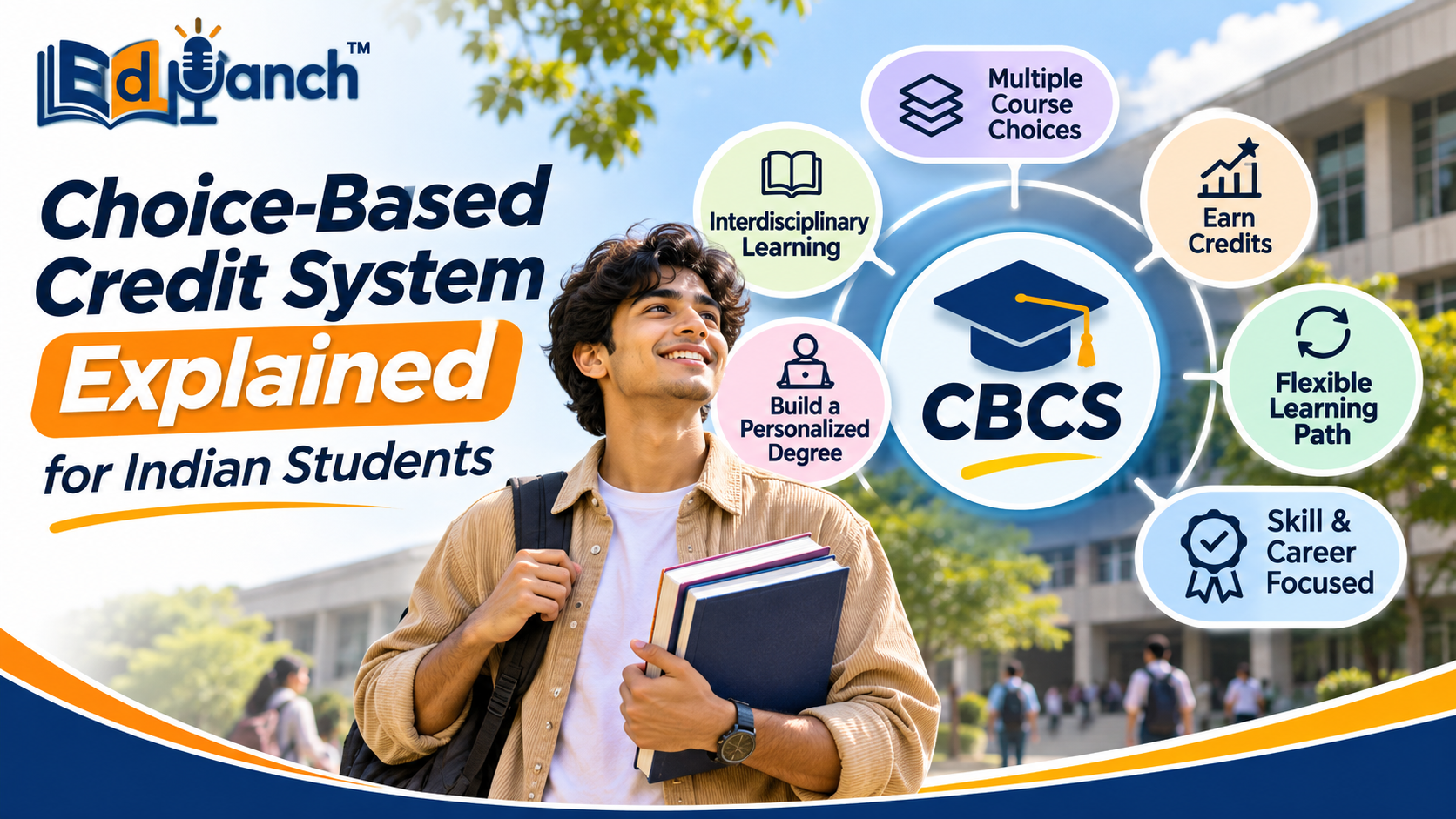
The Academic Bank of Credits, or ABC, is a digital infrastructure that stores a student's earned credits across institutions. It allows students to accumulate credits over time, switch institutions, and even combine learning from different universities or online platforms toward a single degree. This is a significant departure from the earlier model where credits from one university had almost no portability to another.
The Shift Toward Multidisciplinary and Flexible Curricula
One of the most meaningful aspects of NEP 2020 for undergraduate students is its push toward multidisciplinary education. Under the older system, a student enrolled in a physics programme at a central university had very limited scope to study philosophy, economics, or coding alongside their core subjects. NEP 2020 intends to change that.
Universities are now encouraged to become multidisciplinary institutions where students can choose their major and minor subjects from across departments and even across faculties. A student studying commerce can opt for a minor in environmental science. A student majoring in English literature can include data analytics or psychology as elective streams.
This approach mirrors what leading global universities have offered for years and responds directly to what the modern job market demands. Employers increasingly look for graduates who can think across domains, adapt to change, and bring diverse knowledge to their roles.
The policy also emphasizes the inclusion of vocational education at the undergraduate level. Rather than treating vocational skills as something separate or inferior to academic learning, NEP 2020 integrates them within degree programmes. Skill-based courses, internships, and community engagement projects are built into the curriculum structure.
How the FYUP Is Being Implemented Across India
Implementation of the Four-Year Undergraduate Programme has not been uniform across India, which is an important reality for students to understand. The University Grants Commission, or UGC, released the Curriculum and Credit Framework for Undergraduate Programmes, known as CCFUP, as a guiding document for universities.
Central universities under the Ministry of Education began transitioning to the FYUP model, with many of them enrolling their first FYUP batches from the academic year 2023-24 onward. Delhi University, for instance, was among the earlier adopters and had also experimented with a four-year programme before reverting, making its current implementation especially closely watched.
State universities and affiliated colleges, which educate the vast majority of Indian undergraduates, are at different stages of adoption. Some states, including Karnataka and Tamil Nadu, have shown active movement toward restructuring their undergraduate frameworks in alignment with NEP guidelines. Others are still in planning or consultation phases.
This uneven rollout means that two students enrolling in undergraduate programmes in the same year could be experiencing very different academic structures depending on which state or institution they attend. Edumanch continues to track these state-level and institution-level updates to help students stay informed about what exactly applies to them.
The Role of Skill Development and Employability
A core criticism of India's traditional higher education model has been its disconnect from the job market. Graduates often emerged from three-year programmes without practical skills, industry exposure, or even a clear sense of how their academic knowledge translated into professional competency.
NEP 2020 addresses this directly by embedding employability within the degree structure. The policy mandates that undergraduate programmes include:
- Vocational or skill-based electives
- Internship opportunities, ideally including community or industry placements
- Research projects at the four-year level
- Life skills components covering communication, digital literacy, and critical thinking
The goal is not to turn universities into purely technical training centres but to ensure that graduating students are genuinely prepared for the demands of contemporary work environments. This is particularly significant for students from Tier 2 and Tier 3 cities who often do not have access to the informal professional networks that students in metropolitan areas benefit from. For them, structured internship and skill components within the degree itself become far more valuable.
Faculty, Institutions, and the Readiness Challenge
No policy is stronger than the capacity of the institutions and faculty members tasked with implementing it. This is perhaps the most honest challenge that NEP 2020 faces on the ground.
Transitioning to a multidisciplinary model requires universities to redesign their administrative structures, credit transfer systems, examination frameworks, and course offerings simultaneously. Many institutions, particularly smaller affiliated colleges, lack the infrastructure, faculty strength, and financial resources to make this transition smoothly.
Faculty members trained in highly specialized disciplines now need to collaborate across departments, co-design interdisciplinary courses, and supervise research projects at the undergraduate level. This demands not just goodwill but significant professional development investment, which institutions are at different stages of undertaking.
The UGC and Ministry of Education have rolled out teacher training initiatives and have encouraged universities to establish Internal Quality Assurance Cells. The National Credit Framework, or NCrF, also provides a broader structure within which undergraduate education reform sits. However, the gap between policy design and ground-level execution remains a subject that educators, researchers, and students continue to discuss seriously.
What NEP 2020 Means for Students Choosing Their Undergraduate Path Today
For a student currently preparing for or already enrolled in an undergraduate programme in India, NEP 2020 creates both opportunity and responsibility. The opportunity lies in having genuine choices about how to structure one's education. The responsibility lies in actively engaging with those choices rather than passively following a predetermined path.
Students and parents need to ask the right questions when choosing an institution. Has the college or university adopted the FYUP framework? Does it offer a genuine range of multidisciplinary electives? Is the Academic Bank of Credits functional and integrated with the institution's systems? What vocational or skill pathways are built into the programme?
Edumanch is designed precisely to help students and parents navigate these questions with clarity. As India's education landscape continues to evolve under NEP 2020, staying informed is not optional. It is a practical necessity for making decisions that will shape years of academic and professional life.
Conclusion
NEP 2020 represents the most ambitious attempt to reform Indian undergraduate education in a generation. Its core ideas, flexible degree pathways, multidisciplinary curricula, credit portability, and skill integration, respond to genuine structural problems that have limited the potential of Indian graduates for decades.
The road from policy to practice is never straightforward, and the challenges of implementation, infrastructure, and equity are real. But the direction is clear and largely right. Students who understand what NEP 2020 is actually trying to achieve, and who choose their institutions and programmes with that understanding, are better positioned to benefit from the transformation that is already underway.
India's education future will not be built on what policy documents say. It will be built on how well students, educators, institutions, and policymakers work together to turn those words into lived academic experience.
Frequently Asked Questions
Q1: What is the main change NEP 2020 brings to undergraduate education?
NEP 2020 introduces a flexible Four-Year Undergraduate Programme with multiple entry and exit options, multidisciplinary course choices, and credit portability through the Academic Bank of Credits. Students can now leave with a certificate, diploma, or degree depending on the duration of their study and re-enter later to continue.
Q2: What is the Academic Bank of Credits and how does it help students?
The Academic Bank of Credits is a digital system that stores a student's earned academic credits from any registered institution. It allows students to transfer credits between universities, pause and resume their education, and combine learning from multiple sources toward a single recognized degree, reducing the risk of losing academic progress due to unavoidable interruptions.
Q3: Are all Indian universities already following NEP 2020 guidelines for undergraduate programmes?
No. Implementation is at different stages across India. Central universities have largely begun adopting the FYUP framework from 2023-24 onward. State universities and affiliated colleges are transitioning at different speeds depending on state government policies, infrastructure readiness, and available resources.
Q4: Does NEP 2020 make it possible for science students to study arts subjects?
Yes. NEP 2020 encourages multidisciplinary education, which means students can choose major and minor subjects from across disciplines. A science student can include humanities electives and vice versa, depending on what their institution offers within its multidisciplinary course framework.
Q5: How does NEP 2020 improve the employability of undergraduate graduates?
NEP 2020 integrates vocational courses, internships, skill-based electives, and research projects directly into undergraduate degree programmes. This ensures that students graduate with practical experience and professional skills alongside their academic qualifications, making them more prepared for the demands of modern workplaces.
Resources
- University Grants Commission (UGC): Official guidelines and circulars on the Curriculum and Credit Framework for Undergraduate Programmes under NEP 2020
- Ministry of Education, Government of India: Policy documents, implementation updates, and reports on the National Education Policy 2020
- National Credit Framework (NCrF): The overarching credit structure framework linking school, vocational, and higher education under the NEP vision
- Academic Bank of Credits (ABC) Portal: The official platform for students and institutions to register, store, and transfer academic credits across recognized institutions
- NITI Aayog: Research and policy analysis reports related to India's education transformation and NEP 2020 progress
Interlinking Keywords
NEP 2020 undergraduate reforms, Four-Year Undergraduate Programme India, Academic Bank of Credits, multidisciplinary education India, flexible degree programmes NEP, UGC CCFUP guidelines, skill-based education India, higher education policy India, FYUP benefits students, NEP 2020 implementation universities
Last reviewed by:
Dr. Manthan Tripathi, Edumanch Editorial and Education Guidance Team on November 17, 2026.
Disclaimer
The information presented in this article is intended for general informational and educational purposes only. While every effort has been made to ensure accuracy and relevance, education policies, university-specific implementation timelines, and regulatory frameworks are subject to change. Students, parents, and institutions are advised to verify the latest guidelines directly with the University Grants Commission, the Ministry of Education, or their respective universities before making any academic decisions based on this content. Edumanch does not represent any government body, university, or regulatory authority.