 Monday, November 16, 2026
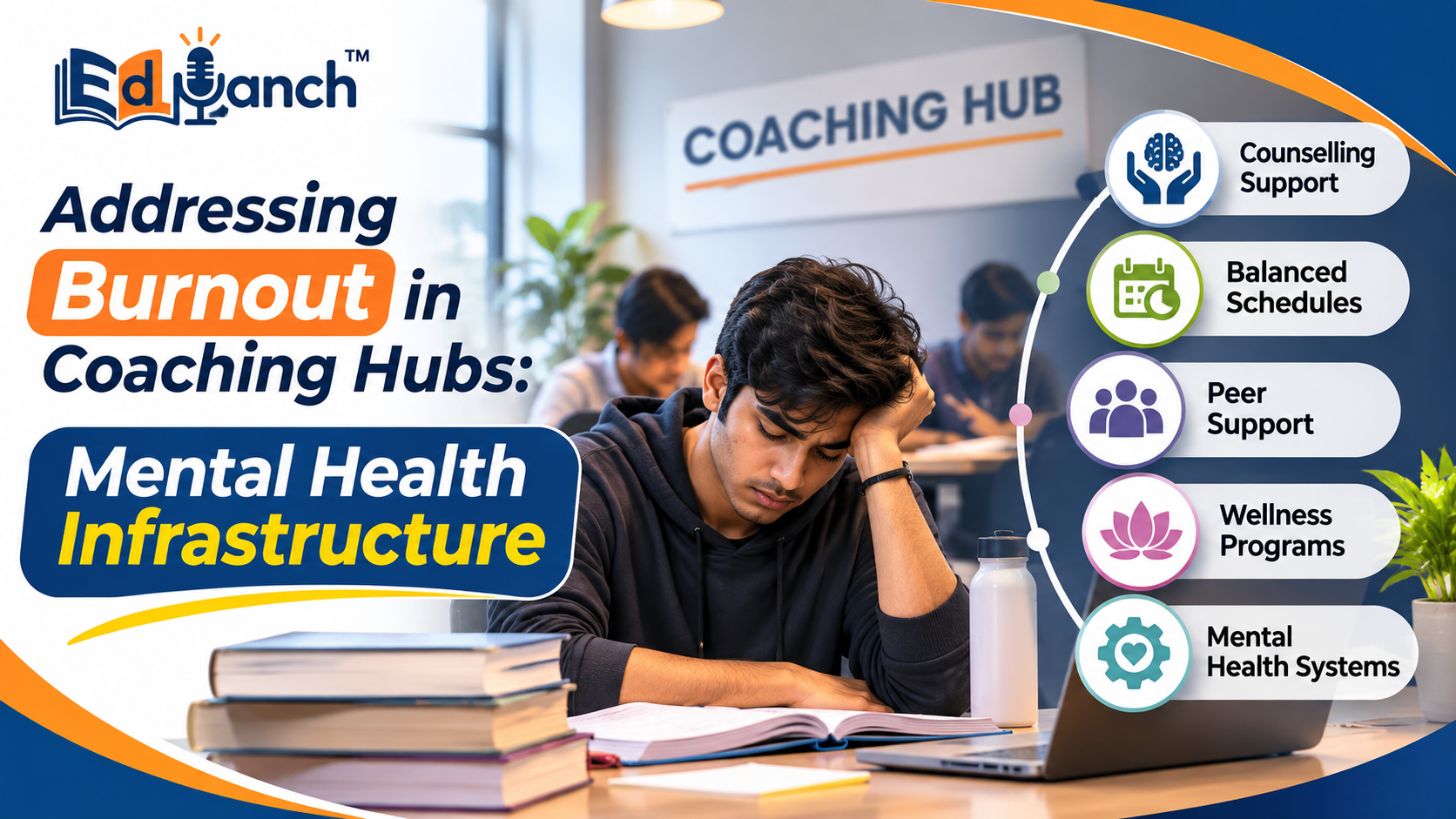
 Student burnout is a major concern in coaching institutions due to academic pressure and demanding schedules. Mental health support, counselling, and balanced routines help promote student well-being.





Executive Overview: The High-Stakes Pressure Cooker
Across premier competitive examination preparation ecosystems—such as Kota, Sikar, Hyderabad, and Delhi-NCR—hundreds of thousands of adolescent and young adult aspirants prepare for high-stakes entrance examinations, including NEET-UG, JEE Advanced, and the Civil Services Examination. The intense concentration of high academic expectations, geographic dislocation, and high-stakes family investments creates an acute psychological environment.
In these specialized education ecosystems, burnout is not merely academic fatigue; it is a clinical presentation characterized by chronic exhaustion, cognitive fragmentation, emotional depersonalization, and acute distress:
- The Single-Metric Identity Trap: In intensive coaching environments, multi-dimensional adolescent development is often compressed into a single data point: weekly mock test percentiles. When a student's entire perceived self-worth and family investment are tied to fluctuating test scores, academic setbacks can quickly trigger severe psychological distress.
- The "Dummy School" Isolation Vulnerability: Bypassing standard secondary school environments removes peer diversity, sports, creative arts, and pastoral care. Students spend twelve to sixteen hours daily cycling exclusively between cramped hostel rooms, crowded lecture halls, and silent study chambers, eliminating natural social buffers.
- Parental Financial Leverage and Guilt: For middle-class and rural agrarian families, funding multi-year coaching fees and urban hostel rentals often requires commercial loans, liquidated ancestral land, or family debt. Aspirants internalize this financial sacrifice as an obligation, viewing academic struggle not as a normal learning hurdle, but as an existential failure.
Addressing this mental health crisis requires moving beyond reactive measures, superficial motivational talks, or commercial wellness initiatives.
It demands an integrated clinical, architectural, and regulatory framework:
- Understanding the neurobiological drivers of chronic sleep debt and sympathetic nervous system overload.
- Deploying a tiered stepped-care psychological support model embedded directly into coaching centers and student residences.
- Enforcing statutory regulatory guidelines governing batching, scheduling, rank publication, and exit options.
- Establishing standardized crisis escalation protocols linking peer networks, professional clinicians, district health authorities, and national crisis response helplines.
1. Neurobiology of Academic Burnout: Sleep Debt and Cognitive Overdrive
To build effective clinical interventions, educators, counselors, and administrative leaders must understand the physiological breakdown that occurs under prolonged, unmitigated competitive stress.
Chronic Sleep Debt and Prefrontal Cortex Decompensation
Competitive exam aspirants frequently operate on four to five hours of fragmented sleep, driven by unyielding study timetables, early-morning testing, and midnight study groups:
- Working Memory and Processing Breakdown: The prefrontal cortex—the anatomical seat of working memory, abstract problem-solving, and emotional regulation—is sensitive to sleep deprivation. Chronic sleep debt impairs hippocampal synaptic consolidation, making it harder to recall complex scientific formulas or analytical frameworks under pressure.
- Limbic Hyper-Reactivity and Catastrophic Thinking: Prolonged sleep deprivation uncouples the prefrontal cortex from the amygdala. Without top-down executive inhibition, the amygdala enters a persistent hyper-reactive state. The student perceives routine academic errors or minor drops in test rankings as catastrophic threats, triggering severe panic attacks, paralyzing exam anxiety, and depersonalization.
The Cortisol-Adrenaline Exhaustion Loop
Preparing for high-stakes exams under severe pressure locks the body in continuous sympathetic fight-or-flight overdrive:
- Sustained elevations in circulating cortisol deplete neurotrophic factors, particularly Brain-Derived Neurotrophic Factor (BDNF), impairing neurogenesis in the dentate gyrus.
- Over months, adrenal exhaustion manifests somatically: severe tension headaches, chronic gastrointestinal distress (such as irritable bowel syndrome), postural tremors, and sudden immune suppression.
- When physical exhaustion collides with an approaching exam deadline, students can experience acute depressive crashes, social withdrawal, and a perceived loss of agency.
2. The Stepped-Care Mental Health Counseling Architecture
A sustainable mental health infrastructure within a high-density coaching hub cannot rely on an isolated, overburdened counselor operating out of an administrative office. It requires a structured, three-tiered stepped-care model designed to catch psychological distress before it escalates into an acute crisis.
Tier 1: Universal Prevention and Environmental Normalization
The baseline tier operates across the entire student population to reduce background stress and normalize help-seeking behaviors:
- The Buddy-Pairing Network: Pairing incoming, relocated students with senior or peer study buddies to ensure immediate, local social integration, preventing the acute loneliness of initial urban relocation.
- De-stigmatization Integration: Conducting mandatory, non-academic orientation sessions during the first week of classes to normalize stress, discuss imposter syndrome, and demystify mental health counseling as a standard performance tool rather than a disciplinary measure.
- Mandatory Academic Pacing: Enforcing strict academic boundaries: capping daily classroom lectures at a maximum of five hours, prohibiting back-to-back testing, and establishing mandatory weekly rest days where both coaching classes and hostel study halls are fully closed.
Tier 2: Targeted Psychological Support and On-Site Clinics
The intermediate tier targets students displaying early indicators of moderate anxiety, depressive symptoms, or significant academic deceleration:
- Dedicated On-Site Psychological Units: Establishing private, soundproof, welcoming counseling suites located inside academic facilities, structurally separated from administrative and disciplinary offices to ensure privacy.
- Licensed Clinical Staffing Ratios: Employing certified clinical psychologists and psychiatric social workers at a minimum ratio of one mental health professional per five hundred enrolled students, avoiding the common corporate practice of using sales counselors as mental health providers.
- Routine Formative Psychological Screening: Deploying validated clinical screening tools (such as the PHQ-9 for depressive symptoms and the GAD-7 for generalized anxiety) at key stress junctures: three months post-arrival, immediately following the release of cumulative mock phase results, and forty-five days prior to the national examination.
Tier 3: Acute Crisis Escalation and Psychiatric Stabilization
The emergency tier addresses severe clinical emergencies, acute suicidal ideation, psychotic decompensation, and severe panic episodes:
- 24/7 Rapid Crisis Triage: Operating dedicated, continuous crisis helplines integrated directly with national mental health support systems, including Tele-MANAS (14416), ensuring instant telephonic psychiatric triage.
- Institutional Hospital Linkages: Formalizing emergency memoranda of understanding (MOUs) between coaching consortiums and district civil hospitals, psychiatric emergency centers, and medical colleges to provide dedicated beds, clinical stabilization, and supervised care.
- Clear Safety Protocols: Establishing clear protocols for emergency transport, family notification, and collaborative safety planning, balancing parental involvement with the student's personal safety and clinical privacy.
3. Regulatory Reforms and Structural Decoupling
Clinical counseling interventions remain ineffective if the educational institution continues to deploy harmful pedagogical and administrative practices. Meaningful reform requires strict adherence to central and state guidelines governing coaching centers.
The Elimination of Humiliating Public Ranking Systems
Historically, coaching centers publicly posted raw scores and national rank projections on public notice boards and digital portals, sorting students into public tiers:
- Modern standards require the complete abolition of public rank displays.
- Test results, performance analytics, and diagnostic feedback must be transmitted privately and confidentially to the student's personal portal.
- Educational analytics must emphasize individual mastery, topical diagnostic strengths, and incremental growth curves rather than public, shaming peer-to-peer comparisons.
Dismantling Performance-Based Batch Segregation
One of the most psychologically damaging practices in coaching hubs is batch shuffling:
- In legacy models, high-scoring students were grouped into elite "Star" or "Topper" batches provided with top faculty, special study materials, and air-conditioned suites, while lower-scoring students were relegated to overcrowded, lower-tier rooms.
- This segregation institutionalizes an academic caste system, triggering severe social shame and defeatism among struggling learners.
- Regulatory frameworks mandate stable, demographically balanced, and consistent batch structures that remain fixed throughout the academic session, ensuring equal access to master faculty and educational resources regardless of interim test performance.
Fair Exit and Pro-Rata Fee Refund Frameworks
A primary driver of student despair is the feeling of being trapped in an unbearable environment because their family paid massive, non-refundable annual tuition fees upfront:
- Regulatory guidelines mandate that all coaching centers must provide pro-rata fee refund policies.
- If a student elects to withdraw from a coaching program due to health issues, emotional distress, or a voluntary change in career direction, the institution is legally obligated to refund the proportional balance of tuition and hostel fees within thirty days.
- Providing a viable, financially fair exit route relieves family financial leverage and eliminates the dangerous feeling that a student has no way out of an overwhelming situation.
4. The Residential Ecosystem: Gatekeeper Training for Hostels and Wardens
Aspirants spend the majority of their vulnerable, non-structured hours not in lecture halls, but in private hostels, paying-guest (PG) accommodations, and local mess halls. Consequently, non-academic service staff form the true front line of student mental health protection.
Comprehensive QPR (Question, Persuade, Refer) Gatekeeper Training
Every hostel warden, cleaning staff member, security guard, and mess worker must complete mandatory, certified suicide prevention and mental health gatekeeper training:
- Recognizing Behavioral Red Flags: Identifying subtle warning signs: a student missing meals for consecutive days, remaining locked inside their room during daylight hours, discarding personal textbooks, accumulating empty blister packs of sedatives, or expressing statements of profound hopelessness.
- Empathetic Verbal Engagement: Training wardens how to speak to a struggling student calmly, validating their stress without offering dismissive platitudes like "just work harder" or "think of your parents."
- Immediate Referral Pathways: Establishing direct, non-punitive hotlines where wardens can alert district clinical teams and coaching counselors immediately when a student exhibits high-risk behaviors.
Environmental Safety Engineering in Student Accommodations
Physical environments must be engineered to remove immediate means of self-harm during moments of acute emotional crisis:
- Anti-Hanging Safety Devices: Equipping all hostel ceiling fans with spring-loaded, load-sensitive anti-hanging devices that automatically detach under excessive downward load, paired with physical siren alarms.
- Architectural Safeguards: Installing heavy-gauge safety netting across open hostel stairwells and interior building courtyards, alongside reinforced window restrictors that prevent access to building ledges.
- Controlled Access to High-Risk Substances: Regulating local pharmacies to prevent the over-the-counter dispensing of scheduled central nervous system depressants, sleep aids, and toxic chemicals to unaccompanied students without valid medical prescriptions.
5. Phased Implementation Protocol: Building a Resilient Coaching Hub
Transitioning a high-pressure educational district into an emotionally supportive, clinically sound academic ecosystem requires an organized four-phase operational strategy:
- Phase 1: Institutional Auditing and Safety Hardening (Weeks 1 to 4):
- Execute a mandatory physical infrastructure audit across all coaching facilities and registered student hostels, verifying the installation of window restrictors, stairwell safety netting, and anti-hanging fan devices.
- Establish baseline counselor-to-student ratios across all coaching campuses, issuing immediate hiring mandates where ratios fall short of one clinician per five hundred students.
- Eliminate all public rank boards, physical banners, and digital leaderboards displaying comparative student scores.
- Phase 2: Staff and Community Gatekeeper Mobilization (Weeks 5 to 8):
- Deliver certified QPR gatekeeper training to one hundred percent of hostel wardens, security personnel, mess operators, and administrative staff across the hub.
- Train instructional teaching faculty on recognizing acute academic burnout, managing classroom stress, and using positive instructional communication.
- Launch the digital Tele-MANAS crisis line awareness campaign, displaying direct helpline contact details in every classroom, hostel room, mess hall, and library.
- Phase 3: Curricular Restructuring and Pacing Enforcement (Weeks 9 to 12):
- Formalize the unified master timetable: capping daily classroom instruction at five hours, banning early-morning classes, and enforcing a mandatory, non-negotiable weekly rest day.
- Restructure academic batches into permanent, heterogeneous cohorts, eliminating performance-based batch shuffling.
- Audit institutional refund portals to ensure compliance with pro-rata fee return mandates within thirty days of withdrawal.
- Phase 4: Clinical Integration and Continuous Surveillance (Months 4 to 6):
- Integrate routine, confidential PHQ-9 and GAD-7 digital screening assessments into the student online portal at standard milestone intervals.
- Formalize emergency clinical response agreements with district hospitals and tertiary psychiatric units for immediate crisis admissions.
- Convene monthly district mental health oversight meetings comprising district administration, clinical psychologists, student representatives, and coaching leadership to review wellness metrics and refine institutional safeguards.
Strategic Summary: Preserving the Future Beyond the Examination
The true measure of an educational system is not its ability to produce top-percentile test scores, but its capacity to nurture resilient, healthy, and intellectually curious young adults. Competitive examinations like NEET, JEE, and UPSC are pathways to professional careers, but they must never become determinants of human worth or personal survival.
By replacing public ranking and batch segregation with personalized diagnostic learning, building stepped-care clinical counseling infrastructure, training the residential hostel ecosystem in gatekeeper response, and providing fair, flexible exit routes, coaching hubs can dismantle the culture of chronic burnout.
This transformation creates an educational environment where academic ambition coexists with psychological safety, preserving the mental health, dignity, and future of every student who dares to dream.
10 Frequently Asked Questions (FAQs)
Q1. What is the fundamental difference between standard exam stress and clinical academic burnout?
Standard exam stress is temporary and task-focused: a student feels nervous before a mock test, but experiences renewed motivation, physical energy, and cognitive focus once the test concludes.
Clinical academic burnout is a chronic, debilitating state characterized by emotional exhaustion, depersonalization, and a persistent sense of futility:
- The student feels drained despite sleeping.
- They experience severe cognitive impairment (inability to focus, working memory lapses).
- They become apathetic or cynical about their goals, often accompanied by somatic symptoms like headaches, nausea, and deep panic.
Q2. Why is public rank publishing so psychologically harmful to competitive exam aspirants?
Public rank publishing triggers acute social shame and public humiliation:
- In adolescent psychology, peer perception is a primary driver of self-worth.
- Broadcasting a student’s rank on public bulletin boards, digital scorecards, or across classroom screens labels them publicly as an academic failure.
- This practice induces social withdrawal, damages self-efficacy, and drives students to isolate themselves from peers, cutting off the social support networks needed to manage stress.
Q3. How does the "dummy school" model contribute to mental health deterioration?
The dummy school model—where students enroll in a formal secondary school strictly on paper for board exam registration while attending coaching classes full-time—strips away the natural buffers of adolescent life:
- Students miss out on regular physical education, arts, diverse peer friendships, and balanced holidays.
- Life becomes completely compressed into an intensive test-prep cycle, leaving students with no identity, creative outlet, or emotional refuge outside of their weekly test scores.
Q4. What should a parent do if their child calls from a coaching hub expressing overwhelming stress or thoughts of quitting?
Follow three critical, supportive steps:
- Validate and De-escalate: Do not lecture, scold, or remind the student of the financial cost of their coaching. Listen calmly and validate their feelings by saying, "Your health and happiness are vastly more important to us than any exam."
- Remove Immediate Pressure: Reassure the student that they have the absolute freedom to step back, take a break, or come home without facing anger, disappointment, or judgment.
- Connect with Professional Care: Contact a trusted local counselor, the hostel warden, or utilize national support lines like Tele-MANAS (14416) to ensure the student has immediate, on-the-ground emotional support.
Q5. What is the role of the national Tele-MANAS helpline (14416) in supporting exam aspirants?
Tele-MANAS (Tele Mental Health Assistance and Networking Across States) is a 24/7, toll-free, multi-lingual mental health tele-service launched by the Government of India:
- It connects callers instantly with trained mental health counselors in their preferred regional language.
- For competitive exam aspirants experiencing acute anxiety, loneliness, or crisis, it provides immediate, confidential psychological first aid and can escalate care to district mental health units when urgent clinical intervention is required.
Q6. How does a pro-rata refund policy help protect student mental health?
Many students remain trapped in toxic, high-pressure coaching environments because their parents paid massive annual fees upfront that are labeled "non-refundable":
- The student feels immense guilt, believing that leaving would financially devastate their family.
- Mandating pro-rata fee refunds allows families to recover the unused balance of their tuition and accommodation fees, removing the financial pressure and giving struggling students a safe, viable exit path.
Q7. Why are anti-hanging ceiling fan devices installed in student hostels?
In moments of acute, impulsive crisis, access to lethal means directly influences suicide risk:
- Spring-loaded, anti-hanging fan devices are engineered to uncouple or fold down when subjected to heavy downward loads, preventing their use for self-harm.
- This physical barrier interrupts the immediate impulsive act, buying valuable time for intervention, de-escalation, and emergency response.
Q8. What is the proper student-to-counselor ratio for a large coaching institute?
Best practice in institutional mental health mandates a ratio of at least one qualified, full-time clinical psychologist or psychiatric counselor per 500 enrolled students:
- In massive coaching centers enrolling tens of thousands of students, employing two or three counselors is entirely inadequate.
- Counselors must be independent medical professionals with protected patient confidentiality, completely separated from marketing or academic performance teams.
Q9. Can mindfulness and yoga replace professional clinical counseling for severe burnout?
No. While mindfulness, physical yoga, and meditation are helpful lifestyle practices for general stress reduction and physical wellness:
- They are supportive self-care strategies, not medical treatments for clinical depression, generalized anxiety disorders, or acute suicidal ideation.
- Students experiencing severe burnout or clinical distress require evidence-based clinical interventions delivered by licensed psychologists and psychiatrists.
Q10. What are the three immediate steps a coaching institute should take to reduce student distress?
Take three immediate operational actions:
- Mandate a Strict Weekly Day-Off: Enforce one complete day per week with zero classes, zero testing, and zero homework to allow restorative sleep and mental recovery.
- Privatize All Performance Scores: Stop publishing ranks publicly; deliver all test results, feedback, and analytics directly and privately to the student's personal portal.
- Train All Hostel Staff in QPR Protocols: Ensure every warden, mess worker, and security guard knows how to recognize early signs of severe depression, ask supportive questions, and connect students to clinical help immediately.