 Monday, November 16, 2026
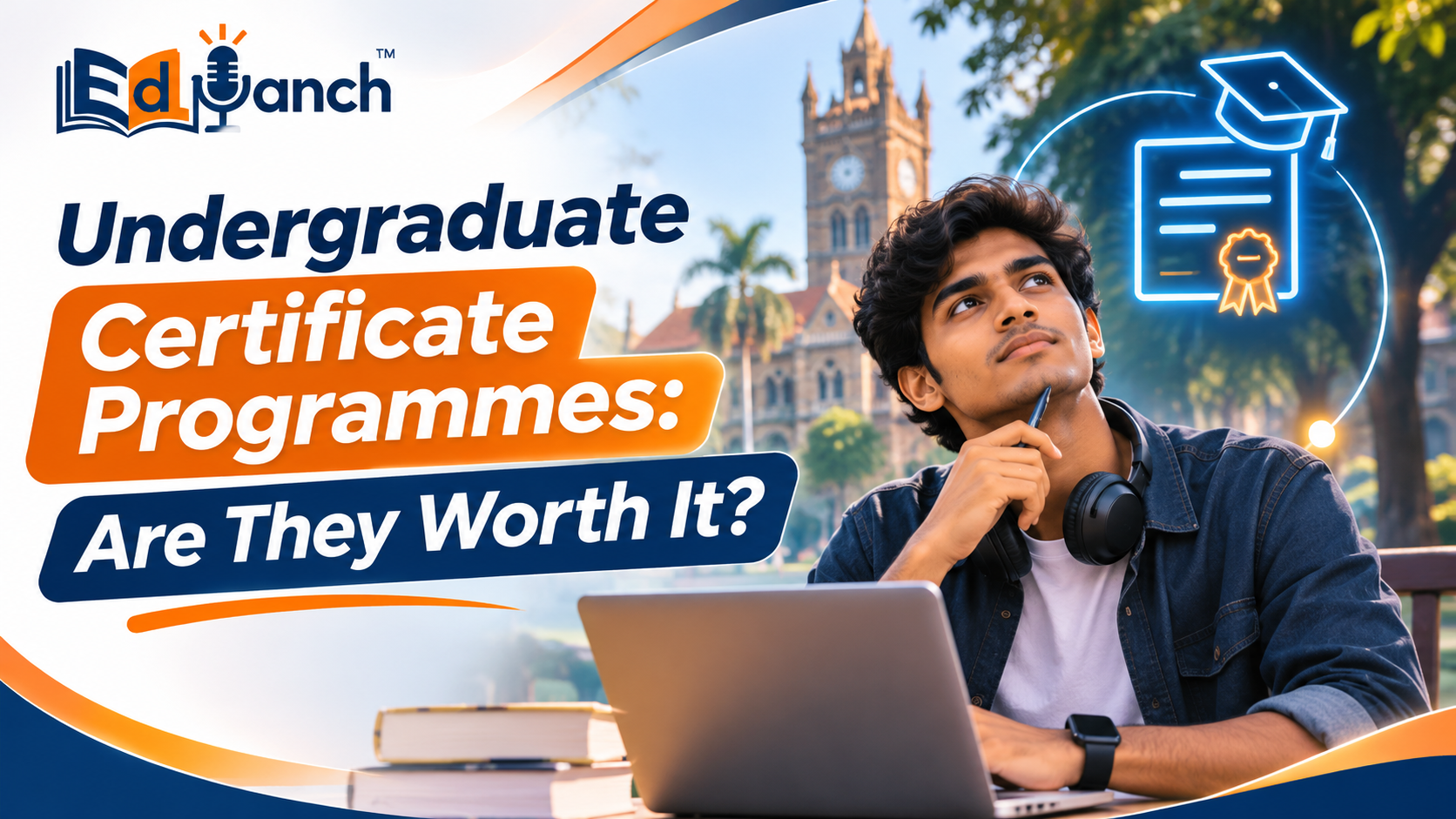
 Undergraduate certificate programmes offer Indian students a focused, affordable path to skill development. Under NEP 2020, their academic standing has improved significantly, making thoughtful selection essential.





Undergraduate Certificate Programmes: Are They Actually Useful for Indian Students?
Introduction
For a large number of Indian students, the path after Class 12 looks like a straightforward binary: either a full undergraduate degree or nothing meaningful at all. That framing, however, overlooks a third option that is quietly gaining traction across colleges, skill development councils, and digital learning platforms across the country. Undergraduate certificate programmes, once considered supplementary add-ons, are now being taken seriously by students, educators, and employers alike.
The National Education Policy 2020 has further legitimized this shift. By introducing multiple entry and exit points within higher education, NEP 2020 has created a formal framework in which certificates are not just informal credentials but recognized academic outcomes. This change is particularly significant for India, where millions of students either drop out before completing a full degree or need a faster route to employment while still being enrolled in a longer programme.
This article takes a clear-eyed look at what undergraduate certificate programmes are, who they benefit, what sectors offer the most value, and how Indian students and parents can make informed decisions about whether to pursue one.
What Are Undergraduate Certificate Programmes?
An undergraduate certificate programme is a structured course of study, typically shorter than a diploma or degree, that focuses on a specific subject, skill, or professional domain. It is designed for students who are either currently enrolled in an undergraduate degree or who have completed at least their Class 12 education.
These programmes generally span between three months and one year. They are offered by universities, autonomous colleges, online platforms, government skill development bodies, and professional institutes. The course content is usually practical and career-oriented, though some programmes carry significant academic depth, especially those offered through UGC-affiliated institutions.
Under NEP 2020, a student who completes one year of a four-year undergraduate programme and exits receives a certificate. Two years earns a diploma, three years earns a degree, and four years earns a degree with research. This framework signals that certificate-level education is now formally embedded within India's national higher education architecture rather than treated as a parallel or inferior stream.
Who Are These Programmes Designed For?
Understanding whether a certificate programme is the right choice requires understanding who these programmes are genuinely designed to serve. The answer is broader than most people assume.
Students currently enrolled in undergraduate degrees form one significant group. Many pursue certificate programmes alongside their bachelor's degree to build domain-specific skills that their degree curriculum does not cover. A commerce student adding a certificate in digital marketing or a science student completing a data analytics certificate is a pattern increasingly common across Tier 1 and Tier 2 cities.
Students from Tier 2 and Tier 3 cities represent another major group. For many of these students, full postgraduate education at a metro institution is financially and logistically difficult. A well-chosen certificate from a recognized institution or a government-backed platform like Swayam or NPTEL offers a credible and affordable alternative that can meaningfully improve career readiness.
Working professionals who want to upskill without taking extended time away from their jobs also turn to certificate programmes. And then there are individuals who exited formal education early and want to re-enter through a structured, manageable entry point.
The common thread across all these groups is a need for education that is focused, time-efficient, and career-relevant.
Which Sectors Offer the Most Career Value?
Not all certificate programmes carry equal weight. The value of a certificate depends heavily on the industry, the issuing institution, and how relevant the specific skill is to current employer demand. Across India, certain sectors consistently produce certificate programmes that lead to tangible career outcomes.
Information Technology and Digital Skills
The demand for professionals with skills in coding, cybersecurity, cloud computing, data science, and artificial intelligence is growing at a pace that full degree programmes alone cannot match. Certificate programmes from institutions such as IITs through NPTEL, or platforms like Coursera and edX in partnership with Indian universities, carry strong recognition in the IT sector. Many employers in this domain are increasingly credential-agnostic, meaning they evaluate demonstrated skill over formal degree qualifications. A certificate backed by a credible project portfolio carries real weight.
Healthcare and Allied Health
India faces a persistent shortage of trained healthcare support workers. Certificate programmes in medical coding, hospital administration, health informatics, nutrition, and community health have strong absorption rates in both government and private healthcare settings. Programmes affiliated with bodies like the National Skill Development Corporation or offered through central universities carry particular employer confidence.
Financial Services and Banking
Certificates in banking operations, financial planning, insurance, and micro-finance are actively recognized by banks, NBFCs, and insurance companies when hiring entry-level staff. The Institute of Banking Personnel Selection and various banking training institutes offer structured certificate programmes that directly prepare students for standardized recruitment exams and job roles.
Education and Skilling
With the rapid growth of ed-tech, school education management, and vocational training in India, certificate programmes in teaching methodology, curriculum design, and educational technology have opened employment pathways in a sector that previously demanded only formal B.Ed qualifications.
Hospitality, Tourism, and Retail
The Indian tourism and hospitality sector, particularly in pilgrimage circuits, heritage destinations, and leisure tourism, generates ongoing demand for trained frontline professionals. Short-duration certificate programmes recognized by the Tourism and Hospitality Skill Council offer students a direct route into employment.
Strengths and Limitations of Certificate Programmes
A fair assessment requires looking at both what these programmes do well and where they fall short.
What they do well:
- They allow students to acquire job-ready skills faster than a traditional degree programme allows.
- They are significantly more affordable, making skill development accessible to students from lower-income households.
- They integrate naturally alongside an ongoing degree, adding a second credential without disrupting the primary academic path.
- They respond quickly to industry changes. A certificate programme can be updated or launched in months, while a full degree programme takes years to redesign.
- Under the NEP 2020 academic bank of credits framework, credits earned through some certificate programmes can be counted toward a full degree, reducing future course loads.
Where they fall short:
- Not all certificate programmes are equal in quality or recognition. Certificates from unaccredited or unrecognized institutions have minimal value with employers.
- In several professions, including medicine, law, engineering, and architecture, a certificate cannot substitute for the statutory degree required by the respective regulatory body.
- Employers in certain traditional sectors, particularly government services and public sector undertakings, continue to mandate minimum degree qualifications regardless of additional certificates.
- Students who pursue certificates without a clear career goal often find themselves with credentials that do not connect to any specific role or industry pathway.
How the National Education Policy 2020 Has Changed the Landscape
The NEP 2020 has arguably done more to legitimize certificate-level education than any single policy in India's post-independence history. By embedding the certificate, diploma, and degree as formal exit points within the same undergraduate programme framework, NEP 2020 has effectively dismantled the idea that only a full three-year or four-year degree constitutes valid higher education.
The Academic Bank of Credits, a digital repository introduced under NEP 2020, allows students to store and transfer credits earned across institutions and programmes. This means a student can earn certificate-level credits at one institution, pause their education for personal or financial reasons, and resume at another institution without losing academic progress. For India's large population of students who have historically dropped out of higher education midway due to financial pressure or family obligations, this framework creates a genuine safety net.
Several central universities, state universities, and deemed institutions have already begun redesigning their undergraduate programmes around this multi-exit structure. As implementation deepens over the next three to five years, the academic and professional standing of undergraduate certificates is expected to rise significantly.
Choosing the Right Certificate Programme
The decision to pursue a certificate programme should be driven by a clear understanding of three things: the student's current educational status, their intended career direction, and the credibility of the programme they are considering.
Before enrolling, students and parents should ask the following questions:
- Is the programme offered by or affiliated with a UGC-recognized university, an NSDC-affiliated training partner, or a central government scheme such as Swayam or PMKVY?
- Does the programme include practical components such as projects, internships, or lab work, or is it entirely theoretical?
- Do employers in the target industry actually recognize this certificate, and can the institution provide placement data or alumni outcomes?
- If the student is pursuing this alongside a degree, does the schedule allow for genuine learning, or will it become an additional burden without real benefit?
- What is the total cost, and does the expected career outcome justify that investment?
Edumanch regularly covers updates on government-recognized skill programmes, UGC policy changes, and emerging certificate pathways across sectors. Students and parents looking for updated guidance on specific programmes can explore Edumanch's education and career resources for current information tailored to the Indian context.
Conclusion
Undergraduate certificate programmes are not a shortcut. They are not a substitute for formal education, and they will not replace the value of a well-chosen degree in regulated professions. What they can do, however, is give students a structured, credible, and career-relevant credential that complements their primary education, responds to their financial reality, and positions them more competitively in a job market that increasingly values demonstrated skill over formal qualification alone.
For Indian students navigating an education system that is changing faster than it has in decades, the key is not to dismiss certificate programmes as lesser qualifications or to pursue them without direction. The key is to choose wisely, verify institutional credibility, and align the choice with a clear career goal. When those conditions are met, an undergraduate certificate programme can be one of the most practical investments a student makes.
Frequently Asked Questions
Q1: Are undergraduate certificate programmes recognized by employers in India?
Yes, certificate programmes from recognized institutions and regulatory bodies such as UGC-approved universities, NSDC-affiliated bodies, and national skill development centres hold strong value with employers, especially in vocational and technical sectors. The recognition depends on the issuing institution and the specific industry.
Q2: Can a certificate programme substitute a full degree in India?
No, a certificate programme does not substitute a full degree. It complements a degree by adding a focused skill or qualification that strengthens employability in specific roles or sectors. In regulated professions such as medicine, law, and engineering, the statutory degree remains mandatory.
Q3: Who should consider doing an undergraduate certificate programme?
Students in their undergraduate years, working professionals, career changers, and individuals from Tier 2 and Tier 3 cities looking for accessible skill development pathways are well-suited for certificate programmes. Anyone who wants to build specific, job-ready skills efficiently can benefit from the right programme.
Q4: What is the typical duration of an undergraduate certificate programme?
Most undergraduate certificate programmes last between three months and one year, depending on the subject area and the institution offering them. Some intensive programmes may be completed in six to eight weeks, while broader skill-based certificates may extend up to twelve months.
Q5: Are online certificate programmes as valid as in-person ones in India?
Online certificate programmes from accredited institutions such as NPTEL, Swayam, and UGC-approved universities carry significant academic and professional value. The credibility of a certificate depends on the issuing institution rather than the mode of delivery. Employers in digital-native sectors are particularly open to online credentials.
Resources
- University Grants Commission (UGC): Official regulatory body for higher education in India, with guidelines on approved undergraduate programmes and the Academic Bank of Credits framework.
- National Skill Development Corporation (NSDC): India's primary public-private partnership organization for skill development, with a directory of affiliated training partners and recognized certificate programmes.
- Swayam: Government of India's national online education platform offering free certificate courses from central universities and IITs across multiple disciplines.
- NPTEL (National Programme on Technology Enhanced Learning): Joint initiative by IITs and IISc offering certificate programmes in engineering, science, management, and humanities, recognized widely by Indian industry.
- Ministry of Education, Government of India: Official source for NEP 2020 implementation guidelines, undergraduate framework updates, and education policy documentation.
Interlinking Keywords
undergraduate certificate programmes India, NEP 2020 undergraduate framework, certificate vs diploma India, Swayam certificate courses, NSDC skill programmes, UGC recognized certificate courses, Academic Bank of Credits, vocational education India, career after 12th certificate courses, short-term courses for students
Last reviewed by:
Dr. Manthan Tripathi, Edumanch Editorial and Education Guidance Team on November 10, 2026.
Disclaimer
The information provided in this article is intended for general educational and informational purposes only. It does not constitute academic counselling, career advice, or institutional endorsement of any kind. Programme structures, eligibility criteria, regulatory frameworks, and employer recognition standards are subject to change. Readers are advised to verify current details directly with the relevant institution, university, or regulatory authority before making any academic or career decisions. Edumanch does not take responsibility for decisions made solely on the basis of the information presented here.