 Monday, November 16, 2026
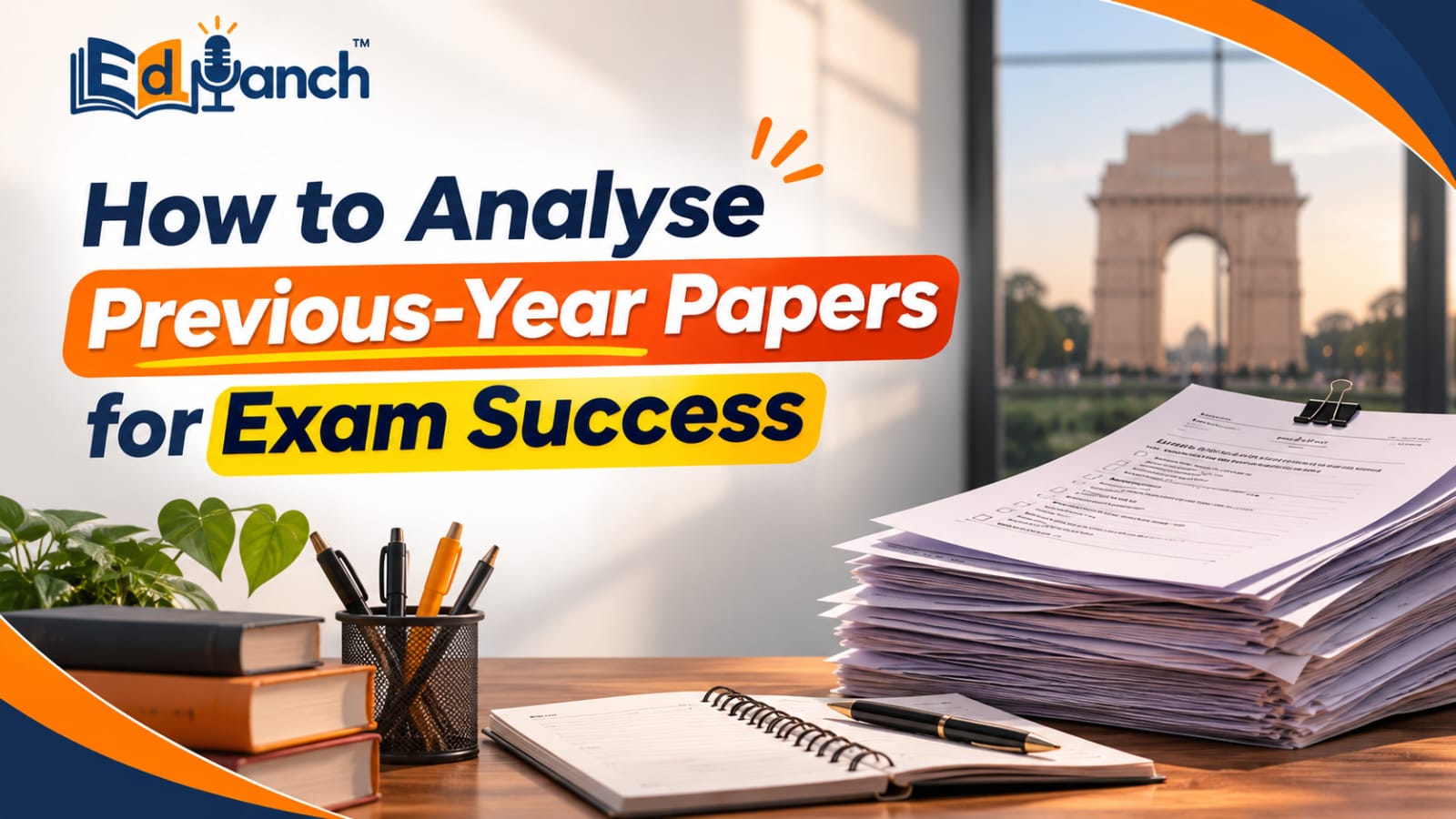
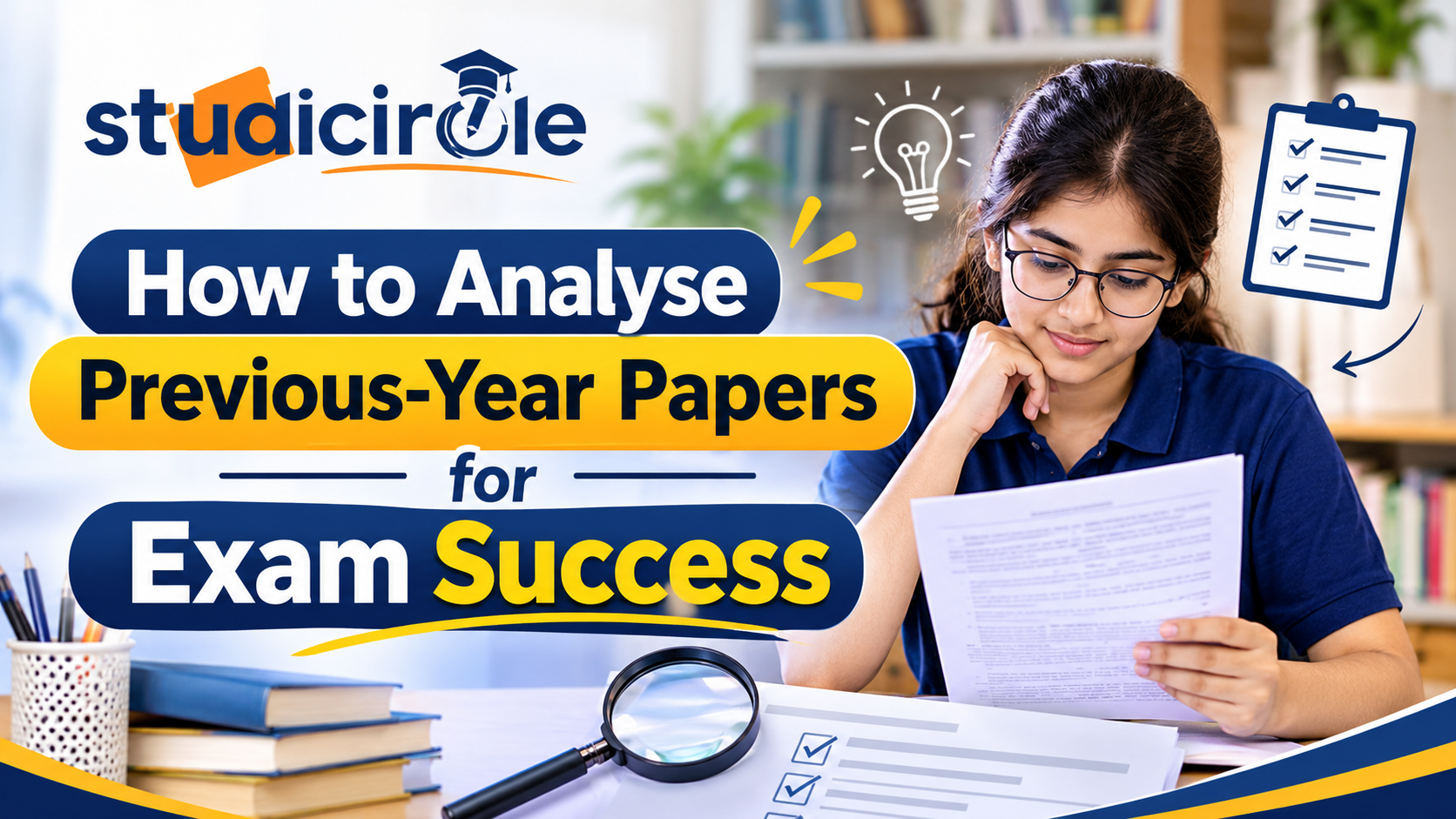
 Analysing previous-year papers strategically helps Indian students identify exam patterns, prioritise high-weightage topics, fill preparation gaps, and build a focused revision plan for competitive and board exams.





Introduction
For millions of students across India, the journey toward cracking a competitive exam is long, demanding, and often uncertain. Whether the goal is clearing UPSC, JEE, NEET, CAT, SSC, state board examinations, or university entrance tests, one resource consistently stands out as among the most valuable tools available: previous-year question papers.
Yet, most students use these papers in a limited way. They attempt a paper, check their answers, note their score, and move on. That approach misses the deeper value these papers hold. The real power of previous-year papers lies not in solving them, but in systematically analysing them. When done correctly, this analysis gives students a clear picture of what examiners prioritise, how question patterns evolve, which topics carry the highest weightage, and where preparation gaps still remain.
This article is designed to help students understand the right approach to previous-year paper analysis, the specific steps involved, and the strategic benefits that follow. For students in India preparing for high-stakes examinations, this skill can genuinely change the direction of preparation.
Understanding What Previous-Year Papers Actually Tell You
Before jumping into the how, it is important to understand the what. Previous-year question papers are not simply practice tools. They are a direct window into the examination system itself.
Every exam, whether conducted by CBSE, NTA, UPSC, state public service commissions, or any national testing body, follows a certain design logic. Question papers are created by subject matter experts who work within defined blueprints and syllabus frameworks. Over time, patterns emerge, and those patterns reveal a great deal about the examination's priorities.
When a student analyses previous-year papers across multiple years, they begin to see:
- Which chapters or topics are tested almost every year without fail
- Which question types (conceptual, application-based, numerical, factual) dominate a particular section
- How the difficulty level has shifted over the years
- Whether certain question formats such as assertion-reason, match the following, or case-based questions have been introduced recently
- The approximate distribution of marks across different units
This kind of insight is impossible to gain from a textbook alone. It requires pattern recognition across multiple years of actual exam data, and that is precisely what systematic analysis delivers.
How to Begin the Analysis Process
The analysis of previous-year papers is not a one-time activity. It is an ongoing process that should ideally begin at the start of preparation and continue through to the final weeks before the exam.
Step 1: Gather papers from at least five to ten yearsOne or two years of data is rarely enough to identify reliable patterns. Students should collect papers from at least the past five years, and ideally ten years for exams like UPSC or JEE where the pattern has evolved meaningfully over time. These papers are available through official examination board websites, trusted education portals, and published books from reputable publishers.
Step 2: Create a topic-wise question logFor each paper, go through every question and tag it to a specific chapter or topic from the official syllabus. Maintain this log in a simple spreadsheet or notebook. Over time, this log will reveal which topics appear most frequently and which are rarely tested.
Step 3: Categorise questions by type and difficultyAlong with topic tagging, note the question type for each entry: recall-based, conceptual understanding, application, calculation, or analytical. This categorisation helps students understand what kind of thinking the exam demands and whether their current preparation style matches that demand.
Step 4: Track marks distribution and time allocationIdentify how many marks are assigned to each major unit or subject in multi-subject exams. This directly informs how much time should be allocated to each topic during preparation. High-weightage areas deserve proportionally more attention.
Identifying Patterns and High-Weightage Areas
Once a topic-wise log exists across multiple years, the patterns become visible and actionable. This is the analytical heart of the entire exercise.
In NEET, for example, the biology section consistently draws a large proportion of questions from chapters such as genetics and evolution, human physiology, and ecology. A student who identifies this trend early will allocate preparation time accordingly rather than spending equal hours on every chapter in the textbook.
In JEE Mains, mathematics questions frequently emphasise calculus, coordinate geometry, and algebra. In UPSC Prelims, polity, economy, and environment tend to dominate the general studies paper year after year. In SSC CGL, quantitative aptitude and English comprehension carry consistent weightage.
This kind of pattern recognition is not about predicting specific questions. It is about building a smarter preparation strategy. Students who understand high-frequency topics can:
- Revise those topics more thoroughly and more often
- Ensure they never leave a high-weightage chapter incomplete
- Build stronger conceptual clarity in areas that the exam repeatedly tests
- Avoid spending excessive time on low-frequency topics at the cost of frequently tested ones
Analysing Question Trends and Exam Evolution
Competitive exams in India do not remain static. Examination bodies respond to changes in curriculum, policy shifts, and broader educational goals. Analysing how question patterns have evolved over the years tells students which direction the exam is heading.
For instance, CBSE board exams have progressively moved toward competency-based questions that test application and understanding rather than rote recall. The National Education Policy 2020 has further accelerated this shift. Students preparing for board exams today need to know that memorising definitions alone is no longer sufficient. Analysis of recent years' papers will confirm this trend clearly.
Similarly, UPSC has increasingly incorporated questions that require interdisciplinary thinking, linking current affairs with constitutional provisions or economic theory with ground-level policy implementation. Students who analyse papers from the past decade will spot this trend and adjust their preparation to develop integrative thinking rather than isolated topic knowledge.
JEE Advanced has consistently challenged students with questions that require multiple-concept application within a single problem. Recognising this through paper analysis drives students to practice multi-step problems more than single-formula applications.
Understanding exam evolution also helps students avoid the trap of relying on outdated preparation materials that do not reflect the current nature of the exam.
Using Gap Analysis to Strengthen Weak Areas
One of the most practical outcomes of previous-year paper analysis is identifying preparation gaps. After tagging and categorising questions from multiple years, students can compare their self-assessed competency in each topic against the actual frequency with which that topic appears.
This comparison often surfaces surprising insights. A student may feel confident about a topic they have studied extensively but realise upon paper analysis that the exam consistently tests that topic from an angle they have not practised. Conversely, they may discover that a topic they have neglected is tested in some form in almost every paper.
Gap analysis guides revision planning by highlighting exactly where effort is most needed. Rather than revising everything equally in the final weeks of preparation, students can focus revision sessions on:
- High-frequency topics where their accuracy is currently low
- Question types they find difficult, such as assertion-reason or passage-based questions
- Concepts that appear in multiple subjects or sections, suggesting broader application
This targeted approach to revision is far more efficient than a generic review of the entire syllabus.
Timing and Self-Assessment Through Timed Mock Attempts
Previous-year paper analysis should eventually feed into timed mock attempts. Once a student has completed the analytical phase and understands the paper's structure, attempting full-length papers under exam-like conditions becomes significantly more productive.
At this stage, the student is not simply practising. They are testing whether their preparation aligns with the actual demands of the exam. Post-attempt review should return to the analytical framework: which high-frequency topics were answered incorrectly, which question types caused the most errors, and whether time management allowed all sections to be attempted.
This cycle of analysis, preparation, mock attempt, and review creates a feedback loop that continuously improves performance. Students who build this loop early in their preparation and maintain it consistently are far better positioned on exam day.
Common Mistakes Students Make with Previous-Year Papers
Despite the availability of previous-year papers, many students do not use them well. Understanding common mistakes can help students avoid them.
The most frequent error is treating previous-year papers as the last resort rather than a planning tool. Many students leave paper solving to the final weeks before the exam, by which point it is too late to adjust preparation strategy based on the insights gained.
Another common mistake is solving papers without reviewing incorrect answers deeply. Marking a question wrong and moving on delivers no learning value. Every incorrect answer deserves a thorough review: Was it a conceptual misunderstanding? A calculation error? Misreading of the question? Each type of error requires a different corrective response.
Students also sometimes rely on a single year's paper to judge the exam's nature, which can be misleading. A particular year may have been unusually difficult or may have included an atypical topic distribution. Multi-year analysis corrects for these anomalies and provides a more reliable picture.
Finally, some students analyse papers in isolation without connecting the insights back to their study plan. Analysis without action is wasted effort. Every pattern identified should translate into a concrete change in how preparation time is allocated.
How Edumanch Supports Your Exam Preparation Journey
Edumanch is built to simplify education information for students across India. For students navigating the complexity of competitive exam preparation, understanding the right strategies, tracking policy changes in examination systems, and accessing reliable guidance on exam patterns and trends are all part of making confident preparation decisions. Edumanch provides the kind of clear, credible, and practical education content that helps students and parents stay informed at every stage of the academic journey.
Conclusion
Previous-year papers are among the most underutilised assets in a student's preparation toolkit. When approached with analytical rigour rather than as simple practice exercises, they become a strategic map of the examination itself. They reveal patterns, highlight priorities, expose preparation gaps, and guide revision decisions in ways that no textbook or coaching material can replicate on its own.
For Indian students preparing for board exams, entrance tests, or competitive examinations, building the habit of systematic previous-year paper analysis is one of the highest-impact steps they can take. It transforms preparation from guesswork into a well-informed strategy aligned directly with what the exam actually demands.
Frequently Asked Questions
Q1: How many years of previous papers should a student analyse before an exam?
Ideally, students should analyse papers from at least five to ten years before sitting for any major exam. Five years is a reasonable minimum for board exams, while exams like UPSC, JEE, and NEET benefit from a ten-year analysis to capture meaningful pattern shifts and topic frequency trends.
Q2: Is solving previous-year papers different from analysing them?
Yes, they are different activities that serve different purposes. Solving a paper tests how well a student performs under time pressure. Analysing a paper means studying its structure, topic distribution, question types, difficulty levels, and patterns across multiple years. Both activities are important, but analysis should come before timed solving to maximise the value of the practice.
Q3: Can previous-year paper analysis predict what will appear in the upcoming exam?
No, paper analysis does not predict specific questions. However, it reliably identifies which topics and question types are tested most frequently, allowing students to prioritise their preparation accordingly. The goal is a smarter strategy, not question prediction.
Q4: How should a student use the insights from paper analysis in their study plan?
Insights from paper analysis should directly shape time allocation, revision priorities, and practice strategies. High-frequency topics should receive more revision time and deeper conceptual coverage. Difficult question types should be practised more extensively. The study plan should be updated based on what the analysis reveals about preparation gaps.
Q5: Is it too late to start analysing previous-year papers two months before the exam?
Two months is enough time to conduct a focused analysis and act on the insights. While starting earlier is always better, a targeted analysis of the past five years, followed by systematic revision of high-frequency areas and timed mock attempts, can still significantly improve performance even within a shorter timeframe.
Resources
- National Council of Educational Research and Training (NCERT): Official curriculum and syllabus resources for board exam preparation across all subjects and grades.
- National Testing Agency (NTA): Official body for JEE Mains, NEET, CUET, and other national entrance examinations, providing official previous-year papers and exam guidelines.
- Union Public Service Commission (UPSC): Official source for UPSC Civil Services previous-year question papers, syllabus, and examination notifications.
- Central Board of Secondary Education (CBSE): Repository of past board examination papers, marking schemes, and competency-based question resources for students in affiliated schools.
- Edumanch (edumanch.in): Education media platform offering exam guidance, preparation strategies, education policy updates, and career readiness content for Indian students and parents.
Interlinking Keywords
Previous year papers, competitive exam preparation India, how to study for UPSC, JEE preparation strategy, NEET exam tips, board exam revision plan, topic-wise analysis, exam pattern 2025, gap analysis in studies, time management for exams, CBSE board exam preparation, NTA exam guidelines, mock test strategy, high-weightage topics, competency-based questions
Last reviewed by:
Dr. Manthan Tripathi, Edumanch Editorial and Education Guidance Team on November 5, 2026.
Disclaimer
The information provided in this article is intended for general educational guidance purposes only. It does not constitute personalised academic counselling or professional advice. Students are encouraged to refer to their official examination board guidelines, syllabus documents, and authorised preparation resources for subject-specific preparation. Edumanch does not guarantee specific examination outcomes based on the strategies described in this article.