 Wednesday, September 30, 2026
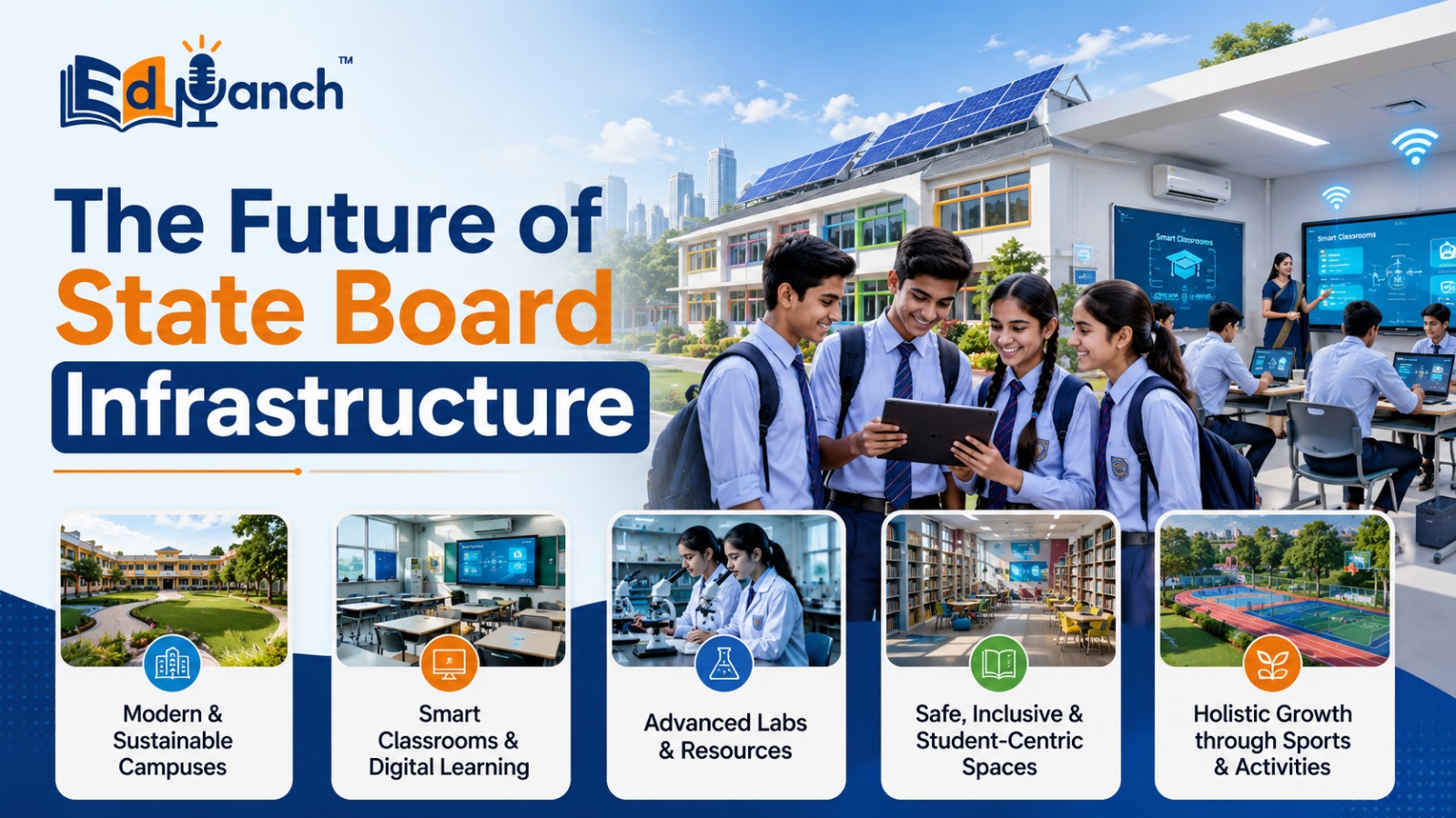
 While national debates frequently focus on central allocations and elite educational institutions, the vast majority of secondary school students in India are educated under State Boards. The day-to-day realities of these learners—ranging from classroom safety and physical lab access to digital learning tools—are dictated directly by state-level educational budgets.




INTRODUCTION
While national debates frequently focus on central allocations and elite educational institutions, the vast majority of secondary school students in India are educated under State Boards. The day-to-day realities of these learners—ranging from classroom safety and physical lab access to digital learning tools—are dictated directly by state-level educational budgets.
As the country pushes forward with the implementation of the National Education Policy (NEP), modernizing state school infrastructure has moved from an administrative goal to a primary economic necessity. However, a close comparison of state spending reveals an uneven landscape, where varying fiscal capacities shape vastly different futures for regional public education.
The Co-Funding Engine: Central Support vs. State Realities
State board school infrastructure operates on a shared funding model. While individual states manage the routine maintenance and payroll of their schools, major infrastructure upgrades are largely driven by centrally sponsored schemes like Samagra Shiksha, which receive substantial backing in central budgets.
- The Funding Split: Under standard frameworks, the central government and state governments share the financial load for school development schemes in a 60:40 ratio for most regions. For Himalayan and North-Eastern states, this split shifts to a 90:10 ratio to accommodate tighter local budgets.
- The Spending Gap: The long-term national policy target set by the NEP aims for a combined center-and-state education spending of 6% of the country's Gross Domestic Product (GDP). However, combined spending across the country sits closer to 4.1% of GDP, leaving a structural gap that impacts local state board improvements.
3 Core Drivers Transforming State Board Infrastructure
1. The Digital Divide and Broadband ExpansionThe starkest indicator of infrastructure variance across state board schools is the deployment of digital learning tools.
- The Structural Divide: Data from recent national tracking indicates highly uneven progress in upgrading school environments. Regions like Dadra & Nagar Haveli, Andhra Pradesh, Bihar, and Odisha have recorded massive gains in their basic school profiles over the past decade. In contrast, states like West Bengal and Meghalaya continue to face challenges, with school upgrade metrics lagging behind national averages.
- The Broadband Push: To establish a consistent baseline, central initiatives like the BharatNet expansion aim to provide comprehensive broadband connectivity to all government secondary schools, helping state boards introduce smart classrooms and digital language labs.
States that align their local budgets with the central PM SHRI (PM Schools for Rising India) initiative receive targeted resources to transform standard state board schools into modern model institutions. These upgrades focus on building eco-friendly campuses, installing solar panels, developing modern science laboratories, and creating safe, accessible learning environments.
3. Vocational and Skill-Centric ClassroomsWith high youth unemployment rates remaining a key challenge for educated young adults, modern educational planning emphasizes integrating vocational training early in the high school curriculum. State budgets that fund dedicated vocational workshops, mechanical labs, and digital skilling centers help their students transition more smoothly into the formal workforce.
Structural Comparison of State Budget Priorities
When looking at budget strategies, a reactive, salary-heavy model allocates the vast majority (often over 80-85%) of its education budget purely to teacher salaries and routine administrative expenses. While this approach maintains daily operations, it leaves very little capital for building new laboratories, repairing schools, or updating digital infrastructure.
A proactive, infrastructure-first blueprint structures its educational budget to balance personnel costs with dedicated capital expenditure (Capex). By actively co-funding national development schemes, these states successfully modernize their local state board schools, close the digital divide, and build future-ready learning spaces.
Key Policy Adjustments for Balanced Growth
To ensure that the future of state board infrastructure develops evenly across all regions, policy experts highlight several essential fiscal strategies:
- Enhance Budget Transparency: Implementing digitized tracking portals helps states monitor the flow of educational funds from state treasuries directly to individual district schools, reducing delays and fund underutilization.
- Decentralize Capital Spending: Empowering local school management committees to make direct spending decisions regarding minor building repairs and equipment purchases speeds up maintenance timelines.
- Focus on Equitable Resource Allocation: Directing extra state infrastructure grants specifically toward underfunded rural and semi-urban districts helps bridge regional disparities, ensuring all students gain equal access to quality learning environments.
Frequently Asked Questions (FAQs)
Q1: Why do individual state budgets matter so much for State Board school infrastructure?While the central government designs national educational frameworks, school education is a concurrent subject in India. Individual states own and manage the vast majority of government schools, meaning local state budget allocations directly determine the quality of classroom buildings, science labs, and student safety.
Q2: What is Samagra Shiksha, and how is it funded?Samagra Shiksha is an overarching, centrally sponsored scheme aimed at ensuring inclusive and equitable quality education from pre-school through Class 12. It is co-funded by the center and states, typically using a 60:40 funding ratio.
Q3: Why do some Indian states struggle to upgrade their school infrastructure despite increased funding?Many states have high mandatory overhead expenses, with the bulk of their local education budgets going toward teacher salaries and administrative costs. This leaves limited flexible capital for long-term infrastructure upgrades like smart classrooms or modern science labs.
Q4: How does the digital infrastructure divide affect State Board students?A lack of digital infrastructure in underfunded regions can widen the educational divide. Students in states with well-funded digital classrooms gain early exposure to technology and computers, while those in underfunded schools may miss out on essential digital literacy skills.
Q5: What is the long-term educational spending target set by the National Education Policy (NEP)?The National Education Policy recommends that the combined public spending of the central government and all state governments on education should reach at least 6% of the country's Gross Domestic Product (GDP).
Q6: How does the PM SHRI scheme impact standard government schools?The PM SHRI scheme provides targeted financial support to select government schools, transforming them into high-quality model institutions that showcase modern teaching methods, eco-friendly campuses, and advanced science and computer labs.
Q7: Why is vocational education becoming a major focus area in modern school budgets?With a growing youth demographic, integrating vocational education into the high school curriculum helps address the mismatch between classroom learning and the practical skills required by employers, improving overall youth employability.
Q8: What is a major cause of fund underutilization in state education departments?Fund underutilization often happens due to administrative delays in approving project blueprints, complex bureaucratic steps for releasing funds, and weak monitoring systems at the grassroots school level.
Q9: Do state educational budgets fund student welfare initiatives like the Mid-Day Meal scheme?Yes, the Mid-Day Meal scheme (now known as PM POSHAN) is a co-funded program where state budgets cover a significant portion of the cost to provide nutritious meals to primary and upper primary students.
Q10: How can decentralized spending decisions improve learning outcomes?Allowing local school committees and principals to make independent spending choices helps resolve maintenance issues quickly—such as fixing broken facilities or purchasing local library books—creating a better learning environment for students.
Which aspects of state educational budgets and infrastructure development do you think require the most attention this year?









.png)
.png)
.png)

.png)
.png)

.png)

.png)



.png)
.png)