 Friday, September 25, 2026
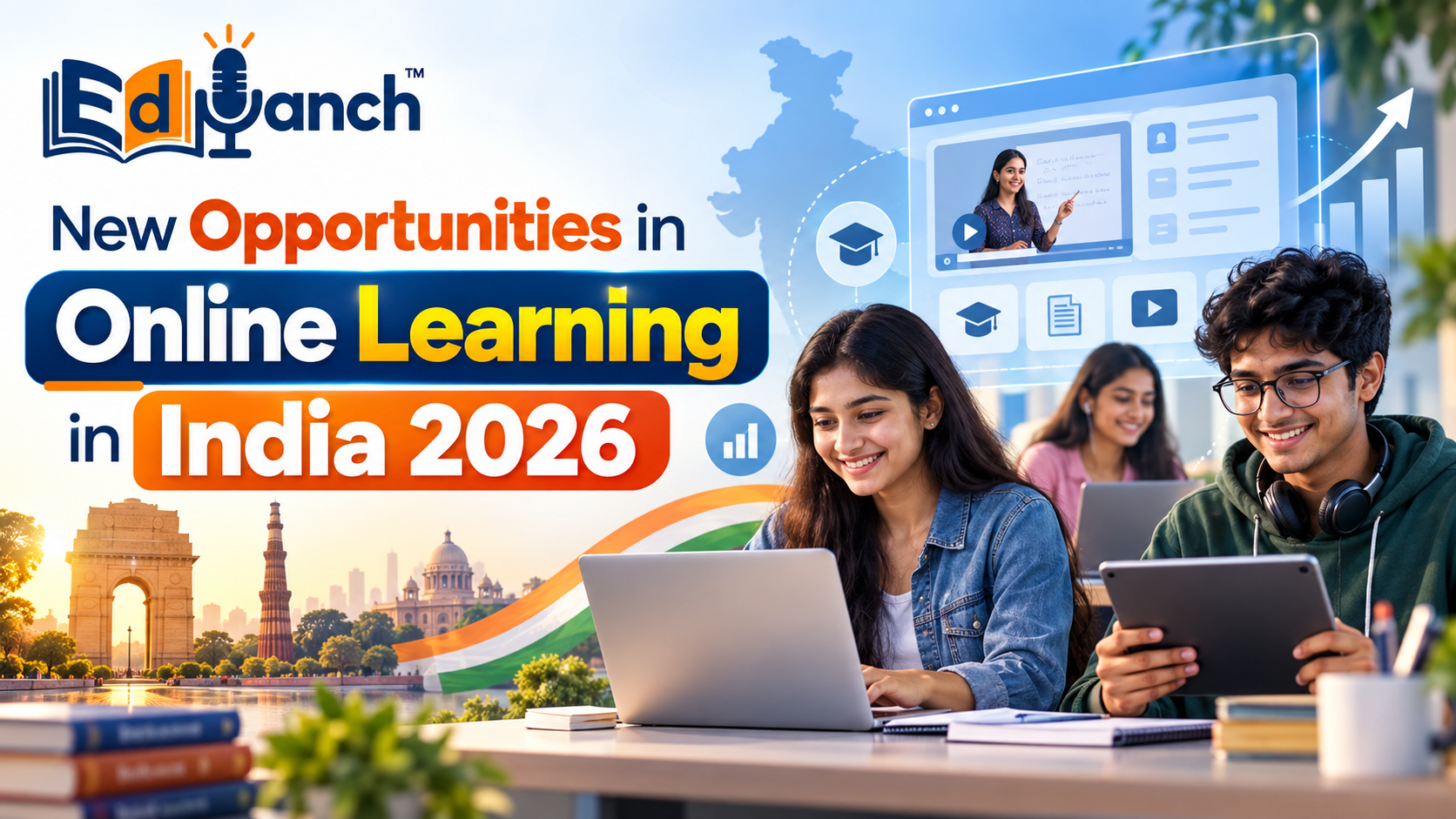
 Online learning in India is transforming education access for students, professionals, and parents through government platforms, NEP 2020 reforms, AI-driven tools, and growing employer recognition of digital credentials.





Introduction
India's approach to learning has changed profoundly over the past few years. What was once considered an alternative to traditional classroom education is now a mainstream choice for millions of students, working professionals, and lifelong learners across the country. The future of online education in India has grown by around 50 percent between 2021 and 2025, with the market projected to reach approximately five billion dollars by the financial year 2025. That number is expected to climb even further in the years ahead.
The shift is not only about numbers. It is about what online learning now makes possible. A student in a small town in Madhya Pradesh can access a course created by an IIT professor. A working mother in Pune can complete a professional certification during her lunch break. A school teacher in rural Rajasthan can earn new qualifications without leaving her classroom or her family. These are not aspirational ideas. They are realities unfolding today, driven by better internet access, smarter platforms, and a government that has placed digital education at the heart of national policy.
This article explores the new opportunities that online learning is creating in India in 2026 and what they mean for students, professionals, parents, and educators who want to make informed decisions about education.
Understanding How Online Learning Has Evolved in India
Online learning in India has a history that goes back further than most people realise. Government initiatives, distance education programmes, and early e-learning platforms existed well before 2020. However, the COVID-19 pandemic acted as the most powerful accelerator the sector had ever seen.
The COVID-19 pandemic acted as a major catalyst: emergency remote teaching forced institutions and learners to adopt online channels, which in turn accelerated product innovation in live classes, micro-learning, AI tutors, and hybrid models, while also generating greater acceptance of online learning among learners, parents, and employers.
That acceptance has not faded. If anything, it has deepened. Employers who once hesitated to recognise online credentials are increasingly valuing demonstrable skills over the name of the institution on a certificate. Universities are integrating online credits into formal degree programmes. Parents who were once sceptical are now actively helping their children enrol in digital courses to supplement school education.
India's online education market is currently valued in the low-to-mid single-digit billions of USD and is projected to grow at a rate of 11.36 percent during the period from 2025 to 2033. This is not a bubble. It reflects a fundamental realignment in how Indians are thinking about learning, skills, and career readiness.
The Government Push: Platforms and Policies That Are Opening Doors
One of the most important drivers of opportunity in online learning is the Indian government's commitment to making digital education accessible to every learner, regardless of geography, income, or institutional access.
SWAYAM, which stands for Study Webs of Active-Learning for Young Aspiring Minds, is a national online education platform launched by the Ministry of Education, Government of India. It is designed to achieve the three cardinal principles of the National Education Policy 2020, namely access, equity, and quality. Course content is developed by experts to ensure it meets national curriculum standards and uses innovative, multimedia-based pedagogy.
The scale of SWAYAM is worth pausing on. As of January 2026, SWAYAM has recorded over 5.80 crore enrolments. Additionally, 48 DTH SWAYAM Prabha channels are delivering 24-hour educational content accessible in various Indian languages. This means learners without reliable internet can still access quality education through television, making digital learning genuinely inclusive rather than just theoretically available.
The UGC has also moved decisively to integrate online learning into formal higher education. According to a July 2026 communication from the University Grants Commission, Higher Education Institutions may allow up to forty percent of the total courses offered in a particular programme in a semester through online credit courses on the SWAYAM platform. This is a landmark shift. Students enrolled in universities can now officially earn a meaningful portion of their academic credits through online courses, bringing flexibility and breadth to degrees that were previously rigid in structure.
Beyond SWAYAM, the PM eVidya programme has brought multiple digital learning resources under a unified framework. DIKSHA, a key component of PM eVidya, has over 2.00 crore registered users as of March 2026, while SATHEE, launched by the Ministry of Education in collaboration with IIT Kanpur, is a portal dedicated exclusively to higher education and entrance examination preparation.
Key Opportunities for Different Groups of Learners
Online learning does not offer the same opportunity to everyone. The real value lies in understanding how it can serve different kinds of learners in distinctly useful ways.
For School StudentsStudents from Class 9 onwards can now access thousands of courses on SWAYAM, created by some of India's finest teachers. These cover everything from standard curriculum subjects to entrance examination preparation. Platforms like DIKSHA provide interactive digital textbooks, practice resources, and assessment tools that go far beyond what a single school can offer. Students in Tier 2 and Tier 3 cities who lack access to coaching centres or specialised teachers now have a genuine alternative at their fingertips.
For College Students and Higher Education LearnersThe integration of SWAYAM credits into formal degree programmes is arguably the most significant structural change in Indian higher education in recent years. Students can now diversify their learning by taking courses from national coordinators such as UGC, NPTEL, IGNOU, IIT Madras, and AICTE, all within the framework of their existing degree. This means a commerce student can earn credits in data analysis. An arts student can study environmental science. The multidisciplinary vision of NEP 2020 is becoming a practical reality through online platforms.
For Working ProfessionalsIndia's online learning market was valued at approximately 7.67 billion dollars in 2025 and is expected to reach 21.47 billion dollars by 2031, growing at a compound annual growth rate of 18.72 percent. Programmes in artificial intelligence, digital marketing, cloud computing, cybersecurity, machine learning, and data science are among the most in demand for job seekers in 2026.
For working professionals, the most valuable aspect of online learning is the flexibility it offers. Courses can be completed in short modules, on mobile devices, during commutes or lunch breaks, or in focused evening sessions. The pressure to take career breaks for skill upgrades is diminishing because quality upskilling is now available without leaving one's current role.
For ParentsParents are increasingly becoming active participants in online education decisions rather than passive observers. The availability of free and low-cost courses on government platforms means families with limited budgets can provide their children with learning opportunities that were previously accessible only to those who could afford private coaching or urban institutions. Parents in Tier 2 cities and smaller towns are using platforms like SWAYAM and DIKSHA to supplement their children's school education without significant additional expense.
Emerging Trends Reshaping Online Learning in 2026
Several important trends are making online learning more effective, more engaging, and more career-relevant in 2026.
Artificial Intelligence and Personalised LearningAI-driven learning platforms are moving beyond static video content. They now assess a learner's pace, identify knowledge gaps, and adjust the curriculum in real time to address individual weaknesses. This kind of personalisation was once available only in expensive one-on-one tutoring. It is now built into many online platforms at no extra cost.
Micro-Learning and Mobile-First DesignResearch consistently shows that shorter, more frequent learning sessions improve long-term retention compared to marathon study blocks. Micro-learning is the format that makes this possible without requiring a complete overhaul of a working professional's schedule. Mobile-first is now the design standard, not an afterthought. For India, where smartphone penetration has driven the digital learning boom, this trend is particularly significant.
Gamification and EngagementGamification is one of the current trends in online education with the clearest and most measurable impact on completion rates. Leaderboards, achievement badges, progress streaks, and reward systems turn passive content consumption into active participation. Students on gamified platforms complete more modules, retain information longer, and report higher satisfaction. This is especially relevant for younger learners who have grown up with interactive digital experiences.
Hybrid and Blended LearningPure online education is evolving into hybrid models that combine the flexibility of digital learning with the structure of in-person engagement. Many universities and institutions are now offering programmes where online coursework is supplemented by periodic on-campus sessions, hands-on workshops, or industry mentorship. This approach addresses the valid concern that purely online learning can sometimes lack depth or peer connection.
Micro-Credentials and Stackable CertificationsThe concept of a single degree earned over three or four years is being complemented by a system of micro-credentials. These are focused, verifiable certifications in specific skills that learners can earn and accumulate over time. Employers in sectors like technology, marketing, finance, and healthcare are increasingly recognising these credentials as meaningful indicators of practical capability.
Challenges That Still Need Attention
It would be incomplete to discuss opportunities without acknowledging the challenges that remain. Digital access, while improving, is still uneven. Students in remote areas face unreliable internet connectivity that disrupts their learning experience. The quality of online courses varies considerably across platforms, and learners without guidance can waste time on programmes that offer little real value. Screen fatigue, reduced physical activity, and limited peer interaction are genuine concerns for young learners.
There is also the challenge of credibility. While attitudes are changing, many employers still prioritise traditional institutional qualifications over online certifications. This is particularly true outside the technology and digital marketing sectors. Learners need to be thoughtful about which platforms and certifications carry genuine weight in their chosen field.
Platforms like Edumanch play a useful role in helping students, parents, and professionals make sense of this complex landscape by providing clear, reliable, and regularly updated information about education opportunities, schemes, and learning trends across India.
How to Make the Most of Online Learning Opportunities
For anyone looking to benefit from the expanding world of online learning, a few practical principles apply.
- Start with a clear goal. Know whether the objective is academic credit, a professional certification, a specific skill, or general knowledge enrichment. This clarity shapes which platform and which course is the right fit.
- Prioritise recognised platforms. SWAYAM, NPTEL, Coursera, and similar established platforms offer courses with credentials that carry weight with institutions and employers.
- Check for credit transfer options. University students should verify whether SWAYAM courses in their field can be credited toward their degree under UGC regulations.
- Be consistent over intensive. Short, regular learning sessions are more effective than marathon sessions followed by long gaps.
- Complement online learning with practice. Knowledge gained online becomes valuable only when applied. Seek out projects, internships, or community initiatives where new skills can be tested in real contexts.
Conclusion
Online learning in India is no longer a backup plan or a stopgap measure. It has become a central part of how the country is building the skills, knowledge, and career readiness of its next generation. Government platforms like SWAYAM are reaching crores of learners. NEP 2020 is reshaping the structure of higher education to make online credits count. Private platforms are raising the bar on course quality, engagement, and relevance to the job market.
The opportunity is real, and it is large. The question for students, professionals, and parents is not whether online learning is worth pursuing. It is about making informed choices about where to invest time, which credentials will genuinely matter, and how to build learning habits that deliver lasting results. India's education ecosystem is changing rapidly, and those who engage with it actively and thoughtfully will be best placed to benefit.
Frequently Asked Questions
Q1: Is online learning recognised by Indian universities and employers?
Yes, increasingly so. Under UGC regulations, universities may allow students to earn up to 40 percent of their semester credits through online courses on the SWAYAM platform. Employers, particularly in technology and digital sectors, are also giving greater weight to online certifications from recognised platforms such as NPTEL, Coursera, and edX.
Q2: What are the best free online learning platforms available to Indian students in 2026?
SWAYAM is the most comprehensive free platform, offering thousands of courses from Class 9 level up to postgraduate programmes, all developed by expert faculty from India's leading institutions. DIKSHA is another government platform focused on school education. NPTEL offers high-quality courses in technical and science disciplines, many of which are free to access.
Q3: Can working professionals genuinely upskill through online learning without disrupting their jobs?
Yes. The micro-learning approach adopted by most major platforms today is designed specifically for learners who are managing full-time work alongside study. Short modules, mobile access, and flexible deadlines make it possible to build skills progressively without the need to take career breaks.
Q4: How do parents know which online course or platform is appropriate for their child?
Parents should look for platforms affiliated with or endorsed by recognised government bodies such as UGC, NCERT, or AICTE. For school-level content, SWAYAM and DIKSHA are reliable starting points. For co-curricular or enrichment learning, it is advisable to look for platforms that offer trial access, clear learning outcomes, and verifiable credentials upon completion.
Q5: What skills are most in demand through online learning for Indian job seekers in 2026?
Artificial intelligence, data science, machine learning, digital marketing, cloud computing, and cybersecurity are among the most sought-after skills. Beyond technology, online courses in communication, financial literacy, project management, and supply chain management are also seeing strong demand from employers across sectors.
Resources
- SWAYAM National Online Learning Platform (swayam.gov.in): India's official government platform offering free MOOCs from Class 9 to postgraduate level across disciplines.
- University Grants Commission (ugc.ac.in): Regulatory body overseeing the credit framework for online courses through SWAYAM for higher education institutions.
- NCERT Digital Initiatives (ncert.nic.in): National curriculum resources and digital content developed for school education under the PM eVidya initiative.
- Ministry of Education, Government of India (education.gov.in): Official source for NEP 2020 updates, PM eVidya programmes, and all national digital education policy announcements.
- NITI Aayog Education Reports (niti.gov.in): Policy research, data, and strategic direction on India's education transformation and skill development landscape.
Interlinking Keywords
Online learning India, SWAYAM courses, NEP 2020 digital education, online certifications for professionals, e-learning platforms India, micro-credentials India, UGC credit transfer online, DIKSHA platform, digital skills India 2026, online education for students India
Last reviewed by:
Dr. Manthan Tripathi, Edumanch Editorial and Education Guidance Team on September 19, 2026
Disclaimer
This article is intended for informational and educational purposes only. The information provided reflects available data and trends as of September 2026. Readers are advised to verify course details, credit transfer eligibility, and certification recognition directly with the relevant institutions, universities, or regulatory bodies before making academic or career decisions. Edumanch does not endorse any specific platform, course, or service mentioned in this article.




.png)
.png)
.png)
.png)


.png)
.png)
.png)
.png)