 Monday, November 16, 2026
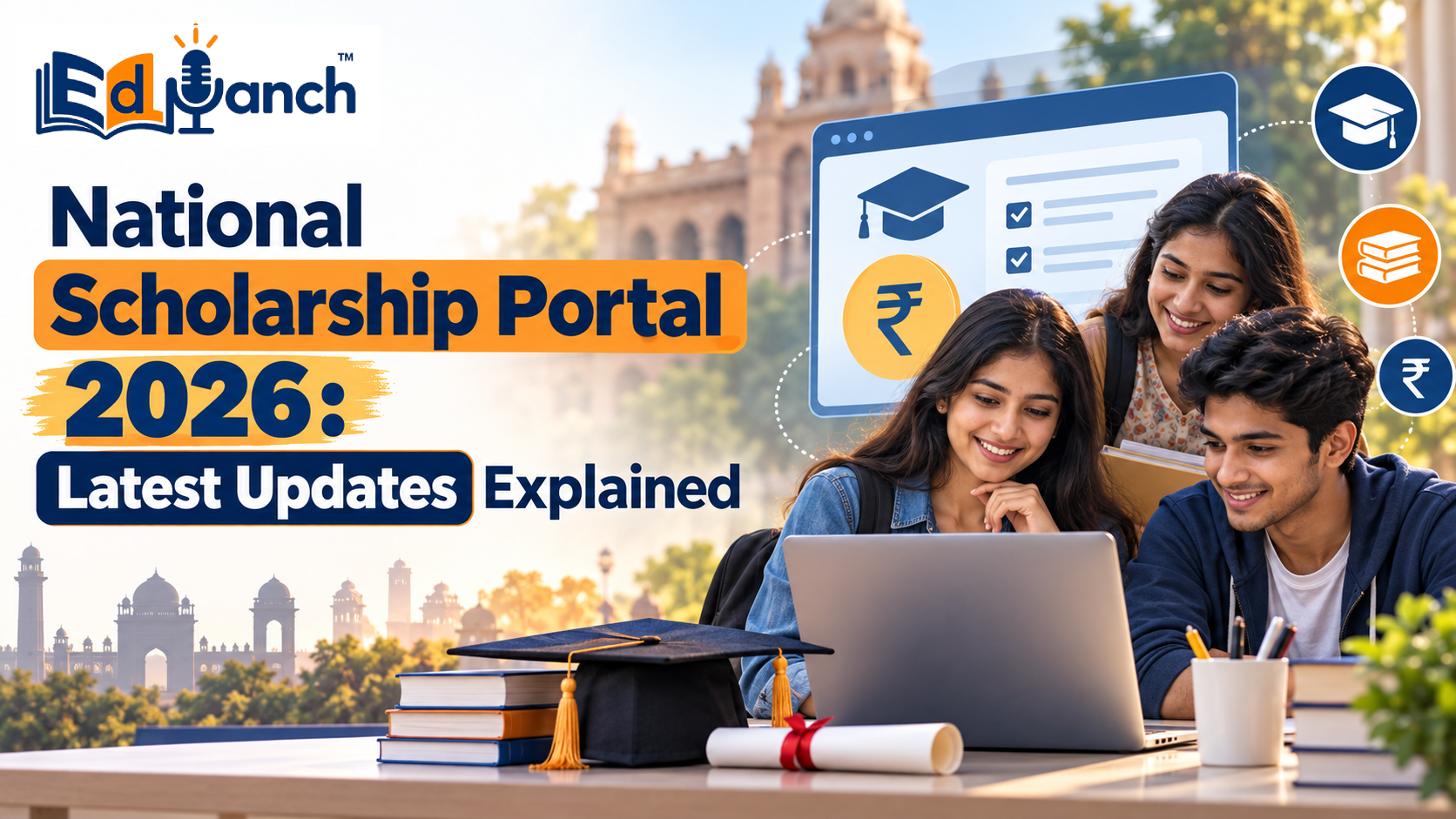
 The National Scholarship Portal centralizes India's scholarship ecosystem, offering students from all backgrounds access to government funding through a transparent, Aadhaar-linked digital application and disbursement system.





Introduction
For millions of students across India, the National Scholarship Portal is not simply a government website. It is the gateway to educational continuity, financial support, and a better future. Whether a student is from a small town in Uttar Pradesh, a tribal district in Jharkhand, or an urban neighborhood in Chennai, the NSP brings centrally funded scholarship opportunities to every corner of the country through a single digital platform.
In recent years, the portal has gone through significant upgrades in its process flow, verification systems, and scholarship categories. Understanding these changes is critical for students and parents who want to take full advantage of the opportunities available. Missing an update, submitting incorrect documents, or misunderstanding a new eligibility rule can cost a deserving student an entire year of financial aid.
This guide from Edumanch breaks down the National Scholarship Portal in plain language, covering what has changed, how the application process works, who qualifies, and what students need to do right now to stay ahead.
Understanding the National Scholarship Portal and Its Purpose
The National Scholarship Portal, commonly referred to as the NSP, was launched by the Ministry of Electronics and Information Technology under the Digital India initiative. It operates as a Mission Mode Project and is hosted at scholarships.gov.in. The primary purpose of the portal is to create a unified, transparent, and accountable system for scholarship disbursement across central government ministries and participating state governments.
Before NSP existed, students had to approach multiple departments, submit physical applications, and navigate complex bureaucratic processes just to receive scholarships they were already entitled to. The portal changed this by centralizing everything, from registration to disbursement, under one roof.
The NSP currently hosts scholarships from the Ministry of Minority Affairs, Ministry of Social Justice and Empowerment, Ministry of Tribal Affairs, Department of Empowerment of Persons with Disabilities, and several other central bodies. A growing number of state governments have also integrated their own scholarship schemes into the NSP framework, making it a truly unified scholarship ecosystem.
The introduction of Direct Benefit Transfer through the Aadhaar-linked bank account system has been one of the most impactful reforms. It eliminates intermediaries and ensures that scholarship amounts reach students directly, reducing both delays and misuse.
Key Updates to the National Scholarship Portal in 2025 and 2026
The Government of India has steadily modernized the NSP over the past two years, and several updates have directly affected how students apply, how institutions verify, and how payments are processed.
One of the most significant changes is the strengthening of the National Scholarship Portal 2.0 framework. Under this upgraded system, the portal has improved its back-end integration with the Unified District Information System for Education (UDISE), PFMS (Public Financial Management System), and Aadhaar-based authentication layers. This means scholarship disbursements are now faster and more accurately tracked than before.
The renewal process has also been simplified. Earlier, students who had received scholarships in previous years had to go through a near-identical fresh application process every year. Under the updated system, returning students can use a pre-filled renewal form that draws from their previous year's data, reducing errors and saving time.
Another key update involves the institute verification mechanism. Institutions are now required to complete verification within a stricter timeline, and those that repeatedly delay or fail verification face de-listing from the portal. This change protects students from being denied scholarships due to institutional inaction.
For Aadhaar seeding, the requirements have been tightened further. All applicants must ensure their Aadhaar number is linked to an active bank account that is operational and has not been frozen or closed. Students using Joint accounts or accounts in someone else's name may face disbursement failures, which is a common issue that Edumanch has seen students encounter repeatedly.
Eligibility Criteria: Who Can Apply Through NSP
The NSP hosts a wide range of scholarships, and eligibility varies by scheme. However, there are common threads that run across most of the major central government scholarships available on the portal.
For pre-matric scholarships, the applicant must be studying in Class 1 through Class 10 and must belong to a minority community, Scheduled Caste, Scheduled Tribe, or Other Backward Class as defined by the relevant ministry guidelines. The annual family income limit is typically set at Rs. 1 lakh for most pre-matric schemes.
For post-matric scholarships, students must have passed Class 10 and be pursuing education from Class 11 onwards, including diploma, graduation, postgraduate, and professional courses. The income ceiling for post-matric scholarships is generally Rs. 2.5 lakh per annum for SC and ST categories, though this may vary by state and scheme.
For merit-cum-means scholarships, which are typically offered under the Ministry of Minority Affairs through the National Fellowship and Scholarship Scheme, the applicant must have scored at least 50 percent in the previous qualifying examination and must meet the income criteria.
Students must also be enrolled in a recognized institution that is registered on the NSP. If an institution is not registered, students from that institution cannot apply through the portal, which is why Edumanch strongly recommends that students verify their institution's NSP registration status before initiating an application.
How to Apply on the National Scholarship Portal: A Step-by-Step Overview
Applying on the NSP requires careful attention to detail. The process can be broadly understood in the following stages.
The first stage is registration. Students who are applying for the first time must register on scholarships.gov.in using their Aadhaar number or bank account number. First-time applicants will receive an application ID and password for future logins.
The second stage is profile completion. After logging in, students must fill in their personal, academic, and banking details accurately. This includes selecting the correct domicile state, institution name, course level, and category. Any mismatch between the details entered and the documents submitted can lead to application rejection.
The third stage is scheme selection. Based on the student's eligibility, the portal automatically displays the schemes for which the student qualifies. Students should read each scheme's terms carefully before selecting the most appropriate one.
The fourth stage is document upload. Students must upload scanned copies of all required documents within the specified size and format. Common documents include the Aadhaar card, income certificate, caste certificate, previous year's marksheet, admission proof, and bank passbook.
The fifth stage is institute verification. Once the student submits the application, it goes to the institution's nodal officer for verification. Students must follow up with their school or college to ensure this step is completed within the deadline.
The sixth stage is tracking. After institute verification, the application moves to the district, state, and ministry levels for approval. Students can track their application status and payment status through their NSP login at any time.
Common Mistakes Students Make on NSP and How to Avoid Them
Based on patterns observed in previous scholarship cycles, several recurring mistakes cost students their scholarships every year.
Entering incorrect bank account details is the most common reason for disbursement failure. Students must double-check that the account number, IFSC code, and account holder name match exactly with what is in their passbook. Accounts that are dormant or frozen will also fail DBT credit.
Selecting the wrong scheme is another frequent error. Students sometimes choose schemes they are not eligible for, leading to rejection at the verification stage. Reading the eligibility criteria for each scheme before applying can prevent this.
Missing the institute verification deadline is a problem that students often have no control over unless they proactively communicate with their institution. Many students have submitted perfect applications only to lose their scholarship because their institution's nodal officer did not act in time. Students must follow up persistently and escalate to the district scholarship officer if necessary.
Submitting applications with expired or incorrectly formatted documents also results in rejections. Income certificates in particular have a validity period, and many state governments require income certificates issued within the current or immediately preceding financial year.
Scholarships Available on NSP Worth Knowing About
The NSP is home to some of India's most impactful scholarship programs. A few key schemes that students should be aware of include the following.
The Pre-Matric and Post-Matric Scholarships for SC, ST, and OBC students administered by the Ministry of Social Justice and Empowerment and the Ministry of Tribal Affairs cover a large proportion of the student population and provide both maintenance allowance and reimbursement of compulsory non-refundable fees.
The Scholarships for Top Class Education for SC Students supports meritorious SC students pursuing graduation and postgraduate courses at premier institutions listed under the scheme, including IITs, IIMs, NITs, and other centrally recognized institutions.
The National Means-cum-Merit Scholarship, administered through state government channels on NSP, targets students in Class 9 and above from economically weaker sections who have demonstrated academic merit at the Class 8 level.
The Central Sector Scheme of Scholarships for College and University Students supports students in the top 20th percentile of their Class 12 board examination who are pursuing regular courses at undergraduate and postgraduate levels.
Understanding which scheme aligns with one's background, income, course, and academic performance is the first step to a successful NSP application.
Conclusion
The National Scholarship Portal remains one of the most powerful tools the Indian government has created to democratize access to education. Its continued upgrades in 2025 and 2026 reflect a commitment to making the system faster, fairer, and more reliable for students across every socioeconomic background.
For students and parents, staying informed about NSP updates is not optional. The difference between a timely, accurate application and a delayed or rejected one can determine whether a student continues their education or is forced to pause it. Platforms like Edumanch exist precisely to bridge this information gap, translating complex government processes into clear and actionable guidance.
Students are encouraged to visit scholarships.gov.in at the start of every academic year, verify their institution's registration status, keep their documents updated, and reach out to their school or college counselors and state scholarship helplines for timely support.
Frequently Asked Questions
Q1: What is the National Scholarship Portal?
The National Scholarship Portal is a centralized digital platform launched by the Government of India to manage, process, and disburse scholarships from central ministries and participating state governments to eligible students across India. It is accessible at scholarships.gov.in.
Q2: When does the NSP application window open in 2026?
The NSP application window for the 2026 academic cycle typically opens between July and October. Students should monitor the official portal at scholarships.gov.in regularly and check for notifications from their state's scholarship department to avoid missing deadlines.
Q3: Which documents are required to apply on the NSP?
Applicants generally need an Aadhaar card, an active Aadhaar-linked bank account, an income certificate, a caste certificate where applicable, admission or enrollment proof, the previous year's marksheet, and the institution's details. Requirements may vary slightly by scheme.
Q4: How can a student check their NSP application status?
Students can log in to their NSP account at scholarships.gov.in using their application ID and date of birth. The dashboard shows the current stage of application review along with any payment updates through the PFMS tracking link.
Q5: Is Aadhaar mandatory for NSP applications?
Yes, Aadhaar is mandatory. It is the foundation of the Direct Benefit Transfer mechanism used by NSP, ensuring scholarship funds are credited directly to the student's bank account without delays or intermediaries.
Resources
- National Scholarship Portal (scholarships.gov.in): Official government portal for all central and state scholarship schemes in India.
- Ministry of Social Justice and Empowerment (socialjustice.gov.in): Source for SC, OBC, and EBC scholarship guidelines and notifications.
- Ministry of Tribal Affairs (tribal.gov.in): Administers pre-matric and post-matric scholarships for Scheduled Tribe students.
- Ministry of Minority Affairs (minorityaffairs.gov.in): Manages merit-cum-means and pre-matric and post-matric scholarships for minority community students.
- Public Financial Management System (pfms.nic.in): Used to track scholarship payment status and Direct Benefit Transfer records.
Interlinking Keywords
NSP login 2026, post-matric scholarship India, pre-matric scholarship eligibility, central government scholarships for students, scholarship renewal process NSP, Aadhaar linked scholarship DBT, state scholarship portal India, minority scholarship 2026, SC ST OBC scholarship portal, education financial aid India
Last reviewed by:
Dr. Manthan Tripathi, Edumanch Editorial and Education Guidance Team on September 12, 2026
Disclaimer:
The information provided in this article is intended for general educational and career guidance purposes only. It does not constitute professional career counselling or placement advisory services. Students are encouraged to consult with their college placement cells, career counsellors, or certified professionals for personalized guidance based on their specific academic background and career goals.