 Monday, November 16, 2026
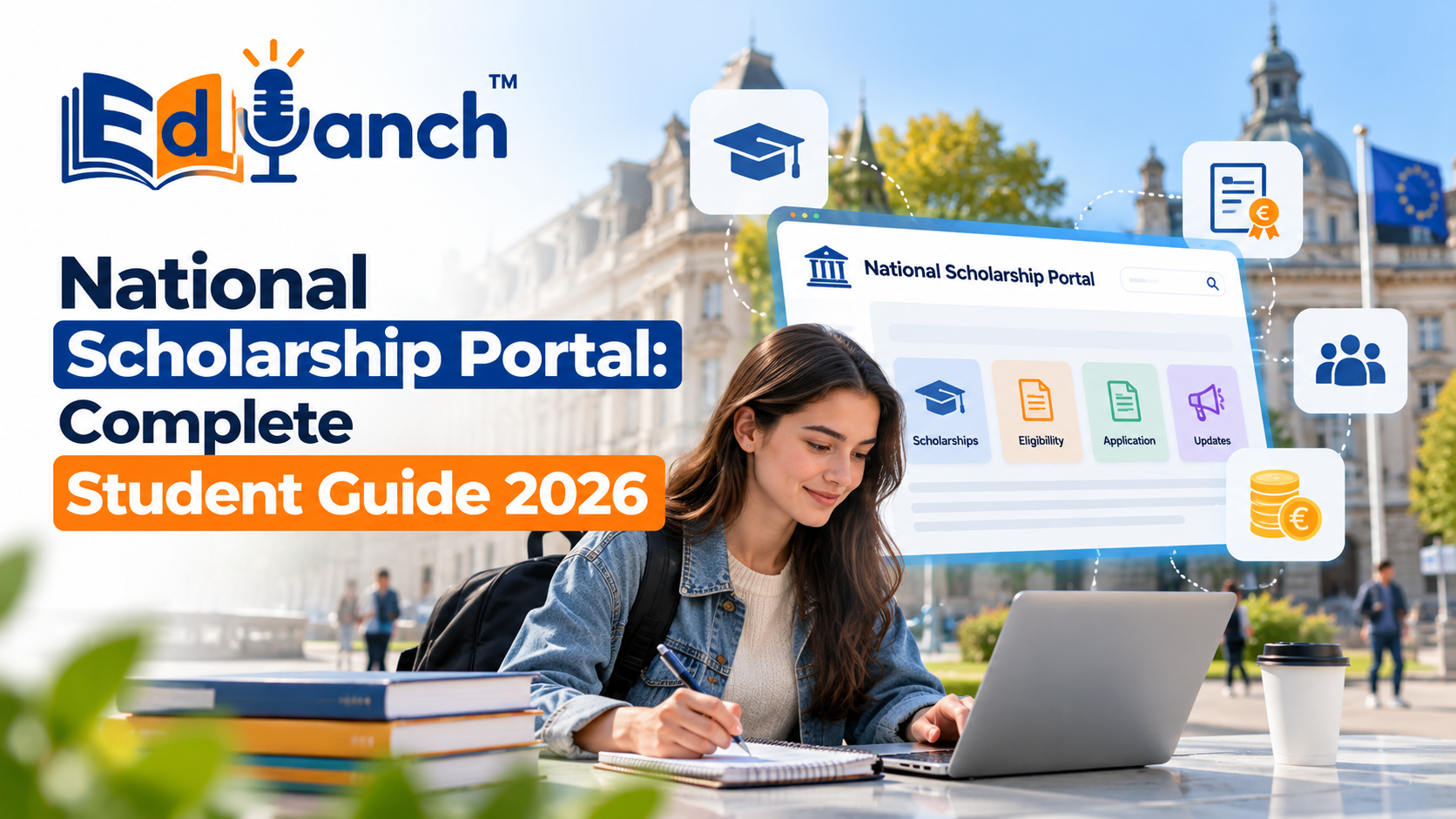
 The National Scholarship Portal centralizes hundreds of government scholarship schemes, enabling eligible Indian students from diverse communities to access financial support through a transparent and direct digital process.





Introduction
Every year, millions of students across India face a common challenge: finding reliable financial support to continue their education. The cost of higher studies, professional courses, and even secondary schooling can place immense pressure on families, especially those from economically weaker backgrounds. To address this at a national scale, the Government of India launched the National Scholarship Portal, commonly known as the NSP, as a unified digital platform that brings hundreds of scholarship schemes under one roof.
The NSP is not just a government website. It is a transformative initiative designed to make scholarship access transparent, efficient, and accessible to every eligible student regardless of geography, community, or educational level. Whether a student is in a rural village in Uttar Pradesh or a metropolitan college in Mumbai, the portal creates a level playing field by digitizing the entire scholarship lifecycle from application to disbursement.
This guide is designed to help students and parents understand everything they need to know about the National Scholarship Portal, including how it works, what scholarships are available, how to register, and how to avoid common application mistakes.
What Is the National Scholarship Portal and Why Does It Matter
The National Scholarship Portal was launched under the National e-Governance Plan of India. It serves as a one-stop destination for students to discover, apply for, and track scholarship schemes offered by central ministries, state governments, and UGC-affiliated institutions. The portal is managed by the Ministry of Electronics and Information Technology in collaboration with the National Informatics Centre.
Before the NSP existed, students had to approach multiple departments, fill physical forms, and follow up manually with institutions for scholarship disbursement. The process was slow, non-transparent, and often vulnerable to delays and errors. The NSP changed this fundamentally by creating a direct benefit transfer system where scholarship amounts are credited directly into students' bank accounts through the PFMS (Public Financial Management System).
The significance of the NSP in the Indian education context cannot be overstated. India has a vast population of students from socially and economically marginalized communities who possess the talent and ambition to pursue higher education but lack the financial resources to do so. The NSP bridges this gap by connecting deserving students with government-funded support at scale.
Types of Scholarships Available on the NSP
One of the most valuable features of the National Scholarship Portal is the sheer variety of scholarship schemes it hosts. These are broadly categorized under three major umbrellas.
The first category covers Central Sector Scholarships. These are scholarships funded and managed by central government ministries such as the Ministry of Education, Ministry of Minority Affairs, Ministry of Social Justice and Empowerment, Ministry of Tribal Affairs, and the Department of Empowerment of Persons with Disabilities. Some of the most widely applied central sector scholarships include the Pre-Matric and Post-Matric Scholarship for SC, ST, OBC, and Minority students, the National Means-Cum-Merit Scholarship (NMMSS), and the Central Sector Scheme of Scholarships for College and University Students.
The second category consists of State Scholarships. Many Indian state governments run their own scholarship programs, which are also listed and processed through the NSP. States including Uttar Pradesh, Maharashtra, Assam, Karnataka, and West Bengal have their own portal-integrated scholarship schemes tailored to their regional student populations.
The third category covers UGC and AICTE Scholarships. These are specifically designed for students pursuing higher education in universities and technical institutions. The Ishan Uday scholarship for students from the North East region and the PG Scholarship Scheme for SC and ST students are notable examples under this umbrella.
Who Can Apply: Eligibility Across Scholarship Categories
Eligibility on the NSP is not one-size-fits-all. Each scholarship scheme carries its own set of academic, financial, and community-based eligibility criteria. However, there are several broad parameters that apply across most schemes.
Students from Scheduled Caste (SC), Scheduled Tribe (ST), Other Backward Classes (OBC), and minority communities are the primary beneficiaries of most central sector scholarships. Beyond community identity, annual family income is a critical determinant. Most pre-matric and post-matric scholarships for SC and ST students require the family income to be below Rs. 2.5 lakh per year, while OBC scholarship limits are often set at Rs. 1 lakh per year. Minority scholarships under the Ministry of Minority Affairs typically require family income below Rs. 2 lakh per year.
Academic performance also plays a significant role. Merit-based scholarships such as the National Means-Cum-Merit Scholarship require students to have scored above a specified percentile in their Class 8 board examination. The Central Sector Scheme for College and University Students requires applicants to be in the top 20 percentile of their respective board in Class 12.
Students with disabilities are also specifically supported through scholarships under the Department of Empowerment of Persons with Disabilities. These schemes are inclusive and cover a wide range of educational levels from Class 9 through postgraduate study.
How to Register and Apply on the NSP: A Step-by-Step Overview
Understanding the registration and application process is essential for students who want to use the NSP effectively. The process is digital, Aadhaar-linked, and relatively straightforward once students understand the steps involved.
To begin, students must visit the official portal at scholarships.gov.in. The homepage displays all available scholarship schemes along with their deadlines, which makes it easy to identify which ones are currently accepting applications.
For new applicants, the process starts with New Registration. Students are required to enter their state of domicile, scholarship category, scheme, gender, date of birth, mobile number linked to Aadhaar, email ID, and bank account details. After OTP verification, a temporary registration ID is generated, which the student must note carefully.
After completing registration, students log in using their credentials and fill out the scholarship application form. This includes academic details, course and institution information, and uploading supporting documents. The documents typically required include an Aadhaar card copy, bank passbook or account details, income certificate, caste certificate if applicable, last year's mark sheet, and a bonafide certificate from the enrolled institution.
Once the application is submitted, it goes through a verification chain involving the educational institution, district authorities, and state nodal agencies before final approval. Students can track the status of their application directly on the portal using their application ID or registration number.
One important rule that students often miss is the renewal requirement. Scholarships on the NSP are not automatically renewed. Students who received a scholarship in the previous academic year must log in and submit a renewal application within the specified window to continue receiving support.
Common Mistakes Students Make and How to Avoid Them
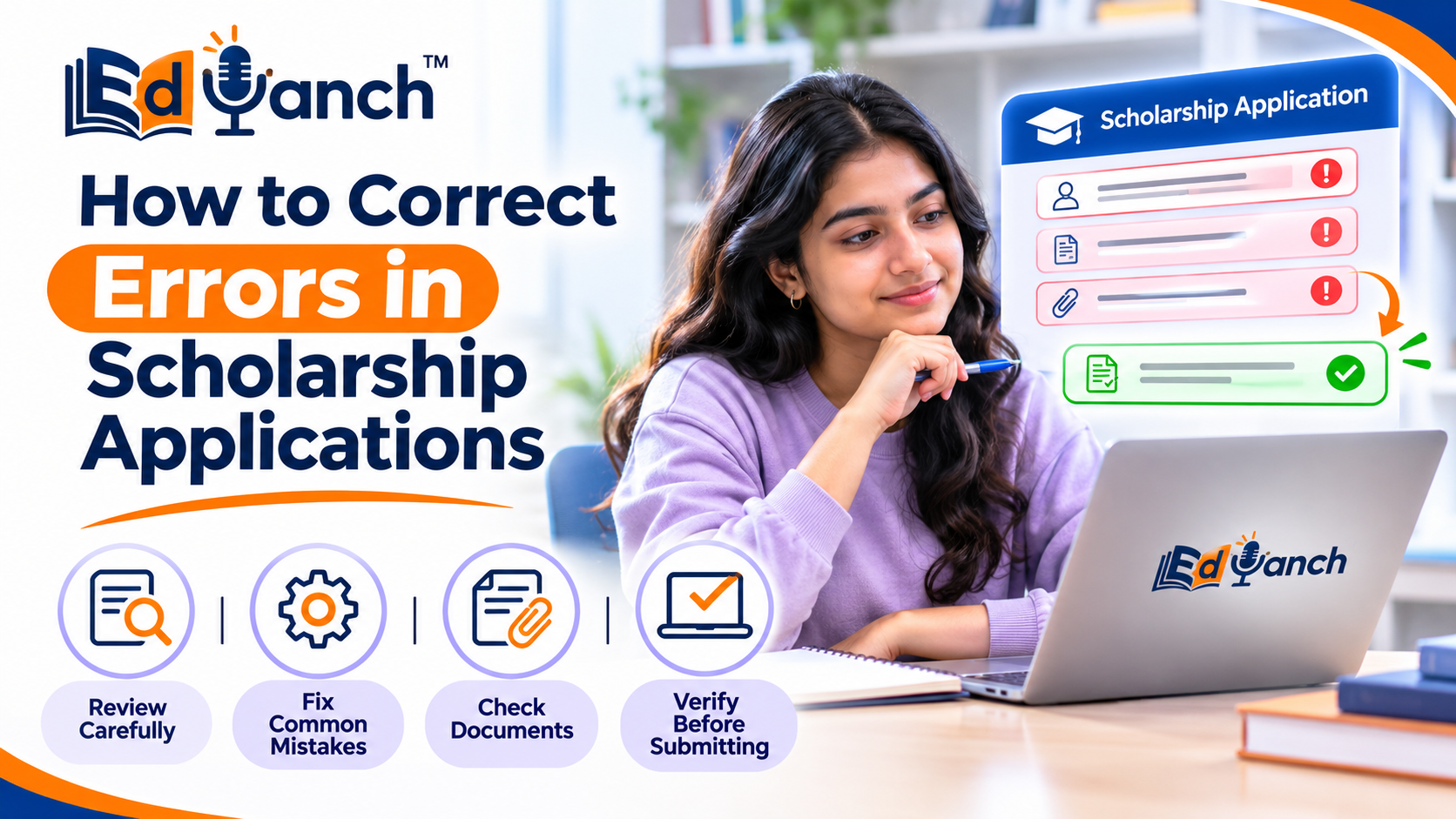
The NSP application process is digital but not always error-free, especially for first-time applicants. Several recurring mistakes end up causing rejection or delays in scholarship disbursement.
The most frequent issue is incorrect bank account details. Since disbursement happens directly through PFMS, even a single digit error in the account number or IFSC code can result in payment failure. Students must double-check and ensure the bank account is active, in their own name, and linked to Aadhaar.
Another common error is mismatched name or date of birth. The name and date of birth on the NSP application must exactly match the information on the Aadhaar card. Any mismatch causes the application to get stuck at the verification stage.
Incomplete document uploads are also a persistent problem. Many students upload blurred, cropped, or incorrectly formatted files. All documents should be in the required format, typically PDF or JPEG, and clearly readable.
Finally, missing deadlines is a significant concern. The NSP operates on strict annual timelines, and late applications are not accepted. Students and parents must track the NSP announcement calendar and submit applications well before the closing date.
How Edumanch Supports Students in Navigating Scholarship Opportunities
For students trying to make sense of the many scholarship options, deadlines, and eligibility conditions on the NSP, having a reliable education information resource makes a meaningful difference. Edumanch provides simplified, student-friendly guidance on scholarships, admission cycles, education policy updates, and financial support opportunities in India.
Rather than navigating government portals alone, students and parents can use Edumanch as a companion resource to stay updated on scholarship announcements, understand eligibility criteria in plain language, and access practical guidance on documentation and application timelines. The platform is built to make education information accessible, especially for students in Tier 2 and Tier 3 cities who may not have easy access to counselors or career guidance professionals.
Conclusion
The National Scholarship Portal stands as one of the most impactful digital education initiatives in India. By centralizing hundreds of scholarship schemes and enabling direct benefit transfer, the NSP has removed many of the traditional barriers that prevented deserving students from accessing financial support. The portal serves students from pre-matric through postgraduate levels across SC, ST, OBC, minority, and differently-abled categories, offering a genuine pathway to educational continuity regardless of financial background.
Students who approach the NSP with accurate documentation, careful attention to deadlines, and a clear understanding of their eligible scheme can benefit significantly from government scholarship support. The process is transparent, trackable, and increasingly student-friendly as the portal continues to evolve.
For Indian families navigating the complex world of education funding, the NSP is not just a government scheme. It is a genuine opportunity that, when used correctly, can make higher education a reality for students who might otherwise be left behind.
Frequently Asked Questions
Q1: What is the National Scholarship Portal?
The National Scholarship Portal (NSP) is a centralized digital platform launched by the Government of India that brings together hundreds of scholarship schemes from central ministries, state governments, and institutions like UGC and AICTE. It allows students to discover, apply for, and track scholarships through a single online interface at scholarships.gov.in.
Q2: Who is eligible to apply on the National Scholarship Portal?
Eligibility depends on the individual scholarship scheme. Generally, students from SC, ST, OBC, minority communities, economically weaker sections, and persons with disabilities studying at pre-matric, post-matric, or higher education levels are eligible. Family income limits and academic performance criteria also apply and vary by scheme.
Q3: How do students register on the National Scholarship Portal?
Students can register by visiting scholarships.gov.in and clicking on New Registration. They need to enter their state, scholarship category, date of birth, Aadhaar-linked mobile number, and bank account details. After OTP verification, a temporary registration ID is issued which is used to log in and complete the application form.
Q4: What documents are required for an NSP scholarship application?
The commonly required documents include the Aadhaar card, bank passbook or account details, income certificate issued by a competent authority, caste certificate where applicable, previous academic year mark sheet, and a bonafide certificate from the enrolled educational institution.
Q5: When does the NSP scholarship application window open each year?
The application window on the NSP typically opens between July and October each academic year. However, specific opening and closing dates vary by scheme and ministry. Students are advised to regularly check the official NSP portal and education news platforms like Edumanch for timely announcements and deadline reminders.
Resources
- National Scholarship Portal (NSP): Official government portal for scholarship discovery, application, and tracking at scholarships.gov.in
- Ministry of Education, Government of India: Policy and scheme information for central education scholarships at education.gov.in
- University Grants Commission (UGC): Details on UGC-funded scholarships for higher education students at ugc.ac.in
- Ministry of Minority Affairs: Scholarship schemes for students from minority communities at minorityaffairs.gov.in
- National Informatics Centre (NIC): Technical governance and portal management information at nic.in
Interlinking Keywords
National Scholarship Portal registration, NSP eligibility criteria, post-matric scholarship India, scholarships for SC ST students, minority scholarships India, education financial aid India, NMMSS scholarship, UGC scholarship schemes, scholarship renewal NSP, direct benefit transfer education
Last reviewed by:
Dr. Manthan Tripathi, Edumanch Editorial and Education Guidance Team on October 16, 2026.
Disclaimer
The information provided in this article is intended for general educational and informational purposes only. Scholarship eligibility criteria, application timelines, income limits, and scheme details are subject to change based on government policy updates. Students are advised to verify all details directly on the official National Scholarship Portal at scholarships.gov.in or contact the relevant ministry or state nodal agency before submitting any application. Edumanch does not represent or act on behalf of any government body.