 Monday, November 16, 2026
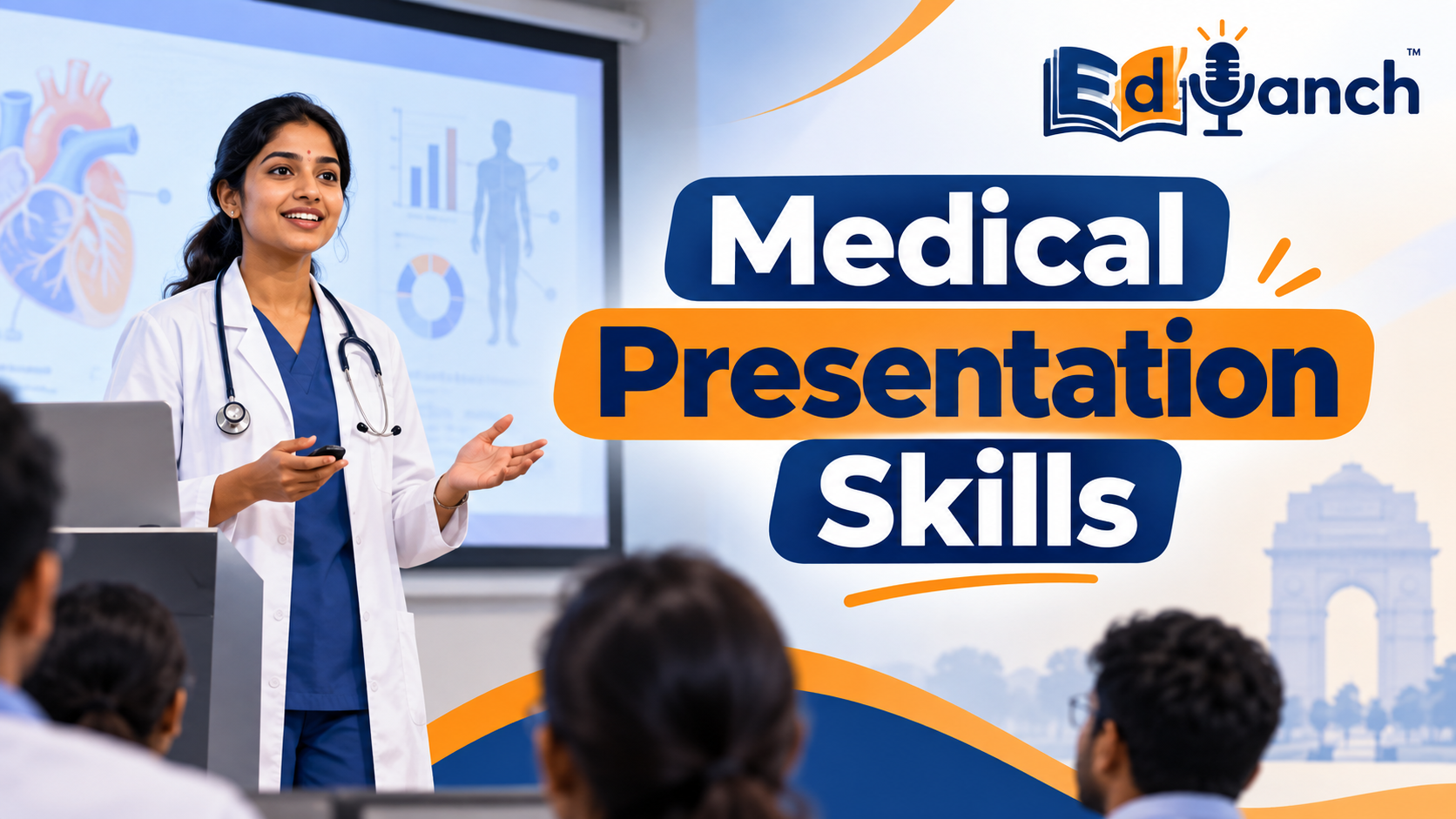
 Medical students can improve research presentations by structuring a clear message, designing simple visuals, rehearsing delivery, explaining data meaningfully, handling questions confidently, and maintaining communication at conferences, posters, and symposiums.





Introduction
You’re in the common room after a long ward day, manuscript drafts piled on a laptop, and your mentor asks: “Can you present this at the college symposium next week?” That mix of pride and panic is familiar to many Indian medical students. Presenting research—whether in a small departmental meeting, a poster session at a state conference, or an oral talk at a national symposium—can feel like a high-stakes test of both science and stagecraft.
This guide is written for you: the medical student balancing clinical hours, exams, and the push to learn research skills. We’ll walk through what presentation skills mean in a medical context, why they matter for your career, and practical, culturally relevant steps you can take to explain research with clarity and confidence. Expect concrete tips for slide design, poster presentation, public speaking, research storytelling, and conference skills that work across Indian institutions.
What it means
Presentation skills in medicine are more than speaking confidently. They combine evidence-based content, clear visuals, ethical practice, and audience-centred delivery. For a student, these skills cover a range of formats: short scientific presentations, poster presentation boards, elevator pitches at conferences, and more elaborate oral talks.
A good scientific presentation has a clear structure: context, question, methods, main results, and interpretation. But structure alone isn’t enough. Research storytelling — framing your findings as a problem solved or a question answered — makes technical details memorable. Slide design and visual clarity help your audience process statistics or images quickly; public speaking skills control pace, tone, and engagement.
Why it matters
Medical student skills in presentation are career currency. Presenting well helps you convey your ideas to supervisors, secure research positions, and succeed at conferences where networking can open training and travel opportunities. Indian students often present in internal symposia, university-level conferences, and programs like institutional research days — each encounter builds confidence and professional visibility.
Beyond career advantages, effective communication promotes patient safety and ethical practice. Being able to summarise data accurately prevents misinterpretation; understanding how to anonymise case reports and obtain approvals ensures you respect patient confidentiality and institutional rules. Good presentation skills also make teaching and peer learning more effective when you’re a demonstrator, tutor, or future resident.
Practical guidance
Plan with the audience in mindStart by asking: Who will be in the room? A faculty-heavy audience expects methodological depth; peers might prioritise clear takeaways and clinical relevance. Tailor your language accordingly. For mixed audiences, prepare a concise background that places your work in clinical context without oversimplifying the methods.
Craft a single guiding messageDecide the one sentence you want listeners to remember. It could be a finding (“Our protocol reduced average post‑op pain scores at 24 hours”) or an insight (“Routine screening identified X% of high-risk patients early”). Use this line as the spine for your talk and repeat it in the conclusion.
Structure: the simple, memorable layout
For a 10–15 minute oral talk, use: 1) Background and question (1–2 slides), 2) Methods (1–2 slides), 3) Key results (3–4 slides), 4) Interpretation and limitations (1–2 slides), 5) Takeaway and future steps (1 slide). Poster presentations differ: visuals replace spoken detail, so ensure your layout guides a viewer through the same logical steps.
Slide design that helps, not hides
- Use large, readable fonts (28+ for headings, 18–24 for body text) and high-contrast colours.
- Keep each slide to one idea; avoid dense bullet lists.
- Replace long tables with clear graphs: bar charts, line graphs, or simple infographics. Label axes and indicate sample sizes.
- Use images (clinical photos, flow diagrams) judiciously and only with appropriate consent and anonymisation.
- Have backup formats: a PDF of your slides and a copy on a USB or cloud drive. Many Indian conference venues vary in audio-visual reliability, so be prepared for projector quirks.
Designing effective posters
Think of a poster as a guided conversation. Large headings, a readable column layout, and a clear results panel help viewers skim and then engage. Lead with a bold take-home message near the top. Use numbered sections so you and a colleague can walk viewers through the story quickly.
Poster practicalities specific to India:
- Standard poster boards and sizes differ between conferences; check organisers’ rules early.
- Carry a paper or laminated one-page summary of your poster and business cards (or a simple QR code) to share contact details.
- Prepare a 60–90 second “pitch” summarising the poster for busy reviewers.
Mastering verbal delivery and public speaking
Practice aloud with friends, near peers, or mentors. Timing is everything: rehearse with a clock and aim to finish a minute early to allow for transitions or questions. If you’re nervous, use grounding techniques: slow inhalations, a brief pause before your opening sentence, and keeping hands relaxed.
Voice and pace matter more than you think. Speak slightly slower than conversational pace, enunciate key terms, and use pauses to emphasise findings. Avoid reading slides verbatim; instead, expand or contextualise the points displayed.
When English isn’t your first language, mixed language use (simple, clear English with occasional regional terms where appropriate) is acceptable so long as scientific clarity is maintained. Practise technical terms in advance to avoid stumbling when naming drugs, procedures, or statistical concepts.
Storytelling with data
Translate numbers into meaning. Instead of listing p-values, explain what the difference implies for patients or practice. Use analogies sparingly — a short comparison to a common clinical situation can help frame significance without oversimplifying.
For example, when presenting a diagnostic accuracy study, explain what a positive test means for a typical patient in your setting: “Among 100 patients with suspected X in our outpatient clinic, this test correctly identified 85 — meaning fewer unnecessary referrals.” This anchors abstract performance measures in a concrete clinical context.
Handling questions and critique
Expect constructive criticism. During Q&A, listen fully before responding. If you don’t know an answer, say so and offer to follow up — then do. For statistical questions outside your expertise, defer respectfully to statisticians or mentors and suggest where additional analyses could help.
Ethics, limitations and risks
Be transparent about limitations: sample size, single-centre design, potential biases, or missing data. Avoid overstating clinical implications; distinguish between exploratory findings and those warranting guideline changes.
Protect patient confidentiality at every step. Remove identifying details and secure necessary institutional permissions before presenting case series or photographs. When in doubt, consult your institutional ethics committee or supervisor. Legal and institutional requirements vary; this article offers general education, not legal advice.
Practical rehearsal and logistics
- Rehearse in the actual room or a similar-sized space.
- Prepare printed speaker notes with only cues and numbers, not full scripts.
- Check compatibility of your laptop with conference systems (HDMI/VGA). Bring adapters and a clicker if available.
- For online or hybrid sessions, test your camera, microphone, and internet beforehand. Keep a quiet, well-lit background and mute notifications.
Networking and conference skills
Conferences are for learning and for making connections. Prepare a short introduction about your research and career interests. When approaching seniors or potential collaborators, be concise and respectful of time. Attend sessions beyond your specialty to learn different presentation styles and broaden perspectives.
Common questions
Q&A is a skill itself. Below are some frequently asked questions students have about presenting research.
1) How long should I practice before the actual presentation?
Start rehearsals at least a week in advance if possible. Early practice identifies content gaps and gives time to refine slide design. In the final 48 hours, do 2–3 timed rehearsals, one in front of peers or mentors for feedback.
2) How many slides are appropriate for a 10-minute talk?
Aim for 7–10 slides for a 10-minute talk. Focus on clarity: fewer slides with stronger visuals beat many dense slides. Each slide should support a single point.
3) How do I present complex statistics to a non-expert audience?
Simplify without distorting. Use absolute numbers when possible (e.g., “5 of 100” instead of “5%” if context helps). Explain what measures mean briefly: sensitivity indicates how well a test finds disease, specificity how well it excludes disease. Offer to share detailed stats in supplementary slides or a follow-up email.
4) Is it OK to use templates from the internet for slides?
Yes, but choose clean, professional templates that prioritise readability. Avoid overly decorative backgrounds and animations that distract from the data.
5) Should I include raw data tables on slides?
Generally no. Present summarized or visualised data. If asked during Q&A, have raw tables in backup slides or in an appendix PDF.
6) How do I manage time during Q&A if many people want to ask questions?
Give brief, clear answers. If a question requires long discussion, offer to continue after the session or by email. When a moderator enforces limits, respect them.
7) Can I practice public speaking locally if I’m shy?
Yes. Many medical colleges run journal clubs, student seminars, and research days that are low‑pressure settings. Toastmasters clubs and university communication centres also provide structured practice in India.
8) When should I seek professional or institutional advice about presenting research?
Consult institutional research offices, ethics committees, or your supervisor if your work involves patient data, photos, or external collaborations. For legal or policy questions (data sharing agreements, intellectual property), seek dedicated institutional or legal advice.
Conclusion
Presentation skills are learnable, incremental — and essential for every medical student who wants to translate research into impact. Start small: a clear message, a few well-designed slides, and two rehearsals. Use local resources — mentors, college workshops, and peer groups — to practise public speaking and build conference skills.
Remember: clarity and honesty matter as much as polish. A well-framed limitation or a candid answer to a question often earns more respect than a glitzy slide deck packed with unverified claims. Over time, strong presentation skills will help you communicate science responsibly, advance your career, and contribute to better patient care.
Medical/Professional/Technology disclaimer
This article provides general educational guidance for medical students and does not constitute legal, institutional, or medical advice. Recommendations about presentation of research do not replace institutional policies on ethics, patient confidentiality, or legal agreements. For questions about patient consent, institutional approvals, or data sharing, consult your institutional ethics committee, research office, or a qualified legal advisor. If your presentation touches on clinical care or patient treatments, seek supervision and clinical guidance from qualified clinicians before making public claims.
FAQs
Q: What is the single best change I can make to improve my research presentation?
A: Clarify your one-sentence takeaway and build every slide and statement to support it. When you can state your central message simply, your slides and delivery follow more naturally.
Q: How do I handle a difficult question during Q&A?
A: Pause to understand the question, acknowledge its value, and answer concisely. If you don’t know, say so and offer to follow up with data or a more detailed response later.
Q: Should I include references on my slides?
A: Include 1–2 key references on a final slide or on slides where you directly cite prior work. For posters, a small references section is appropriate.
Q: How can I make my poster stand out without being flashy?
A: Use a strong, clear title; bold take-home message; clean visuals; and a logical flow. A concise, well-practised elevator pitch helps you engage judges and passersby.
Q: Is English always required at conferences?
A: Most national and many regional conferences use English, but some local events accept regional languages. Use the conference language for submissions and prepare bilingual briefings if you expect mixed-language audiences.
Q: What if the projector fails during my talk?
A: Have printed speaker notes and a PDF backup. Be ready to talk through your main points without slides and offer to send your slides to attendees afterwards.
Q: How can I improve slide design skills quickly?
A: Study well-designed scientific slides, use simple templates, practise converting tables to graphs, and ask for peer feedback focused on readability and clarity.
Q: Can I present preliminary or negative results?
A: Yes. Many venues welcome preliminary and negative findings if they are clearly described and ethical approvals are in place. Discuss with your supervisor whether the work is appropriate for the intended forum.
Interlinking keywords
["clinical rotation skills", "research methodology for medical students", "how to make conference posters", "public speaking tips for doctors", "slide design for presentations", "networking at medical conferences"]
References
[
{"name": "World Health Organization (WHO)", "url": "https://www.who.int/"},
{"name": "Indian Council of Medical Research (ICMR)", "url": "https://www.icmr.gov.in/"},
{"name": "National Medical Commission (NMC)", "url": "https://www.nmc.org.in/"},
{"name": "Ministry of Health and Family Welfare, Government of India", "url": "https://www.mohfw.gov.in/"},
{"name": "PubMed (NIH National Library of Medicine)", "url": "https://pubmed.ncbi.nlm.nih.gov/"},
{"name": "Centers for Disease Control and Prevention (CDC)", "url": "https://www.cdc.gov/"},
{"name": "NHS (National Health Service, UK)", "url": "https://www.nhs.uk/"},
{"name": "Toastmasters International", "url": "https://www.toastmasters.org/"}
]
Note: This article naturally uses the phrase "how medical students can improve research presentation skills" as a guide for searchers seeking practical, actionable advice.