 Monday, November 16, 2026
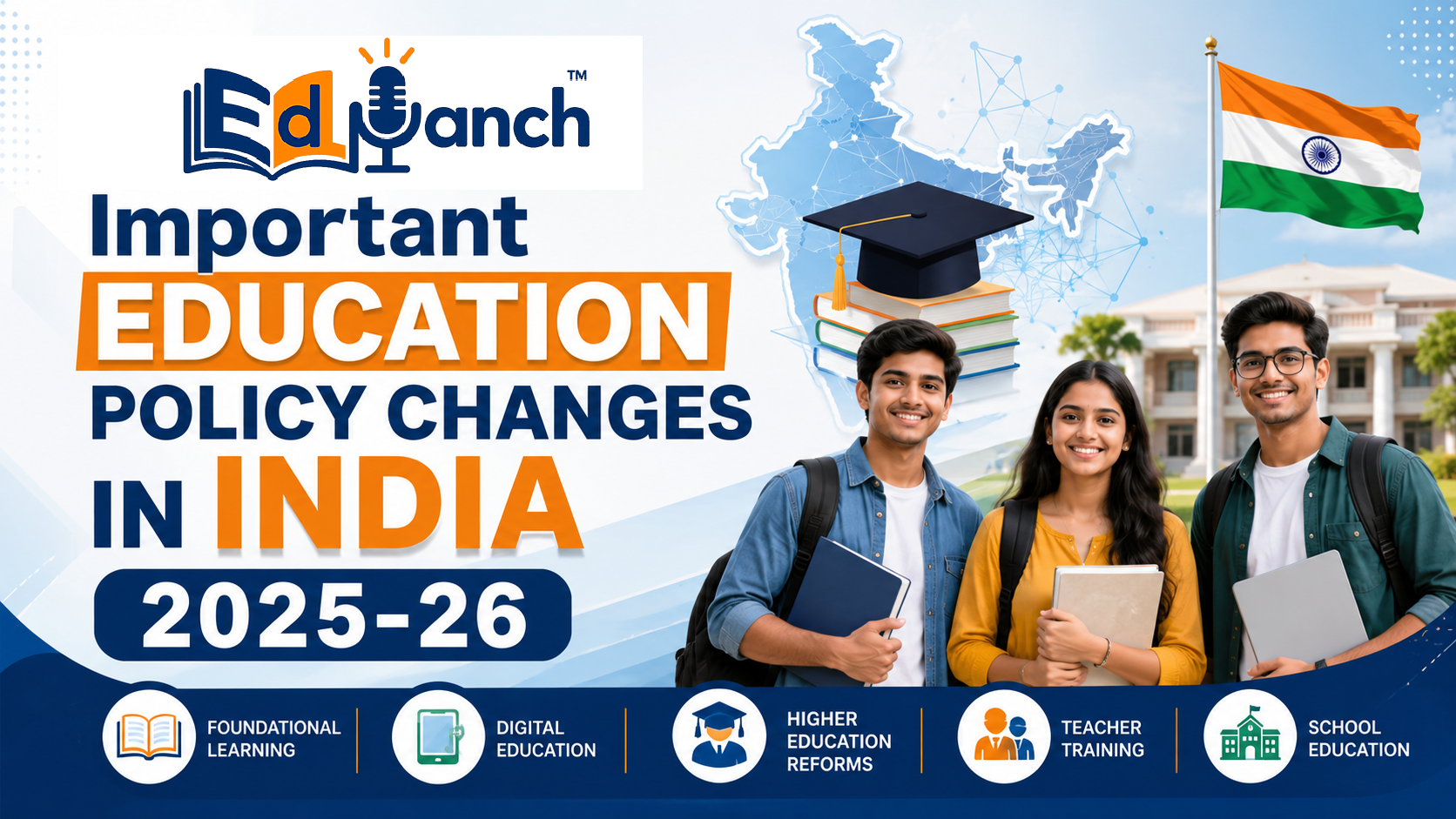
 India's 2025-26 education policy changes cover NEP implementation, revised curricula, assessment reforms, foundational literacy, vocational integration, and digital learning, reshaping how students learn and grow.





Introduction
India's education system is in the middle of one of its most significant transformations in decades. Across classrooms in Delhi, Lucknow, Chennai, and small towns in between, teachers, students, and parents are all navigating a shifting landscape shaped by the National Education Policy 2020 and its year-on-year implementation updates.
The 2025-26 academic year has brought forward fresh curriculum frameworks, revised textbooks, updated assessment norms, and a stronger push toward skill-based and holistic education. These are not minor administrative changes. They affect how children are taught, how they are assessed, which subjects they can choose, and ultimately, how well they are prepared for higher education and the workforce.
For students and parents, understanding these shifts is no longer optional. It is necessary. This article breaks down the most important education policy changes in India this year, explains what they mean in practical terms, and helps families stay informed and prepared.
The Foundation of Change: NEP 2020 and Where It Stands in 2026
The National Education Policy 2020 remains the central document guiding India's education reforms. Approved by the Union Cabinet in July 2020, it set out a sweeping vision for restructuring school and higher education over a period of years. By 2026, the country is well into the implementation phase, and the pace has picked up considerably.
The most visible structural change is the shift from the old 10+2 school system to a new 5+3+3+4 framework. This means:
- Foundational Stage covering three years of preschool and Grades 1 and 2
- Preparatory Stage covering Grades 3 to 5
- Middle Stage covering Grades 6 to 8
- Secondary Stage covering Grades 9 to 12
This structure is designed to align teaching methods and content with the actual cognitive and emotional development of children at each stage. Early years receive more play-based and activity-driven learning, while upper grades shift toward analytical thinking, multidisciplinary choices, and applied knowledge.
CBSE-affiliated schools have advanced further in adopting this framework compared to many state boards, which are still in transitional phases. However, NCERT has now released updated National Curriculum Frameworks for both the school stage and the foundational stage, providing a common direction for the entire country.
Revised Curriculum Frameworks and New Textbooks
One of the most tangible changes families will notice in 2025-26 is the release of revised NCERT textbooks and updated curriculum frameworks. NCERT has been working on new textbooks aligned with the National Curriculum Framework for School Education (NCF-SE) released in 2023, and by 2026, fresh editions are being introduced across multiple grade levels.
The revised content places a much stronger emphasis on Indian knowledge traditions, critical thinking, local context, and real-world application. The old model of loading students with dense factual content has been significantly reduced. Instead, students are expected to engage with fewer but more meaningful concepts, explore them in depth, and apply them to situations they encounter in daily life.
For parents in Tier 2 and Tier 3 cities, this shift matters a great deal. Children no longer need to rely purely on memorization to perform well. The curriculum now rewards understanding, curiosity, and the ability to reason, which opens opportunities for students from all kinds of backgrounds.
It is important for parents to verify which edition of the textbook their school is following and whether the school has updated its teaching approach alongside the new material. The textbook alone does not determine learning quality; the classroom environment and teacher preparedness matter equally.
Assessment Reforms and the End of Rote Learning
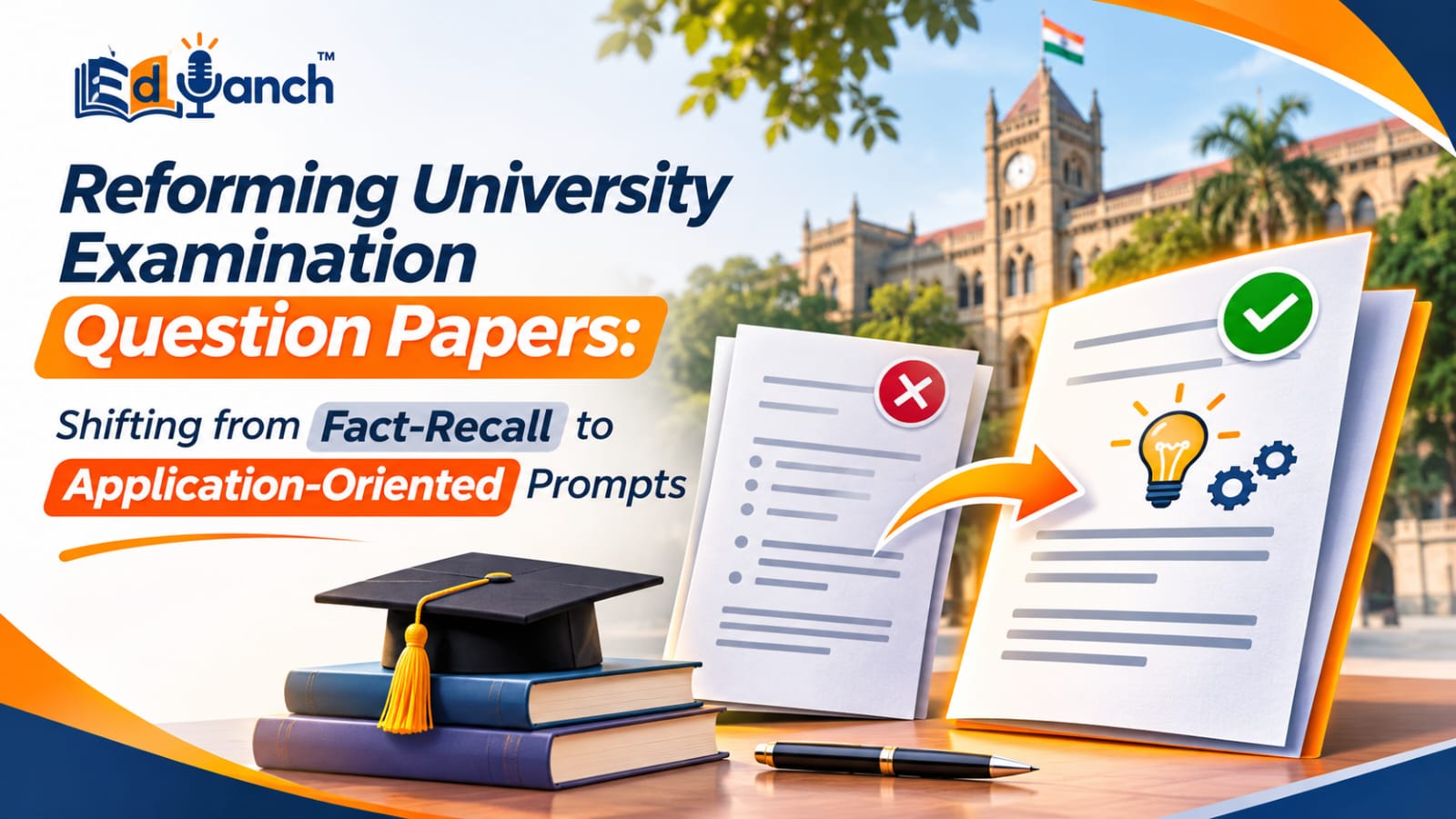
Perhaps the most discussed change under India's new education policy is the transformation of how students are assessed. For decades, the Indian examination system rewarded students who could reproduce information accurately. That model is now being deliberately dismantled.
Under the current reforms, CBSE has moved toward competency-based assessments. Board exam question papers now include more application-based, scenario-driven, and analytical questions. Students are expected to demonstrate that they understand concepts, not just that they have memorized textbook definitions.
Key changes in assessment this year include:
- Greater weightage to internal assessments, projects, and practical work across grade levels
- Competency-based questions making up a larger share of board exam papers
- The option for students to appear in Class 10 and Class 12 board exams twice a year, reducing the high-stakes pressure of a single annual exam
- Continuous formative assessments built into the school calendar rather than limited to term-end tests
For students who have grown up preparing for exams through repeated drilling and memorization, this shift requires a genuine change in how they study. For parents, it means supporting learning habits built around understanding, discussion, and application rather than last-minute revision from notes.
Foundational Literacy and Numeracy: A National Priority
The National Initiative for Proficiency in Reading with Understanding and Numeracy, widely known as NIPUN Bharat, continues to be one of the most important policy commitments in 2025-26. This initiative focuses on ensuring that every child in India achieves basic reading and arithmetic proficiency by the end of Grade 3.
Data from multiple surveys had revealed that a significant percentage of Indian children in upper primary grades could not read simple sentences or perform basic calculations. NIPUN Bharat was launched to address this foundational gap directly.
This year, states are reporting progress through structured teaching programs, teacher training initiatives, and updated learning assessments for early grades. Schools are now required to monitor and report on foundational learning outcomes, which is a meaningful shift from simply tracking attendance and examination scores.
For parents of children in preschool and lower primary grades, this is particularly relevant. Foundational literacy is not about pushing children to read early. It is about creating the right conditions for language development, number sense, and cognitive readiness through age-appropriate, play-based methods.
Vocational Education and Skill Integration from Middle School
One of the most forward-looking aspects of the new education policy is the integration of vocational and skill-based learning from the middle school level itself. Starting from Grade 6, students now have structured exposure to skill areas that were previously reserved for technical institutions or higher secondary vocational streams.
These include areas such as basic coding and computational thinking, financial literacy, design thinking, agriculture, textile work, and community service. The intent is to remove the social stigma historically attached to vocational and technical education in India and to help students discover their interests well before they must make stream-level decisions in Grade 9 or 11.
For families in smaller towns and rural areas, this is a significant policy shift. Students who may not wish to pursue the conventional science or commerce streams now have a structured pathway to explore practical skills within the mainstream school curriculum itself.
Higher Education Reforms Affecting School Graduates
The education policy changes in 2025-26 are not limited to schools. Higher education in India is also undergoing structural change, and school graduates are directly affected by what happens at the university level.
The National Credit Framework, commonly called NCrF, has been introduced to allow credit accumulation and transfer across school, vocational, and higher education levels. This means a student's performance and learning experiences in school can now carry formal academic credit into undergraduate programs, removing the sharp break between school and college that has existed for generations.
Additionally, universities operating under the new UGC framework are now implementing four-year undergraduate programs with multiple exit and entry options. Students who leave after one year receive a certificate; after two years, a diploma; after three years, a bachelor's degree; and after four years, a bachelor's with research honors. This flexibility, borrowed from global university models, gives students far more control over their own education timelines and goals.
For Class 11 and 12 students currently making decisions about college, understanding this new university structure is essential. It changes how they should evaluate course choices, institutions, and long-term academic plans.
Digital Learning Infrastructure and the National Digital Education Architecture
India's education policy in 2025-26 also reflects a serious institutional commitment to digital learning infrastructure. The National Digital Education Architecture, called NDEAR, continues to expand, and platforms such as DIKSHA, SWAYAM, and the PM eVIDYA initiative are being integrated more deeply into formal school curricula.
Teachers are being trained to use digital tools not as replacements for classroom interaction but as supplements that deepen understanding, support diverse learning speeds, and make quality content accessible to students in remote areas. Schools affiliated with CBSE are increasingly expected to have functional digital labs and to incorporate online learning resources into lesson planning.
For students and parents, this means digital literacy is no longer a bonus skill. It is a baseline expectation. Students who are comfortable navigating online learning platforms, evaluating digital content, and using technology as a research and creativity tool will have a clear advantage as they move into higher education and employment.
What Parents and Students Should Do Right Now
Understanding these policy changes at a conceptual level is only the beginning. The more important question is what families should do in response. A few practical steps are worth considering:
- Speak with the school directly and ask how NEP reforms are being implemented in the classroom, not just on paper
- Encourage children to explore subjects and activities outside their comfort zones, since the policy actively supports multidisciplinary curiosity
- Shift focus from exam scores as the only measure of progress to a broader view that includes project work, practical skills, communication, and self-confidence
- Stay updated with official information from NCERT, CBSE, and the Ministry of Education, since policy implementation details continue to evolve
- Use trusted education media platforms like Edumanch to stay informed about state-level updates, university admission changes, and new opportunities as they emerge
Education policy changes can feel overwhelming at first, especially when they affect decisions about subjects, exams, and future pathways. But families who stay informed and engage actively with their schools will be far better positioned to help their children thrive in this new environment.
Conclusion
India's education system is changing with a clarity of purpose that has not existed before. The 2025-26 academic year marks a point where the National Education Policy 2020 has moved from being a document of intent to a lived experience inside classrooms across the country. From revised textbooks and competency-based assessments to vocational integration and university credit frameworks, the reforms are comprehensive and interconnected.
For students, these changes represent genuine opportunity. The system is becoming more flexible, more practical, and more respectful of diverse talents. For parents, staying informed and engaged is the most valuable contribution they can make to their child's education journey during this transition.
Edumanch remains committed to simplifying these developments, tracking updates across states and boards, and helping every student, parent, and educator understand what is changing, why it matters, and what to do next.
Frequently Asked Questions
Q1: What are the most important education policy changes in India in 2025-26?
The most significant changes include the phased rollout of the 5+3+3+4 school structure under NEP 2020, revised NCERT curriculum frameworks, new competency-based assessments, mandatory foundational literacy programs under NIPUN Bharat, and expanded vocational education from middle school onwards.
Q2: How does the new education policy affect board exam students in India?
Board exam students now benefit from competency-based question papers that emphasize understanding and application over memorization. CBSE has also introduced the option to appear in board exams twice a year, reducing the pressure of a single high-stakes annual examination.
Q3: Is NEP 2020 fully implemented across all Indian states in 2026?
No. Implementation varies by state. CBSE-affiliated schools have progressed further, while many state boards are still in transitional phases. Full implementation is expected to unfold over several more years, with progress being tracked annually by the Ministry of Education.
Q4: What changes have been made to the school curriculum under NEP in 2025-26?
NCERT has released new National Curriculum Frameworks and is introducing revised textbooks across grade levels. The new curriculum reduces content load, increases focus on the Indian context and real-world application, and introduces greater subject flexibility, especially for students in Grades 9 to 12.
Q5: How can parents prepare their children for the new education system in India?
Parents can support their children by encouraging curiosity-driven learning, reducing reliance on rote preparation, supporting participation in extracurricular and skill-based activities, communicating regularly with the school about how reforms are being applied, and using reliable education platforms to stay informed.
Resources
- Ministry of Education, Government of India (education.gov.in): Official source for all NEP 2020 policy documents, implementation updates, and national education announcements
- NCERT (ncert.nic.in): National Council of Educational Research and Training, publisher of revised curriculum frameworks and new textbooks under NEP
- CBSE (cbse.gov.in): Central Board of Secondary Education, source for updated examination guidelines, competency-based assessment frameworks, and school circulars
- UGC (ugc.ac.in): University Grants Commission, responsible for higher education reforms including the National Credit Framework and four-year undergraduate program guidelines
- DIKSHA (diksha.gov.in): National digital learning platform offering curriculum-aligned content for students and teachers across states and boards
INTERLINKING KEYWORDS
NEP 2020 implementation, national curriculum framework, CBSE assessment reforms, NIPUN Bharat, foundational literacy India, vocational education policy, NCERT new textbooks, competency-based education, National Credit Framework, higher education reforms India, digital learning India, education news India
Last reviewed by:
Edumanch Editorial and Education Guidance Team on August 29, 2026
DISCLAIMER
The information provided in this article is intended for general awareness and educational purposes only. While every effort has been made to ensure accuracy at the time of writing, education policies and their implementation details are subject to change by government bodies and regulatory authorities. Readers are advised to verify the latest updates directly from official sources such as the Ministry of Education, NCERT, CBSE, and their respective state education departments before making any academic or institutional decisions.