 Monday, November 16, 2026
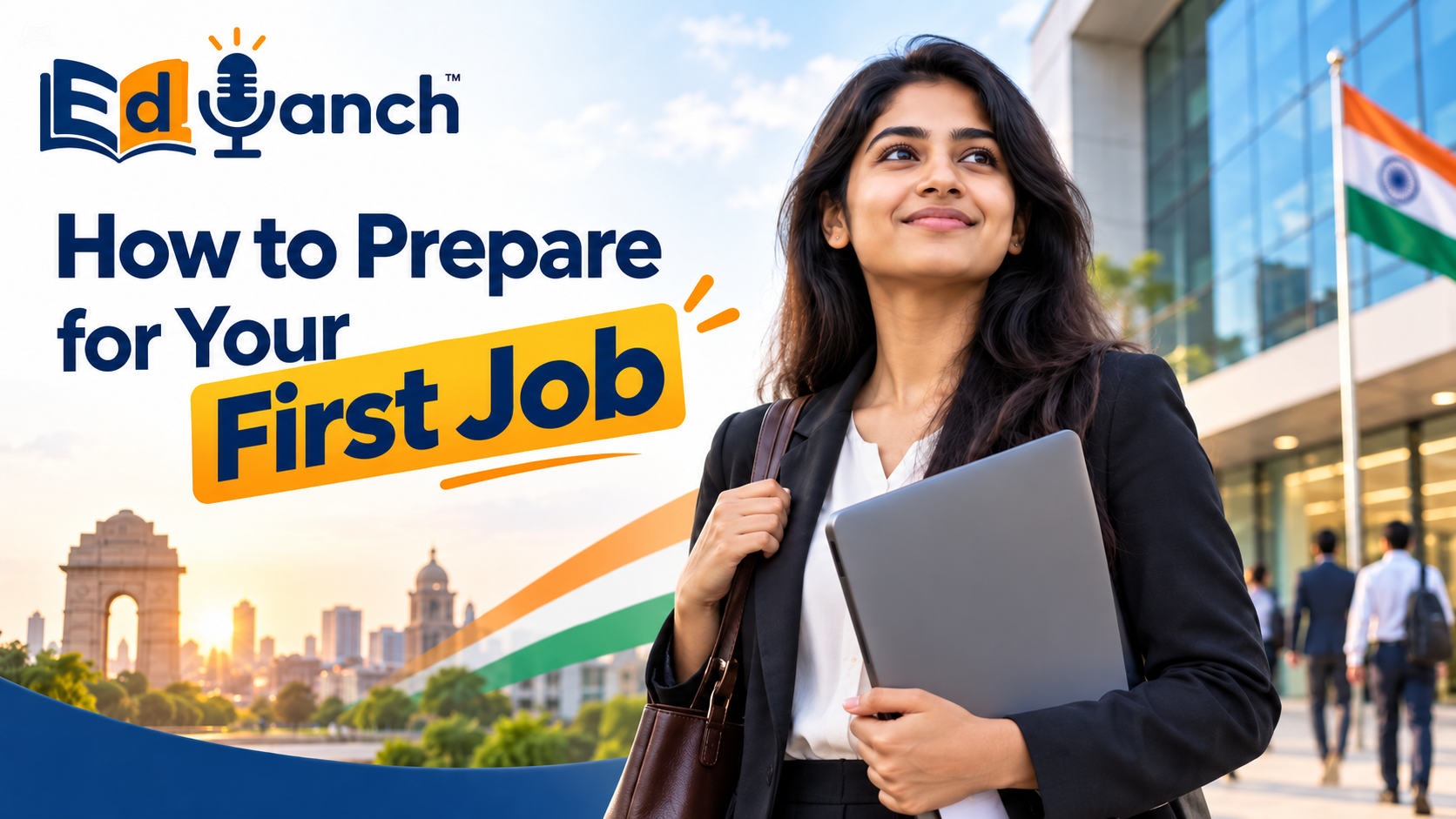
 This guide helps Indian freshers prepare for their first job through self-assessment, skill building, resume writing, interview preparation, and developing a professional mindset for workplace success.





Introduction
For millions of students across India, stepping into the working world for the first time is one of the most defining moments of their lives. Whether someone is a recent graduate from a tier-1 college in Mumbai or a fresher from a state university in Patna, the transition from classroom to workplace is rarely simple. The excitement of landing a first job is often accompanied by nervousness, self-doubt, and a long list of unanswered questions.
What does an employer actually expect on day one? How does a fresher with no formal work history write a resume that stands out? How should a young professional behave in a workplace setting? These are questions that most academic institutions do not answer clearly enough, leaving many freshers to figure things out on their own.
This guide is built specifically for Indian students and freshers who are either preparing to enter the job market or have recently received their first offer. It covers everything from understanding what employers look for to building skills, preparing documents, and developing the professional mindset that makes a lasting impression.
Understanding What the First Job Actually Means
Before diving into preparation steps, it is important to understand what a first job represents and what it does not represent. Many freshers in India make the mistake of treating their first job as the final destination rather than the first step in a long journey.
An entry-level position is designed to introduce a person to professional life. It is where theoretical knowledge gets tested against real-world situations. It is where soft skills matter as much as technical knowledge. Indian employers, particularly in sectors like IT, banking, manufacturing, and retail, consistently report that freshers who succeed are not always the ones with the highest grades. They are the ones who adapt quickly, communicate clearly, and demonstrate a genuine willingness to grow.
It is equally important for freshers to understand that a first job may not always align perfectly with their dream career. Many of India's most successful professionals today began in roles that were far removed from their eventual areas of expertise. The first job teaches patience, discipline, and the value of building credibility from the ground up.
Identifying Your Strengths and the Right Career Direction
One of the first and most important steps in preparing for a first job is honest self-assessment. This means taking time to identify personal strengths, areas of interest, and transferable skills developed through education, projects, internships, or even social activities.
A student who led a college cultural committee has demonstrated leadership, event management, and team coordination. A student who completed an online certification in data analysis has a tangible skill to offer. A fresher who volunteered with an NGO during college has shown initiative and social responsibility. These experiences matter, even when they do not come in the form of formal employment.
In India, the National Skill Development Corporation (NSDC) and platforms supported by the Ministry of Skill Development and Entrepreneurship have created structured pathways for skill identification and enhancement. Freshers can explore these resources to understand which skills are in demand across industries and which certifications carry weight with employers.
Choosing the Right Industry and Job RoleIndia's job market in 2026 is diverse and evolving rapidly. Sectors such as technology, financial services, healthcare, logistics, e-commerce, and green energy are actively hiring freshers with the right attitude and foundational knowledge. It is important to research industries of interest before applying broadly and randomly.
Freshers should study job descriptions carefully. Recurring skill requirements across multiple job listings in a preferred sector reveal what employers value most. This helps in creating a focused preparation plan rather than a generic one.
Building Skills Before the First Job
The gap between college and the first job, even if it is only a few weeks, is an opportunity that many freshers underutilize. This period can be used productively to build skills that increase employability and confidence.
The most universally valued skills across Indian employers include:
- Professional communication in English and regional languages, both written and spoken
- Basic proficiency in tools such as Microsoft Office, Google Workspace, and industry-specific software
- Data interpretation and analytical thinking
- Time management and task prioritization
- Problem-solving under pressure
Beyond technical skills, employers consistently look for what is broadly called "professional behavior." This includes punctuality, the ability to receive feedback graciously, the discipline to meet deadlines, and the maturity to work respectfully with colleagues from different backgrounds.
Online learning platforms like Coursera, LinkedIn Learning, NPTEL (which is supported by IITs and IISc), and government-backed initiatives like SWAYAM offer free or affordable courses that can meaningfully strengthen a fresher's profile. Completing a recognized short course and listing it on a resume demonstrates initiative and a learning orientation that employers across India actively appreciate.
Writing a Resume and Cover Letter That Reflects Real Value
A resume for a first job in India does not need to be long. It needs to be honest, organized, and specific. Many freshers make the mistake of either leaving the resume too thin or padding it with vague statements that add no real information.
The resume should begin with a brief professional summary that captures who the candidate is, what they have studied, and what they are looking for. This is followed by educational qualifications, relevant skills, academic projects, internships or training programs, certifications, and extracurricular achievements.
Academic projects deserve more attention than most freshers give them. If a student completed a final-year project on supply chain optimization, a dissertation on consumer behavior, or a lab project on machine learning applications, these represent real intellectual work. Describing the objective, approach, and outcome of such projects in the resume gives employers a concrete sense of what the candidate can do.
Tailoring Every ApplicationOne of the most common and costly mistakes freshers make is sending the same resume to every employer. Indian recruiters and hiring managers can immediately identify a generic application. Tailoring the resume and cover letter to each job posting, by mirroring language used in the job description and highlighting the most relevant skills and experiences, significantly increases the chances of being shortlisted.
The cover letter, even in India where it is sometimes treated as optional, is a powerful tool. It gives the fresher a chance to explain why they are applying for this specific role at this specific organization, and how their background connects to what the employer needs.
Preparing for Job Interviews as a Fresher
The interview is where many freshers lose opportunities that their resumes helped them earn. Interview preparation is not just about memorizing answers to common questions. It is about developing the ability to think clearly under mild pressure, communicate with confidence, and demonstrate genuine interest in the role and organization.
Freshers should research the company thoroughly before any interview. This includes understanding what the company does, who its clients or customers are, what its recent achievements or news have been, and what values it publicly stands for. Employers are consistently impressed by candidates who demonstrate that they took the organization seriously enough to prepare.
Common interview questions for freshers in India include questions about strengths and weaknesses, reasons for choosing a particular career path, academic achievements, challenges faced during college, and situational questions that test problem-solving ability. Practicing answers aloud, ideally with a friend or mentor, is far more effective than writing answers down and reading them silently.
Body language, eye contact, and a calm tone of voice matter significantly in interviews. Dressing appropriately for the industry and arriving on time, or slightly early, reflects professionalism that recruiters notice and remember.
Developing a Professional Mindset Before Day One
Getting a job offer is one achievement. Performing well in the first few weeks is another, and the latter is far more important for long-term career growth. Many freshers underestimate how different the workplace environment is from college. The social dynamics, expectations around time, communication norms, and accountability structures are all fundamentally different.
Before joining, freshers should mentally prepare to be observers first and contributors second. Entering a new workplace with the intention to learn before forming opinions helps in understanding the culture, identifying key relationships, and earning the trust of managers and colleagues gradually.
It is also important to set realistic expectations. The first job may not come with exciting projects from day one. Many entry-level roles in India involve repetitive, foundational tasks. Approaching these tasks with sincerity and attention to detail is what builds a reputation over time.
Networking and Relationship Building at WorkProfessional relationships are one of the most undervalued assets in a first job. Freshers who take the time to build genuine, respectful relationships with colleagues, mentors, and managers tend to progress faster than those who remain isolated or focus only on assigned tasks.
In India, many career opportunities come through referrals and professional networks. Starting to build those networks from day one of the first job is a long-term investment that pays dividends well into the future.
Leveraging Platforms and Resources Available in India
India's career preparation ecosystem has grown significantly. Beyond traditional placement cells in colleges, freshers today have access to a wide range of tools and platforms designed to support their job search and preparation.
Job platforms like Naukri.com, LinkedIn, Internshala, and Shine.com allow freshers to explore entry-level opportunities, set up job alerts, and research industry trends. LinkedIn in particular is increasingly important for building a visible professional identity and connecting with recruiters and industry professionals.
Government programs such as the National Apprenticeship Promotion Scheme (NAPS) and initiatives under the National Career Service (NCS) portal provide structured pathways for freshers to gain on-the-job training and connect with employers looking specifically for entry-level talent.
Conclusion
Preparing for a first job in India is as much about mindset as it is about skills and documents. Freshers who approach this transition with clarity, discipline, and a genuine desire to learn are the ones who tend to build strong early careers. The journey begins with honest self-assessment, moves through deliberate skill building, careful resume preparation, and thorough interview practice, and ultimately depends on the professional values a fresher demonstrates once they walk through the door on the first day.
Platforms like Edumanch are committed to helping students and freshers navigate these transitions with reliable, practical, and India-specific guidance. Education does not end with a degree; career readiness is the next chapter, and it begins with the right preparation.
Frequently Asked Questions
Q1: How should a fresher prepare for their first job in India?
A fresher should start by identifying relevant skills, building a focused resume, researching target companies, preparing for interviews, and developing professional habits before joining. Using platforms like SWAYAM or LinkedIn Learning for skill development is a practical starting point.
Q2: What skills are most important for a first job?
Communication, time management, teamwork, basic digital proficiency, and a learning mindset are the skills employers value most in first-time job seekers across industries in India.
Q3: How do I write a resume with no work experience?
Highlight academic projects, internships or training programs, certifications, extracurricular roles, and volunteer work. Be specific about what was done and what was achieved in each experience rather than using vague or general descriptions.
Q4: Is an internship necessary before the first job?
An internship is not always mandatory but provides a significant advantage. It builds real-world confidence, adds practical context to academic knowledge, and makes a resume more competitive when applying for entry-level roles.
Q5: What mistakes should freshers avoid when starting their first job?
Freshers should avoid overconfidence, resistance to feedback, poor communication habits, and forming strong opinions about workplace culture too quickly. Listening, observing, and building trust gradually are far more effective approaches in the early weeks.
Resources
- National Skill Development Corporation (NSDC): Offers skill development programs, certification pathways, and industry-linked training for Indian freshers and students.
- SWAYAM (Study Webs of Active Learning for Young Aspiring Minds): A Government of India initiative offering free online courses from IITs, IIMs, and central universities to support academic and career growth.
- National Career Service (NCS) Portal: Operated by the Ministry of Labour and Employment, this platform connects job seekers with employers and provides career counseling resources.
- LinkedIn Learning: A globally recognized online learning platform with courses on professional skills, industry tools, and career development relevant to Indian job seekers.
- Internshala: An India-focused platform offering internships, entry-level jobs, and skill-building courses designed specifically for students and freshers.
Interlinking Keywords
first job tips for freshers, entry level jobs in India, resume writing for students, interview preparation guide, career readiness for students, skill development India, NSDC courses, job search platforms India
Last reviewed by:
Edumanch Editorial and Education Guidance Team on September 4, 2026
Disclaimer:
The information provided in this article is intended for general guidance and informational purposes only. It does not constitute professional career counseling or legal employment advice. Readers are encouraged to verify current job market conditions, platform availability, and government scheme details directly with the respective authorities or career professionals before making career decisions.