 Monday, November 16, 2026
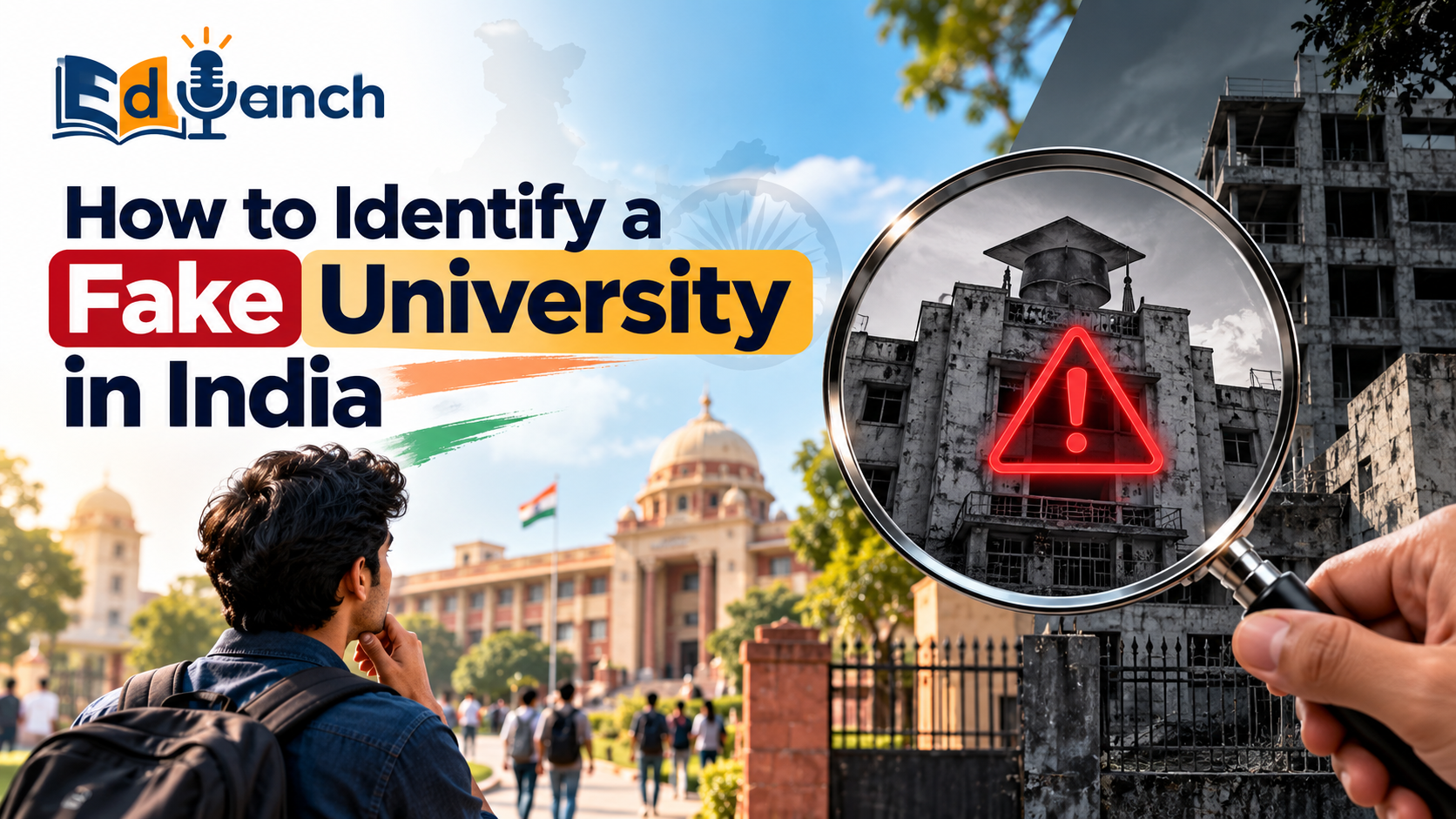
 Fake universities in India defraud thousands of students annually. This guide explains how to verify institutional recognition, spot fraud indicators, and make safe, informed admission decisions using official sources.





How to Identify a Fake University in India: A Complete Guide for Students and Parents
Introduction
Every year, thousands of Indian students make one of the most consequential decisions of their lives: choosing a university. For many families, this choice represents years of savings, aspirations, and hard work. Yet a deeply troubling reality continues to shadow India's education landscape. Fake universities, also called self-styled institutions or derecognized bodies, continue to operate across the country, collecting fees, issuing worthless degrees, and destroying futures.
The University Grants Commission (UGC) regularly publishes and updates a list of fake universities operating in India. As of recent years, this list has included more than 20 such institutions spread across multiple states. The actual number of fraudulent or unrecognized educational entities operating across India, however, is believed to be significantly higher. Many of these institutions target students from smaller towns and rural areas who may not have easy access to reliable verification resources.
The consequences of enrolling in a fake university are severe. Degrees issued by such institutions carry no legal or academic value. Students find themselves disqualified from government jobs, postgraduate admissions, professional licensing exams, and even private sector recruitment. Understanding how to verify a university before applying is not optional. It is essential.
Understanding Fake Universities and How They Operate
A fake university in India typically presents itself as a legitimate institution. It may have a professional-looking website, an attractive campus or rented office space, and printed brochures that mimic those of real universities. Some even conduct admission ceremonies, issue identity cards, and hold convocations. The deception can be convincing, especially for first-generation college students or families unfamiliar with the higher education system.
These institutions often claim to be "deemed" universities, "autonomous" bodies, or affiliated with foreign or international accrediting agencies that have no standing in India. Some use names that closely resemble those of legitimate and well-known universities to cause deliberate confusion. Others claim affiliation with the UGC, the Association of Indian Universities, or the Ministry of Education without any such recognition actually existing.
There are several common patterns worth understanding:
- Unrecognized institutions frequently use the word "University" or "Vishwavidyalaya" in their names despite having no authority to do so under the UGC Act of 1956.
- They often offer degrees in unusual or in-demand fields at unrealistically low fees or in shortened timeframes.
- Many operate primarily online or through postal correspondence, with no verifiable physical infrastructure.
- Some claim recognition from state governments even when no such notification exists in official state gazettes.
Red Flags Every Student and Parent Must Watch For
Identifying a fake university becomes significantly easier once a person knows what signs to look for. The following indicators should immediately prompt closer scrutiny.
The first and most important red flag is an institution that cannot be found on the official UGC website. The UGC maintains a regularly updated list of universities approved to operate in India, as well as a separate list of fake universities. If a university's name does not appear on the approved list or appears on the fake list, no further consideration is warranted.
Another major warning sign is unrealistic promises. Legitimate universities do not offer guaranteed placements, degrees within one year for multi-year courses, or credits for "life experience" that bypass coursework. If an institution is making such claims, it is operating outside the norms of accredited education.
Vague or unverifiable affiliations are equally concerning. Any institution that claims affiliation with a foreign body, a global accrediting agency, or a domestic organization without providing verifiable documentation should be treated with serious suspicion. A simple online search of the claimed affiliating or accrediting body will often reveal whether it is legitimate.
Poor digital presence, broken website links, missing faculty profiles, absent contact information, and lack of a proper grievance redressal mechanism are also telling signs. Genuine universities have transparent governance structures and publicly accessible information about their leadership, academic programs, faculty, and regulatory status.
How to Verify a University Before Applying
Verification is a straightforward process when a student or parent knows where to look and what to check. The following steps provide a reliable framework for confirming whether a university is genuine.
The first step is to visit the official UGC website at ugc.ac.in and use the "List of Universities" feature. This database allows users to search for universities by name and state. The UGC also publishes a separate list titled "Fake Universities" that is updated periodically. Checking both lists is advisable.
The second step involves verifying affiliation or recognition through the relevant state government. In India, state universities are established by state legislature acts. A genuine state university will have a corresponding government gazette notification that can be accessed through the state education department or the legislative assembly records.
For central universities, deemed universities, and institutions of national importance, verification should be done through the Ministry of Education at education.gov.in. All such institutions are specifically notified in the Gazette of India, and these notifications are publicly accessible.
Students applying to professional courses must also check recognition from the relevant statutory regulatory body:
- Medical degrees: National Medical Commission (nmc.org.in)
- Engineering degrees: All India Council for Technical Education (aicte-india.org)
- Legal degrees: Bar Council of India (barcouncilofindia.org)
- Pharmacy degrees: Pharmacy Council of India (pci.nic.in)
- Nursing degrees: Indian Nursing Council (indiannursingcouncil.org)
Cross-referencing the institution's claims against these official regulatory bodies takes only a few minutes and can prevent years of academic and professional loss.
The Role of UGC and Regulatory Bodies in Protecting Students
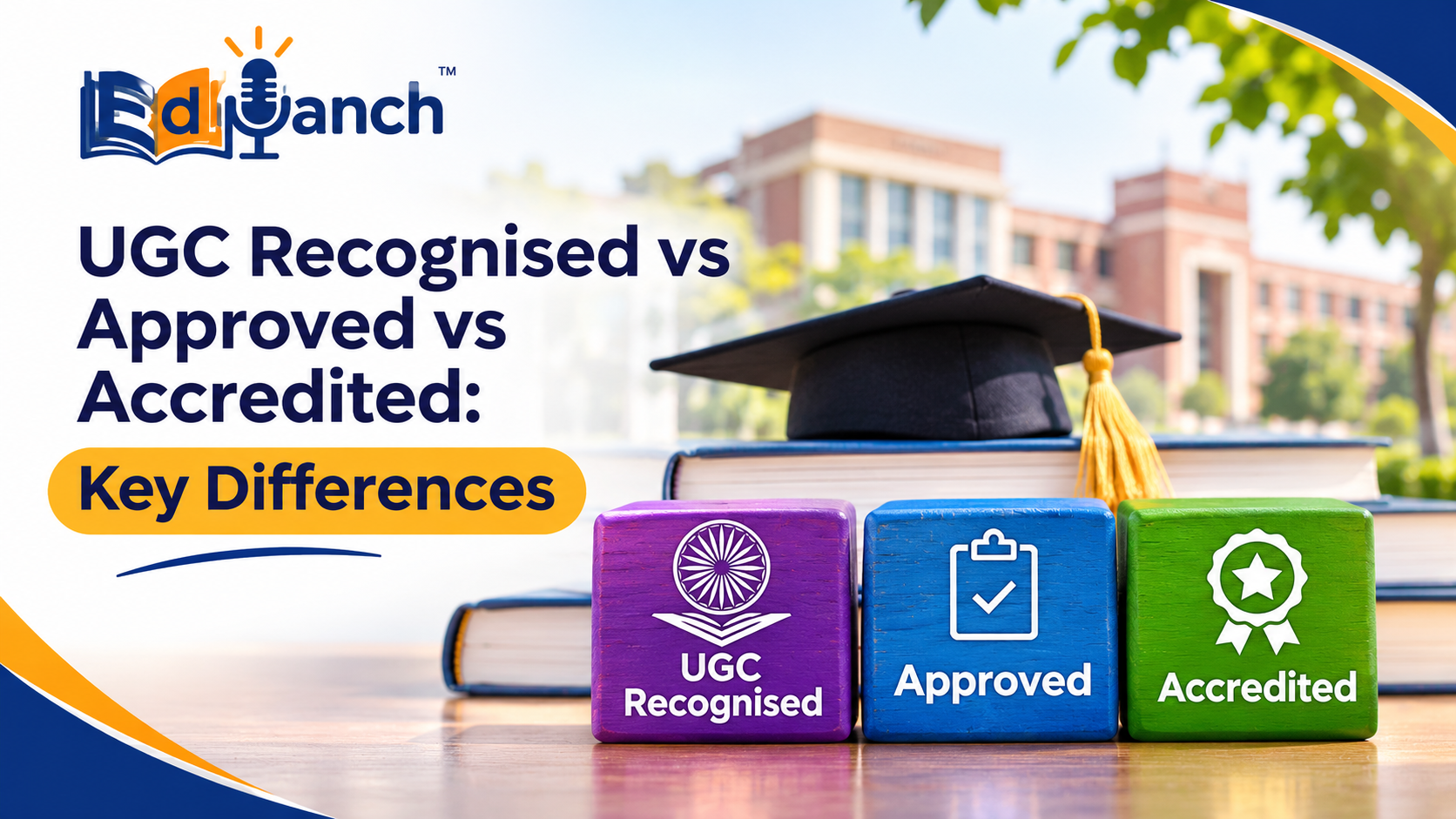
The University Grants Commission is the primary authority responsible for coordinating, determining, and maintaining standards of university education in India. Under the UGC Act of 1956, only institutions that have been established by a central or state act or declared as a deemed university under Section 3 of the UGC Act are permitted to use the word "University" and award degrees.
The UGC has taken proactive steps to address the problem of fake universities. It regularly sends advisories to state governments, publishes warnings in national newspapers, and updates its online list of fake institutions. It has also collaborated with the Ministry of Education to file complaints and initiate legal proceedings against fraudulent operators.
Beyond the UGC, the National Assessment and Accreditation Council (NAAC) and the National Board of Accreditation (NBA) provide quality certifications for institutions and programs. While NAAC and NBA accreditation is not mandatory for all institutions, their accreditation serves as an additional layer of assurance regarding academic quality. A genuine institution that invites accreditation and publicly displays its accreditation status is demonstrating transparency.
Students who wish to file complaints about suspected fake universities can approach the UGC directly through its complaint portal or write to the nearest regional office of the UGC. State education departments also have mechanisms to receive such complaints and initiate local inquiry.
Why Students Fall Victim and How Awareness Can Change That
The reasons students enroll in fake universities are often rooted in systemic vulnerabilities rather than personal carelessness. Students facing pressure to secure admission after competitive exam setbacks, those coming from families with limited prior exposure to higher education, and those seeking low-cost or distance education options are particularly at risk.
Fraudulent institutions exploit these vulnerabilities with calculated precision. They advertise heavily during peak admission seasons, promise relaxed eligibility criteria, and offer flexible payment plans to attract financially stretched families. In some cases, agents and local brokers receive commissions for directing students toward these institutions, adding another layer of deception.
Education awareness is the most powerful antidote to this problem. When students and parents understand the verification process, know where to look for official information, and approach admission decisions with due diligence, the influence of fraudulent institutions diminishes significantly.
Edumanch is committed to being a reliable information resource for exactly this purpose. By providing clear, verified, and updated guidance on education governance, admission processes, and institutional legitimacy, Edumanch empowers students and parents to make safe, informed, and confident education choices.
Practical Steps to Take If You Suspect an Institution Is Fake
If a student or parent has already enrolled or is in the process of enrolling in an institution that they now suspect may be fake, prompt action is necessary.
The first step is to stop all fee payments immediately until the institution's recognition status is fully verified through official channels. Do not rely on documents provided by the institution itself, such as recognition certificates or affiliation letters, without cross-checking their authenticity against the original issuing authority.
If the institution is found to be fake or unrecognized, the following actions are recommended:
- File a complaint with the UGC through its official website.
- File a police complaint for fraud if fees have already been paid.
- Approach the state consumer disputes redressal commission for fee recovery.
- Contact the state education department for guidance on alternative admission options.
- Consult a legal aid center or education rights organization if necessary.
Students in this situation should also consult the admissions offices of legitimate universities to explore whether any previously completed coursework from a recognized institution can be credited, though this will depend on individual institutional policies.
Frequently Asked Questions
Q1: How can I check if a university in India is recognized by the UGC?
Visit the official UGC website at ugc.ac.in and use the university search tool under the "Universities" section. The website also maintains a dedicated list of fake universities that is updated regularly. If the institution you are looking for does not appear in the approved list, treat it as unrecognized until further official confirmation is obtained.
Q2: Can a fake university in India issue a valid degree?
No. Degrees issued by fake or unrecognized universities have no legal or academic validity in India. Such degrees are not accepted by government employers, public sector undertakings, recognized universities for postgraduate admissions, or most private sector employers who verify credentials. Presenting such a degree may also attract legal consequences in certain employment or professional contexts.
Q3: Are distance education universities in India also regulated by the UGC?
Yes. Distance education programs in India are regulated by the Distance Education Bureau (DEB), which functions under the UGC. Any university or institution offering distance or online degree programs must have UGC-DEB recognition for those specific programs. Students must verify both institutional recognition and program-specific DEB approval before enrolling in any distance education course.
Q4: What should I do if I have already paid fees to a fake university?
Stop all further payments immediately. File a written complaint with the UGC, and approach the local police station to file a fraud complaint. You may also approach the consumer forum in your district for fee recovery. Keep all receipts, admission documents, and communication records as evidence throughout this process.
Q5: Is a university registered under the Societies Registration Act or Companies Act a legitimate university?
Not necessarily. A registration under the Societies Registration Act, the Companies Act, or a trust deed does not confer the status of a university. Only institutions established by a central or state legislature act, or declared as deemed universities under Section 3 of the UGC Act of 1956, are legally permitted to call themselves universities and award degrees. Always verify through the UGC, not through corporate or society registration records.
Resources
- University Grants Commission (UGC): Official body for university recognition and the source of the approved and fake university lists at ugc.ac.in.
- Ministry of Education, Government of India: Nodal ministry for higher education policy and gazette notifications for central and deemed universities, accessible at education.gov.in.
- National Assessment and Accreditation Council (NAAC): Provides institutional accreditation and quality assurance for higher education institutions at naac.gov.in.
- All India Council for Technical Education (AICTE): Regulatory body for technical education programs including engineering and management at aicte-india.org.
- Distance Education Bureau (DEB), UGC: Governs recognition of distance and online education programs offered by universities in India, accessible through ugc.ac.in/deb.
Interlinking Keywords
UGC approved universities, fake university list India, how to verify college recognition, UGC recognized distance education, deemed university India, higher education fraud India, NAAC accredited colleges, university admission India, education scam awareness, AICTE recognized engineering colleges
Last reviewed by:
Dr. Manthan Tripathi, Edumanch Editorial and Education Guidance Team on October 30, 2026.
Disclaimer
The information presented in this article is intended for general awareness and educational purposes only. It does not constitute legal advice. Students and parents are strongly encouraged to verify all institutional credentials directly through the UGC website (ugc.ac.in), the Ministry of Education (education.gov.in), and the relevant statutory regulatory bodies before making any admission or fee-related decision. Edumanch does not take responsibility for any decisions made solely on the basis of this article without independent verification.