 Wednesday, September 30, 2026
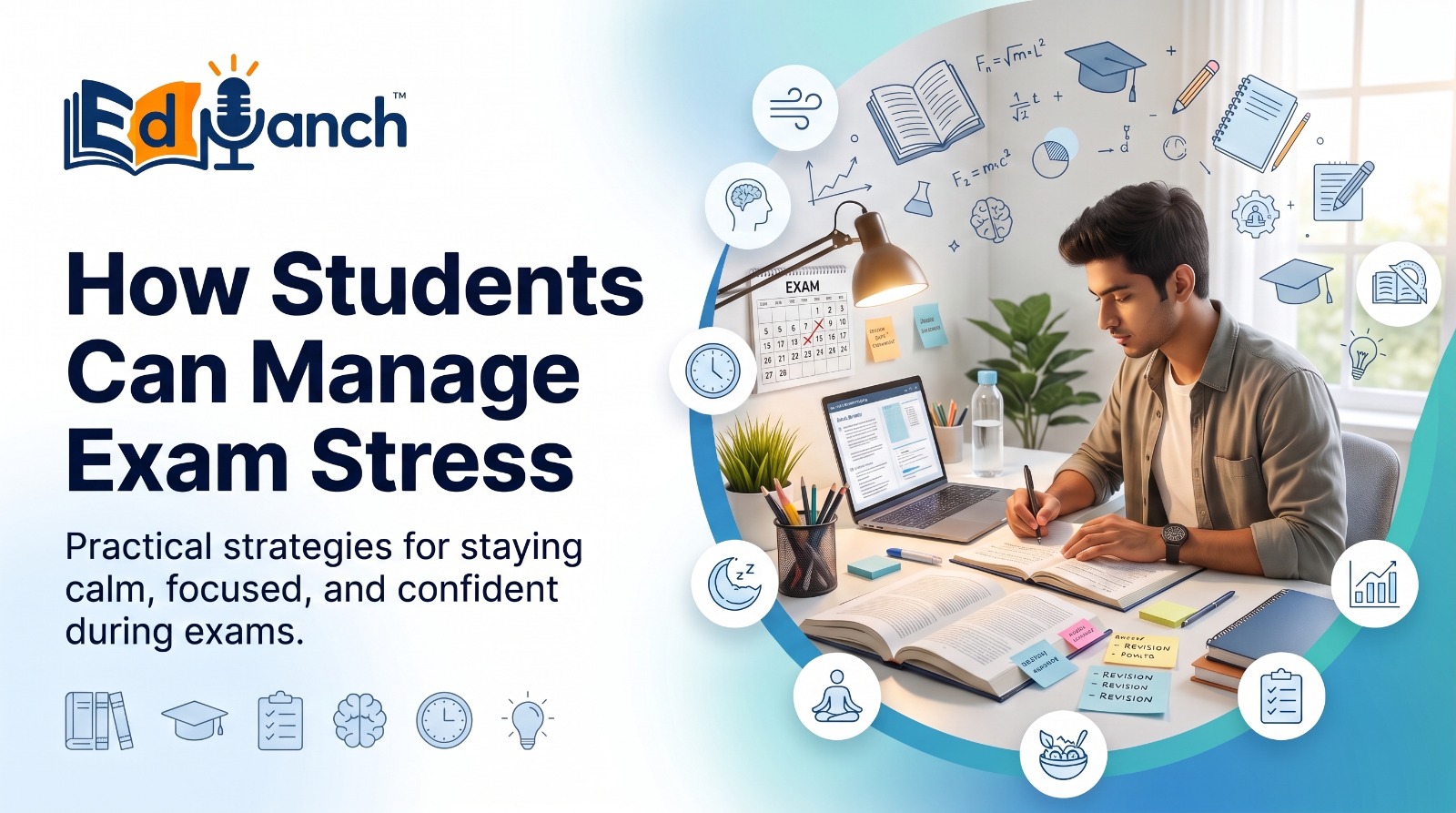
 This guide explains why Indian students experience intense exam stress, how to recognise early warning signs, and practical, evidence-based strategies students and parents can use to manage pressure and build resilience.





Introduction
Exam season affects almost every student in India in some form. Recent research gives a sense of scale: an NCERT survey found that around 80 percent of students in Classes 9 to 12 report anxiety linked to exams and results, while separate academic studies across major Indian cities have found that a majority of students preparing for competitive examinations experience moderate to high levels of stress. This is not a niche problem confined to a few over-ambitious students. It is a shared experience across school boards, coaching institutes, and universities, from Tier 1 metros to Tier 2 towns.
The good news is that exam stress, while common, is manageable. It does not have to define a student's academic experience or wellbeing. With the right habits, support systems, and mindset shifts, students can walk into an exam hall feeling prepared rather than overwhelmed. This guide breaks down what exam stress actually is, why it happens, how to recognise it early, and what students and parents in India can do about it, practically and sustainably.
Understanding Exam Stress and Why It Happens
Exam stress is the body and mind's natural response to the pressure of performing well in a time-bound, high-stakes evaluation. A certain amount of stress is not inherently harmful. It can sharpen focus, improve alertness, and push a student to prepare more seriously. Problems arise when this stress becomes constant, disproportionate to the actual situation, or begins to interfere with sleep, appetite, relationships, and daily functioning.
In the Indian context, several factors intensify this pressure well beyond what students in less exam-centric systems typically experience.
Limited seats and high competition: Entrance examinations such as JEE and NEET see millions of applicants competing for a comparatively small number of seats each year, which creates a high-stakes environment starting as early as middle school in many cases.
Family and social expectations: Academic performance in India is often closely linked to family pride and future stability, which can make results feel like more than just a grade on paper.
Long preparation timelines: Many students, particularly those preparing for competitive exams, spend two to three years focused almost entirely on a single test, which can cause their sense of identity to become tightly bound to their performance.
Sleep and lifestyle disruption: A large proportion of students preparing for competitive exams sleep fewer than six hours a night during peak preparation periods, which affects both mood regulation and memory consolidation.
Comparison culture: Coaching hubs, group chats, and constant rank-based conversations can make it difficult for students to focus on their own pace without comparing themselves to peers.
Understanding these root causes matters because it shifts the conversation from "the student is simply not resilient enough" to "the environment around exams needs better support systems." Both the student's coping strategies and the support system around them play a role.
Recognising the Signs of Exam Stress
Stress does not always announce itself clearly. It often shows up as physical discomfort, mood changes, or shifts in behaviour before a student consciously identifies it as stress. Common signs include persistent worry about the exam, tension or restlessness, headaches or stomach discomfort, changes in appetite, irritability, difficulty falling or staying asleep, loss of interest in activities the student normally enjoys, trouble concentrating while studying, and a low or hopeless mood that lingers beyond a bad day.
Parents and teachers are often better positioned than the student to notice these patterns early, since students in the middle of intense preparation may dismiss their own symptoms as simply "part of exam season." Recognising these signs early makes it easier to intervene before stress becomes overwhelming or starts to genuinely affect the student's health and performance.
Practical Strategies to Manage Exam Stress
There is no single formula that works for every student, but certain strategies are consistently effective and evidence-backed. The following approaches address different aspects of exam preparation, from the body to the mind to the study process itself.
Build a Realistic Study RoutineA structured but flexible timetable reduces the anxiety that comes from feeling directionless. Breaking the syllabus into smaller, achievable sections makes revision feel less overwhelming than treating it as one enormous task. It also helps to build in short breaks between study sessions rather than pushing through hours without pause, since sustained concentration without rest tends to reduce retention rather than improve it.
Protect Sleep, Even During Peak PreparationSleep is one of the most under-prioritised parts of exam preparation in India, particularly among students preparing for competitive exams who often believe that cutting sleep to study more will improve outcomes. The evidence points the other way. Poor sleep reduces memory consolidation and increases emotional reactivity, which makes ordinary setbacks feel larger than they are. Most teenagers need roughly eight to ten hours of sleep, and even during intensive preparation, a consistent sleep schedule generally supports better performance than late-night cramming.
Eat Well and Stay Physically ActiveDiet and movement have a direct effect on mood and energy levels during exam preparation. A balanced diet with regular meals tends to support steadier energy through the day compared to relying heavily on caffeine, sugary snacks, or skipped meals. Physical activity, even something as simple as a short walk, a game, or a few minutes of stretching, can help clear the mind and reduce built-up tension. It does not need to be intense or time-consuming to be effective.
Practise Grounding and Relaxation TechniquesSimple breathing exercises, short mindfulness practices, or a few minutes of quiet reflection can help calm the nervous system before and during exam periods. These techniques are particularly useful in the moments just before an exam, when nervousness tends to peak. Practising them in advance, rather than trying them for the first time on exam day, tends to make them more effective.
Talk About the Pressure Instead of Carrying It AloneMany students hesitate to voice their stress because they do not want to seem weak or add to their family's worry. Encouraging open conversations, whether with a parent, teacher, school counsellor, or friend, helps prevent stress from building up silently. Talking about specific worries often makes them feel more manageable, and it also allows the people around the student to offer appropriate support.
Reframe What the Exam Actually MeasuresAn exam reflects performance on a specific day under specific conditions. It does not measure a student's worth, intelligence, or future potential as a whole. Encouraging students to see setbacks as part of the process, rather than as identity-defining failures, can reduce the intensity of pre-exam anxiety and make it easier to recover from a disappointing result.
Manage Expectations, RealisticallyClear, honest conversations about what is realistic to expect, both from the student to their family and from the family to the student, reduce a significant amount of pressure. When expectations are vague or unspoken, students often assume the worst-case version of what is expected of them.
The Role of Parents, Schools, and Institutions
Support systems outside the student play a significant role in how manageable exam stress feels. Parents can help most by listening without immediately problem-solving or comparing their child to others, and by keeping the focus on effort and wellbeing rather than only on results. Avoiding household pressure during exam periods, such as expecting the same level of chores or strict routines, can also ease the overall burden on the student.
Schools and coaching institutes have a growing responsibility here too. Many institutions in India now offer structured mentorship, counselling access, and continuous evaluation systems designed to reduce the intensity of high-stakes, one-shot examinations. Where such support exists, students and parents are encouraged to use it actively rather than treating counselling as a last resort.
Government and policy-level initiatives are also increasingly focused on student mental health as part of the broader education ecosystem, recognising that academic outcomes and psychological wellbeing are closely connected rather than separate concerns.
When to Seek Professional Support
Some level of stress before an exam is expected and often manageable through the strategies above. However, professional support becomes important when stress is severe, persists for weeks rather than days, significantly disrupts sleep, appetite, or daily functioning, or is accompanied by feelings of hopelessness, withdrawal from friends and family, or thoughts of self-harm. In such cases, a school counsellor, psychologist, or doctor should be consulted rather than waiting for the feeling to pass on its own.
Research also indicates that many students who reach a point of serious distress tend to confide in a friend rather than a trusted adult or professional. This makes it important for schools and families to make professional help feel accessible and non-stigmatised, rather than something reserved only for extreme situations.
If a student ever expresses thoughts of self-harm or suicide, this should be treated as urgent. Immediate contact with a mental health professional, a trusted adult, or a crisis helpline is important, and the concern should never be dismissed as ordinary exam nervousness.
Conclusion
Exam stress is a near-universal experience for students across India, shaped by a competitive academic environment, high family expectations, and demanding preparation timelines. It is not something to be dismissed, but it is also not something that has to overwhelm a student's health or self-worth. Practical steps such as structured study routines, protected sleep, physical activity, open conversations, and realistic expectations can meaningfully reduce the intensity of exam-related pressure. Equally important is the support system around the student, including parents, teachers, and institutions, who can help create an environment where seeking help feels normal rather than something to hide. With the right combination of self-care and support, students can approach exams with far greater calm, confidence, and resilience.
Frequently Asked Questions
Q1: What are the early signs of exam stress in students?
Early signs include difficulty sleeping, irritability, headaches or stomach discomfort, loss of appetite or overeating, trouble concentrating, and a persistent sense of worry about the upcoming exam.
Q2: How many hours should a student sleep during exam preparation?
Most teenagers and young adults need seven to nine hours of sleep each night. Cutting sleep short to study longer usually reduces memory retention and concentration the next day rather than improving it.
Q3: Is some amount of exam stress normal or even helpful?
Yes. A moderate level of stress can sharpen focus and motivation. It becomes a concern only when it interferes with sleep, appetite, daily functioning, or emotional well-being over an extended period.
Q4: How can parents help a child cope with exam stress without adding pressure?
Parents can help by listening without judgement, avoiding comparisons with other students, keeping expectations realistic, and focusing conversations on effort and wellbeing rather than only on marks.
Q5: When should a student seek professional help for exam-related anxiety?
Professional support is advisable when stress is severe, lasts for weeks, disrupts sleep and daily life significantly, or is accompanied by hopelessness, withdrawal, or thoughts of self-harm. A school counsellor, psychologist, or doctor should be consulted.
Resources
- National Council of Educational Research and Training (NCERT): Publishes research and guidance on student mental health and wellbeing in Indian schools.
- National Institute of Mental Health and Neurosciences (NIMHANS): Conducts national research on student mental health, stress, and anxiety trends in India.
- University Grants Commission (UGC) Mental Health Framework for Higher Education Institutions: Guidance for colleges and universities on student psychological support.
- World Health Organization (WHO), South-East Asia Region: Reports and guidance on adolescent mental health in the region.
- Childline India: A support helpline for children and young people facing distress, including exam-related stress.
Interlinking Keywords
exam stress in students, student mental health India, exam preparation tips, coping with academic pressure, board exam anxiety, NEET and JEE stress, student counselling support, healthy study routine
Disclaimer
This article is intended for general informational and educational purposes only and does not constitute medical or psychological advice, diagnosis, or treatment. If a student is experiencing severe, persistent, or worsening stress, anxiety, or thoughts of self-harm, please consult a qualified doctor, psychologist, or counsellor promptly. In case of a mental health emergency, contact a crisis helpline or seek immediate professional assistance.
Last reviewed by:
Edumanch Editorial Team on July 16, 2026









.png)
.png)
.png)

.png)
.png)

.png)

.png)



.png)
.png)