 Friday, September 25, 2026
.png)
 Higher education reforms in India, anchored by NEP 2020, are transforming university structures, expanding access, integrating skills, and preparing students for a competitive global future.





Introduction
India stands at a defining crossroads in its educational journey. With more than 1,000 universities and over 40,000 colleges serving nearly 43 million students, the country operates one of the largest higher education systems in the world. Yet for decades, this system has been criticized for being too rigid, too examination-focused, and too disconnected from the real demands of industry and society.
The reforms now underway represent the most ambitious reimagining of Indian higher education since independence. Anchored by the National Education Policy 2020 and supported by a series of regulatory, structural, and institutional changes, these reforms are not small adjustments. They are systemic shifts that will change how students learn, how institutions function, and how Indian degrees are valued both domestically and globally.
For students deciding their academic futures, for parents trying to guide their children, and for institutions navigating a new regulatory landscape, understanding these reforms is no longer optional. It is essential.
Understanding the Scale of Change: What Higher Education Reform Means in India
The phrase "higher education reform" covers a broad spectrum of changes. In the Indian context, it refers to policy shifts at the national level, restructuring of regulatory bodies, changes in how universities design and deliver their curricula, new approaches to assessment, and a fundamental rethinking of what a college degree should produce.
The National Education Policy 2020, commonly called NEP 2020, is the central document driving this transformation. It replaces the previous National Policy on Education that was last revised in 1992, and it reflects an understanding that the world Indian students are entering today is fundamentally different from the one that policy was designed for.
NEP 2020 envisions a higher education system that is multidisciplinary, flexible, and outcome-oriented. It moves away from the narrow single-stream model where a student enrolled in a commerce program had almost no access to sciences or humanities. Instead, it proposes a university experience closer to the global liberal arts model, where students can combine subjects across disciplines, pick up vocational skills alongside academic knowledge, and progress through their degrees at a pace and in a sequence that suits their individual circumstances.
Key Pillars of the Reform Framework
Multidisciplinary Education and Flexible Degree Structures
One of the most significant departures from the old system is the introduction of a four-year undergraduate program with multiple entry and exit options. Under this structure, a student who completes one year of a degree program and needs to leave for any reason does not simply lose that time. They receive a certificate. Two years of completion earns them a diploma. Three years earns them a bachelor's degree, and four years earns them a bachelor's degree with research specialization.
This flexibility addresses one of the most painful realities of the earlier system, where students who dropped out for financial, personal, or health reasons had nothing formal to show for the time and money invested. The new structure acknowledges that education is not always a straight line and builds dignity and portability into partial completion.
The Academic Bank of Credits
Closely linked to the flexible degree structure is the Academic Bank of Credits, or ABC. This is a national digital platform where students can store credits earned at one institution and use them at another. A student who studied for a year at a state university in Uttar Pradesh and then moves to a private university in Pune does not start over. Their credits follow them.
This system opens the door to genuinely personalized education pathways. Students can take courses from different institutions, including online programs from recognized universities, and build a degree that reflects their actual interests and goals rather than whatever a single institution happens to offer.
Regulatory Restructuring and Institutional Autonomy
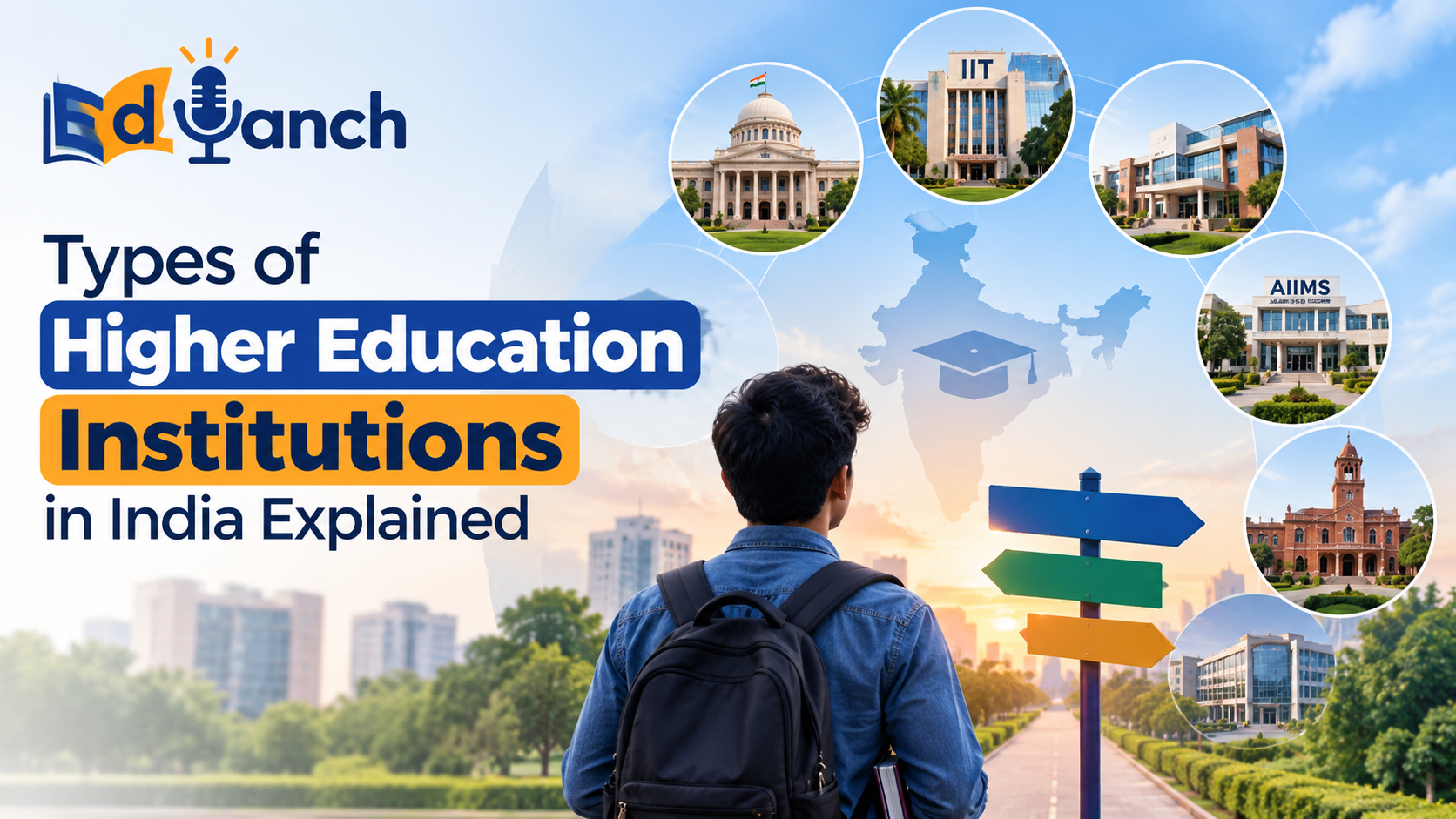
The University Grants Commission has been a central figure in Indian higher education for decades, responsible for both funding and regulation. Critics have long argued that this dual role creates conflicts and limits institutional freedom. Under proposed reforms, a new body called the Higher Education Commission of India is expected to take over academic regulation, while funding functions are separated out. The goal is to give universities more genuine autonomy to innovate while ensuring accountability through transparent accreditation and outcome-based assessment rather than compliance-based inspection.
Institutions that demonstrate consistent quality and honest governance are expected to receive greater freedom to set their own curricula, faculty hiring standards, and fee structures. This shift is intended to encourage the kind of institutional excellence that has largely been concentrated in a small number of elite institutions like the IITs and IIMs.
Internationalisation of Indian Higher Education
For the first time, foreign universities have been officially invited to establish campuses in India. This is a landmark change. Institutions like foreign-origin universities setting up in cities such as GIFT City in Gujarat represent a direct acknowledgment that global competition for talent is real and that Indian students deserve access to world-class education without having to leave the country.
At the same time, reforms aim to make Indian degrees more internationally portable. Better accreditation systems, stronger research output requirements, and alignment with global quality benchmarks are intended to raise the standing of Indian institutions in global rankings and make Indian graduates more competitive in international job markets.
Skill Integration and Industry Alignment
One of the most persistent criticisms of Indian higher education has been the mismatch between what universities produce and what employers need. Graduates with strong theoretical knowledge but limited practical skills have been a well-documented challenge for Indian industry for years.
NEP 2020 and the broader reform agenda place significant emphasis on vocational integration within mainstream higher education. Students are encouraged to take vocational credit courses alongside their core academic subjects. Internship requirements, industry mentorship programs, and entrepreneurship curricula are being woven into degree programs across disciplines.
The National Skills Qualifications Framework is being aligned with university credit systems so that skill certifications earned outside traditional classrooms can count toward a formal degree. This integration is especially significant for students from economically weaker sections who may have pursued vocational training as a practical path and previously had no way to convert that training into recognized academic credentials.
Digital Learning and Expanding Access
The reforms place considerable weight on technology as a tool for expanding access. Platforms such as SWAYAM, which offers free online courses from central universities and institutions of national importance, have been strengthened and integrated into the credit framework. A student at a smaller college in a Tier 2 or Tier 3 city can now take a course from a professor at a national institution, earn credits, and have those credits count toward their degree.
This is genuinely transformative for students in places like Gorakhpur, Nashik, Coimbatore, or Bhopal, where the quality gap between local institutions and premier universities has historically been difficult to bridge. Digital access does not eliminate that gap entirely, but it narrows it in meaningful ways.
The recognition of regional language instruction as a legitimate medium for higher education is another access-focused reform. For millions of students who think and communicate most naturally in Hindi, Tamil, Telugu, Bengali, or other Indian languages, being forced into English-medium instruction at the university level has been a barrier to genuine comprehension and intellectual engagement. Reforms support content delivery in Indian languages without abandoning English as an important professional and academic skill.
Challenges in Implementation
The vision of these reforms is genuinely ambitious. The reality of implementing them across a system as vast and diverse as Indian higher education is considerably more complex.
Faculty preparedness is a significant concern. Many universities, particularly state universities and affiliated colleges, face chronic shortages of qualified teaching staff. Implementing outcome-based education, multidisciplinary curricula, and research integration requires faculty who have been trained and supported to deliver these programs. Without substantial investment in faculty development, the reforms risk becoming policy documents that do not translate into classroom reality.
Infrastructure disparities between institutions in metropolitan areas and those in smaller cities or rural regions remain a serious challenge. The ABC and SWAYAM integrations assume digital infrastructure and connectivity that is not uniformly available. Bridging this infrastructure gap is a prerequisite for equitable reform outcomes.
Institutional resistance is also a real factor. Many universities, particularly those with long-established departmental structures and administrative cultures, find the transition to flexible multidisciplinary programs difficult to absorb quickly. Reform timelines need to be realistic about the pace of institutional change.
What This Means for Students and Parents
For students currently in school or preparing to enter college, these reforms signal that the nature of a degree is changing. The rigidity of the old system is giving way to something more flexible and individualized. This creates opportunity, but it also requires more active decision-making. Students who understand the new framework and plan deliberately will be better positioned to take advantage of it.
For parents, the key takeaway is that a college education in India is no longer a fixed four-year commitment with a predetermined outcome. It is becoming a more dynamic process where choices made along the way, courses selected, skills developed, and institutions attended matter more than they did before.
Platforms like Edumanch exist precisely to help students and parents navigate this evolving landscape, offering clear, reliable information about policy changes, admission processes, emerging career pathways, and institutional developments so that decisions can be made with confidence rather than confusion.
Conclusion
Higher education reforms in India represent a genuine attempt to rebuild a system that was overdue for transformation. The National Education Policy 2020 and the regulatory and structural changes accompanying it are not perfect, and implementation will be uneven across the country. But the direction is clear. Indian higher education is moving toward flexibility, quality, access, and global relevance.
For students, this is ultimately good news. The system is being redesigned with their realities, aspirations, and futures in mind. Staying informed about these changes and understanding how they affect specific academic and career decisions is the most important step any student or parent can take right now.
Frequently Asked Questions
Q1: What is the National Education Policy 2020 and how does it affect higher education?
The National Education Policy 2020 is a landmark policy that restructures Indian higher education by introducing multidisciplinary learning, flexible degree structures, multiple entry and exit points, credit transfer systems, and greater academic autonomy for institutions.
Q2: What is the Academic Bank of Credits in India?
The Academic Bank of Credits is a digital repository that allows students to store credits earned across different institutions and programs, enabling flexible learning pathways and reducing the risk of losing academic progress when students change courses or institutions.
Q3: How is the UGC changing under education reforms?
The University Grants Commission is being restructured under proposed reforms. The Higher Education Commission of India is expected to replace the UGC as the primary regulatory body, separating funding functions from academic regulation to improve efficiency and institutional autonomy.
Q4: Will Indian degrees be recognized internationally after reforms?
Yes, one of the key goals of current reforms is to bring Indian higher education standards closer to global benchmarks, improve accreditation systems, allow foreign universities to set up campuses in India, and enable greater recognition of Indian degrees abroad.
Q5: How do education reforms in India affect students in Tier 2 and Tier 3 cities?
Reforms focused on digital learning, open and distance education, and regional language instruction are expected to significantly improve access and quality for students in smaller cities and towns, reducing the historical gap between metropolitan and non-metropolitan education outcomes.
Resources
- University Grants Commission (UGC): Official regulatory body for higher education in India, with guidelines on NEP 2020 implementation and institutional frameworks. (ugc.ac.in)
- Ministry of Education, Government of India: Primary source for National Education Policy 2020 documents, reform notifications, and higher education scheme announcements. (education.gov.in)
- NITI Aayog: Policy research and implementation body with reports on education reform, skill development alignment, and India's educational future. (niti.gov.in)
- SWAYAM Platform: Government-operated platform for free online courses integrated with the credit transfer system under NEP 2020. (swayam.gov.in)
- National Council for Vocational Education and Training (NCVET): Regulatory body overseeing the alignment of vocational qualifications with the National Skills Qualifications Framework. (ncvet.gov.in)
Interlinking Keywords
NEP 2020 highlights, Academic Bank of Credits India, UGC reforms 2024, multidisciplinary education India, SWAYAM online courses, higher education policy India, skill-based education, foreign universities in India, undergraduate degree flexibility, Edumanch education news
Last reviewed by:
Dr. Manthan Tripathi, Edumanch Editorial and Education Guidance Team on September 14, 2026
Disclaimer
The information provided in this article is intended for general educational awareness and informational purposes only. Policy details, regulatory frameworks, and implementation timelines related to higher education reforms in India may evolve over time. Readers are advised to refer to official sources, including the Ministry of Education, University Grants Commission, and NITI Aayog, for the most current and authoritative information before making any academic or institutional decisions. Edumanch does not represent any government body or regulatory authority.




.png)
.png)

.png)

.png)



.png)



.png)


.png)