 Monday, November 16, 2026
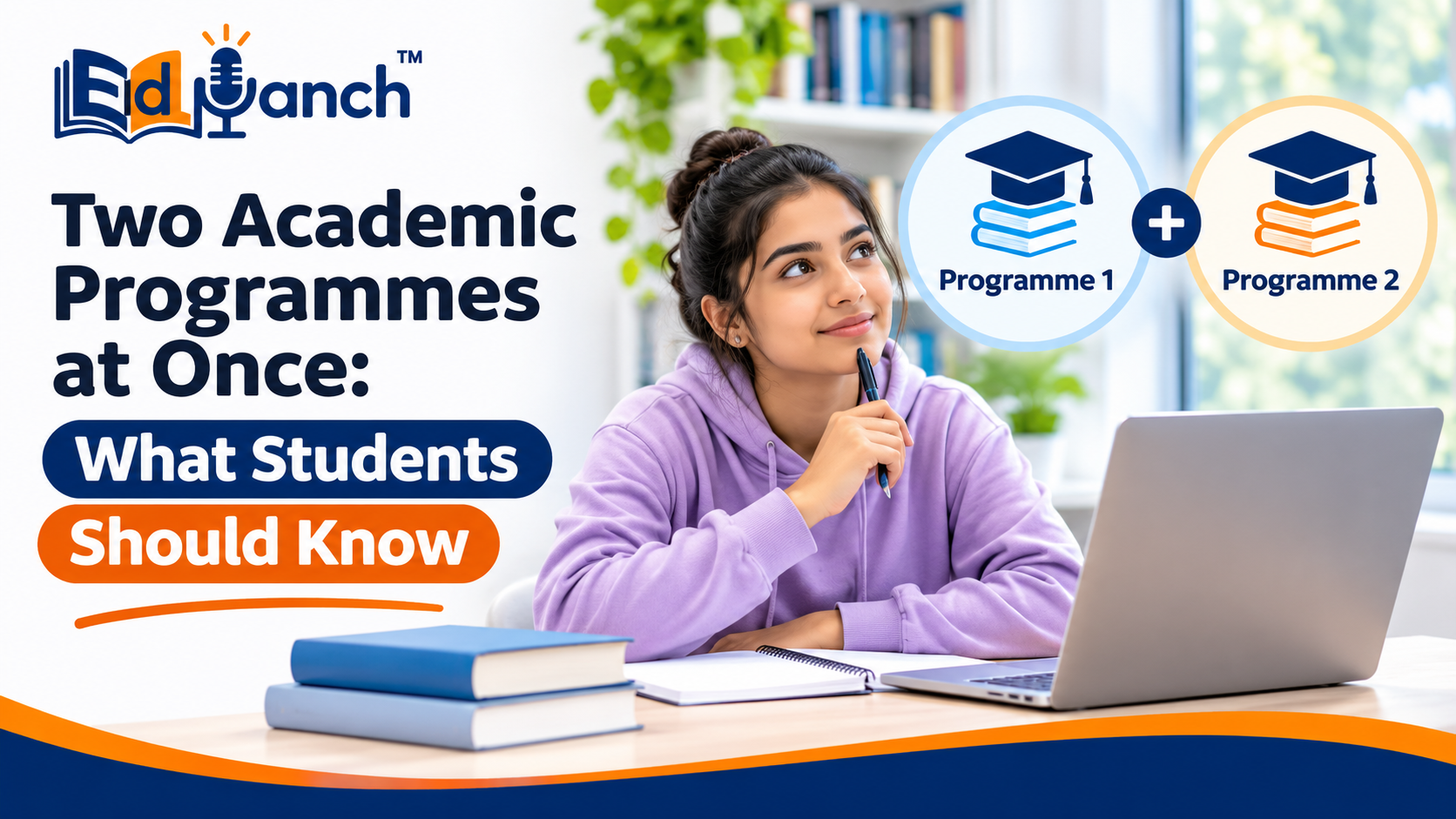
 Flexible degree programmes are transforming Indian higher education through NEP 2020 frameworks, giving students greater choice, accessibility, and career readiness in a rapidly evolving academic landscape.





Introduction
Higher education in India is undergoing one of its most significant transformations in decades. For generations, students had little choice once they enrolled in a degree programme. They followed a fixed syllabus, a fixed timeline, and a fixed exit point. Switching streams meant starting over. Taking a break often meant losing academic credit. The rigidity of the traditional system left little room for individual goals, financial realities, or life circumstances.
That reality is changing rapidly. Flexible degree programmes are rewriting the rules of how students learn, when they learn, and what they learn. Driven by the National Education Policy 2020 and supported by University Grants Commission guidelines, Indian universities are now opening doors that were previously closed to millions of students. The shift is not just structural; it represents a fundamentally new understanding of what education is meant to achieve.
Edumanch has consistently tracked how India's education landscape is evolving, and the rise of flexible degree pathways stands out as one of the most consequential changes of this generation.
Understanding Flexible Degree Programmes
At their core, flexible degree programmes give students the freedom to design their academic journey in ways that align with their personal goals, professional ambitions, and life situations. The concept moves away from one-size-fits-all education toward a system that acknowledges individual differences.
Under the National Education Policy 2020, the Government of India introduced several key mechanisms that enable this flexibility. The most widely discussed is the Multiple Entry and Multiple Exit system, which allows students to enter or exit a degree programme at different stages without losing academic credit. A student who completes one year of a bachelor's programme earns a certificate. Two years earns a diploma. The full three or four years earns the degree. If a student needs to leave due to personal, financial, or professional reasons, the credits earned are preserved in the Academic Bank of Credits, allowing them to return and continue from where they left off.
This framework fundamentally changes the stakes of interrupting one's education. Rather than treating a break as a failure, the system treats it as a pause, a practical acknowledgment of the complex lives that many Indian students lead.
Another dimension of flexibility is the choice of subjects itself. Students in Indian universities are increasingly allowed to mix disciplines, combining, for example, computer science with economics, or literature with data analytics. This multidisciplinary approach reflects the reality of modern careers, where technical skills and humanistic thinking are rarely separate.
The Policy Framework Enabling This Change
No conversation about flexible degrees in India is complete without acknowledging the NEP 2020 as the central policy driver. The policy, released after a consultative process spanning several years, identified rigidity as one of the key weaknesses of Indian higher education. It called for academic flexibility, holistic development, and a credit-based learning system that could accommodate diverse student needs.
The UGC has since operationalised several guidelines to support this shift. Key developments include:
- The Academic Bank of Credits framework, which provides a national repository for storing and transferring earned credits across institutions.
- Guidelines allowing universities to offer programmes in both online and offline modes, or in a blended combination of the two.
- Recognition of Open Distance Learning as academically equivalent to conventional programmes for most course categories.
- Encouragement of vocational education integration within degree programmes, allowing students to earn skill-based certifications alongside academic qualifications.
Beyond the UGC, SWAYAM, the government's national online education platform, has made it possible for students to take elective courses from institutions across the country and have those credits counted toward their degree. A student in a regional college in Rajasthan can now access a data science elective taught by a professor at IIT Madras and have it formally recognised.
These are not marginal policy changes. They represent a structural redesign of how Indian higher education operates.
How Students Are Benefiting
The impact of flexible degree programmes on individual students is tangible and wide-ranging. Perhaps the most significant benefit is access. Students from smaller towns, rural areas, and economically constrained families often could not afford to pursue full-time residential degrees, particularly when family responsibilities or financial pressures made continuous enrolment difficult. The multiple exit option and the recognition of part-time and online learning have made degree education more accessible to this demographic.
For working professionals, flexible degrees open a pathway that was largely unavailable before. Someone already employed in a field can now pursue a formal qualification without leaving their job. This is especially meaningful in sectors like healthcare, information technology, and business, where upskilling is continuous but formal credentials still carry weight.
For students who are uncertain about their career direction, the ability to explore multiple disciplines without committing permanently to one reduces the anxiety of early academic decisions. Choosing commerce over science no longer has to feel like a permanent foreclosure of options.
The psychological effect of this shift should not be underestimated. When students feel that the system works with them rather than against them, engagement improves. Dropout rates, which have historically been a serious concern in Indian higher education, are expected to decline as more universities implement these frameworks meaningfully.
Challenges in Implementation
While the policy intent behind flexible degree programmes is strong, the ground reality of implementation is more complex. Not all universities are equally prepared to operationalise the changes that NEP 2020 and UGC guidelines envision.
Faculty readiness is one of the more pressing challenges. Designing multidisciplinary courses, facilitating credit transfers, and evaluating students who are following non-linear academic paths requires a different approach to teaching and assessment. Many institutions are still working through these transitions.
Infrastructure is another concern. The Academic Bank of Credits system needs robust digital infrastructure to function seamlessly. While the framework exists at the national level, its integration with individual university systems is still uneven across states and institution types.
There is also the question of recognition. For students who choose the multiple exit option after one or two years, the market value of a certificate or diploma needs to be clearly established. Employers, graduate school admissions committees, and professional bodies need to understand and accept these credentials before students can fully benefit from the flexibility the system offers.
Additionally, awareness remains a gap. Many students and parents in Tier 2 and Tier 3 cities are not yet fully informed about their rights under the new system, the options available to them, or how to navigate the Academic Bank of Credits. Platforms like Edumanch play an important role in bridging this awareness gap by translating complex policy into clear, student-friendly guidance.
The Role of Technology and Online Learning
One of the most powerful enablers of flexible education in India is digital technology. The expansion of online degree programmes, blended learning, and digital content libraries has made it structurally possible to offer flexibility in ways that were logistically impossible in a purely physical classroom model.
Institutions like IGNOU, which has served distance learners for decades, have now been joined by a growing number of conventional universities offering fully online degrees recognised by the UGC. The SWAYAM platform offers hundreds of courses across disciplines, and its integration with the Academic Bank of Credits means that learning genuinely transcends institutional walls.
Edtech companies have also contributed to this landscape, though the critical distinction remains between UGC-recognised qualifications, which carry formal academic weight, and private certifications, which carry professional value but do not replace formal degrees in most academic and government contexts.
For students, understanding this distinction is essential. Flexible does not mean informal, and choosing the right programme from an accredited institution remains as important as ever.
What This Means for the Future of Indian Higher Education
The move toward flexible degree programmes is not a temporary policy experiment. It represents a directional shift in how India conceptualises higher education, one that brings the system closer to global best practices while remaining sensitive to the specific social, economic, and cultural context of the country.
Countries like the United States, the United Kingdom, and Australia have long offered credit transfer systems, part-time degree options, and interdisciplinary programmes as standard features of their higher education landscape. India's adoption of similar frameworks, adapted to its own scale and context, positions it to produce graduates who are more adaptable, more broadly educated, and more capable of navigating an economy that changes faster than any fixed curriculum can keep up with.
For parents and students currently making education decisions, this is a landscape with more options and more complexity than previous generations encountered. The key is to make informed choices, and that begins with understanding what is available, what is recognised, and what aligns with individual goals.
Frequently Asked Questions
Q1: What is the Multiple Entry and Multiple Exit system under NEP 2020?
The Multiple Entry and Multiple Exit system allows students to join or leave a degree programme at different points without losing their academic credits. A student who exits after one year receives a certificate, after two years a diploma, and after three or four years the full degree. Credits are stored in the Academic Bank of Credits for future use.
Q2: Is an online degree from an Indian university as valid as a regular degree?
Yes, online degrees from universities that are UGC-approved and listed on the UGC Distance Education Bureau are academically valid and equivalent to regular degrees for most purposes, including government jobs and postgraduate admissions, subject to relevant eligibility norms.
Q3: What is the Academic Bank of Credits and how does a student use it?
The Academic Bank of Credits is a national digital repository where students can store academic credits earned from different institutions or courses. Students can open an account through the ABC portal, and credits are automatically deposited when courses are completed through participating institutions and platforms like SWAYAM.
Q4: Can students in India now combine subjects from different streams in one degree?
Yes, under the NEP 2020 framework, many universities are introducing multidisciplinary programmes that allow students to combine subjects across streams, such as arts with technology, science with commerce, or vocational skills with academic disciplines. This is supported by UGC guidelines on holistic and multidisciplinary education.
Q5: Are flexible degree programmes available in Tier 2 and Tier 3 cities in India?
Flexible degree options, especially through online and open distance learning modes, are accessible to students across India regardless of location. Programmes offered through IGNOU, SWAYAM, and UGC-approved online universities are available nationally. Awareness and infrastructure remain areas of active improvement in smaller cities.
Resources
- University Grants Commission (UGC): Official guidelines on flexible degree frameworks, Academic Bank of Credits, and online education regulations in India.
- National Education Policy 2020, Ministry of Education: Full text and framework document outlining the policy basis for flexible higher education in India.
- Academic Bank of Credits (ABC) Portal, Government of India: Official student registration portal for storing and managing academic credits across institutions.
- SWAYAM Platform, Ministry of Education: National online learning platform offering UGC-recognised courses and electives across disciplines.
- IGNOU (Indira Gandhi National Open University): India's largest open university offering flexible distance and online degree programmes across hundreds of disciplines.
Interlinking Keywords
National Education Policy 2020, Multiple Entry and Multiple Exit system, Academic Bank of Credits India, UGC online degree India, SWAYAM courses credit transfer, flexible higher education India, multidisciplinary degree programmes, open distance learning UGC, higher education policy India, NEP 2020 implementation universities
Last reviewed by:
Dr. Manthan Tripathi, Edumanch Editorial and Education Guidance Team on November 3, 2026.
Disclaimer
The information provided in this article is for general informational and educational purposes only. While we strive to ensure accuracy, education policies, UGC guidelines, and institutional frameworks are subject to change over time. Readers are encouraged to verify current regulations with the University Grants Commission, the Ministry of Education, or their respective institutions before making any academic decisions. Edumanch is an independent information platform and is not affiliated with, or endorsed by, any government body, university, or regulatory authority mentioned in this article. References to third-party platforms and institutions are purely for informational purposes. For personalised guidance, please consult a qualified education counsellor or your institution’s academic office.