 Friday, September 25, 2026
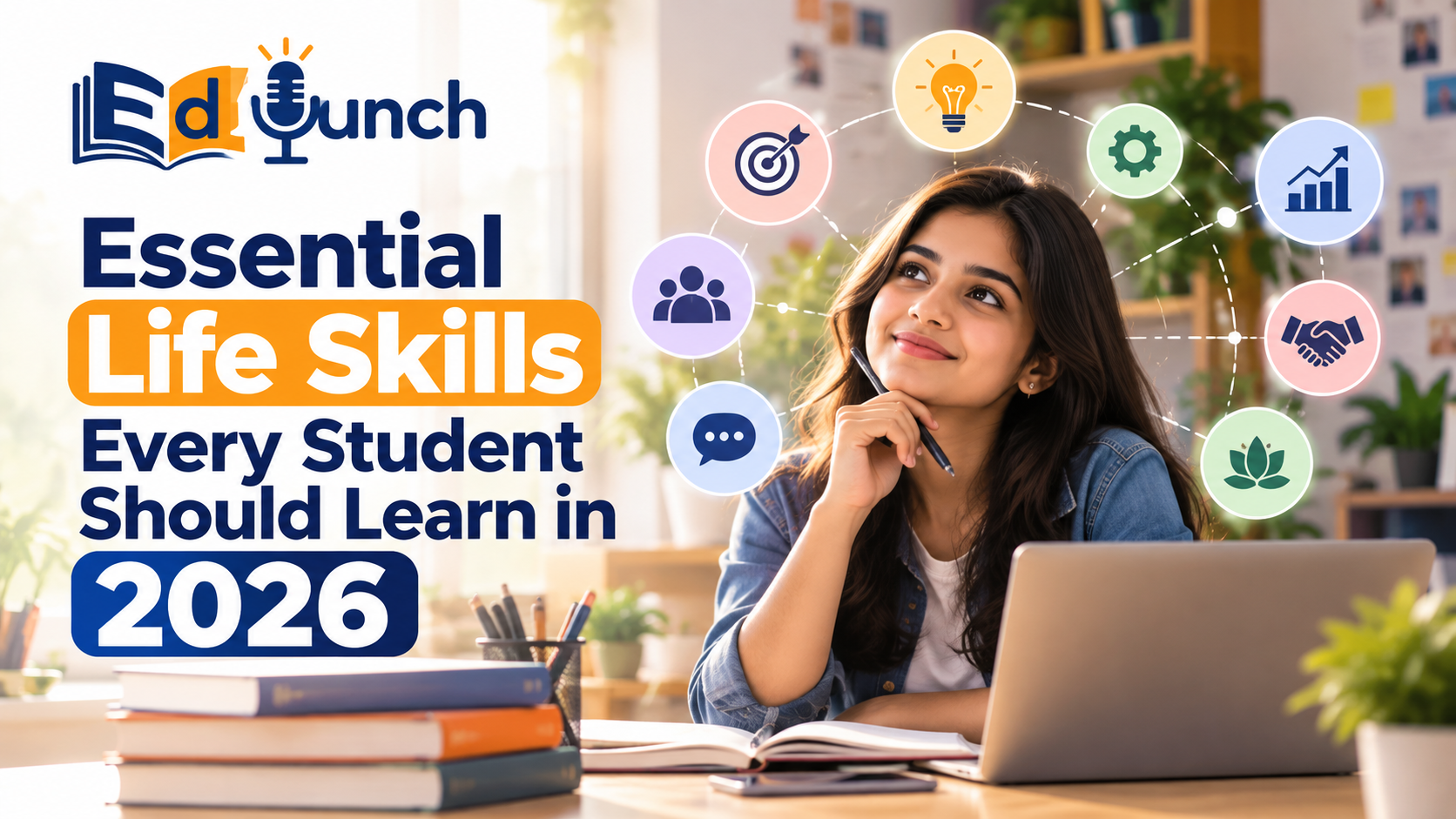
 Life skills like communication, financial literacy, critical thinking, and emotional intelligence are essential for Indian students to succeed beyond academics and thrive in real-world challenges.





Introduction
Education in India has always placed a strong emphasis on academic performance. From board examinations to entrance tests, students are often measured entirely by their marks and ranks. Yet when these same students step into professional life or independent living, they frequently find themselves underprepared for challenges that no textbook ever covered.
The gap between academic excellence and real-world readiness is not a new concern, but it has become more urgent in recent years. With the National Education Policy 2020 actively promoting holistic development, skill-based learning, and experiential education, the conversation around life skills for students has finally found a more prominent place in India's education discourse.
Life skills are the practical, social, and emotional abilities that help individuals navigate everyday situations with confidence and competence. They are not soft add-ons to education. They are foundational capacities that determine how effectively a student can function as an adult, a professional, a citizen, and a human being. For students across India, whether they are studying in a metro city or a tier-3 town, life skills are becoming as important as subject knowledge.
Understanding What Life Skills Actually Mean
The World Health Organization defines life skills as abilities for adaptive and positive behavior that enable individuals to deal effectively with the demands and challenges of everyday life. This definition captures something important: life skills are not optional. They are adaptive tools for survival in a complex world.
In the Indian student context, life skills cover a wide range of abilities. They include how a student communicates with others, manages time during exam season or internship schedules, handles money, processes emotions under pressure, thinks critically about information they encounter online, and makes decisions that affect their academic and personal future.
Life skills are broadly grouped into three categories. The first is cognitive skills, which include critical thinking, problem-solving, and decision-making. The second is personal skills, which cover self-awareness, emotional regulation, and resilience. The third is social skills, which include communication, empathy, teamwork, and conflict resolution.
Understanding this framework helps students and parents recognize that life skills development is not a single activity. It is an ongoing process that must be nurtured across every stage of a student's journey.
Communication and Interpersonal Skills
One of the most frequently cited shortcomings of Indian graduates entering the workforce is poor communication. This does not refer only to English language fluency. It includes the ability to express ideas clearly, listen actively, ask meaningful questions, and engage in constructive dialogue.
Effective communication matters in job interviews, group discussions, college seminars, project presentations, and everyday peer interactions. Students who can communicate well tend to build stronger relationships, resolve conflicts more peacefully, and collaborate more effectively in teams.
Interpersonal skills go hand in hand with communication. They include empathy, the ability to understand another person's perspective, and the capacity to navigate social situations without creating friction. In a diverse country like India, where classrooms and workplaces include people from different states, languages, religions, and backgrounds, interpersonal sensitivity is not just a nice-to-have quality. It is a professional necessity.
Students can build these skills by participating in debates, joining student councils, volunteering for community activities, and making a conscious habit of listening before responding in conversations.
Time Management and Self-Discipline
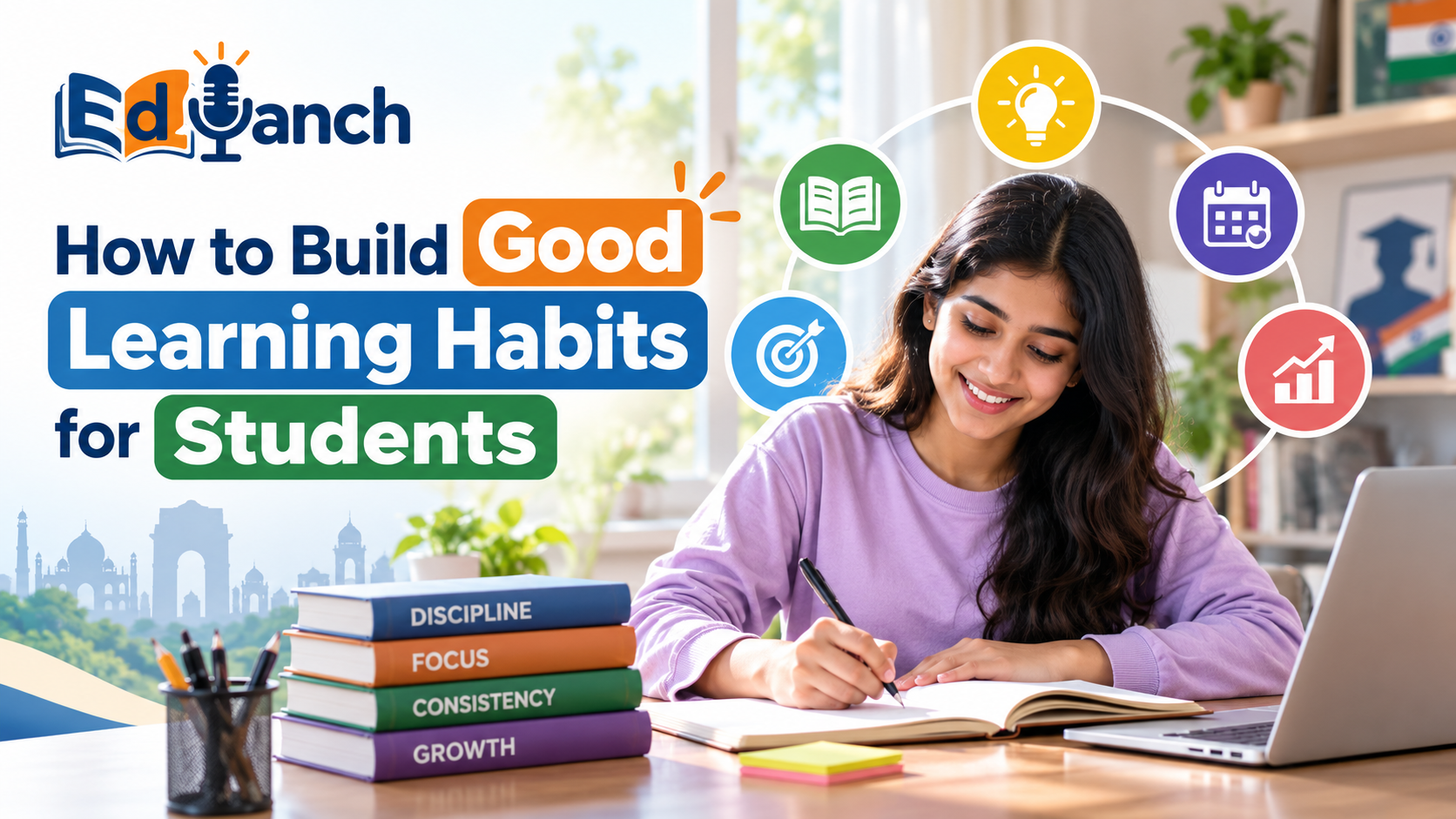
Indian students often face a demanding schedule: school or college hours, coaching classes, extracurricular activities, family responsibilities, and personal study time all competing for the same limited hours in a day. Without strong time management skills, even a motivated and intelligent student can fall behind, burn out, or develop chronic stress.
Time management is not simply about making a timetable. It is about understanding priorities, setting realistic goals, breaking large tasks into manageable steps, and protecting study time from distractions. In an era of smartphones and social media, self-discipline is the underlying skill that makes time management possible.
Research consistently shows that students who manage time well perform better academically and experience lower levels of anxiety. They are also more likely to pursue extracurricular interests, engage in physical activity, and maintain healthier sleep routines.
Practical habits that build time management include using a planner or digital calendar, setting daily goals each morning, following the Pomodoro technique for focused study, and reviewing the week's progress every Sunday evening.
Financial Literacy and Money Management
Financial literacy is one of the most neglected life skills in the Indian school curriculum, yet it is among the most consequential for a student's adult life. Understanding how to earn, save, budget, invest, and spend responsibly can make a significant difference to a young person's financial well-being after they leave home.
India has a rapidly growing student population that is gaining access to credit cards, UPI payments, student loans, and part-time income opportunities earlier than previous generations. Without basic financial education, students are vulnerable to impulsive spending, debt traps, and financial anxiety.
Financial literacy for students does not require complex investment knowledge. It begins with understanding the difference between needs and wants, learning to track personal expenses, setting a monthly budget, and appreciating the value of saving even small amounts consistently. Concepts like compound interest, tax basics, and the importance of an emergency fund are also highly relevant for students approaching adulthood.
Parents and educators play a critical role in this area. Encouraging students to manage a small weekly allowance responsibly, discussing household budgets openly, and introducing basic banking concepts early can set the foundation for lifelong financial health.
Critical Thinking and Problem-Solving
In an age where misinformation spreads rapidly across social media, WhatsApp forwards, and short-form video platforms, the ability to think critically is not just an academic skill. It is a civic responsibility.
Critical thinking involves the ability to evaluate information objectively, identify assumptions, question sources, recognize bias, and arrive at well-reasoned conclusions. For students, it means not accepting every claim at face value, whether it appears in a textbook, a news article, or a peer's opinion.
Problem-solving is closely linked to critical thinking. It is the ability to identify a challenge, explore possible solutions, assess their feasibility, and implement the most appropriate one. Students who develop problem-solving skills become more confident in unfamiliar situations because they trust their own ability to find a path forward.
Schools and parents can nurture these skills by encouraging open-ended discussions, avoiding the habit of providing immediate answers, posing hypothetical scenarios, and rewarding logical reasoning over rote recall.
Emotional Intelligence and Mental Resilience
Mental health awareness among Indian students has grown significantly in recent years, driven partly by the challenges of the COVID-19 pandemic and the academic pressure that remains a defining feature of student life in India. Yet awareness alone is not enough. Students need to develop emotional intelligence and resilience as active, practiced skills.
Emotional intelligence includes four core components:
- Self-awareness: recognizing one's own emotions and their impact on behavior
- Self-regulation: managing emotional responses, especially in stressful situations
- Empathy: understanding and sharing the feelings of others
- Social skills: using emotional understanding to build and maintain healthy relationships
Resilience, on the other hand, is the capacity to recover from failure, disappointment, or difficulty without giving up or losing confidence. In a competitive academic environment, students who develop resilience are better equipped to handle examination setbacks, peer pressure, family expectations, and personal disappointments without being derailed.
Mindfulness practices, journaling, physical activity, open conversations with trusted adults, and counseling support all contribute to emotional skill development. Schools that offer trained counselors and structured emotional learning programs create safer and more productive learning environments.
Digital Literacy and Online Safety
India is home to one of the world's largest and youngest digital populations. Students today are digital natives who use smartphones, online platforms, and educational apps as natural extensions of their learning. However, being born into a digital world does not automatically mean being digitally literate.
Digital literacy includes the ability to use technology effectively, evaluate online information critically, protect personal data, recognize cyberbullying, understand digital privacy, and behave responsibly across online platforms. These skills are essential not just for academic success but for personal safety and professional readiness.
Online safety is a particular concern for school-going children and adolescents. Teaching students to protect their personal information, recognize phishing attempts, maintain respectful online behavior, and report harmful content is as important as teaching them to use educational technology.
As digital learning platforms, coding boot camps, and skill-based apps become more integrated into Indian education, the ability to navigate and leverage these tools intelligently will determine which students gain a competitive advantage and which ones are simply scrolling without purpose.
Adaptability, Teamwork, and Leadership
The modern workplace, whether in India's growing startup ecosystem, corporate sector, public services, or creative industries, consistently values individuals who can adapt to change, work effectively in teams, and take initiative when needed.
Adaptability means staying productive and positive when circumstances shift, whether it is a change in curriculum, a new teacher's teaching style, a shift to online learning, or an unexpected challenge in a group project. Students who learn to embrace change rather than resist it develop a significant advantage in both academic and professional settings.
Teamwork is closely tied to communication and empathy but deserves its own emphasis. The ability to contribute meaningfully to a group, respect different roles, manage disagreements constructively, and celebrate collective success is a skill that students must practice consciously.
Leadership does not mean always being in charge. For students, it means having the confidence to speak up when necessary, the responsibility to follow through on commitments, and the maturity to support others in achieving shared goals. Opportunities for student leadership exist in school events, sports teams, cultural programs, and community service initiatives.
Frequently Asked Questions
Q1: What are the most important life skills for students?
The most important life skills for students include effective communication, time management, financial literacy, critical thinking, emotional intelligence, and digital literacy. These skills support academic success and prepare students for a confident, capable adult life.
Q2: Why are life skills important for students in India?
Life skills help Indian students navigate a rapidly changing education landscape and job market. They build self-confidence, improve decision-making, and prepare students to handle real-world challenges that go far beyond textbook learning and board examinations.
Q3: How can students develop life skills at home?
Students can develop life skills at home by practicing basic budgeting, taking responsibility for household tasks, reading regularly across diverse topics, engaging in meaningful conversations, and using online platforms designed for skill-based and experiential learning.
Q4: Are life skills taught in Indian schools?
The National Education Policy 2020 emphasizes experiential learning, holistic development, and skill integration. However, formal life skills education remains inconsistent across Indian schools, which makes self-directed learning and parental guidance especially important.
Q5: What is the role of parents in building life skills in students?
Parents play a critical role by encouraging independence at age-appropriate stages, modeling good financial habits and communication, offering opportunities for problem-solving at home, and creating a supportive environment for emotional expression and growth.
Resources
- National Education Policy 2020: Ministry of Education, Government of India document outlining the vision for holistic, skill-integrated, and student-centered learning across India.
- World Health Organization Life Skills Education: WHO framework defining core life skills and their importance for adolescent development and wellbeing.
- NCERT Guidelines on Life Skills: National Council of Educational Research and Training resources on integrating life skills into school curricula across Indian states.
- UNICEF Life Skills for Education: UNICEF's international framework for life skills-based education, including evidence and implementation models relevant to developing nations, including India.
- Ministry of Skill Development and Entrepreneurship: Government of India body responsible for national skill development initiatives, policies, and programs targeting youth and students.
Interlinking Keywords
life skills for students, life skills education India, NEP 2020 skill development, time management for students, financial literacy for students, critical thinking in education, emotional intelligence students, digital literacy India, student leadership skills, communication skills students, holistic education India, soft skills for students
Last reviewed by:
Dr. Manthan Tripathi, Edumanch Editorial and Education Guidance Team on September 22, 2026.
Disclaimer
The information provided in this article is intended for general educational and informational purposes only. It is not a substitute for professional academic counseling, career guidance, psychological support, or institutional advice. While every effort has been made to ensure the accuracy and relevance of the content for Indian students, parents, and educators, individual circumstances may vary. Readers are encouraged to consult qualified professionals, school counselors, or education experts for personalized guidance. Edumanch does not endorse any specific institution, product, or service mentioned or implied in this article.





.png)
.png)
.png)
.png)

.png)
.png)
.png)

.png)