 Friday, September 25, 2026
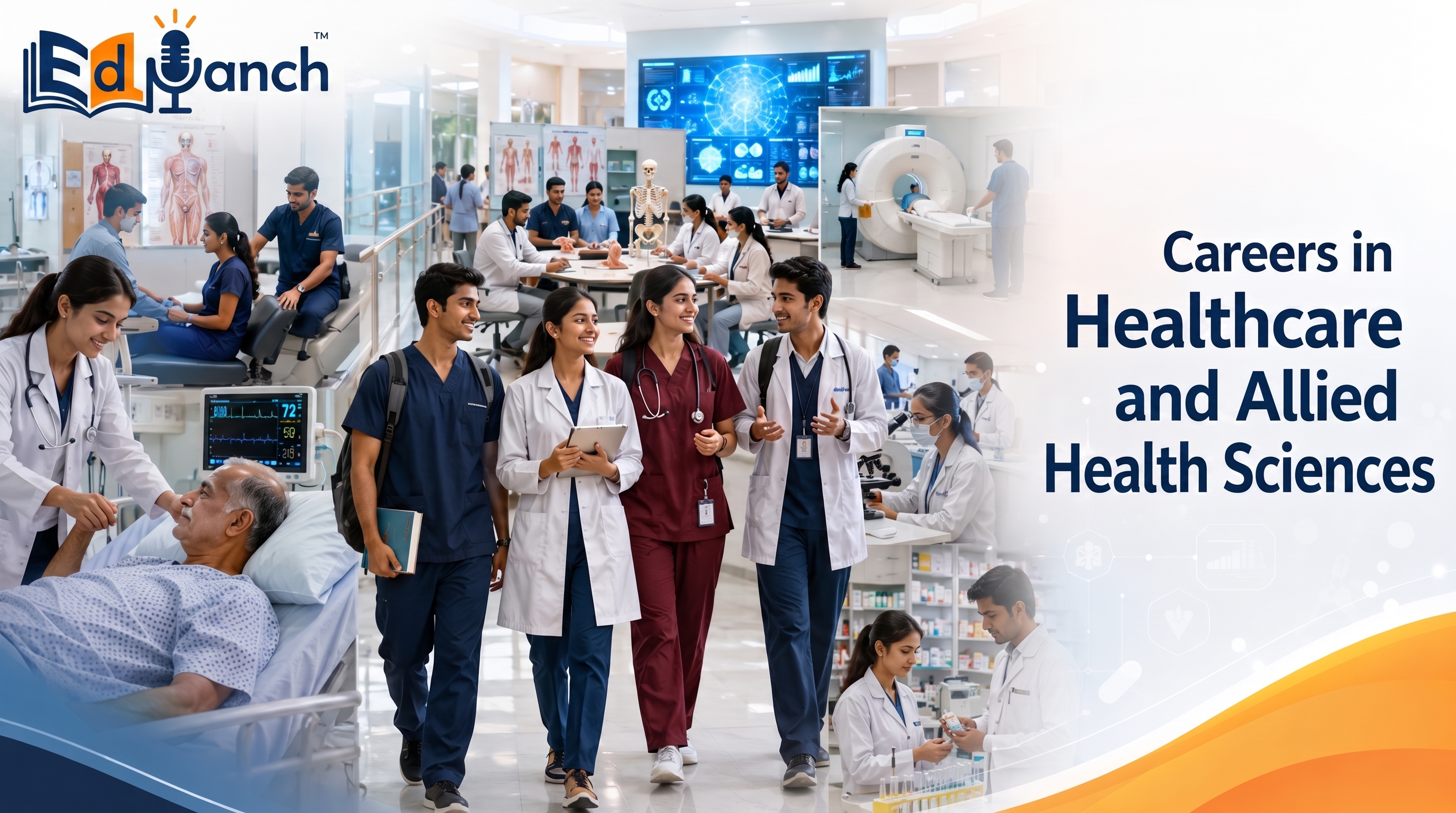
 Allied Health Sciences offer Indian students a growing, NCAHP-regulated career path in diagnostics, therapy, and patient care, backed by strong government investment and rising demand across hospitals, diagnostic chains, and global healthcare markets.





Introduction
Healthcare in India no longer runs on doctors and nurses alone. Every diagnosis, every surgery, and every recovery depends on a much larger team working quietly behind the scenes. This is the world of Allied Health Sciences, a segment of healthcare that identifies, supports, treats, and rehabilitates patients through specialised, technical expertise. For students who want a meaningful career in healthcare but are unsure about the MBBS route, this field offers a practical, respected, and increasingly well regulated alternative.
The timing could not be better. India is investing heavily in this workforce, and the job market for skilled allied health professionals is expanding faster than most students realise. This guide explains what the field actually involves, which career paths are available, what the job market looks like in 2026, and how students and parents can make an informed decision.
Understanding Allied Health Sciences
Allied Health Sciences cover healthcare professions that support diagnosis, treatment, rehabilitation, and overall patient management, without necessarily requiring an MBBS or BDS degree. These professionals work closely with doctors, surgeons, and nurses, and in many cases, healthcare delivery simply cannot function without them.
The field is broadly divided into two categories. Technicians and assistants complete shorter diploma or certificate programmes and typically work under supervision. Therapists and technologists undergo more intensive, degree level education that includes patient evaluation, diagnosis support, and treatment planning.
Common specialisations include medical laboratory sciences, radiology and imaging technology, physiotherapy, optometry, operation theatre technology, respiratory therapy, dialysis technology, and audiology and speech language pathology. Each of these plays a distinct and essential role in a hospital or diagnostic setting.
A significant regulatory shift has strengthened this sector considerably. The National Commission for Allied and Healthcare Professions Act, 2021 brought long overdue structure to a field that was earlier fragmented across unrecognised diplomas and inconsistent standards. The National Commission for Allied and Healthcare Professions now regulates these professionals across ten broad categories, covering roles that were previously not governed by bodies such as the National Medical Commission, the Dental Council, or the Indian Nursing Council. Today, the country has a national framework spanning ten recognised professional categories and more than fifty distinct allied and healthcare professions, supported by a national registry and licensing mechanism, along with mandatory clinical training built into professional education.
Importantly, students should not confuse a short-term diploma with a full undergraduate degree. For a serious, long-term career, a recognised degree programme with proper NCAHP alignment offers far better prospects for registration, employer trust, and future mobility.
Career Pathways in Allied Health Sciences
The scope within this field is genuinely wide, and it is not limited to hospital wards.
Clinical careers form the most visible category. These include radiology technologists who operate imaging equipment such as X-ray, CT, and MRI machines, medical laboratory technologists who conduct diagnostic tests, physiotherapists who help patients recover movement after injury or surgery, operation theatre technicians who assist during surgical procedures, and respiratory therapists who support patients with breathing difficulties. Dental hygienists, phlebotomists, and pharmacy technicians also fall within this space, each contributing to a specific stage of patient care.
Non-clinical careers are equally important and often overlooked. Healthcare administrators manage hospital operations. Health information technicians handle medical records, billing codes, and confidentiality standards. Clinical research associates support drug trials and medical studies. Medical equipment specialists manage the technology hospitals depend on daily.
Academic and research careers open up for those who pursue postgraduate study. Many allied health graduates go on to become faculty members, research assistants, or specialists contributing to clinical studies and evidence-based practice.
A few emerging and highly specialised roles deserve mention as well. Genetic counsellors help patients understand inherited health risks. Medical dosimetrists calculate radiation doses for cancer treatment. Prosthetists and orthotists design supportive devices such as artificial limbs and braces. These roles require focused postgraduate training but offer strong specialisation value and relatively lower competition.
Job Market Outlook and Demand in India
The demand story here is unusually strong, and it is backed by both policy commitment and workforce data.
India is facing a considerable shortfall of trained professionals in this space. Various industry and policy estimates suggest a shortage of over six million allied and healthcare professionals nationwide across diagnostics, imaging, rehabilitation, and clinical support roles. This shortage has direct consequences for the healthcare system. When allied and healthcare roles remain underfilled, doctors end up absorbing the additional workload, which contributes to burnout and lengthens diagnostic and surgical turnaround times.
The government has responded with concrete financial commitment. In the Union Budget 2026 to 27, the government proposed a phased plan outlay of nine hundred and eighty crore rupees over three years to expand and strengthen allied and healthcare professional's education. Under this initiative, Allied Health Professional Institutes across ten key disciplines will be established and upgraded, with the goal of creating close to one lakh skilled professionals over the next five years through both public and private sector participation. These ten disciplines include optometry, radiology, anaesthesia, operation theatre technology, and applied psychology and behavioural health, among others. A related initiative will also train a large number of geriatric caregivers to support India's ageing population.
This budgetary push is not a small gesture. With structured expansion, industry observers believe the allied and healthcare sector has the potential to absorb close to one million youth annually, which would represent roughly ten percent of new workforce entrants each year in India.
Educational reform has kept pace with this demand. The commission has notified competency-based curricula covering roughly twenty-eight distinct professions, implementable from the 2026 to 27 academic year, based on official NCAHP communication issued in April 2026. This is intended to bring more consistency to how these courses are taught across different states and universities. Students should also note a common misconception directly. NEET UG is not required for undergraduate allied and healthcare programmes for the 2026 to 27 academic year, which removes one of the biggest entry barriers that discourages capable students from considering this field.
Hiring patterns reflect this growth on the ground. Hospital chains, corporate diagnostic laboratories such as Dr Lal PathLabs and Metropolis, government institutions including AIIMS, PGIMER, and ESI hospitals, and rehabilitation and imaging centres are all expanding their allied health teams, not just in metro cities but increasingly in Tier 2 towns where new hospitals and diagnostic chains are opening up.
Global demand adds another dimension. Countries in the Middle East, along with the United Kingdom, Canada, and Australia, continue to recruit trained allied health professionals, particularly in radiology, physiotherapy, and laboratory sciences, subject to local licensing requirements.
Choosing the Right Course and Institution
Selecting a course in this field requires more diligence than simply picking a popular-sounding degree name. Students should first confirm whether the programme is aligned with NCAHP's competency-based curriculum, since this affects registration eligibility later. It also helps to check whether the institute offers structured clinical exposure, since allied health is a practice-heavy field where classroom learning alone is not sufficient.
Duration and degree titles vary by specialisation. Physiotherapy typically runs as a four-year programme followed by a mandatory internship. Optometry and medical laboratory science programmes generally range between three and five years depending on the university structure. Shorter diploma routes exist for technician-level roles but tend to offer more limited long-term growth compared to full degree programmes.
Parents and students evaluating options should also look at placement history, tie-ups with hospitals or diagnostic chains for internships, and whether faculty includes practising clinicians alongside academic staff. These factors influence job readiness far more than brand name alone.
Salary Expectations and Career Growth
Compensation in this field varies by specialisation, city, and employer type, but the overall trajectory is encouraging. Entry-level salaries typically fall between two point five and four lakh rupees annually across most core allied health roles. With a few years of relevant hospital or laboratory experience, professionals can expect this range to move up meaningfully, often reaching six to ten lakh rupees in metro cities for roles such as physiotherapy and radiology.
Specialisation, additional certifications, and postgraduate qualifications tend to accelerate this growth further. Professionals who move into supervisory, academic, or research roles, or who take up niche specialisations such as genetic counselling or medical dosimetry, often see a stronger long-term earning curve compared to general clinical roles.
Government roles, while sometimes offering lower starting pay than private corporate chains, tend to provide long-term stability, structured promotions, and pension benefits, which many candidates factor into their overall career planning.
Emerging Trends Shaping the Future
A few shifts are worth watching closely for anyone planning a long-term career in this space.
Technology integration is reshaping day-to-day work across specialisations. Artificial intelligence-assisted diagnostics, teleradiology, and digital health record systems under the Ayushman Bharat Digital Mission are changing how allied health professionals interact with patient data and diagnostic tools. Professionals who build comfort with these digital systems early tend to have an advantage.
India's disease burden is also shifting demand within the field. A growing elderly population and a rising share of non-communicable diseases such as diabetes and cardiovascular conditions are increasing the need for physiotherapists, dialysis technologists, and rehabilitation specialists, not just diagnostic staff.
Career diversity within allied health continues to expand as well. Beyond direct clinical practice, graduates are increasingly moving into healthcare management, medical technology sales, academic research, and health policy roles, giving the field a flexibility that many traditional healthcare careers do not offer.
Conclusion
Allied Health Sciences represent one of India's most practical and future ready healthcare career paths. The combination of a serious workforce shortage, strong government investment, clearer regulatory standards under NCAHP, and steady global demand makes this a field worth serious consideration for science students who want a stable, respected role in healthcare without committing to the MBBS route. For students and parents still weighing their options, the most useful next step is to research specific specialisations, verify NCAHP alignment of shortlisted courses, and speak with current professionals in the field before making a final decision. Edumanch will continue tracking updates on allied health curricula, admissions, and policy changes to help students navigate this evolving space with clarity.
Frequently Asked Questions
Q1: Is NEET required to pursue Allied Health Sciences in India?
No. NEET UG is not required for undergraduate Allied Health Sciences programmes in India. Students can apply directly through the admission process of the university or institute offering the course, based on their Class 12 science background.
Q2: What is the starting salary for Allied Health professionals in India?
Entry-level salaries generally range between two point five and four lakh rupees per year, depending on the specialisation, city, and type of employer. Salaries tend to rise steadily with experience, certifications, and specialisation.
Q3: Which Allied Health courses have the best job demand in India?
Medical Laboratory Sciences, Radiology and Imaging Technology, Physiotherapy, Optometry, and Operation Theatre Technology are among the most in-demand courses, largely because of the expansion of diagnostic centres and hospital infrastructure across India.
Q4: What is NCAHP and why does it matter for Allied Health careers?
The National Commission for Allied and Healthcare Professions is the regulatory body that standardises education, registration, and practice for Allied Health professionals in India. Registration under NCAHP is becoming important for employment verification and postgraduate admissions.
Q5: Can Allied Health graduates work outside India?
Yes. Allied Health professionals, particularly those trained in radiology, physiotherapy, and laboratory sciences, are in demand in countries such as the United Kingdom, Canada, Australia, and across the Middle East, provided they meet the destination country's licensing and qualification requirements.
Resources
- National Commission for Allied and Healthcare Professions (NCAHP): Official regulatory body for curriculum standards and registration
- Ministry of Health and Family Welfare, Government of India: Policy updates and budget allocations for healthcare workforce development
- Bureau of Labor Statistics, Occupational Outlook Handbook: Comparative international data on healthcare occupation growth and wages
- Press Information Bureau, Government of India: Official announcements on Union Budget healthcare allocations
- Ayushman Bharat Digital Mission (ABDM): Information on India's digital health infrastructure relevant to allied health careers
Interlinking Keywords
Allied Health Sciences courses in India, NCAHP registration process, physiotherapy career scope, medical laboratory technology courses, radiology and imaging technology, healthcare career options after 12th, Ayushman Bharat Digital Mission, healthcare admissions India
Last reviewed by:
Edumanch Editorial Team on July 14, 2026
Disclaimer:
This article is intended for general informational and educational purposes only and does not constitute medical, career, or professional advice. Course details, salary figures, and regulatory information may change over time and can vary by institution, state, and individual circumstances. Readers are encouraged to verify current admission criteria, curriculum status, and registration requirements directly with NCAHP and respective institutions, and to consult qualified career counsellors or academic advisors before making education or career decisions.






.png)
.png)

.png)

.png)



.png)
.png)


.png)


.png)