 Monday, October 05, 2026
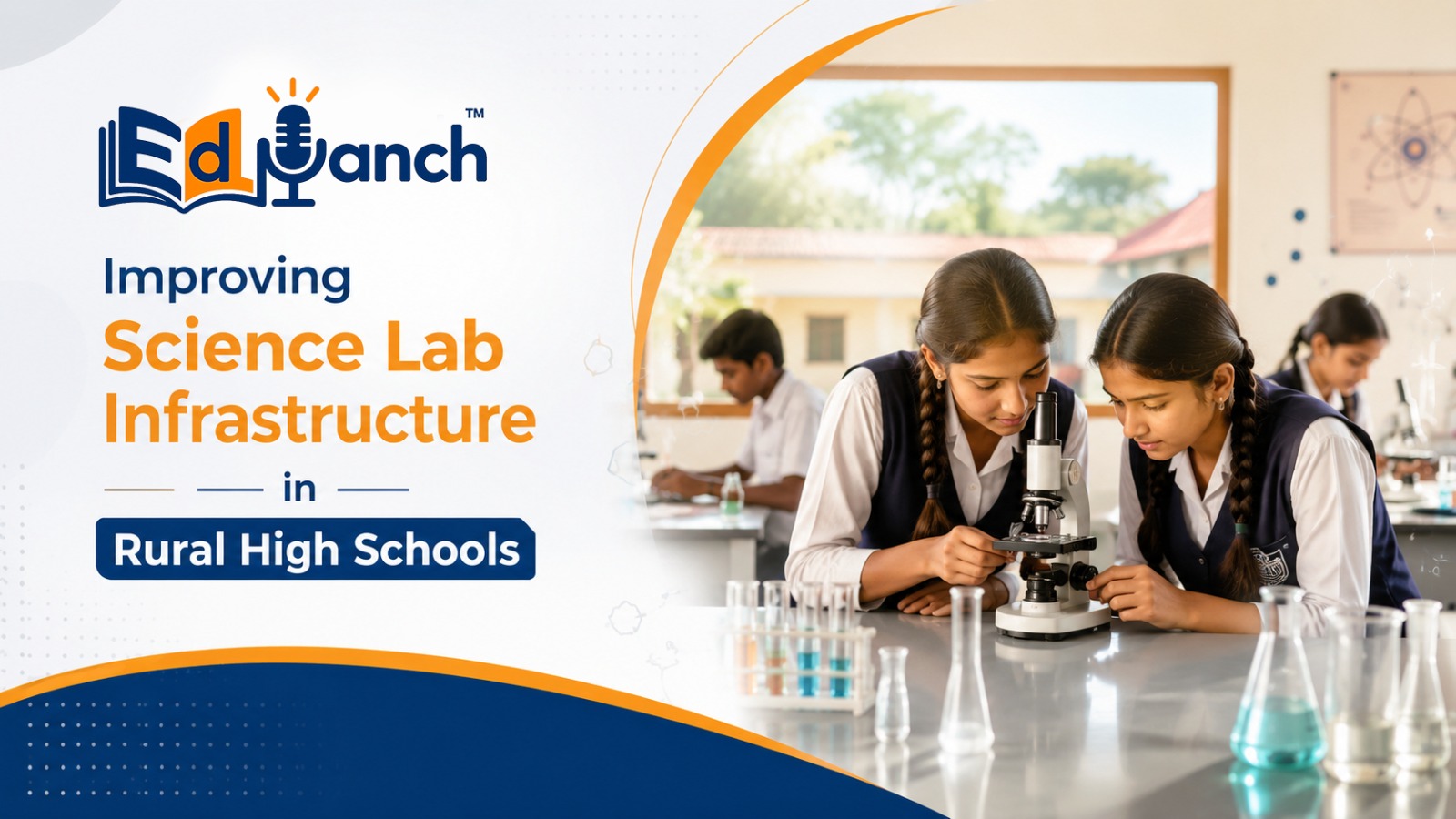
 Low-cost science toolkits, microscale experiments, and frugal instruments can bring hands-on STEM education to rural schools by reducing infrastructure costs, improving safety, and enabling practical learning despite limited resources.




Hands-on experimentation is the cornerstone of effective science education. While theoretical textbooks convey the principles of physics, chemistry, and biology, true scientific inquiry occurs when students manipulate variables, observe real-time reactions, and analyze empirical data.
In thousands of rural high schools across developing and underserved regions, standard science laboratory infrastructure remains a critical bottleneck. Traditional laboratories demand dedicated brick-and-mortar rooms, continuous running water, centralized LPG gas lines, expensive borosilicate glassware, and hazardous chemical storage. Faced with budget constraints and intermittent electricity, rural schools are frequently forced to reduce STEM education to rote memorization.
The emergence of low-cost practical science toolkits, microscale chemistry, and frugal scientific instrumentation offers an immediate, scalable solution. By replacing fragile, high-cost apparatuses with durable, portable, and localized experimentation kits, educators can bridge the rural-urban STEM divide without waiting for multi-year capital infrastructure grants.
1. Core Bottlenecks in Rural Science Education
Understanding the primary failure points of conventional laboratory setups in rural schools is essential for deploying appropriate alternatives:
- High Capital & Recurring Replacement Costs: Traditional glassware (burettes, pipettes, volumetric flasks) and precision optics (compound light microscopes) break easily. Rural schools often lack the operating budget to replace broken components, leading to locked "display-only" laboratories.
- Chemical Safety & Waste Management Deficits: Standard macroscale chemistry requires fume hoods, running water sinks, and specialized chemical disposal systems to prevent groundwater contamination. Rural schools rarely have dedicated drainage systems to handle toxic heavy metals or concentrated acids safely.
- Electricity & Utility Volatility: Advanced optical instruments, heating mantles, and electronic sensors depend on steady AC power grids. Frequent power outages stall scheduled classroom experiments.
- Teacher Training & Preparation Friction: In single-teacher or understaffed rural science departments, spending 45 minutes preparing solutions and setting up apparatuses for a 40-minute class period creates an administrative barrier that discourages practical sessions.
2. Low-Cost Toolkit Innovations Across Scientific Disciplines
Modern low-cost toolkits decentralize laboratory work, turning standard student desks into active experimental stations using durable, safe, and inexpensive components:
A. Biology: Frugal Microscopy & Field Kits
- The Paper Microscope (Foldscope): Engineered using waterproof paper, a single spherical sapphire lens, and a mobile phone camera mount, these pocket microscopes cost under $2 to $5 while delivering up to 140x magnification and 2-micron resolution. Students can visualize plant stomata, protozoa in pond water, blood smears, and cheek cells directly at their desks.
- Locally Sourced Staining & Dissection Alternatives: Replacing expensive synthetic histological stains with natural indicators (e.g., beetroot extract, iodine solutions, and methylene blue substitutes) allows comprehensive cell biology lessons at negligible expense.
B. Chemistry: Microscale & Small-Scale Chemistry Kits
- Well-Plate & Dropper Systems: Instead of mixing 50 to 100 mL of reagents in large glass beakers, microscale chemistry utilizes transparent plastic 24-well or 96-well culture plates and plastic Pasteur pipettes. Experiments use drops (0.05\text{ mL}) rather than milliliters.
- Safety & Cost Advantages: Reducing chemical volumes by 95% minimizes toxic waste, eliminates fire hazards, prevents chemical burns, and allows a single standard chemical bottle to supply a school for years instead of months.
- DIY Gas Generation & Electrolysis: Utilizing modified plastic syringes, 9V batteries, and graphite pencil leads allows students to perform water electrolysis, capture gases (hydrogen, oxygen, carbon dioxide), and observe acid-base neutralizations safely without glass test tubes or Bunsen burners.
C. Physics: Modular Mechanics, Optics & Circuitry Kits
- Breadboard Electronic & Sensor Kits: Inexpensive solderless breadboards, low-cost LEDs, resistors, solar cells, and digital multimeters allow students to explore Ohm’s law, series/parallel circuits, and semiconductor behavior without specialized power benches.
- Acoustics, Mechanics & Ray Optics: Utilizing 3D-printed or laser-cut acrylic lenses, low-cost red/green diode laser pointers, spring dynamometers, and repurposed plastic pulleys allows comprehensive coverage of Newtonian mechanics, wave reflection, refraction, and focal lengths.
3. Structural Comparison: Traditional Labs vs. Low-Cost Modular Toolkits
Evaluating traditional laboratory frameworks against modular low-cost toolkit models demonstrates clear operational advantages for resource-constrained schools:
- Spatial Requirements: Traditional laboratories require dedicated, specialized rooms with acid-resistant benches and gas piping. Modular toolkits operate on any standard classroom desk or outdoor field surface and store compactly inside portable plastic storage crates ("Lab-in-a-Box").
- Cost per Student Station: Traditional setups cost significant capital per student station for glassware and equipment. Low-cost practical kits lower this threshold by 80% to 90%, enabling individual or two-student paired hands-on engagement rather than teacher-only demonstrations.
- Safety & Hazard Footprint: Traditional macro-chemistry handles large volumes of concentrated acids and open flames, carrying high safety liabilities. Microscale toolkits use microliter volumes and ambient reaction setups, virtually eliminating fire, spill, and toxic inhalation hazards.
- Durability & Transportability: Traditional glass apparatuses and heavy cast-iron stands break frequently during transit or handling. Modern toolkits use high-impact polycarbonate, flexible plastics, and solid-state electronics engineered to withstand rugged rural transportation.
- Waste & Environmental Disposal: Traditional labs generate liters of chemical waste requiring neutralization tanks. Microscale experiments generate drops of dilute waste that can be neutralized directly on a paper towel or collected in a single rinse jar.
4. High-Performance Action Plan for Rural STEM Enhancement
To systematically upgrade practical science delivery across rural high school clusters, district education officers and school administrators can execute a three-phase implementation roadmap:
- Procure Curriculum-Mapped 'Lab-in-a-Box' Modular Kits
Phase 1: Toolkit Selection & Alignment
Audit national and regional high school science syllabi (Class 9 to 12) to identify mandatory core experiments. Procure certified, durable microscale chemistry, Foldscope, and modular physics kits tailored to cover at least 90% of curriculum requirements. - Conduct Practical Workshops for Rural Science Educators
Phase 2: Teacher Capacity Building
Train rural physics, chemistry, and biology teachers in microscale experimentation techniques, low-cost reagent substitutions, toolkit maintenance, and inquiry-based pedagogical methods. - Establish Mobile STEM Hubs & Experiential Science Clubs
Phase 3: Community Science Networks
Implement a rotating kit model between neighboring village schools to share specialized modules (such as astronomy telescopes or water-testing kits). Launch hands-on science fairs and student-led environmental monitoring projects.
Actionable Strategy: Digital Governance & Educational System Alignment
- Track Student STEM Accreditations via Digital Academic Repositories: Ensure practical science milestones, STEM project certifications, and vocational science credits are logged and preserved through national education registries—such as the APAAR ID (Automated Permanent Academic Account Registry) system within the Academic Bank of Credits (ABC) network.
- Integrate Localized Environmental Testing with Public Health Portals: Equip rural high school science clubs with water-testing and soil-testing toolkits to measure local groundwater fluoride, nitrates, and bacterial contamination. Sync community testing data with rural health monitoring networks—including public health infrastructure like the ABHA ID (Ayushman Bharat Health Account) pipeline—to flag regional environmental health risks.
- Leverage Open-Access Digital Video Demonstrations: Provide teachers with offline digital libraries (loaded onto micro-SD cards or low-power offline servers) featuring step-by-step video guides for every toolkit experiment, ensuring seamless continuity even during network outages.
Frequently Asked Questions (FAQs)
Q1. What is a "Lab-in-a-Box" concept?
A "Lab-in-a-Box" is a self-contained, portable science kit containing all necessary modular instruments, microscale containers, low-hazard reagents, and instruction cards required to conduct dozens of curriculum-aligned experiments without needing a dedicated laboratory room.
Q2. Can microscale chemistry fully cover the high school chemistry syllabus?
Yes. Microscale chemistry covers all foundational concepts—including acid-base titrations, precipitation reactions, electrochemistry, reaction kinetics, and qualitative inorganic analysis—using drops of liquid in multi-well plates instead of large volumes in glass flasks.
Q3. How durable are paper-based microscopes like the Foldscope?
Foldscopes are made of waterproof, synthetic paper-poly composite material. They are drop-proof, water-resistant, require no electrical power, and can withstand rugged outdoor field conditions, making them ideal for rural schools.
Q4. Are low-cost DIY physics kits accurate enough for secondary education?
Yes. Modern low-cost digital multimeters, optical diode lasers, and precision spring scales provide high measurement precision, allowing students to verify physical constants (like the acceleration due to gravity g or the refractive index of water) within acceptable experimental margins of error.
Q5. How does microscale chemistry improve laboratory safety?
Because reactions use microliter droplets rather than large volumes, the risk of chemical splashes, explosive thermal reactions, toxic vapor release, and chemical burns is reduced to near zero.
Q6. How does an APAAR ID support science students in rural schools?
An APAAR ID provides a lifetime, centralized digital academic record, allowing rural students to record practical science certifications, vocational skills, and STEM competition achievements across their high school and higher education pathways.
Q7. How can rural schools manage without running LPG gas lines for heating?
Experiments requiring heat can utilize safe, compact spirit burners, solid-fuel hexamine tablets, or low-cost portable electric immersion coils instead of expensive centralized LPG pipeline networks.
Q8. What is the typical cost difference between a traditional lab and a toolkit-based lab?
Setting up a traditional high school science laboratory for 30 students typically requires thousands of dollars in infrastructure and glassware. A complete set of low-cost modular toolkits capable of supporting 30 students can be deployed for a fraction of that cost.
Q9. Can low-cost kits support environmental science and local community projects?
Yes. Students can use pH strips, conductivity sensors, turbidity tubes, and Foldscopes to test local well water, examine agricultural soil health, and identify crop pests, directly connecting classroom science to community problem-solving.
Q10. What immediate step should a rural school principal take to start practical science classes?
Procure a starter set of multi-well plastic plates, basic optical lenses, Foldscopes, and digital multimeters, designating an organized storage cabinet in an existing classroom to begin immediate desk-based experimentation.










.png)
.png)
.png)

.png)
.png)

.png)

.png)



.png)
.png)