 Saturday, October 03, 2026
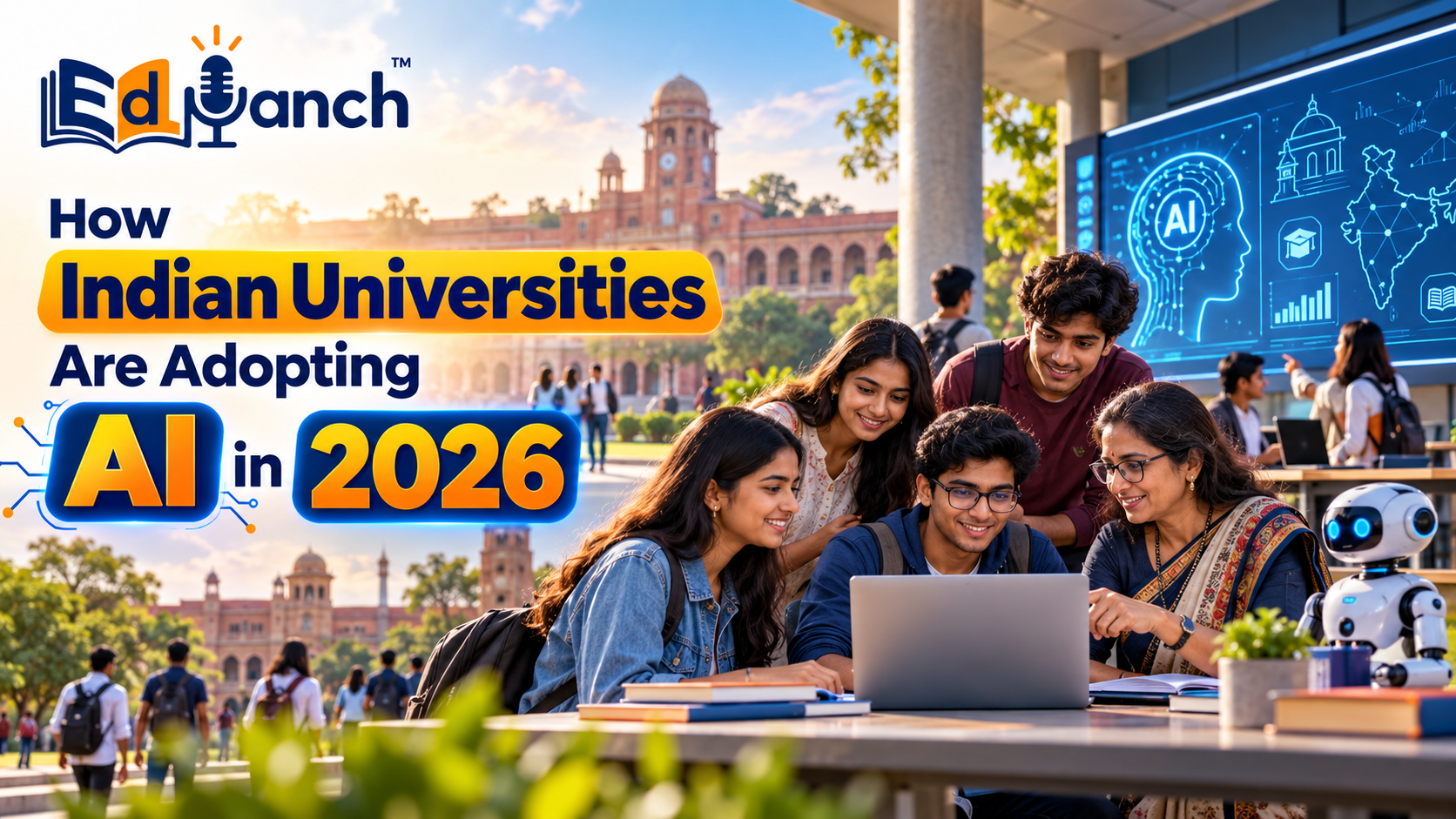
 Indian universities are integrating artificial intelligence across curricula, research, and administration, driven by national policy and growing demand for AI-ready graduates in every field.





Introduction
Artificial intelligence is no longer a topic confined to technology companies or research laboratories. It has entered lecture halls, administrative offices, student counselling centres, and examination systems across India. Indian universities, long known for producing some of the world's finest engineering and science graduates, are now actively reshaping themselves to meet the demands of an AI-driven world.
The shift is happening at multiple levels. Governments are releasing national policies, universities are redesigning curricula, faculty members are exploring AI-powered teaching tools, and students are building AI-based projects before they even graduate. What was once a subject taught in a handful of postgraduate programmes has now become a cross-disciplinary priority that touches every corner of campus life.
Understanding how and why Indian universities are embracing AI is important not just for students choosing their academic paths, but also for parents, educators, institutional leaders, and policymakers who shape the future of Indian education.
The Policy Push Behind AI in Indian Higher Education
The pace of AI adoption in Indian universities has not happened by accident. It has been guided and accelerated by a series of significant national policy decisions that created both the framework and the urgency for change.
The National Education Policy 2020 was among the first major signals from the Indian government that technology, including artificial intelligence, would be central to the future of education. The policy encouraged institutions to integrate coding, computational thinking, and data literacy from school level onward, and it called for universities to build interdisciplinary programmes that prepared students for future workplaces.
Following the NEP, the University Grants Commission released guidelines for introducing AI and related subjects across undergraduate programmes. These guidelines allowed universities to introduce AI as a core or elective subject even in non-engineering streams such as economics, sociology, commerce, and the humanities. The intent was clear: AI literacy should not remain the exclusive domain of computer science departments.
The National Skill Development Corporation and AICTE have also partnered with technology companies to provide AI skilling programmes that university students can access alongside their formal degrees. These programmes, often delivered through online platforms and blended learning formats, have extended AI education beyond the boundaries of any single campus.
India's vision of becoming a global AI hub, as articulated in the National Strategy for Artificial Intelligence released by NITI Aayog, placed higher education institutions at the centre of building the skilled workforce this ambition requires. Universities have responded to this expectation, though the depth and quality of their responses varies considerably across states and institution types.
How Curricula Are Being Redesigned for the AI Era
One of the most visible changes happening across Indian campuses is the redesign of academic programmes to include artificial intelligence either as a standalone discipline or as a foundational strand running through existing subjects.
Several central universities and Indian Institutes of Technology have introduced dedicated B.Tech and M.Tech programmes in Artificial Intelligence and Machine Learning, often in collaboration with global technology partners. IIT Hyderabad was among the earliest institutions to launch a standalone B.Tech programme in AI. Since then, institutions ranging from IIT Bombay and IIT Delhi to newer state universities have followed with their own versions of AI-focused degree programmes.
Beyond dedicated degrees, universities are embedding AI modules into existing disciplines in meaningful ways. A few notable examples include:
- Medical colleges introducing AI in radiology and diagnostics as part of their postgraduate programmes.
- Law schools offering electives on AI ethics, data privacy regulation, and algorithmic accountability.
- Business schools restructuring MBA programmes to include AI-driven decision making, predictive analytics, and automation strategy.
- Social science departments exploring AI and its societal impact, including issues of bias, surveillance, and digital rights.
This interdisciplinary approach reflects a broader understanding that AI is not simply a technical subject. It is a societal force that requires graduates from all fields to understand its implications, applications, and limitations.
AI Tools Transforming Teaching, Learning, and Assessment
Beyond curriculum changes, universities across India are experimenting with AI tools that change the actual experience of teaching and learning inside and outside the classroom.
Faculty members at several institutions are using AI-powered platforms to personalise learning pathways for students. These tools track individual student performance, identify knowledge gaps, and recommend resources that address specific weaknesses. Platforms such as Coursera for Campus, NPTEL, and homegrown EdTech solutions integrated with university learning management systems are being deployed at scale.
AI-based proctoring software has become widespread in online and blended examination systems, especially since the pandemic accelerated the move to remote assessments. Universities now use tools that monitor student activity during online exams through camera and behavioural analysis, though this practice has also raised ongoing debates about student privacy and the accuracy of algorithmic surveillance.
Chatbots are being deployed by university administration offices to handle student queries about admissions, fee payments, scholarship applications, and academic schedules. Several state universities have introduced AI-powered helpdesk systems that reduce the administrative burden on staff while giving students faster access to information.
For research, AI is transforming how faculty and doctoral students process literature, identify patterns in large datasets, and generate initial hypotheses. Libraries at premier institutions have begun integrating AI-assisted research tools that help users navigate vast academic databases more efficiently.
Research and Innovation Ecosystems Built Around AI
Indian universities are not only teaching AI. They are increasingly contributing to it through dedicated research centres, industry partnerships, and government-funded projects.
The government's initiative to establish Centres of Excellence in AI at premier institutions has created focused environments where faculty and students work on applied AI problems in areas such as agriculture, healthcare, language processing, and climate science. These centres function as bridges between academic research and real-world deployment, attracting both government funding and private sector investment.
IITs and IISc have consistently ranked among Asia's leading institutions for AI-related research output, with publications in top international conferences and journals. However, the research culture is also growing at newer central universities and private deemed universities that are investing in infrastructure and attracting research-focused faculty.
Industry-academia collaboration has become a defining feature of the AI research ecosystem. Companies such as Google, Microsoft, IBM, TCS, and Infosys have formal partnerships with Indian universities that include research grants, curriculum co-design, internship pipelines, and joint publication programmes. These collaborations ensure that university research stays connected to industry needs while giving students exposure to professional AI environments.
Startup incubators on university campuses are also producing a growing number of AI-based ventures. Students trained in machine learning, natural language processing, and computer vision are building solutions for Indian markets, including tools for regional language translation, crop disease detection, and affordable diagnostic support for rural healthcare.
Challenges That Indian Universities Still Need to Address
The progress is real and significant, but it would be misleading to present it without acknowledging the substantial gaps that remain in AI adoption across Indian higher education.
Faculty readiness is perhaps the most pressing challenge. A large proportion of university teachers, particularly outside metropolitan areas and elite institutions, have limited training in AI and related subjects. Upskilling an existing faculty workforce at scale is a slow and complex process that requires sustained investment, not just one-time workshops or short courses.
Infrastructure inequality is equally significant. While IITs and central universities have access to high-performance computing resources, cloud credits from technology partners, and well-equipped labs, a majority of Indian universities and colleges operate with limited digital infrastructure. Without reliable internet connectivity, modern hardware, and affordable access to AI tools, meaningful AI education remains out of reach for many students.
Regional language barriers present another challenge. Most AI tools, platforms, and learning resources are primarily available in English, which disadvantages students from regional medium educational backgrounds. Building AI literacy in Hindi, Tamil, Telugu, Bengali, and other major Indian languages is a priority that has received attention in policy documents but requires far more concerted action on the ground.
Finally, the question of ethical AI education is still developing. Teaching students to build AI systems is not the same as teaching them to build responsible AI systems. Curricula that address algorithmic bias, data ethics, digital rights, and the social consequences of automation are not yet standard across Indian institutions.
What This Means for Students, Parents, and the Future of Indian Education
For students currently navigating higher education choices, the integration of AI across disciplines represents both an opportunity and an expectation. The ability to understand, use, and critically evaluate AI tools is rapidly becoming a baseline competency in the modern workforce, regardless of the field one enters.
Students in engineering and computer science should look beyond degree names and examine whether their institutions offer hands-on AI project experience, industry mentorship, and access to real datasets. Students in non-technical fields should seek institutions that are embedding digital and AI literacy into their programmes rather than treating it as an optional extra.
For parents, the message is equally clear. Supporting a child's curiosity about technology, encouraging critical thinking about how digital tools work, and helping them access supplementary AI learning resources outside their formal curriculum can significantly strengthen their academic and professional future.
For educators and institutions, the challenge is to move from aspiration to implementation. Policies and partnership agreements create the conditions for change, but the quality of AI education ultimately depends on faculty preparation, infrastructure investment, and a genuine commitment to inclusive access across geographies and economic backgrounds.
India has the demographic scale, the engineering talent pipeline, and the national ambition to become a significant force in global AI. Whether its universities can deliver on that potential depends on decisions being made in curriculum committees, faculty development programmes, and government budget allocations right now.
Frequently Asked Questions
Q1: Which Indian universities have the best AI programmes in 2026?
IIT Hyderabad, IIT Bombay, IIT Delhi, IISc Bangalore, and several NIT campuses are among the most recognised institutions for AI education and research. Private universities such as Manipal Institute of Technology, BITS Pilani, and Amrita Vishwa Vidyapeetham also offer strong AI-focused programmes. The best choice depends on the student's academic goals, preferred learning environment, and interest in research versus industry-facing education.
Q2: Can students from non-engineering backgrounds study AI in Indian universities?
Yes. Following UGC guidelines and the priorities set out in NEP 2020, several universities now offer AI electives, certificate programmes, and interdisciplinary courses open to students from commerce, arts, social sciences, and other non-technical fields. Online platforms linked with university systems also provide accessible AI learning for students across disciplines.
Q3: How is the Indian government supporting AI adoption in universities?
The government is supporting AI adoption through multiple channels including NITI Aayog's national AI strategy, UGC guidelines for AI curriculum integration, AICTE-approved AI programmes, Centres of Excellence at premier institutions, and collaborations between the National Skill Development Corporation and technology companies to deliver AI skilling programmes to university students.
Q4: Is AI replacing teachers and professors in Indian universities?
AI is being introduced as a tool to support and enhance teaching, not to replace educators. Faculty members use AI platforms to personalise learning, reduce administrative workloads, and provide more timely feedback to students. The human role of mentorship, critical guidance, and academic judgment remains central to quality higher education in India.
Q5: What skills should Indian students develop alongside AI knowledge to stay competitive?
Students benefit most from combining AI literacy with strong critical thinking, communication skills, domain knowledge in their chosen field, and an understanding of ethics and data privacy. Employers across sectors are increasingly looking for graduates who can both apply AI tools effectively and evaluate their limitations and societal implications responsibly.
Resources
- University Grants Commission (UGC): National guidelines and circulars on AI curriculum integration in Indian higher education programmes.
- NITI Aayog National Strategy for Artificial Intelligence: India's official AI policy framework outlining priorities for research, skilling, and institutional development.
- All India Council for Technical Education (AICTE): Approved frameworks for AI and machine learning programmes across technical institutions in India.
- National Programme on Technology Enhanced Learning (NPTEL): A government-backed platform offering free AI and machine learning courses developed by IITs and IISc for students across India.
- Ministry of Education, Government of India: Policy documents, NEP 2020 guidelines, and digital education initiatives shaping the future of higher education in the country.
Interlinking Keywords
AI in Indian universities, AI curriculum India, artificial intelligence higher education India, NEP 2020 and technology, UGC AI guidelines, EdTech India 2026, AI courses for students India, machine learning degree India, AI and future of education, digital learning India
Last reviewed by:
Dr. Manthan Tripathi, Edumanch Editorial and Education Guidance Team on October 1, 2026.
Disclaimer
The information presented in this article is intended for general educational and informational purposes only. It does not constitute official academic or career advice. Readers are encouraged to verify programme details, eligibility criteria, and institutional offerings directly with the concerned universities or regulatory bodies before making any educational or career decisions. Edumanch does not endorse any specific institution, course, or technology platform mentioned in this article.







.png)
.png)
.png)
.png)
.png)

.png)

.png)



.png)
.png)