 Monday, October 05, 2026
.png)
 This article explores the top EdTech trends of 2026 reshaping Indian education, including AI-powered learning, hybrid models, microcredentials, gamification, and cybersecurity, helping students stay informed and future-ready.





Introduction
Education in India is changing faster than at any other point in recent history. From classrooms in metropolitan cities to learning centres in smaller towns, technology is quietly but firmly reshaping how students study, how teachers teach, and how institutions operate. The term EdTech, short for education technology, once referred to a narrow set of tools. Today it describes an entire ecosystem that touches every stage of the learning journey.
For Indian students navigating board exams, entrance tests, college admissions, and career choices, understanding the technology behind modern education is no longer optional. It is a genuine advantage. The global EdTech market is projected to grow at over 17 percent annually and reach hundreds of billions of dollars by the early 2030s. India, with one of the largest student populations in the world, sits right at the centre of this transformation.
This article explores the most important EdTech trends of 2026 that every Indian student, parent, and educator needs to understand, not as abstract global developments, but as real changes that are already affecting classrooms, campuses, and career pathways across the country.
Understanding EdTech and Why It Matters for Indian Students
Before diving into individual trends, it helps to understand what EdTech actually means in the Indian context. India has approximately 250 million school students and over 35 million higher education students. Alongside a formal public education system managed by bodies such as NCERT, UGC, and the All India Council for Technical Education, a large and fast-growing private EdTech sector has emerged. Platforms like BYJU'S, Unacademy, Vedantu, and upGrad have brought video lectures, live tutoring, adaptive assessments, and career counselling to millions of learners across Tier 1, Tier 2, and even Tier 3 cities.
The National Education Policy 2020 has also accelerated digital adoption by encouraging institutions to integrate technology into teaching, expand online degree programmes, and create more flexible learning pathways. This policy framework, combined with rising smartphone penetration and affordable data connectivity, has made India one of the most active EdTech markets in the world.
For students, the significance is clear. The way you learn, the credentials you earn, and the tools you use are all evolving. Staying informed about these changes helps students make smarter decisions about their education, career preparation, and future readiness.
Key EdTech Trends Shaping Indian Education in 2026
Artificial Intelligence and Personalised Learning
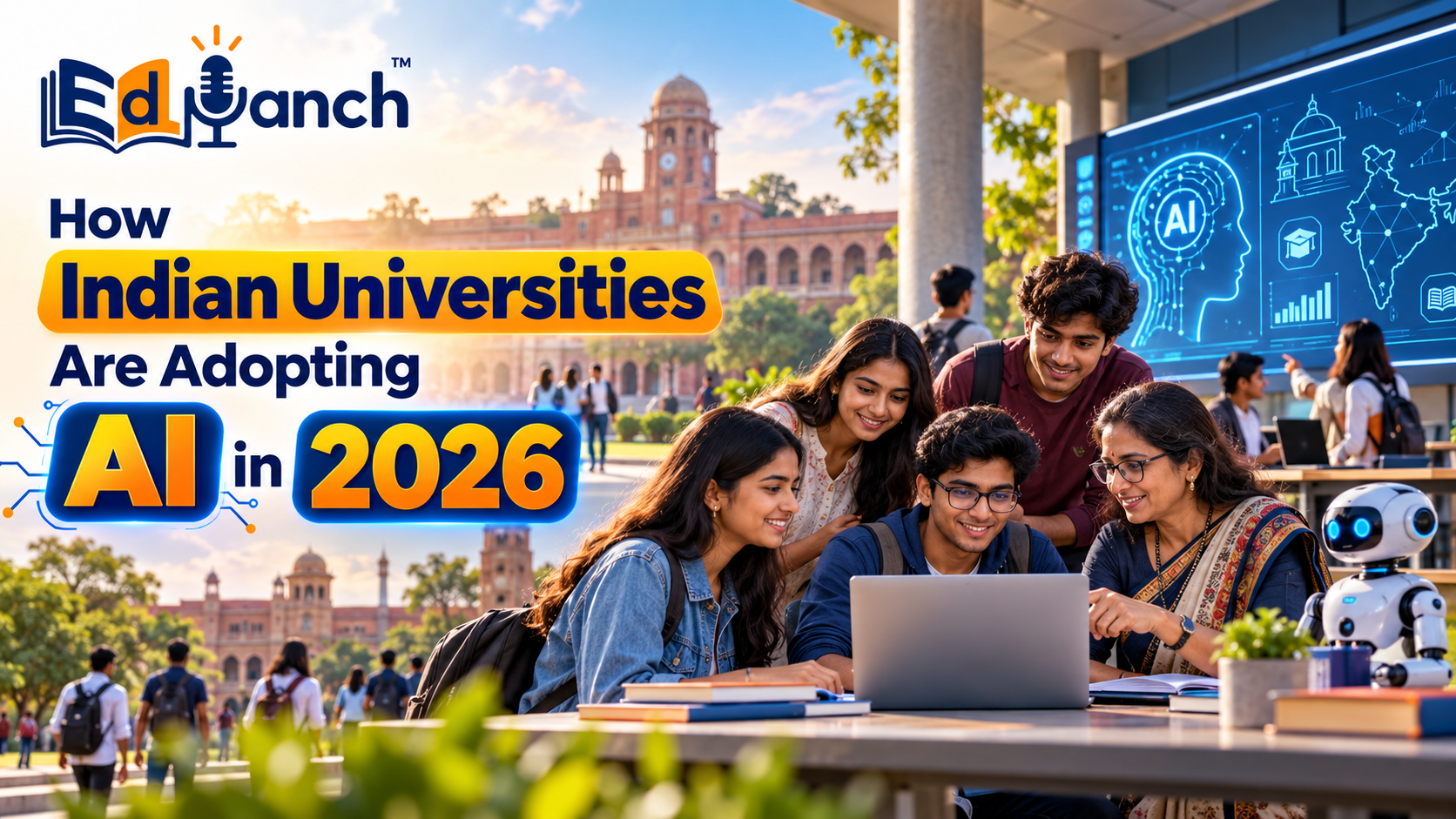
Artificial intelligence is arguably the single most transformative force in education technology today. AI-powered learning platforms analyse each student's performance data, identify strengths and gaps, and then adapt the content, difficulty level, and pace to suit that individual learner. This is called personalised or adaptive learning, and it is becoming standard rather than exceptional.
For Indian students preparing for competitive examinations such as JEE, NEET, UPSC, or CAT, AI-driven personalisation offers a meaningful edge. Instead of following a one-size-fits-all study plan, students receive targeted practice sets, customised revision schedules, and intelligent feedback based on their unique performance patterns. Several Indian EdTech platforms have already integrated AI tutoring features, and this capability will deepen significantly over the next two to three years.
Teachers and educators benefit equally. AI tools help instructors identify which students are falling behind before a problem becomes serious. Early intervention, supported by data, improves outcomes across the classroom rather than just for the most vocal or visible students.
Hybrid and Flexible Learning Models
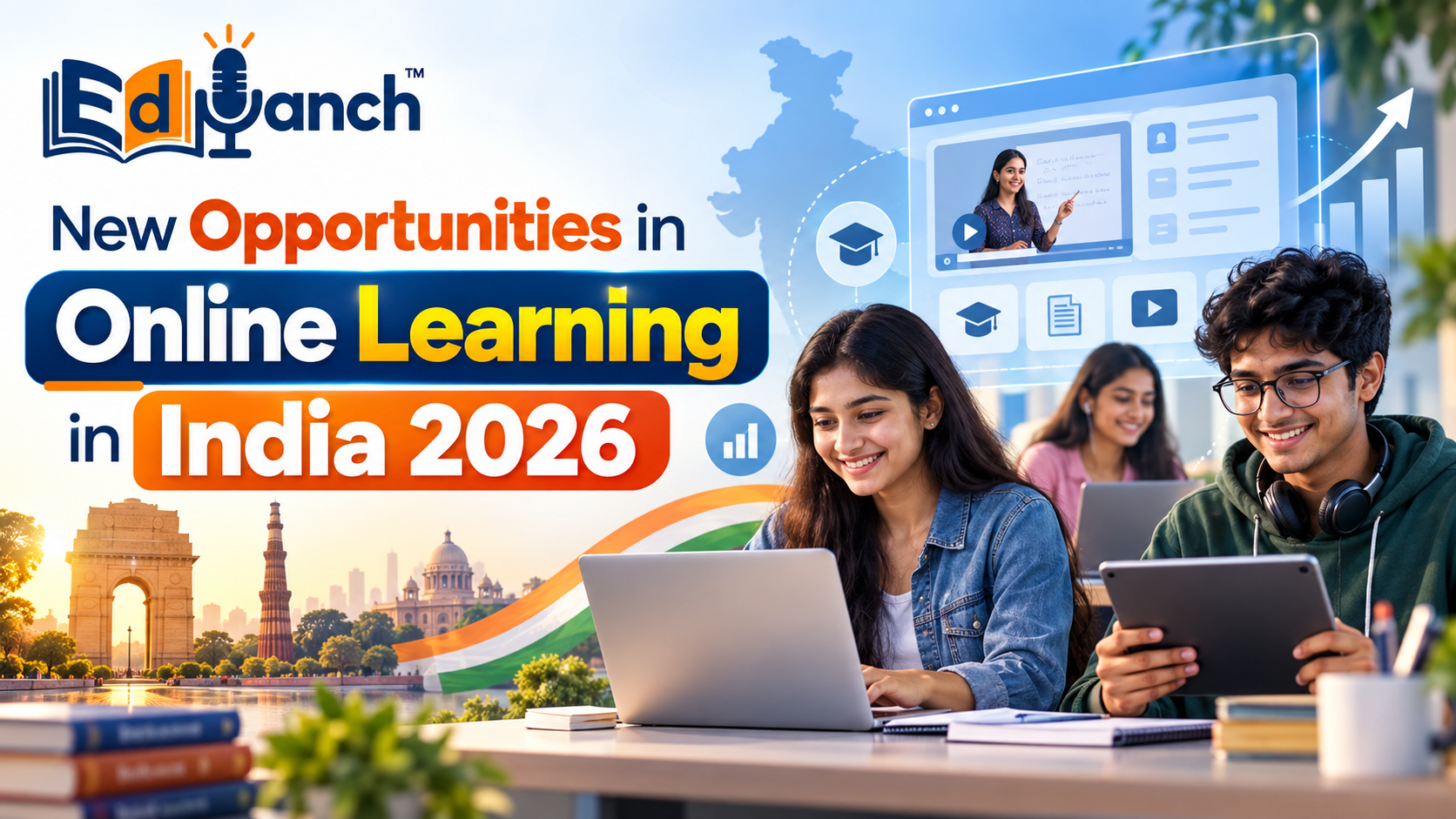
The rigid choice between fully online and fully offline education is dissolving. Hybrid learning, which blends in-person instruction with digital components, is becoming the preferred model across Indian schools and universities.
Under the National Education Policy 2020, Indian higher education institutions are actively building capacity for online and blended delivery. Universities such as IGNOU and several central universities now offer programmes that combine campus attendance with digital coursework, allowing students to manage their time more effectively.
For students in smaller cities or those with family responsibilities, hybrid models are particularly valuable. The ability to access recorded lectures, online discussion boards, and digital assignments without being physically present full-time removes a significant barrier to quality education. At the same time, hybrid models retain the human connection of face-to-face teaching, which remains important for collaborative learning, practical skill development, and mentorship.
Microcredentials and Digital Badges
The traditional degree is not disappearing, but it is no longer the only credential that carries weight. Microcredentials, short-form certifications that demonstrate specific skills or knowledge in a focused area, are gaining recognition from employers, especially in the technology, design, finance, and management sectors.
Platforms such as Coursera, edX, LinkedIn Learning, and several Indian-origin platforms now offer microcredential programmes that can be completed in weeks rather than years. These credentials are increasingly visible on resumes, LinkedIn profiles, and job applications.
For Indian students who want to complement their formal degree with industry-relevant skills, microcredentials offer a practical and affordable option. A computer science student earning a certified course in data science, cloud computing, or UX design demonstrates practical initiative beyond the classroom. Employers, particularly in the technology sector, are paying close attention to these signals.
The UGC has also begun exploring frameworks to formally recognise some short-duration credentials within the higher education system, which could further strengthen their value in India's academic and professional landscape.
Gamification and Immersive Learning
Gamification uses elements from games, such as points, leaderboards, badges, and challenges, to make learning more engaging. It is not a new idea, but its application in Indian EdTech is becoming more sophisticated and more widespread.
Beyond surface-level game mechanics, more advanced forms of immersive learning are entering the picture. Augmented reality and virtual reality technologies, while still in relatively early stages of adoption in India, are beginning to appear in specialised contexts. Medical colleges are exploring VR simulations for anatomy training. Engineering institutions are using virtual labs that allow students to conduct experiments without physical equipment. History and geography lessons can be brought to life through immersive digital recreations.
As the cost of AR and VR hardware decreases and as internet infrastructure in India continues to improve, these tools are expected to become more accessible to mainstream institutions over the next few years. In the near term, gamification within mobile learning apps remains the most accessible and widely used form of immersive learning for the average Indian student.
Learning Analytics and Data-Driven Support
Learning analytics refers to the collection and analysis of data generated by students as they interact with digital education platforms. This data covers everything from time spent on a topic to quiz performance, assignment completion rates, and engagement with course materials.
When used responsibly and effectively, learning analytics gives educators and institutions a much clearer picture of how students are actually progressing. It moves the conversation from anecdotal observation to evidence-based insight. Advisors and teachers can identify at-risk students earlier and offer targeted support before the situation becomes critical.
For Indian higher education institutions, which often manage very large student populations with limited counselling and support resources, predictive analytics tools could make a meaningful difference in student retention and completion rates. Several technology companies are now building analytics modules specifically designed for the Indian academic environment.
Generative AI and Academic Integrity
Generative AI tools, which can create written content, solve problems, and generate code within seconds, have ignited important conversations in education globally, and India is no exception. These tools are increasingly accessible to students, which raises genuine questions about academic honesty and the purpose of assessments.
Forward-thinking institutions are not simply trying to ban these tools. Instead, they are redesigning how they assess student learning. Project-based evaluations, oral examinations, group presentations, and applied assignments are becoming more prominent because they require students to demonstrate genuine understanding in ways that cannot be replicated by a generative AI tool alone.
At the same time, students who learn to use generative AI tools effectively and responsibly, as aids to research, drafting, and problem-solving rather than replacements for thinking, will carry a genuine advantage in the workplace. The goal is not to avoid these technologies but to engage with them critically and ethically.
Cybersecurity and Data Privacy in EdTech
As Indian students spend more time on digital platforms, the volume of sensitive personal and academic data being collected and stored by EdTech companies continues to grow. This makes cybersecurity a critical issue, not just for institutions but for individual students and families as well.
Data about academic performance, attendance, financial transactions, and personal identity must be protected rigorously. Unfortunately, the EdTech sector has faced a number of high-profile data breaches in recent years, both in India and globally. Students and parents should take an active interest in understanding the data privacy policies of the platforms they use and should be cautious about the personal information they share online.
Regulatory frameworks around data protection in India, including the Digital Personal Data Protection Act, are evolving to address these concerns. EdTech companies that invest in robust security infrastructure and maintain transparent privacy practices will earn greater trust from students, parents, and institutions.
How These Trends Are Playing Out in India Specifically
India's EdTech story has its own distinct character. While the country has produced globally significant EdTech platforms and is home to one of the world's most competitive student populations, significant challenges remain.
The digital divide between urban and rural India, between students with reliable internet access and those without, continues to affect equitable access to EdTech benefits. Government initiatives such as the PM eVIDYA programme, the DIKSHA platform, and the SWAYAM online education portal are working to bridge this gap, but progress is uneven across states and communities.
Teacher training is another critical factor. Technology alone cannot improve educational outcomes. Educators need ongoing professional development to integrate digital tools effectively into their teaching practice. The National Initiative for School Heads and Teachers Holistic Advancement programme and similar efforts are important steps, but the scale of India's teaching workforce means that this remains an ongoing challenge.
Despite these complexities, the trajectory is clear. India's EdTech sector will continue to grow, to deepen its reach, and to introduce capabilities that genuinely transform the student experience for millions of learners across the country.
What Students and Parents Should Do Now
The most important response to these EdTech trends is not passive observation but active engagement. Some practical steps worth considering:
- Explore reputable online platforms and enrol in at least one short-duration course relevant to your field of study or career interest.
- Pay attention to microcredential programmes offered by recognised institutions and industry bodies, particularly in technology, business, and creative fields.
- Develop basic digital literacy skills, including an understanding of how AI tools work, how to evaluate online sources critically, and how to protect personal data online.
- Ask schools and colleges about their digital learning infrastructure and whether hybrid learning options are available.
- Stay informed through trusted education media sources that simplify policy changes, new programmes, and emerging opportunities in the Indian education ecosystem.
Platforms like Edumanch are built precisely for this purpose, to make education information simple, current, and useful for the real decisions that students, parents, and educators face every day.
Conclusion
The EdTech trends of 2026 are not distant possibilities. They are active realities that are already reshaping classrooms, campuses, and career pathways across India. Artificial intelligence is personalising learning at scale. Hybrid models are expanding access. Microcredentials are creating new routes to career readiness. Immersive tools are making complex concepts tangible. And data is helping institutions support students more proactively than ever before.
For Indian students, the message is straightforward. Technology will not replace the effort, curiosity, and determination that meaningful education demands. However, students who understand these tools, engage with them thoughtfully, and stay informed about the changes happening around them will be significantly better positioned to navigate the opportunities and challenges ahead.
Education in India is evolving. The students who thrive will be the ones who evolve with it.
Frequently Asked Questions
Q1: What are the biggest EdTech trends in India in 2026?
The biggest EdTech trends in India in 2026 include AI-powered personalised learning, hybrid and flexible learning models, microcredentials and digital badges, gamification, learning analytics, and increased focus on cybersecurity in digital education platforms.
Q2: How is artificial intelligence changing education in India?
Artificial intelligence is helping Indian students receive personalised content recommendations, real-time feedback, and adaptive assessments. AI tutors and smart learning management systems are also helping educators identify struggling students early and intervene effectively.
Q3: Are microcredentials and digital certificates useful for Indian students?
Yes. Microcredentials and digital badges are increasingly recognised by Indian employers, particularly in the technology, business, and creative sectors. They offer students a flexible and affordable way to build job-relevant skills alongside or instead of traditional degrees.
Q4: What is hybrid learning and is it available in India?
Hybrid learning combines in-person classroom instruction with online components, giving students the flexibility to learn at their own pace and location. Many Indian universities and EdTech platforms, including those under the National Education Policy 2020 framework, are now actively adopting hybrid models.
Q5: How can Indian students prepare for the EdTech-driven future of education?
Indian students can prepare by developing digital literacy skills, exploring online learning platforms, earning industry-relevant microcredentials, staying updated on new tools and technologies, and actively participating in blended or hybrid learning programmes offered by their institutions.
Resources
- National Council of Educational Research and Training (NCERT): Official curriculum frameworks, learning materials, and digital resources for school education in India.
- University Grants Commission (UGC): Regulatory guidelines for higher education, including online and open distance learning frameworks and microcredential recognition.
- SWAYAM (Study Webs of Active Learning for Young Aspiring Minds): Government of India's platform offering free online courses from school level to postgraduate level.
- Ministry of Education, Government of India: Policy updates, NEP 2020 implementation reports, and digital education initiatives including PM eVIDYA.
- All India Council for Technical Education (AICTE): Guidelines and updates on technical education, skill development programmes, and approved online learning options for engineering and management students.
Interlinking Keywords
EdTech trends India, AI in education, hybrid learning India, microcredentials for students, National Education Policy 2020, online learning platforms India, digital badges, learning analytics, gamification in education, SWAYAM online courses
Last reviewed by:
Edumanch Editorial Team on August 14, 2026
Disclaimer:
The information provided in this article is intended for general awareness and educational purposes only. EdTech platforms, programmes, and policies mentioned are subject to change. Readers are encouraged to verify the latest details directly with the relevant institutions, government bodies, or official platforms before making any academic or career decisions.









.png)
.png)
.png)
.png)
.png)

.png)

.png)


.png)
.png)