 Thursday, October 08, 2026
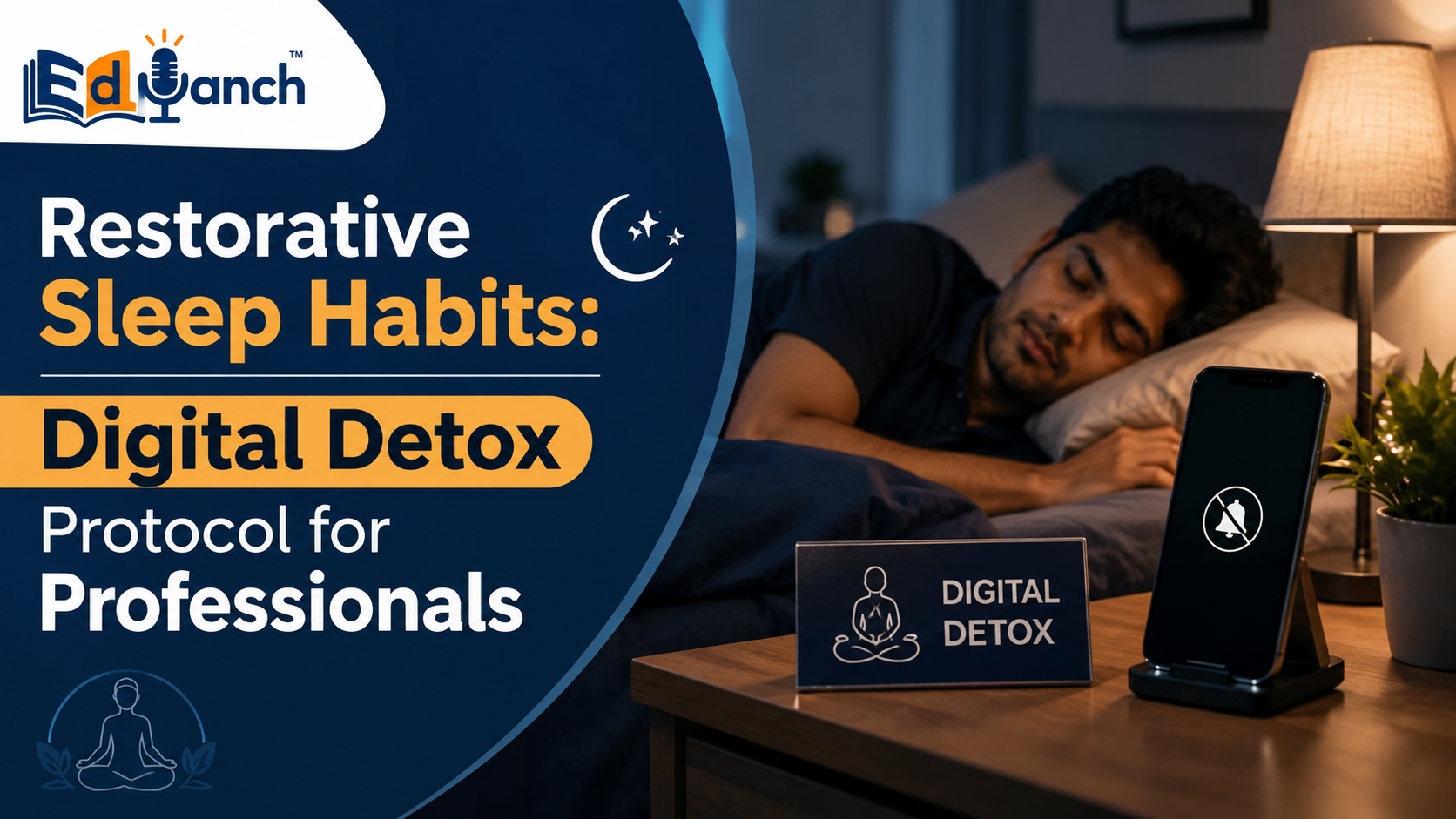
 In today’s hyper-connected professional environment, constant digital engagement is reshaping sleep patterns and disrupting natural recovery cycles. This article explores how digital overload impacts sleep architecture and highlights the importance of intentional digital detox strategies for restoring physical and mental well-being.


Modern professional life is defined by a state of persistent hyper-connectivity. While the transition to cloud-based productivity suites, instant messaging channels, and asynchronous project networks has optimized business operations, it has simultaneously introduced an unintended physiological tax: the erosion of human sleep architecture.
For high-velocity working professionals, sleep deficits are rarely caused by a simple lack of fatigue. Instead, they are structural failures driven by the blurring of boundaries between office hours and personal life.
[ THE HYPER-CONNECTED CIRCADIAN DEFICIT ]
│
┌────────────────────────┴────────────────────────┐
▼ ▼
[ THE METROPOLITAN GLOW ] [ THE PSYCHOLOGICAL ANCHOR ]
• Constant high-energy blue wavelength exposure • Late-night escalations and message alerts
• Suppresses natural pineal melatonin logs • Keeps the sympathetic system alert
• Shifts biological rest windows outward • Short-circuits deep slow-wave deep sleep
When professionals bring active screens into the bedroom, they subject their neurological pathways to a damaging combination of artificial light and cognitive stimulation. This environmental stress forces the autonomic nervous system to remain in a state of low-grade sympathetic activation ("fight-or-flight") right when it needs to settle into parasympathetic recovery.
Reclaiming restorative sleep does not demand walking away from modern professional responsibilities. True neurological recovery is achieved through a structured, data-driven digital detox protocol that resets your circadian rhythms, optimizes neural recovery, and protects your evening rest windows systematically.
1. The Core Infrastructure: The Circadian Recovery Matrix
To safely optimize sleep efficiency without compromising career execution velocity, your evening transition should pivot around three precise, evidence-based physical anchors.
[ NEUROLOGICAL RE-REGULATION MATRIX ]
│
┌────────────────────────┼────────────────────────┐
▼ ▼ ▼
[ THERMAL DROP VECTOR ] [ PHOTIC SHIELDING LAYER ] [ VAGAL CALMING TRIGGER ]
• Cool room boundaries • Pure black-out screens • Slow, extended exhalations
• Mimics natural dipping • Zero blue wavelengths • Lowers ambient pulse rates
• Accelerates sleep onset• Maximizes melatonin pass • Disarms active work stress
2. Three Primary Sleep Vulnerabilities and Digital Resolutions
A comprehensive audit of professional evening routines highlights three primary bottlenecks where sleep quality collapses, along with the precise behavioral protocols needed to resolve them:
Vulnerability A: The Blue-Light Melatonin Suppression Void- The Clinical Science: The human eye contains specialized photosensitive cells that are highly sensitive to blue light wavelengths (460–480 nm) emitted by smartphones and laptops. Exposure to this light late at night signals your brain's master clock to halt the release of melatonin, the vital hormone responsible for timing sleep onset, making it difficult to fall asleep smoothly.
- The Digital Resolution: Enforce an ironclad "60-Minute Screen-Free Buffer" before your target sleep time. If you must review documents late, configure your devices to automatically switch to high-contrast monochrome formats or activate native night-shift filters to block out harmful blue light wavelengths completely.
- The Clinical Science: Reviewing high-priority work communications or tracking unpredictable news updates right before bed triggers an immediate cortisol spike. This cognitive shock alerts your brain, forcing you into a loop of racing thoughts that prevents your mind from settling into deep sleep.
- The Digital Resolution: Implement a strict "Digital Sunset" communication lock across your network exactly one hour before bed. Move all workplace messaging channels to do-not-disturb mode and place your primary smartphone inside a dedicated dock located entirely outside your sleeping area to protect your peace of mind.
- The Clinical Science: Utilizing your bed as a secondary workspace for late-night typing creates a confusing psychological association. Over time, your brain stops viewing the bed as a place for rest, associating it instead with workspace pressure and stress, which fuels chronic insomnia.
- The Digital Resolution: Establish a strict, non-negotiable rule: The Bed is an Absolute Device-Free Sanctuary. Keep all laptops, tablets, and mobile devices confined to designated workspaces, training your brain to recognize the mattress as a cue for immediate neurological relaxation.
Comparative Matrix: Unmonitored Screen Habits vs. Circadian Detox Networks
The table below contrasts the physiological impact of unmanaged evening screen habits with the recovery advantages of a structured digital detox protocol.
|
Circadian Performance Indicator |
Unmonitored Evening Screen Habits |
Structured Digital Detox Protocol |
Long-Term Strategic Advantage |
|---|---|---|---|
|
Melatonin Production |
Delayed or suppressed by late-night screen exposure. |
Protected 60-minute dark adaptation phases. |
Accelerates sleep onset and improves overall sleep efficiency. |
|
Autonomic Stress Profile |
Sympathetic overload driven by midnight work alerts. |
Parasympathetic vagal breath work anchors. |
Lowers resting heart rate and reduces bedtime anxiety. |
|
Sleep Architecture Grid |
Fractured slow-wave and REM sleep tracking scores. |
Uninterrupted, natural sleep cycling layout. |
Optimizes cellular repair and sharpens focus the next day. |
|
Bedroom Boundary Line |
Blurred boundaries; the bed serves as a backup desk. |
Strict device-free bedroom layout rules. |
Corrects chronic sleep associations to eliminate insomnia. |
|
Morning Wake Experience |
Groggy mornings driven by high sleep inertia logs. |
Refreshed waking driven by natural hormone shifts. |
Boosts focus and decision-making speed during core office hours. |
3. High-Performance Action Plan for Daily Execution
To smoothly transition away from hyper-connected habits and build a sustainable, sleep-optimized evening routine, you must execute a multi-phase tracking protocol:
- Execute a Complete Bedroom Environment and Device Audit
Phase 1
Set up your sleeping space for success. Remove all glowing electronics, install high-quality blackout curtains to block outside light, and replace your phone with a simple, dedicated physical alarm clock to eliminate the temptation to check screens at night. - Deploy Your Automated Evening Communication Locks
Phase 2
Automate your boundaries. Program your phone to enter a strict "Sleep Mode" one hour before bed to silence incoming notifications, and transition your activities to relaxing, analog habits like reading a physical book or journaling to calm your mind. - Incorporate a Native Multi-Tier Circadian Tracking Sheet
Phase 3
Track your recovery patterns clearly. Keep a compact, digital or physical log to track your consistency, recording your screen-off times, sleep onset speed, and morning energy levels to watch your positive trends build over time.
Actionable Strategy: Your Long-Term Health Roadmap
- Link Your Health Insights with the Universal ABHA Framework Natively: Ensure your wearable smart trackers or sleep staging tools coordinate with national health platforms. Linking your metrics natively via the Ayushman Bharat Digital Mission (ABDM) interface preserves your long-term health logs, prevents chart fragmentation, and simplifies medical check-ins across clinics.
- Incorporate High-Resolution Home Oximetry Staging Cues: Do not ignore morning headaches, recurring night-waking, or persistent fatigue, which can be early indicators of sleep apnea—a hidden driver of chronic exhaustion. Use a home pulse oximeter once a month to verify your blood oxygen metrics remain stable throughout the night.
- Conduct Semi-Monthly Evening Environmental Calibration Audits: Keep a continuous, objective eye on your sleep space. Take time twice a month to check your bedroom's temperature and light levels, ensuring your room remains cool (around 18\text{--}22^\circ\text{C}) and perfectly dark to support your body's natural overnight recovery.
Frequently Asked Questions (FAQs)
Q1. Why does looking at a smartphone screen late at night directly damage sleep quality?Smartphones emit concentrated blue light wavelengths that mimic natural daylight. When this light hits your eyes at night, it tricks your brain's master clock into believing it is still daytime, completely halting the release of melatonin and delaying your natural sleep cycles.
Q2. What exactly does a "Digital Sunset" look like for a busy professional?A digital sunset is a set boundary time—typically 60 minutes before bed—where you disconnect from all digital work tools. You move professional apps to silent modes, turn off laptops, and pivot to calming analog activities to help your nervous system wind down.
Q3. How does late-night work stress alter your physical sleep architecture?Reviewing high-priority work tasks or emails late at night triggers a surge of cortisol and adrenaline. This hormonal spike raises your heart rate and tightens your blood vessels, keeping your body too alert to enter deep, slow-wave sleep stages.
Q4. Can using "Night Shift" or blue-light blocking filters completely save your sleep?While screen filters help reduce the intensity of blue light wavelengths, they do not resolve the psychological stimulation of reading new updates. True neurological rest requires removing screens entirely to allow your brain to unclamp from work pressures.
Q5. Why is using your bed as a secondary workspace a major cause of insomnia?Your brain builds strong spatial associations based on your daily habits. If you type out work reports while sitting in bed, your mind begins to link that space with stress and focus rather than rest, making it difficult to fall asleep naturally when you turn off the lights.
Q6. How does a cool room temperature accelerate your natural sleep onset speed?To initiate sleep, your body needs to drop its core temperature by roughly one full degree Celsius. Keeping your bedroom cool helps accelerate this natural thermal drop, signaling your brain to enter sleep states quickly.
Q7. What parameters are tracked on a 360-degree holistic circadian progress card?A holistic progress card tracks an array of metrics beyond raw sleep duration. It evaluates your screen-off times, sleep onset speed, frequency of night-waking, morning alertness ratings, and evening stress levels to provide a clear map of your recovery health.
Q8. Why should you avoid checking your smartphone immediately if you wake up in the middle of the night?Checking your phone mid-night exposes your eyes to an instant burst of bright light and introduces fresh mental stimulation. This combined shock alerts your brain, raising your heart rate and making it incredibly difficult to drift back into deep sleep.
Q9. How long does it typically take to see an improvement in energy levels after adopting this protocol?When you stick to a consistent digital detox routine—such as maintaining screen-free buffers, enforcing digital sunsets, and keeping a cool room—your nervous system adapts quickly. You can observe a distinct stabilization in your deep sleep patterns and improved morning focus within 4 to 6 weeks of active execution.
Q10. What steps should you take if your mind continues to race after turning off your screens?Do not stay in bed tossing and turning, as this builds a negative association with your mattress. Step out of bed, move to a dimly lit adjacent space, and engage in a calming, low-stimulus activity like soft stretching or listening to gentle ambient music until your body signals it is ready for rest.














.png)
.png)
.png)

.png)
.png)

.png)

.png)