 Monday, October 05, 2026
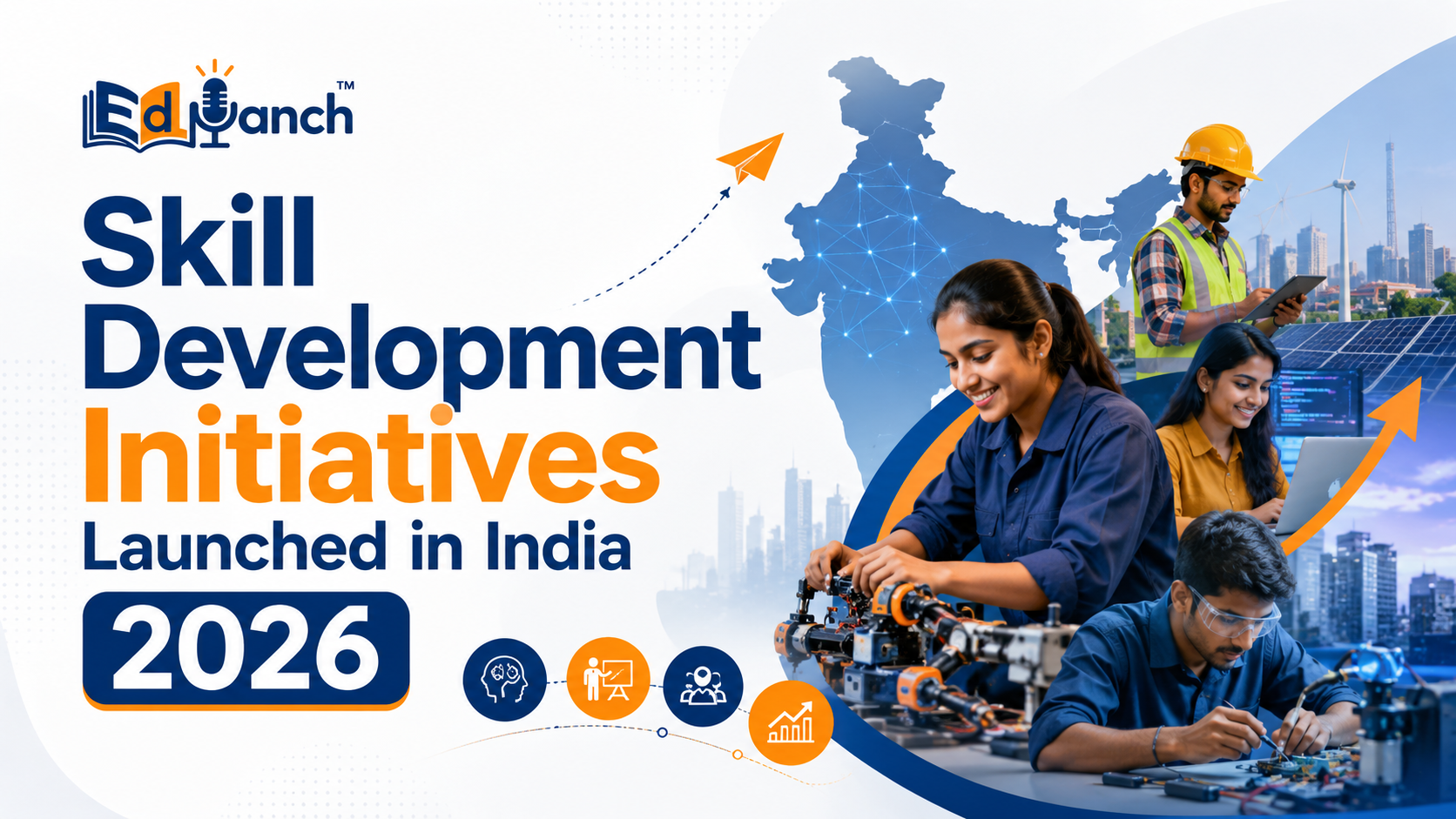
 India's new skill development initiatives, including PM SETU, SOAR, and the Skills Outcomes Fund, are reshaping vocational training by linking education to AI readiness and real employment outcomes for students nationwide.





Introduction
India's skill development landscape is moving faster than at any point in the last decade. With artificial intelligence, automation, and green technologies reshaping the job market, the government has rolled out a fresh set of initiatives in 2026 aimed at making the Indian workforce future-ready. These are not isolated announcements. They form part of a larger shift where skilling is being tied directly to employment outcomes, AI literacy is being introduced from the school level, and Industrial Training Institutes are being upgraded on a scale not seen before.
For students trying to decide between a traditional degree and a vocational path, for parents wondering whether a government skilling scheme is worth their child's time, and for working professionals looking to reskill, understanding these new initiatives matters. This guide breaks down the most significant skill development programmes launched or expanded in India recently, explains who they are meant for, and looks at what they mean for the years ahead.
Understanding India's Skilling Push: The Bigger Picture
India has one of the youngest populations in the world, with a large share of citizens in the working age group. This demographic strength only becomes an economic advantage if enough people have job-ready skills. The Skill India Mission, launched in 2015, was built to close this gap, and it has been refined continuously since then.
The Union Cabinet approved the continuation and restructuring of the Central Sector Scheme called the Skill India Programme, bringing together Pradhan Mantri Kaushal Vikas Yojana 4.0, the Pradhan Mantri National Apprenticeship Promotion Scheme, and the Jan Shikshan Sansthan scheme under one composite structure. This restructuring was designed to simplify governance, improve monitoring, and align training more closely with what employers actually need. A national pool of assessors and trainers is also being developed to maintain consistent quality across thousands of training centres nationwide.
What makes the current phase different is the clear shift toward outcome-based thinking. Earlier phases of skilling focused heavily on the number of people trained. The newer initiatives are far more concerned with what happens after training, namely whether candidates actually find and retain employment.
Key New Initiatives Reshaping Skill Development in India
PM SETU: Upgrading India's ITI NetworkOne of the most ambitious recent approvals is Pradhan Mantri Skilling and Employability through Upgraded ITIs, known as PM SETU. The scheme carries an estimated outlay running into tens of thousands of crores over five years and follows a Hub and Spoke model, where around 200 Hub institutes support roughly 800 Spoke institutes across the country. The goal is to modernise vocational training infrastructure so that Industrial Training Institutes are not seen as a fallback option but as a credible, industry-aligned alternative to conventional higher education.
This matters because the number of ITIs in India has grown substantially over the past decade, and PM SETU is meant to improve the quality of what happens inside these institutes rather than simply expanding their number. Better laboratories, updated machinery, and curriculum aligned with current industry requirements are central to this upgrade.
The Skills Outcomes Fund: Linking Training to Real JobsA newer and particularly notable initiative is the Skills Outcomes Fund, introduced as a campaign by the Ministry of Skill Development and Entrepreneurship. Unlike traditional training schemes, this fund is structured around Outcome-Based Financing, meaning that investment and payment are tied to actual employment results rather than just training completion. It will be operated through the National Skill Development Corporation, with government bodies, private companies, and philanthropic organisations co-investing.
This model builds on the earlier Skill Impact Bond, under which a meaningful share of trained youth secured jobs and a notable proportion stayed employed over time. The Skills Outcomes Fund extends this approach to sectors such as information technology, banking and financial services, automobiles, healthcare, logistics, and green jobs, which are currently seeing strong hiring demand. For students, this signals that future training programmes may increasingly be judged, and possibly priced, on whether they actually lead to a paycheck.
SOAR: Bringing AI Literacy to School StudentsArtificial intelligence has moved from being an optional add-on skill to a baseline expectation in many careers, and the government has responded with SOAR, short for Skilling for AI Readiness. This national initiative is aimed at building AI awareness and foundational skills among school students from Classes 6 to 12, while simultaneously training educators so they can guide students confidently. The programme offers structured micro-credential courses accessible through the Skill India Digital Hub, and it has been positioned as a way to prevent a new kind of digital divide based on AI fluency rather than just internet access.
For parents, this is a meaningful shift. AI exposure is no longer reserved for engineering colleges or postgraduate programmes. It is being introduced at the school stage itself, which means students who engage with these foundational courses early may find it easier to choose AI-related specialisations later, whether in college or through vocational routes.
PMKVY 4.0 and the Expansion of Futuristic Job RolesPradhan Mantri Kaushal Vikas Yojana 4.0 continues to be the flagship short-term training scheme under the Skill India Mission, and its course catalogue has been expanded considerably to reflect Industry 4.0 demands. Training is now available in areas such as Artificial Intelligence and Machine Learning, Robotic Process Automation, Drone Pilot Technician roles, Industrial Internet of Things, and Data Analytics. Newer job roles being promoted under the scheme include Electric Vehicle Service Technician, AR and VR Technical Artist, Solar Photovoltaic Designer, and AI and ML Engineer positions.
These are not theoretical categories. Lakhs of candidates have already been trained or oriented under PMKVY 4.0 in futuristic job roles, with significant funding allocated specifically for digital skills training. The scheme is open broadly to individuals between 14 and 35 years of age, covering school and college dropouts, unemployed youth, and people seeking certification for skills they already possess through Recognition of Prior Learning.
Apprenticeships and Industrial Training in Emerging FieldsThe National Apprenticeship Promotion Scheme has also evolved to include apprenticeship opportunities in fields such as Artificial Intelligence, robotics, blockchain, and green energy, alongside long-established manufacturing and IT-ITeS trades. Thousands of apprentices have already been engaged specifically in AI-related trades, with a much larger number placed in broader IT and digital roles. A Direct Benefit Transfer mechanism now ensures that the government's share of the stipend reaches apprentices' bank accounts directly, reducing delays that earlier versions of the scheme faced.
Similarly, under the Craftsman Training Scheme delivered through Industrial Training Institutes and National Skill Training Institutes, new-age courses in Artificial Intelligence, Industrial Robotics, and drone technology have been introduced. A short foundational module on Artificial Intelligence has also been added to the Employability Skills subject across CTS trades, ensuring every trainee gets at least a basic introduction to AI concepts regardless of their specific craft.
Jan Shikshan Sansthan and Rural Digital SkillingReaching learners outside major cities remains a priority, and the Jan Shikshan Sansthan scheme has introduced new digital skills courses, including Assistant Computer Operator, a foundational course on computer concepts, Cyber Security Assistant, and Data Analysis Assistant. Tens of thousands of candidates have already been trained or oriented in these digital courses in the current financial year alone. JSS continues to work through a network of non-governmental organisations, with strong participation historically from women and rural communities, making it one of the more inclusive components of India's skilling architecture.
Industry Partnerships and Sector-Specific SkillingThe Directorate General of Training has built partnerships with major technology companies, including IBM India, Microsoft, Cisco, Adobe India, and Amazon Web Services, often under Corporate Social Responsibility arrangements, to deliver technical training in current industry tools. Separately, the Ministry of Electronics and Information Technology, along with Nasscom, runs the FutureSkills Prime platform, offering courses in Artificial Intelligence, Robotic Process Automation, and cybersecurity. These partnerships matter because they bring private sector currency to government-led skilling, ensuring that what students learn reflects what employers in technology companies are actually using.
What This Means for Students, Parents, and Job Seekers
For a student in Tier 2 or Tier 3 India deciding on a career path, these initiatives open up routes that did not exist a few years ago. A student who completes Class 10 or Class 12 no longer needs to choose only between a conventional degree and informal work. Short-term certified courses in AI, data analytics, drone operations, or electric vehicle servicing are now accessible through the Skill India Digital Hub, often at low or no cost, and several carry direct links to apprenticeship or placement opportunities.
For parents, the key reassurance is that these are not informal or unverified courses. They are anchored in the National Skill Qualification Framework and overseen by the National Council for Vocational Education and Training, which means certifications carry recognised value with employers. Parents weighing whether a child should pursue an ITI diploma alongside or instead of a conventional degree can take some comfort from the fact that infrastructure upgrades under PM SETU and quality checks under NCVET are specifically meant to raise the credibility of vocational education.
For working professionals looking to reskill, particularly those whose roles may be affected by automation, programmes like FutureSkills Prime and the AI and Machine Learning tracks under PMKVY 4.0 offer a relatively low-friction way to add a recognised digital skill without committing to a long academic programme.
Edumanch's role in this landscape is to keep these moving pieces organised in one place, helping students compare schemes, understand eligibility, and track new policy updates as the skilling ecosystem continues to expand across the country.
Challenges That Still Need Attention
It would be misleading to suggest the picture is without gaps. India's vocational training enrolment among youth has grown substantially, yet it still trails several other large economies. Awareness in rural and semi-urban areas remains uneven, and many eligible candidates are simply unaware that schemes like JSS or DDU-GKY exist in their district. There is also the long-standing challenge of perception, where vocational training is sometimes seen as a lesser option compared to a university degree, even when the former leads to faster and more stable employment in certain trades.
The shift toward outcome-based financing through initiatives like the Skills Outcomes Fund is a direct response to another challenge, which is that training completion numbers alone do not guarantee jobs. Whether this model scales successfully across more sectors and states will be an important indicator to watch over the next few years.
Conclusion
The new skill development initiatives launched in India reflect a clear and deliberate shift in approach. Infrastructure upgrades through PM SETU, AI literacy starting at the school level through SOAR, outcome-linked funding through the Skills Outcomes Fund, and an expanding catalogue of futuristic job roles under PMKVY 4.0 all point toward a skilling ecosystem that is trying to match the pace of technological change rather than lag behind it. For students and parents navigating career decisions today, these programmes offer real, certified pathways into employment, provided the right scheme is matched to the right stage of education and the right career goal. Staying updated on these initiatives and understanding eligibility before applying will continue to be the most useful first step for anyone looking to benefit from India's evolving skilling push.
Frequently Asked Questions
Q1: What are the newest skill development initiatives launched in India?
The newest initiatives include PM SETU for upgrading Industrial Training Institutes, the SOAR programme for building AI readiness among school students, the Skills Outcomes Fund that links training investment to employment results, and an expanded PMKVY 4.0 covering AI, robotics, and other futuristic job roles.
Q2: Who is eligible for PMKVY 4.0 training?
PMKVY 4.0 is generally open to Indian youth between 14 and 35 years of age, including school and college dropouts, unemployed individuals, and those who already have skills and want formal certification through Recognition of Prior Learning.
Q3: How can students enrol in the Skill India Digital Hub?
Students can visit the official Skill India Digital Hub portal, complete a simple registration with basic personal details, and then browse and enrol in courses, assessments, and certification programmes across a wide range of job roles.
Q4: What is the SOAR programme under the Skill India Mission?
SOAR, or Skilling for AI Readiness, is a national initiative that introduces foundational AI awareness and skills to school students from Classes 6 to 12 and builds AI literacy among teachers, with courses delivered through the Skill India Digital Hub.
Q5: Are these skill development schemes useful for students from small towns?
Yes. Schemes such as Jan Shikshan Sansthan, Deen Dayal Upadhyaya Grameen Kaushal Yojana, and the growing network of Industrial Training Institutes are specifically designed to reach rural areas, aspirational districts, and Tier 2 and Tier 3 towns, making certified vocational training accessible well beyond major metropolitan cities.









.png)
.png)
.png)
.png)
.png)

.png)

.png)