 Thursday, October 08, 2026
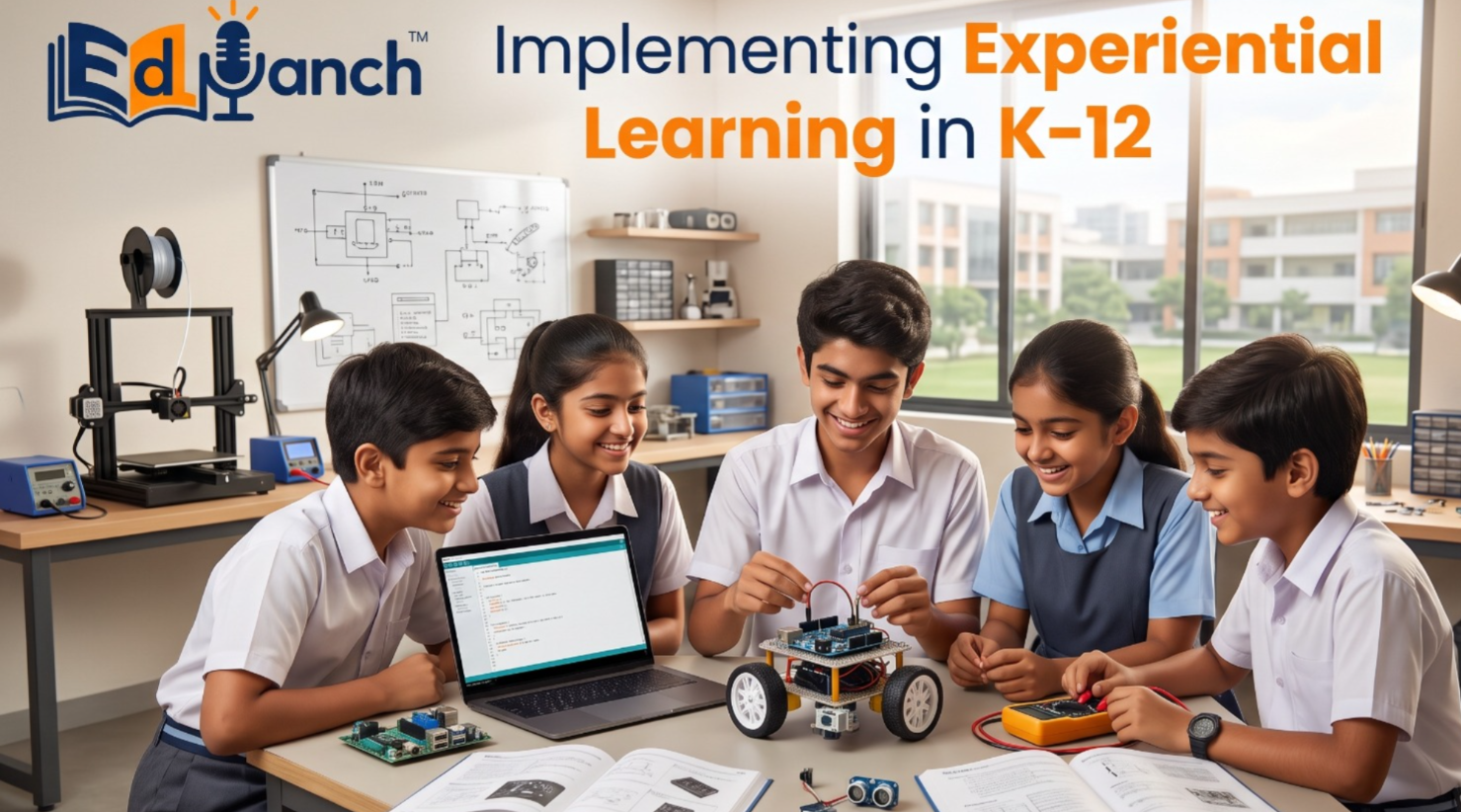
 For generations, the default architecture of primary and secondary education has remained largely unchanged. Classrooms have functioned primarily as venues for passive information transmission, where teachers deliver lectures, assign textbook chapters, require memorization of key definitions, and evaluate understanding through standardized written examinations.




For generations, the default architecture of primary and secondary education has remained largely unchanged. Classrooms have functioned primarily as venues for passive information transmission, where teachers deliver lectures, assign textbook chapters, require memorization of key definitions, and evaluate understanding through standardized written examinations. While this traditional methodology can effectively build foundational literacy and establish basic factual recall, it increasingly struggles to meet the demands of a modern world that prioritizes critical thinking, adaptability, complex problem-solving, and emotional intelligence. When learning remains confined to abstract text on a page, students often struggle to see its real-world relevance, leading to shallow conceptual retention, disengagement, and a lack of practical application skills.
Experiential learning offers a proven alternative to this passive model. Grounded in the foundational research of educational theorists such as John Dewey, Jean Piaget, and most notably David Kolb, experiential education shifts the instructional focus from passive listening to active discovery. At its core, experiential learning is defined not simply as "doing activities," but as a structured process where knowledge is created through the transformation of experience. By engaging students in direct, hands-on exploration followed by deliberate, guided reflection, K-12 educators can bridge the gap between abstract academic theories and concrete real-world applications.
Transitioning a school or classroom toward experiential models does not require abandoning rigorous academic standards or throwing out established curricula. Instead, it involves changing how concepts are introduced, explored, and internalised. When students construct their own understanding through direct interaction with their environment, they retain information longer, develop stronger analytical capabilities, and cultivate a genuine enthusiasm for lifelong learning.
1. The Theoretical Underpinnings: Unpacking Kolb’s Experiential Learning Cycle
To implement experiential learning effectively in a K-12 setting, educators must understand that hands-on activity alone is insufficient for deep learning. Physical engagement without structured cognitive processing often degenerates into mere entertainment. The educational power of experiential learning lies in executing a complete, continuous cognitive cycle, as formulated in David Kolb’s Four-Stage Learning Model.
Stage 1: Concrete ExperienceThe cycle begins with a direct, immersive experience that provides the raw material for learning. In a K-12 classroom, a concrete experience can take many forms: a physical science experiment, a role-playing historical simulation, a community survey, a building project, or an outdoor environmental sampling exercise. The primary objective of this stage is to engage the student's senses, spark curiosity, and create an authentic baseline of personal observation. During this stage, the teacher avoids delivering lectures or providing answers beforehand, allowing students to encounter challenges, make initial mistakes, and observe phenomena directly.
Stage 2: Reflective ObservationOnce the physical or simulated activity is complete, students must step back from the action to process what occurred. This is the stage where raw experience begins to transform into meaningful insight. During reflective observation, students ask questions such as: What actually happened during the activity? What did I notice? Where did our group run into unexpected obstacles? How did I feel when the initial design failed? Educators facilitate this stage through structured journaling, peer-led debriefing sessions, guided discussion prompts, or visual mind-mapping. Without this intentional reflective pause, the cognitive connection between physical activity and academic theory remains unformed.
Stage 3: Abstract ConceptualizationIn the third stage, students work to make sense of their reflections by connecting their direct observations to formal concepts, academic theories, and overarching principles. Here, the educator helps students synthesize their findings into generalizable conclusions. For instance, after observing how different soil types affect water drainage in a hands-on terrarium project, students link their personal observations to textbook concepts such as soil porosity, erosion mechanics, and ecosystem dynamics. During abstract conceptualization, students formulate mental models, derive mathematical formulas, or establish historical rules based on the evidence they gathered firsthand.
Stage 4: Active ExperimentationThe final stage of the cycle requires students to take their newly formed mental models and test them in entirely new, unfamiliar contexts. This stage completes the feedback loop and transforms theoretical understanding into versatile problem-solving ability. Students ask: If this rule holds true, what will happen if we change a variable? How can we apply this principles to solve a different problem in our local community? By applying their conceptual insights to a new challenge, students test the validity of their conclusions, generating a brand-new concrete experience and restarting the learning cycle at a higher level of cognitive sophistication.
2. Five Classroom-Ready Experiential Activity Models Beyond Textbooks
Implementing experiential learning in primary and secondary schools does not require expensive high-tech equipment or radical structural overhauls. What it requires is thoughtful lesson design that puts student inquiry at the center. Below are five practical, field-tested activity models across different grade levels and subject areas that demonstrate how to move learning beyond the pages of a textbook.
Model A: "Design-a-City" Math and Geography Integration- Target Grade Band: Middle School (Grades 6–8)
- Core Subject Alignment: Geometry, Ratios and Proportions, Human Geography, Environmental Science, and Financial Literacy.
- The Hands-On Activity: Rather than completing isolated worksheets on area, perimeter, scale factors, and percentage calculations, students work in collaborative teams over a three-week unit to design a sustainable, functioning city grid from scratch. Working with explicit constraints—such as a fixed virtual budget, specific land-use zoning laws, and geographic terrain limitations—teams must draw scaled physical blueprints using specific ratio conversions, such as one centimeter equaling ten meters. They must allocate space for residential neighborhoods, industrial zones, public parks, road networks, emergency services, and waste management infrastructure.
- The Experiential Loop: During the activity, student teams face unexpected real-world variables introduced by the teacher, such as a sudden budget cut, an environmental flood-zone warning, or a population spike requiring density adjustments. Students must recalculate land ratios, redraw geometric layouts, and make trade-offs between economic growth and environmental preservation.
- Reflection and Conceptualization: Once the blueprints are complete, student teams present their municipal master plans to a guest panel consisting of peers, teachers, and local urban planning professionals. Instead of taking a traditional written test, students are assessed on their ability to defend their mathematical calculations, justify their spatial choices using geographic principles, and explain how their city design mitigates environmental impacts.
- Target Grade Band: Elementary School (Grades 3–5)
- Core Subject Alignment: Life Sciences, Ecosystem Dynamics, Photosynthesis, Water Cycle, and Earth Systems.
- The Hands-On Activity: To learn how living and non-living elements interact within a self-sustaining ecosystem, students construct physical terrariums using clear glass or plastic containers, gravel, activated charcoal, soil, small terrestrial plants, and measured amounts of water. Once assembled, the jars are sealed airtight and placed near natural light sources. The jars remain sealed for four weeks, creating closed environmental loops that require no external input of water or nutrients.
- The Experiential Loop: Students become active environmental researchers. Each morning, they record daily qualitative and quantitative data in dedicated field journals. They measure plant growth against marked glass lines, record moisture condensation levels on the container walls, track leaf color shifts, and note any mold formation or decay.
- Reflection and Conceptualization: When students observe water droplets forming on the inside lid of a sealed jar and falling back into the soil, the teacher introduces formal terms like evaporation, condensation, and precipitation. Because students have watched the process occur inside their own jars for weeks, these terms become concrete realities rather than abstract vocabulary words to memorize for a quiz. Students write reflective summaries explaining how energy transfers through their closed systems and how balance is maintained without human intervention.
- Target Grade Band: High School (Grades 9–12)
- Core Subject Alignment: World History, Constitutional Law, Social Studies, Public Speaking, and Formal Argumentation.
- The Hands-On Activity: Instead of passively reading a chapter about a historical treaty, constitutional convention, or landmark legal dispute, the teacher transforms the classroom into a formal court or diplomatic chamber. Students are assigned specific historical figures, legal advocates, witnesses, or jurors. Each student receives a brief dossier containing primary source documents, private letters, speeches, and legal precedents from the era being studied.
- The Experiential Loop: Students must adopt the perspective, political constraints, and philosophical arguments of their assigned roles—even if those views conflict with their modern personal beliefs. Legal teams draft formal opening statements, prepare witness cross-examinations, and cite primary source evidence to build their cases. During the simulation, students must respond dynamically to unexpected evidence, opposing arguments, and judicial questioning in real-time.
- Reflection and Conceptualization: Following the delivery of the verdict or diplomatic agreement, students break character for a debriefing session. They write critical reflection essays analyzing the gap between historical realities and their classroom simulation. They examine how socio-economic pressures, personal biases, and systemic power dynamics shaped real historical outcomes, demonstrating a deep, nuanced understanding of history that goes far beyond memorizing dates and names.
- Target Grade Band: Middle and High School (Grades 7–12)
- Core Subject Alignment: Chemistry, Environmental Science, Data Analysis, Technical Writing, and Civic Engagement.
- The Hands-On Activity: Students step out of the traditional laboratory setting to perform a real-world environmental audit of their local community. Partnering with local conservation groups or municipal water authorities, student teams collect water samples from various local sources—including nearby streams, agricultural runoff ditches, school drinking fountains, and municipal taps. Using field-testing kits, they measure key chemical and biological indicators such as pH levels, dissolved oxygen, nitrates, phosphates, heavy metal traces, and turbidity.
- The Experiential Loop: Students map their sample collection points geographically, correlate chemical data with surrounding land use (such as proximity to industrial parks, agricultural fields, or residential lawns), and track environmental metrics over time. When unexpected spikes in nitrate or acidity levels appear in specific samples, students investigate potential upstream pollution sources.
- Reflection and Conceptualization: Rather than submitting a standard lab report that only the teacher reads, students compile their findings into an environmental impact report. They present their findings to local civic bodies, school board administrators, or community town halls, offering actionable, evidence-based policy recommendations for local water conservation. This connects academic chemistry directly to public health and civic advocacy.
- Target Grade Band: Early Primary (Grades 1–3)
- Core Subject Alignment: Basic Arithmetic, Monetary Value, Financial Literacy, Social-Emotional Learning, and Applied Economics.
- The Hands-On Activity: To build a practical understanding of foundational mathematics and basic economics, teachers set up a continuous, micro-classroom economy that runs throughout the school term. Students earn simulated "classroom currency" by fulfilling daily classroom responsibilities, demonstrating collaborative behavior, and completing creative bonus tasks.
- The Experiential Loop: Every two weeks, the classroom transforms into a hands-on market. Students can choose to spend their hard-earned currency on small privilege rewards (such as choosing their seat for the week or leading line duty), purchase student-made crafts, or save their earnings in personal "bank accounts" to buy higher-value items during future market days. Students take turns acting as storekeepers, bank tellers, and consumers.
- Reflection and Conceptualization: Through hands-on transactions, students make practical calculations involving addition, subtraction, making change, and tracking ledger balances. When demand for a popular item spikes and prices rise, the teacher introduces basic economic concepts like supply, demand, inflation, and opportunity cost. Students reflect on their personal spending choices in guided discussions, evaluating the difference between short-term gratification and long-term financial planning.
3. Structural Evaluation: Traditional Textbook Instruction vs. Experiential Learning
Transitioning an educational institution from traditional textbook-centric teaching to an experiential learning framework alters classroom culture and instructional mechanics across several key operational dimensions.
Primary Student Role and EngagementIn a traditional textbook framework, the student acts primarily as a passive recipient of information. The learning environment requires sitting quietly, reading designated pages, listening to teacher lectures, and reproducing information on demand. In contrast, an experiential framework places the student in the active role of researcher, designer, collaborator, and critical thinker. Engagement shifts from passive compliance to active ownership, as students directly manipulate materials, test hypotheses, and drive their own inquiry.
Knowledge Depth and Long-Term RetentionTextbook instruction often emphasizes broad coverage of facts and definitions over deep conceptual understanding. While students may memorize technical terms long enough to pass a end-of-unit quiz, studies show that information acquired through rote memorization fades rapidly without practical context. Experiential learning focuses on deep, durable understanding. Because concepts are anchored to tangible sensory experiences, real-world problems, and personal reflection, knowledge is stored in long-term memory structures, making it far easier for students to retrieve and apply concepts in novel situations years later.
Assessment Methodology and Feedback LoopsTraditional instruction relies heavily on summative, high-stakes assessments, such as multiple-choice tests, end-of-chapter quizzes, and standardized fill-in-the-blank exams. These instruments measure a student's ability to recall information at a single point in time. Experiential learning utilizes authentic, continuous performance assessments. Educators evaluate student growth through project portfolios, working prototypes, peer presentations, field journals, self-reflective essays, and direct observation of problem-solving processes. Feedback is continuous and formative, allowing students to refine their work in real-time.
Failure Management and Psychological MindsetIn a traditional classroom, making a mistake on a test or assignment usually results in a low grade, creating a fear of failure that can discourage intellectual risk-taking and foster a fixed mindset. In an experiential learning environment, initial errors, failed prototypes, and unexpected experimental results are treated as essential learning data. When a bridge built from balsa wood collapses under a weight test, it is not marked as a failure; it becomes the starting point for reflective observation and structural redesign. This approach builds resilience, adaptability, and a growth mindset.
Interdisciplinary Integration and Real-World ContextTextbook curricula typically isolate academic subjects into rigid, artificial silos—mathematics is taught in isolation from science, and language arts is separated from social studies. Experiential learning mirrors the real world by naturally integrating multiple academic disciplines within single, comprehensive projects. A local water quality audit, for example, requires applying chemistry concepts, performing mathematical statistical analysis, exercising geographical mapping skills, and writing persuasive public policy briefs in clear, professional English.
4. High-Performance Action Plan for K-12 Educators and Administrators
Transitioning a classroom, department, or entire school toward experiential learning requires a deliberate, structured execution strategy. Without clear planning and scaffolding, hands-on activities can become chaotic and lose their educational impact. Educators can follow a three-phase operational roadmap to build a sustainable experiential learning environment.
Phase 1: Curriculum Audit and Essential Question FramingBegin by auditing your existing syllabus to identify dense, abstract, or historically difficult units that students frequently struggle to grasp through textbook reading alone. Instead of attempting to convert an entire year's curriculum overnight, select two or three key topics per term for experiential redesign.
Reframe these traditional topics around compelling, open-ended "Essential Questions" that connect academic standards to real-world challenges. For example, convert a standard unit on "Chapter 5: Botanical Structures and Photosynthesis" into an active inquiry question: "How can we design a zero-water indoor agricultural system to grow fresh vegetables in our school cafeteria?" This single shift frames the required science standards within a meaningful, goal-oriented project that naturally motivates student investigation.
Phase 2: Logistics Structuring, Scaffolding, and Role AssignmentThe success of experiential activities depends heavily on backend organization and clear structural parameters. Before launching a hands-on project, map out time limits, material logistics, safety protocols, and physical space requirements.
To prevent group work from becoming unbalanced—where one student does all the work while others disengage—assign explicit, rotating functional roles to every student within a team. For instance, in a science simulation project, designate specific responsibilities:
- The Project Director: Manages timelines, ensures safety compliance, and keeps the team focused on the core rubric goals.
- The Materials Specialist: Manages equipment, handles raw supplies, and oversees clean-up operations.
- The Lead Data Analyst: Records quantitative observations, maintains the team field log, and verifies measurement accuracy.
- The Communications Officer: Coordinates team presentations, organizes visual documentation, and leads the drafting of the final reflection report.
Providing clear role definitions ensures that every student remains active, accountable, and personally invested in the team's outcome.
Phase 3: Facilitating Guided Reflection and Authentic AssessmentNever allow a hands-on activity to end abruptly without dedicated time for cognitive processing. Reserve the final 15 to 20 percent of every lesson block for structured reflection and abstract conceptualization.
Guide students through the reflection phase using explicit, three-tiered debriefing prompts:
- Tier 1 (What?): What specific physical results did your group observe? What data points did you collect? Where did your initial prototype encounter unexpected friction?
- Tier 2 (So What?): How do your physical results connect to the scientific laws, mathematical formulas, or historical theories we are studying? Why did your design fail or succeed based on these underlying principles?
- Tier 3 (Now What?): How can you apply this new principle to solve a different problem? What would you change if you had to rebuild this project from scratch tomorrow?
Assess student mastery using holistic rubrics that evaluate the entire learning journey—including initial planning, iterative problem-solving, collaborative execution, quality of technical work, and the depth of self-reflective insights—rather than grading solely on the final physical product.
Actionable Strategy: Digital Governance and Credential Integration
As experiential learning programs mature across primary, secondary, and higher education ecosystems, institutions must build secure, modern digital infrastructure to track, verify, and store student project achievements and co-curricular milestones.
Unifying Learning Portfolios via National Digital Academic FrameworksTraditional report cards and paper transcripts are ill-suited for capturing the rich, multifaceted outcomes of experiential learning. Schools should integrate student project achievements, vocational skills, community service-learning hours, and interdisciplinary milestones directly into verified digital academic repositories, such as the APAAR ID (Automated Permanent Academic Account Registry) operating within the broader Academic Bank of Credits (ABC) network.
By linking student-designed engineering prototypes, environmental audit reports, and civic debate accomplishments to a permanent, lifetime digital academic identity, students build an auditable, verifiable record of their practical capabilities. This comprehensive record supports their transition into higher education, specialized vocational institutes, and competitive career markets.
Managing Student Safety and Field Logistics via Health NetworksExperiential learning frequently takes students beyond traditional classroom walls—into local ecosystems, community centers, municipal facilities, and regional industrial sites. Managing safety, emergency contacts, and medical permissions during field-based experiential projects is essential for institutional risk management.
Schools should integrate student health records and activity clearances through secure, interoperable digital health accounts—such as the ABHA ID (Ayushman Bharat Health Account) pipeline. This ensures that emergency medical profiles, allergy information, and parental consent clearances are instantly, securely accessible to authorized school supervisors during off-campus excursions, safeguarding student well-being while expanding real-world learning horizons.
Institutionalizing Bi-Annual Experiential Curriculum AuditsSchool leaders and department heads should schedule bi-annual curriculum reviews to evaluate the impact of their experiential learning initiatives. Track qualitative and quantitative indicators, including student engagement rates, conceptual retention scores on standardized diagnostics, interdisciplinary project quality, material cost efficiencies, and teacher feedback. Use these insights to refine project scaffolding, update equipment inventories, and share effective activity templates across academic departments.
Frequently Asked Questions (FAQs)
Q1. Is experiential learning suitable for early primary school students (Grades K–2)?Yes. Young children are naturally experiential learners who make sense of the world through tactile interaction, sensory exploration, and imaginative play. Simple activity models—such as running a classroom storefront, planting a garden patch to observe plant growth cycles, or building simple structures using balance blocks—effectively teach foundational arithmetic, vocabulary, fine motor skills, and social-emotional cooperation without relying on heavy text reading.
Q2. How can teachers cover rigid, mandated curriculum standards if experiential projects take more time?Experiential learning should not be viewed as an "add-on" activity squeezed into an already overcrowded schedule. Instead, well-designed experiential projects should replace passive textbook reading and repetitive worksheet drills. A single, well-structured interdisciplinary project can address multiple mandated learning standards across science, mathematics, language arts, and social studies simultaneously, ultimately saving instructional time while deepening student comprehension.
Q3. How do you grade student performance fairly in an experiential learning model?Assessment in experiential learning uses rubric-based authentic evaluation tools. Rather than grading only the final physical product or relying on a single test score, educators assess multiple dimensions of the learning cycle: project planning quality, systematic data collection, team collaboration, critical thinking during problem-solving iterations, and the depth of self-reflection demonstrated in final logs or oral presentations.
Q4. Does implementing experiential learning require a large budget or high-tech equipment?No. Highly effective experiential learning can occur using low-cost household items, recycled materials, natural outdoor surroundings, or simple classroom simulations. Constructing a self-sustaining terrarium requires basic glass jars and garden soil, while executing a mock trial requires only primary source documents and creative role-playing. The educational value comes from the structure of the inquiry and reflection, not the cost of the tools.
Q5. How can educators manage noise levels and classroom discipline during hands-on group activities?Classroom management in an experiential setting relies on clear group norms, structured time management, and explicit individual role assignments within student teams. When every student has a specific, accountable job within their group, off-task behavior decreases significantly. Noise in an experiential classroom should be re-framed: purposeful, collaborative discussion focused on solving a shared problem is a sign of healthy engagement, not a lack of discipline.
Q6. How does an APAAR ID assist in tracking student achievements in experiential learning?An APAAR ID acts as a permanent, lifetime digital academic registry for students. It records verified academic credits, co-curricular project achievements, vocational skills, and community service-learning milestones across a student's entire educational journey, providing a reliable, portable record of practical competencies for future academic and career opportunities.
Q7. What is the teacher's primary role during an experiential learning activity?The teacher's role transforms from a traditional lecturer ("the sage on the stage") to a strategic facilitator ("the guide on the side"). During experiential activities, the educator moves between groups, observes student interactions, asks targeted probing questions to guide thinking, monitors safety protocols, helps students navigate roadblocks, and leads the final structured debriefing session.
Q8. How does Kolb’s Learning Cycle apply to a daily 45-minute class period?A teacher can run a micro-cycle of Kolb's framework within a single class period: spend 15 minutes on a rapid Concrete Experience (e.g., testing different paper airplane wing designs), 10 minutes on Reflective Observation (recording flight distances and discussing structural failures in small groups), 10 minutes on Abstract Conceptualization (connecting flight results to aerodynamic lift and drag principles presented on the board), and 10 minutes on Active Experimentation (modifying wing angles to test the new aerodynamic rule in a final flight test).
Q9. Can experiential learning be adapted effectively for neurodivergent and special education students?Yes. Experiential learning is beneficial for neurodivergent students and diverse learning styles. Hands-on, multi-sensory exploration provides alternative, visual, and tactile entry points to complex concepts that might otherwise present significant barriers when delivered strictly through dense written text or long auditory lectures.
Q10. What single step should an educator take tomorrow to begin moving away from textbook-heavy instruction?Select one upcoming lesson that students historically find abstract, dry, or difficult to understand through reading alone. Convert that single textbook lesson into a 20-minute physical simulation or hands-on experiment, and follow it immediately with a 10-minute guided reflection discussion asking students to explain what happened, why it happened based on core principles, and how they can apply what they learned.











.png)
.png)
.png)
.png)
.png)
.png)
.png)