 Monday, October 05, 2026
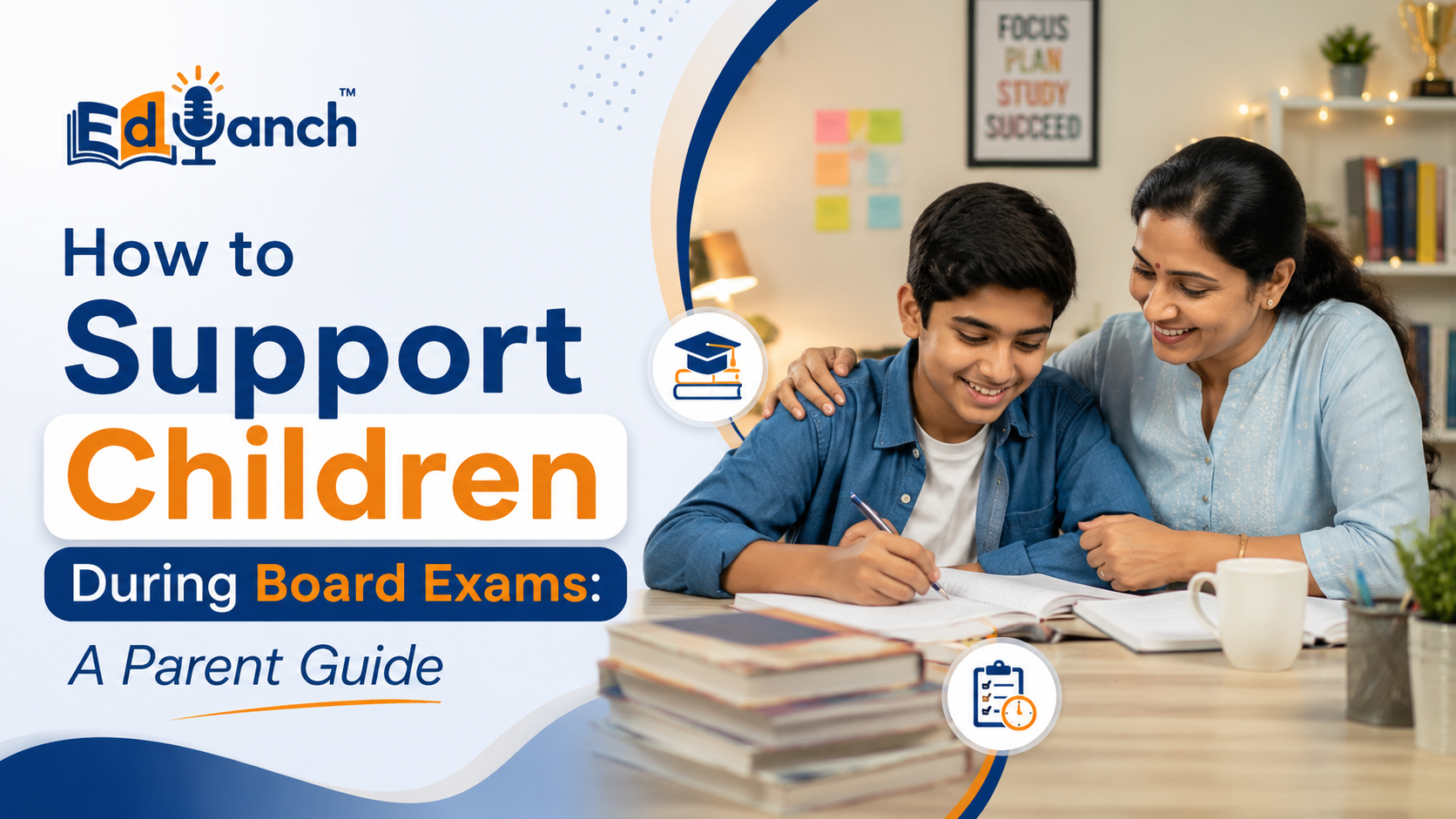
 This guide helps Indian parents support children through board exams with practical routines, emotional reassurance, health habits, and calm post-exam guidance, backed by national survey data on student stress.





Introduction
Board exam season changes the rhythm of an entire household. Timetables get rearranged, dinner table conversations shift toward marks and revision, and the pressure that students feel often spills over onto parents as well. Government surveys give a clear picture of how widespread this pressure has become. NCERT's Manodarpan survey, conducted among close to four lakh students from Classes 6 to 12, found that a majority of students perceived studies as the primary reason for their anxiety, largely because they felt they would not be respected if they did not perform well academically. Separately, a NIMHANS study reported that more than 85 percent of Indian students experience moderate to severe exam stress.
These numbers do not suggest that board exams themselves are the problem. They suggest that the way families, schools, and students approach exam season needs more structure, more empathy, and less fear. Parents are not expected to become subject experts overnight or to solve every academic gap. What genuinely helps is a steady, informed, and emotionally present approach at home. This guide walks through what that looks like in practice, drawing on academic research, expert recommendations, and the realities of Indian households preparing for CBSE, ICSE, and state board examinations.
Understanding Why Board Exams Feel So High Stakes in India
Board exams in India carry a weight that goes beyond the syllabus. For most families, Class 10 and Class 12 results are tied to stream selection, college admissions, scholarship eligibility, and sometimes extended family expectations. This is different from many other education systems, where a single exam does not carry the same downstream consequences.
The Central Board of Secondary Education alone conducted exams for a massive student population in 2026, with the Class 10 board exams seeing participation from around 24.7 lakh students appearing out of 24.8 lakh registered candidates, resulting in a pass percentage of 93.70 percent. At the Class 12 level, results were slightly more mixed, with the overall pass percentage recorded at 85.20 percent, a drop of a little over 3 percentage points compared to the previous year. Regional performance also varied considerably, with some regions crossing 95 percent pass rates while others stayed closer to 72 percent.
Numbers like these matter for parents to know, not to add pressure, but to understand that performance varies widely across the country due to school quality, access to guidance, and regional educational infrastructure, not just a child's individual effort. Recognising this can help parents set realistic, compassionate expectations instead of comparing their child against an abstract national average.
It is equally important to recognise that competitive academic environments extend beyond board exams. Even coaching-heavy hubs preparing students for subsequent entrance exams show concerning patterns, with research indicating that a large share of students in such environments spend six to seven hours daily inside coaching institutes on top of self-study, and a majority say they want at least one full day off each week. This context is useful for parents to understand how demanding the overall academic pipeline can feel to a teenager, even before board exams begin.
Recognising the Emotional and Physical Signs of Exam Pressure
Not every child expresses stress the same way. Some withdraw quietly, some become irritable, and others push themselves into unhealthy study patterns without saying a word. Common signs that a child may be under more pressure than they can manage include disrupted sleep, skipping meals or overeating, frequent headaches or stomach aches without a medical cause, sudden drops in motivation, or avoidance of conversations about studies altogether.
Parents do not need to diagnose these signs clinically. The goal is simply to notice patterns early enough to respond with support rather than reacting only after a child reaches a breaking point. If signs of distress are severe, prolonged, or include statements of hopelessness, this goes beyond ordinary exam stress and warrants a conversation with a school counsellor or mental health professional rather than home remedies alone.
Building a Study Environment That Actually Works
A large part of exam-related stress at home comes from disorganised routines rather than the syllabus itself. Children preparing for board exams benefit from a dedicated, distraction-free study space, away from the television and, where possible, away from constant notifications on the phone. This does not need to be an elaborate setup. A quiet corner with good lighting and their own study materials within reach is usually enough.
Equally important is the routine itself. Rigid, exhausting study schedules tend to backfire. A more sustainable approach involves shorter, focused sessions broken up with proper rest. Encouraging a child to divide the syllabus into smaller, manageable sections rather than trying to cover everything at once reduces the feeling of being overwhelmed and makes revision far more effective than last-minute cramming.
Some practical elements that tend to help most households include:
- A realistic daily timetable built together with the child, not imposed on them
- Short breaks of ten to fifteen minutes after each hour of focused study
- A fixed wind-down time in the evening to protect sleep
- Clear, limited screen time boundaries during high-intensity revision weeks
Supporting Children Emotionally Without Adding Pressure
The single most protective factor during exam season is a child's sense that they are supported unconditionally, not just when they perform well. This means listening to a child's worries without immediately jumping to solutions or comparisons, and resisting the urge to bring up how a sibling, cousin, or classmate is preparing. Comparisons, even well-intentioned ones, tend to increase anxiety rather than motivation.
It also helps to separate marks from a child's worth as a person. Praising effort, consistency, and improvement, rather than only the final score, builds a healthier long-term relationship with learning. Parents can reassure children that while board exams matter, they are one part of a much longer academic and career journey, not the sole determinant of it.
Simple, honest reassurance goes a long way during this period. Saying things like "we are proud of the effort you are putting in" or "your best attempt is what matters to us" can meaningfully lower a child's anxiety without lowering their motivation to prepare well.
Taking Care of Physical Health During Exam Preparation
Academic performance is closely tied to physical wellbeing, and this is often the first thing to slip during exam season. Adequate sleep supports memory consolidation, meaning that cutting sleep short to extend study hours is usually counterproductive rather than helpful. Most teenagers preparing for board exams need seven to nine hours of sleep each night.
Nutrition matters just as much. A pattern of skipping meals, relying on caffeine, or eating excessive sugary and processed snacks can affect concentration and mood. Regular, balanced meals with adequate protein, fruits, and vegetables support sustained energy through long study sessions. Encouraging some form of daily physical movement, even a twenty-minute walk or light exercise, has also been linked to better focus and reduced stress, since physical activity gives the mind a genuine break from continuous academic pressure.
Parents can support this by keeping healthy snacks easily accessible, avoiding heavy or oily meals before study sessions, and gently discouraging all-night study marathons, particularly in the final week before exams.
Helping With Academic Planning Without Taking Over
Many parents feel unsure about how much academic involvement is appropriate, especially in subjects they are not familiar with. The good news is that effective support does not require subject expertise. Parents can help by asking their child to explain a topic aloud, which reinforces understanding regardless of whether the parent understands the answer. Encouraging the use of previous years' question papers, mind maps, and flashcards also tends to be more effective than passive re-reading of textbooks.
Where a child is falling behind or struggling with a specific subject, encouraging them to reach out to their teacher, rather than the parent stepping in to intervene directly, helps the child build important self-advocacy skills. If tuition or additional academic support is genuinely needed, this should be framed as an added resource rather than a signal that the child has failed to prepare adequately on their own.
Platforms like Edumanch can be a useful starting point here, since staying updated on exam schedules, board notifications, syllabus changes, and admission timelines allows parents to plan academic support around what is actually happening in the education system, rather than relying on rumours or outdated information circulating among other parents.
Guiding the Final Days Before Exams
The days immediately before an exam should ideally be calm rather than intense. This is not the time to introduce new topics or attempt to cover the entire syllabus again. Instead, encouraging a child to revise key formulas, summaries, and previously marked weak areas tends to be far more useful. Ensuring that admit cards, stationery, and other exam materials are organised the night before removes a source of last-minute panic that is entirely avoidable.
Parents can also help by keeping the home environment calm during this window. Reducing loud arguments, unnecessary social engagements, or last-minute academic pressure in the final stretch allows the child to walk into the exam hall with a clearer, steadier mind.
Supporting Children After Each Exam and After Results
How parents respond immediately after an exam paper often shapes how a child approaches the next one. Bombarding a child with questions about how a paper went, right as they step out of the exam hall, tends to increase anxiety about the next exam rather than offering any real support. A better approach is to let the child decide how much they want to discuss, and to focus conversation on rest and recovery rather than a post-mortem of every question.
The same principle applies once results are declared. Acknowledging the effort a child put in, regardless of the final score, and discussing next steps with a calm, solution-focused approach helps children develop resilience. Board exam results, whether strong or disappointing, are a single data point in a much longer academic journey, not a final verdict on a child's abilities or future.
Conclusion
Supporting a child through board exams is less about controlling every hour of their preparation and more about creating conditions where they can study effectively, rest adequately, and feel emotionally secure. India's board exam system is demanding, and the pressure students feel is well documented by national surveys and institutional data. What parents can influence directly is the environment at home: a realistic routine, healthy habits, honest conversations, and reassurance that a child's worth is never defined by a single set of marks. Staying informed through reliable education platforms, understanding exam patterns and timelines, and approaching this season as a shared effort rather than a test of the child alone can make a meaningful difference to how children experience one of the most significant academic milestones of their school life.
Frequently Asked Questions
Q1: How can parents help reduce board exam stress in children?
Parents can help by keeping study routines realistic, avoiding comparisons with other students, listening to their child without judgement, and ensuring adequate sleep, nutrition, and short breaks during preparation.
Q2: What should parents avoid saying during board exam preparation?
Parents should avoid comparing their child to siblings, classmates, or toppers, avoid attaching family reputation to marks, and avoid repeatedly reminding the child how important the exam is, since this often increases anxiety rather than motivation.
Q3: How many hours of sleep does a child need during board exams?
Most adolescents preparing for board exams need seven to nine hours of sleep each night. Cutting sleep to extend study hours generally reduces memory retention and concentration the following day.
Q4: Is it normal for children to feel anxious before board exams?
Yes, mild to moderate anxiety before board exams is common and even useful, as it keeps students alert. Parents should be more attentive if anxiety appears severe, prolonged, or is accompanied by withdrawal, sleep disturbance, or loss of appetite.
Q5: How can parents support a child after board exam results are declared?
Parents can support their child after results by focusing on effort rather than only the score, discussing next steps calmly, and reassuring the child that one examination does not define their entire academic or career future.












.png)
.png)
.png)

.png)
.png)

.png)

.png)