 Thursday, October 08, 2026
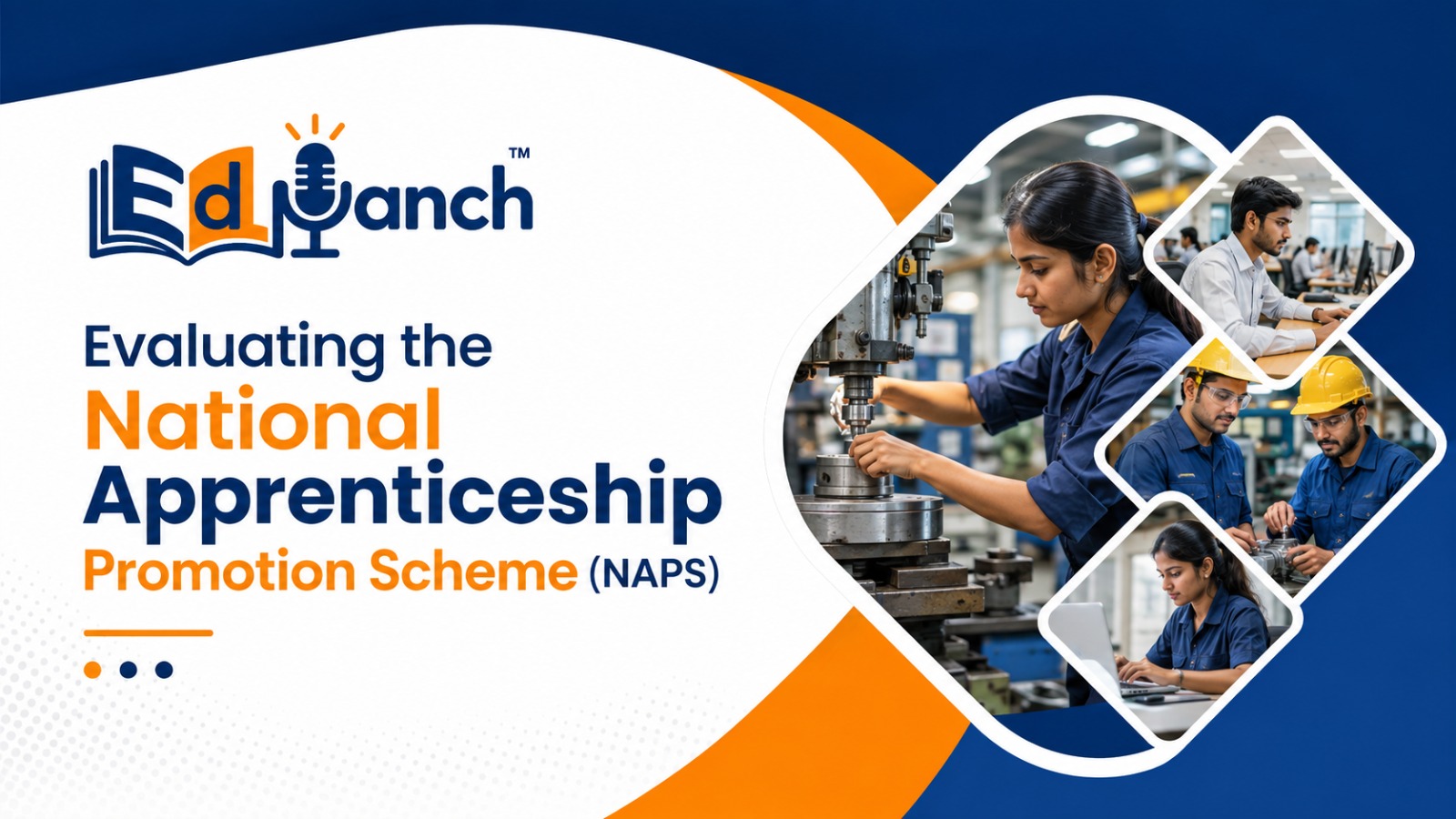
 NAPS-2 bridges India’s education-employment gap by combining workplace training, stipend support, digital governance, and industry participation to strengthen youth employability, apprenticeship quality, and sustainable workforce development.




India’s demographic dividend presents an unprecedented economic opportunity, with over 65% of the population under 35 years of age. However, the disconnect between formal academic curricula and real-world industrial demands has long fueled an employability crisis. Traditional degrees and vocational diplomas frequently emphasize theoretical concepts without imparting the practical, hands-on competencies demanded by modern shop floors, tech complexes, and service industries.
To eliminate this structural mismatch, the Ministry of Skill Development and Entrepreneurship (MSDE) rolled out the National Apprenticeship Promotion Scheme (NAPS) under the Apprentices Act, 1961. Now operating in its upgraded phase as NAPS-2, the initiative is designed to institutionalize "earn-while-you-learn" ecosystems across public and private sectors.
By sharing partial stipend burdens with employers, expanding coverage to Micro, Small, and Medium Enterprises (MSMEs), and utilizing direct digital transfer mechanisms, NAPS acts as a critical bridge connecting classroom education with sustainable employment.
1. The Core Architecture of NAPS-2
The modern iteration of the scheme operates under a streamlined central sector architecture, eliminating administrative friction for both establishments and candidates:
- Direct Benefit Transfer (DBT) Stipend Support: The Government of India co-funds the apprentice’s monthly stipend by directly depositing 25% of the approved stipend (up to a ceiling of ₹1,500 per month per apprentice) into the candidate's bank account via the Public Financial Management System (PFMS). Employers disburse the remaining 75% or higher share.
- Designated vs. Optional Trades: The scheme covers both traditional Designated Trades (formal ITI-aligned engineering and non-engineering trades) and flexible Optional Trades (customized, industry-designed job roles spanning logistics, retail, IT, banking, and healthcare).
- MSME Integration: Establishments with 4 to 29 employees can voluntarily engage apprentices, while enterprises employing 30 or more personnel are statutorily mandated to engage apprentices within a range of 2.5% to 15% of their total workforce.
- Age & Educational Diversity: Open to candidates aged 14 to 35 (18+ for hazardous industries), accommodating individuals from Class 5 dropouts and school pass-outs to vocational certificate holders and general degree graduates.
2. Structural Mechanism: From Academia to Workplace
Evaluating the shift from purely academic vocational training to NAPS-driven apprenticeship highlights the operational transformation:
- Training Modality: Traditional vocational pathways rely on static classroom simulations and theoretical lectures. NAPS immerses candidates in live production lines, active administrative suites, and actual hospital or service desks.
- Financial Sustainability: Conventional students incur tuition expenses with zero immediate earnings. NAPS apprentices receive structured monthly stipends (ranging from ₹5,000 to ₹9,000+ depending on educational entry level), creating financial independence.
- Curriculum Alignment: Static academic syllabi often lag behind technological advancements by several years. Apprenticeship training adapts dynamically to current factory machinery, enterprise software, and industry quality control protocols.
- Recruitment & Absorption: Standard graduates must navigate cold job applications and entry barriers. Apprentices complete an extended "on-the-job audition," with national evaluations showing that over 70% of apprentices receive full-time employment offers from their host establishments upon program completion.
3. High-Yield Industry Sectors Driving Apprentice Engagement
NAPS has expanded far beyond traditional manufacturing to encompass high-growth domains across the national economy:
- Automotive & Heavy Manufacturing: Precision assembly, robotic line operations, Computer Numerical Control (CNC) machining, and quality inspection.
- Electronics & Hardware: Semiconductor assembly, testing, and packaging (ATP), printed circuit board (PCB) surface mounting, and cleanroom instrumentation.
- Retail & E-Commerce Logistics: Warehouse fulfillment logistics, inventory sorting, cold-chain monitoring, and last-mile dispatch routing.
- Healthcare & Life Sciences: Medical records management, hospital patient desk coordination, and pharmacy inventory handling.
- Banking, Financial Services & Insurance (BFSI): Digital transaction auditing, customer onboarding verification, and loan processing support.
4. Key Strengths and Measured Outcomes
The operational scaling of the National Apprenticeship Promotion Scheme has yielded measurable socio-economic benefits across multiple sectors:
- De-Risking Talent Acquisition for MSMEs: Smaller enterprises that previously avoided formal hiring due to training overhead costs now utilize government stipend co-funding to onboard and train entry-level workers at minimal financial risk.
- Reduction in Youth Underemployment: Transitioning general arts, science, and commerce graduates into Optional Trade apprenticeships gives non-technical degree holders direct technical pathways into corporate operations.
- Transparent Digital Ecosystem: Shifting stipend disbursements to Direct Benefit Transfer (DBT) has eliminated middleman delays, ghost enrollments, and delayed reimbursement claims that plagued earlier vocational frameworks.
- Inclusion of Underserved Geographies: Targeted campaigns like the Pradhan Mantri National Apprenticeship Melas (PMNAM) ensure monthly recruitment drives reach Tier-2, Tier-3, and aspirational districts.
5. High-Performance Action Plan: Employer Onboarding & Candidate Execution
To maximize institutional participation and streamline contract execution under NAPS-2, establishments and aspiring candidates can follow a structured four-phase implementation roadmap:
- Establishment Registration & Portal Profile Setup
Phase 1: Registration & Portal Setup
Enterprises register on the unified apprenticeship portal, submit their PAN and corporate credentials, and define apprenticeship training slots across designated or optional trades. - E-KYC Verification & Contract Issuance
Phase 2: Candidate Matching & Contract
Candidates complete biometric and profile verification on the apprenticeship portal. Employers issue formal online apprenticeship contracts specifying duration, stipend breakdown, and training curriculum. - On-the-Job Execution & Automated DBT Stipend Release
Phase 3: Dual-Mode Training & Payroll
Apprentices undergo workplace training. Employers disburse their primary stipend share via digital banking by the 10th of each month, triggering the automated government DBT share directly into the candidate's account. - Joint Assessment, Certification & Permanent Placement
Phase 4: Assessment & Absorption
Host establishments and Sector Skill Councils (SSCs) conduct final practical assessments, issuing recognized National Apprenticeship Certificates (NAC) for immediate full-time employment conversion.
Actionable Strategy: Digital Governance & Educational Credit Integration
- Link Vocational Accreditations with National Academic Repositories: Ensure that apprenticeship training hours, practical workshop competencies, and National Apprenticeship Certificates (NAC) are recorded directly into centralized digital education repositories—such as the APAAR ID (Automated Permanent Academic Account Registry) system within the Academic Bank of Credits (ABC) network. This allows youth to convert on-the-job apprenticeship credits toward formal diploma or degree completions under the National Credit Framework (NCrF).
- Integrate Apprenticeship Medicals with Universal Health Networks: For industrial sectors with mandatory occupational health checks (manufacturing, chemicals, mining), ensure pre-employment medical evaluations and periodic fitness records are synced to digital health accounts—such as the ABHA ID (Ayushman Bharat Health Account) pipeline—to maintain longitudinal occupational health tracking.
- Utilize Skill India Digital Hub for Opportunity Tracking: Both candidates and employers should maintain real-time engagement via the unified Skill India Digital Hub (SIDH) to track upcoming Pradhan Mantri National Apprenticeship Melas (PMNAM), trade curriculum updates, and regional quota fulfillments.
6. Structural Challenges and Future Policy Imperatives
While NAPS has expanded apprenticeship adoption, several operational barriers require ongoing policy refinement:
- Stipend Competitiveness in High-Cost Metros: In major Tier-1 cities, baseline stipends can struggle to cover living expenses, sometimes leading to apprentice dropouts before the 1-year contract concludes.
- Informal Sector Integration: Millions of small informal workshops and artisanal clusters remain outside formal digital portal registries. Expanding simplified offline-to-online onboarding is essential to modernize informal apprenticeships.
- Quality Assurance Across Optional Trades: Because optional trades are employer-defined, establishing standardized assessment benchmarks across diverse private firms is critical to prevent apprenticeships from devolving into low-skill routine labor.
Frequently Asked Questions (FAQs)
Q1. What is the primary objective of the National Apprenticeship Promotion Scheme (NAPS)?The primary objective of NAPS is to promote apprenticeship training across India by offering financial incentives to employers, providing partial stipend support to apprentices via Direct Benefit Transfer (DBT), and bridging the gap between theoretical education and job market requirements.
Q2. How is the apprentice stipend shared between the government and the employer under NAPS-2?Under NAPS-2, the Government of India provides partial stipend support of 25% of the total stipend paid, capped at a maximum of ₹1,500 per month per apprentice, disbursed directly to the apprentice's bank account via DBT. The employer pays the remaining 75% or more.
Q3. What is the difference between Designated Trades and Optional Trades?Designated Trades are formal occupations and engineering branches pre-notified by the Central Apprenticeship Council (typically aligned with ITIs). Optional Trades are customized, employer-defined roles designed to meet specific industry needs in service, IT, logistics, and emerging sectors.
Q4. Is engaging apprentices mandatory for private companies in India?Yes, for establishments with 30 or more employees (including contract staff), engaging apprentices between 2.5% and 15% of their total workforce is mandatory under the Apprentices Act, 1961. For establishments with 4 to 29 employees, participation is voluntary.
Q5. Can college graduates from general streams (BA, B.Com, B.Sc) join NAPS?Yes. NAPS is open to graduates from general academic streams. They can enroll under Optional Trades tailored for banking, retail, administration, digital marketing, supply chain, and customer service operations.
Q6. How does an APAAR ID integrate with NAPS apprenticeship records?An APAAR ID links an individual’s formal academic achievements with vocational apprenticeship credits stored in the Academic Bank of Credits (ABC), enabling seamless credit transfer and academic equivalence under the National Credit Framework (NCrF).
Q7. What are the Pradhan Mantri National Apprenticeship Melas (PMNAM)?PMNAMs are dedicated, recurring monthly recruitment drives organized across districts nationwide where local employers, Sector Skill Councils, and youth meet on-site for immediate apprenticeship matching, interviewing, and contract issuance.
Q8. What happens after an apprentice completes their training duration?Upon completing their training tenure, apprentices undergo a practical assessment and receive the National Apprenticeship Certificate (NAC). Host establishments frequently absorb high-performing candidates into permanent, full-time positions.
Q9. Do apprentices have Employee Provident Fund (EPF) and ESI deductions?Under the Apprentices Act, apprentices are classified as trainees, not formal employees. Therefore, standard statutory labor deductions like EPF and ESI are not applicable to the stipend, ensuring candidates receive their full stipend payout.
Q10. How can a candidate verify their eligibility and register for NAPS?Candidates can create an account on the official apprenticeship portal, complete digital e-KYC verification, upload their educational certificates, and search for active apprenticeship vacancies by trade, sector, and location.
7. Conclusion: Institutionalizing Apprenticeship as a National Norm
The National Apprenticeship Promotion Scheme represents a vital structural evolution in India’s workforce development strategy. By shifting the focus from isolated classroom certifications to experiential, shop-floor learning, NAPS provides youth with practical competence and verifiable industry experience.
As NAPS-2 continues to expand its reach among MSMEs, service industries, and regional industrial corridors, scaling employer participation and ensuring high-quality training standards will be paramount. Linking on-the-job apprenticeship credits with formal education systems establishes a clear, flexible path for Indian youth to transition confidently from education into productive, long-term employment.














.png)
.png)
.png)

.png)
.png)

.png)

.png)