 Thursday, October 08, 2026
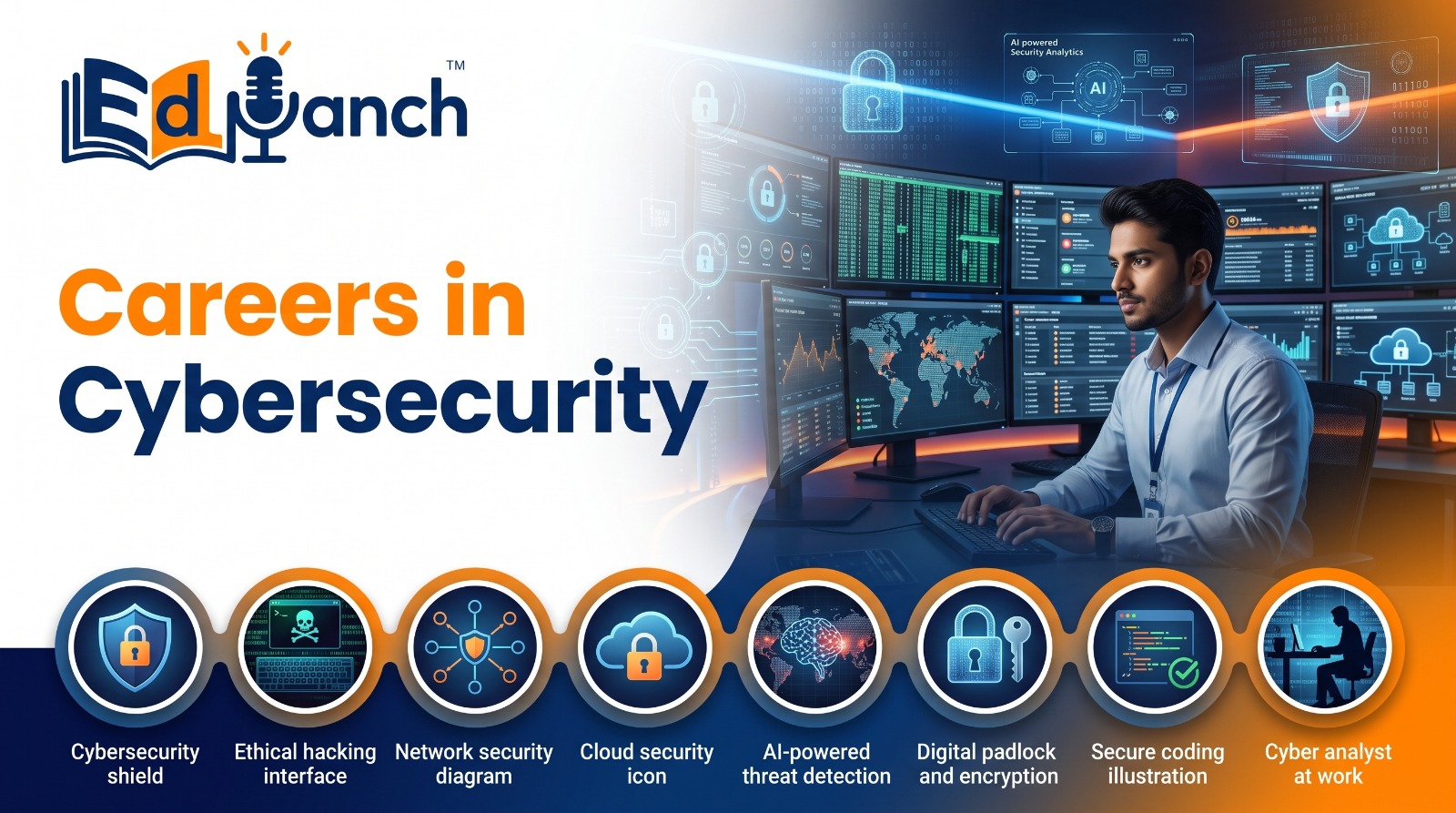
 This guide explains cybersecurity career paths for Indian students, covering entry-level roles, specialisations, required skills, certifications, and realistic salary expectations for building a future-ready career in 2026.





Introduction
Cybersecurity has moved from being a specialised technical niche to one of the most important career decisions a student can make today. As India's banks, hospitals, government departments, and businesses shift more of their operations online, the need to protect that digital infrastructure has grown rapidly. This has created a wide and constantly expanding set of career paths for students who are curious about how systems, networks, and data can be protected from misuse.
For many students and parents, however, cybersecurity still feels like an unclear or intimidating field. Questions about which degree to pursue, what skills matter, which certifications are worth the investment, and what a typical career progression looks like are common and valid. This guide is designed to answer those questions clearly, using current industry information relevant to the Indian job market, so that students can make an informed decision about whether this path suits their interests and strengths.
Understanding What Cybersecurity Careers Actually Involve
At its core, cybersecurity is about protecting computer systems, networks, applications, and data from unauthorised access, damage, or theft. This is not a single job title but an entire ecosystem of specialised roles that work together. Some professionals focus on building strong defences before an attack happens. Others specialise in detecting and responding once something goes wrong. A separate group works on testing systems by thinking like an attacker, in order to find weaknesses before real criminals do.
Students often assume cybersecurity only involves coding or hacking, but the field is far broader. Roles exist in policy and compliance, security architecture, risk management, forensic investigation, and even leadership positions that combine technical understanding with business strategy. This variety means that students with different strengths, whether analytical thinking, attention to detail, communication skills, or systems-level problem-solving, can all find a suitable path within the same broad field.
Understanding this variety early helps students avoid a common mistake: choosing a narrow specialisation too soon, before exploring what genuinely interests them. Most professionals in this field recommend starting with foundational, generalist roles and gradually moving toward specialisation once real hands-on exposure clarifies which area feels like the best fit.
Popular Career Paths Within Cybersecurity
There is no single route into cybersecurity, and career paths tend to branch based on individual interest and aptitude. Some of the most common and accessible directions for Indian students include the following.
Security Operations and Monitoring is usually the most common entry point. Security Operations Centre, commonly called SOC, analysts monitor networks for suspicious activity, investigate alerts, and escalate genuine threats. This role builds a strong foundation in how attacks unfold in real time.
Security Engineering and Architecture suits students who enjoy designing systems rather than only reacting to threats. Professionals in this path build firewalls, secure network architecture, and design defence systems that anticipate future risks rather than only responding to current ones.
Penetration Testing and Ethical Hacking attracts students who enjoy problem-solving from an attacker's perspective. Ethical hackers are hired by organisations to legally test systems for weaknesses before malicious actors can exploit them. This path requires strong technical curiosity and continuous learning, since attack techniques evolve constantly.
Governance, Risk, and Compliance, often shortened to GRC, is well suited to students who are strong communicators and interested in policy, regulation, and organisational strategy rather than only technical execution. This area has grown significantly as Indian regulations around data protection have become stricter.
Digital Forensics and Incident Response involves investigating what happened after a security incident, often working closely with law enforcement or internal legal teams. This path requires patience, documentation skills, and calm decision-making under pressure.
Cloud Security has emerged as one of the fastest-growing specialisations, as Indian enterprises across banking, healthcare, and retail continue migrating infrastructure to platforms such as AWS, Microsoft Azure, and Google Cloud. Professionals in this space combine traditional security knowledge with cloud-specific tools and frameworks.
Each of these paths eventually connects to leadership tracks such as Security Manager or Chief Information Security Officer, where technical expertise combines with organisational strategy and team management.
Skills and Educational Background Needed
Most entry-level cybersecurity roles in India prefer candidates with a bachelor's degree in computer science, information technology, electronics, or a closely related engineering discipline. That said, the field has become somewhat more flexible in recent years, with several organisations placing greater emphasis on demonstrated skills, verified project experience, and certifications rather than academic background alone.
Core technical skills that matter across almost every cybersecurity path include a working understanding of computer networks, operating systems, basic programming or scripting, and familiarity with common security tools. Beyond the technical side, certain interpersonal skills genuinely influence long-term success in this field.
- Strong attention to detail, since small anomalies often indicate larger problems
- Clear technical writing ability, since documenting incidents accurately matters as much as solving them
- Comfort with continuous learning, since threats and defensive techniques change frequently
- Calm decision-making under pressure, particularly for incident response roles
Students who are still in school or early college can begin building relevant foundations through basic programming courses, networking fundamentals, and beginner-friendly practical platforms that simulate real investigative scenarios. Many students find that structured, guided practice, rather than only theoretical study, builds confidence faster in this field.
Certifications That Add Real Value
Certifications play a meaningful role in cybersecurity hiring, particularly at the entry and mid-career stages, since they help validate specific skills to employers. For beginners, CompTIA Security Plus and Certified Ethical Hacker are widely recognised starting points that cover foundational concepts without requiring years of prior experience.
As professionals progress, certifications such as Certified Information Systems Security Professional, Certified Information Security Manager, and Certified Cloud Security Professional become more relevant, particularly for those moving toward architecture, management, or specialised cloud security roles. It is worth noting that certifications alone rarely guarantee a job offer. Employers increasingly value candidates who combine certifications with practical, hands-on experience, whether through internships, personal projects, or structured lab-based learning platforms that simulate real investigative work.
Salary Expectations and Career Growth in India
Cybersecurity salaries in India vary considerably depending on role, city, certification, and hands-on experience, but the overall trend has been consistently upward due to a persistent shortage of skilled professionals. Entry-level cybersecurity salaries in India generally fall in a moderate range, while experienced professionals can earn significantly more depending on specialisation and seniority.
Entry-level roles such as SOC Analysts and Junior Security Analysts typically see starting compensation in a reasonable range depending on industry, location, certifications, and hands-on skills, with strong long-term earning potential as candidates progress into more specialised positions. Mid-level professionals in areas such as cloud security, application security, and threat intelligence typically see higher compensation than entry-level roles meaningfully.
At the senior end, cybersecurity leadership roles including Chief Information Security Officer positions can command compensation reaching into the crore range annually at large organisations. Specialised technical certifications and multi-year experience in areas such as governance, risk, and cloud security tend to command noticeable salary premiums compared to generalist roles, particularly at larger enterprises and global capability centres based in cities such as Bengaluru, Hyderabad, and Pune.
It is important for students and parents to view these figures through a realistic lens. Salary growth in this field tends to reward continuous skill development far more than certificates collected without practical application. Career growth is rarely instant, but it tends to be steady and well rewarded for those who stay consistent with learning.
Building a Practical Path Forward
For students exploring this field, the most useful first step is exposure rather than immediate specialisation. Reading about cybersecurity concepts helps build vocabulary, but genuine understanding tends to develop through guided, hands-on practice, such as working through simulated investigation exercises, learning to interpret logs, or understanding how common attack patterns unfold step by step.
Many students also benefit from connecting with structured learning communities, campus cybersecurity clubs, or beginner-friendly online platforms that walk through realistic scenarios without requiring prior technical background. This kind of gradual, practical exposure often helps students discover which specific area within cybersecurity genuinely interests them, well before they need to commit to a particular certification path or academic specialisation.
Institutions and educators also play an important role here. As more colleges across India introduce dedicated cybersecurity electives, workshops, and industry partnerships, students today have considerably more structured pathways available compared to just a few years ago. Staying updated on which colleges, certification bodies, and skilling programmes are actively evolving in this space can make a meaningful difference in how confidently a student approaches this career.
Conclusion
Cybersecurity offers one of the most dynamic and consistently in-demand career paths available to Indian students today. The field rewards curiosity, patience, and a willingness to keep learning, far more than it depends on a single fixed academic background. Whether a student is drawn toward technical roles such as penetration testing, analytical roles such as security operations, or strategic roles such as governance and risk management, there is a genuine pathway suited to different strengths and interests.
The most important step for any student considering this field is to start exploring early, build foundational skills gradually, and stay informed about how the industry and its educational pathways continue to evolve. Making informed, well-paced decisions today can lead to a genuinely rewarding and future-ready career in the years ahead.
Frequently Asked Questions
Q1: Is cybersecurity a good career option for Indian students in 2026?
Yes. India faces a large shortage of trained cybersecurity professionals even as cyberattacks continue to rise across banking, healthcare, and government sectors. This shortage is creating consistent demand for skilled entrants, along with strong long-term salary growth.
Q2: What qualifications are required to start a career in cybersecurity in India?
Most entry-level roles prefer a bachelor's degree in computer science, information technology, or a related field. However, many companies now also hire candidates with relevant certifications and demonstrated practical skills, even without a traditional degree.
Q3: Which certifications help the most for a cybersecurity career in India?
CompTIA Security Plus and Certified Ethical Hacker are commonly recommended for beginners. As professionals gain experience, certifications such as CISSP, CISM, and CCSP become valuable for mid-level and leadership roles.
Q4: What is the average starting salary for cybersecurity roles in India?
Entry-level roles such as SOC Analyst or Junior Security Analyst typically offer salaries in a moderate range depending on the city, certifications, and hands-on experience. Salaries generally increase substantially with specialisation and years of experience.
Q5: Can students without a computer science background move into cybersecurity?
Yes. Students from other technical or even non-technical backgrounds can transition into cybersecurity by building foundational IT knowledge and pursuing beginner-friendly certifications, though this typically takes additional preparation time.
Resources
- National Critical Information Infrastructure Protection Centre (NCIIPC): Government body under NTRO responsible for protecting India's critical information infrastructure
- Indian Computer Emergency Response Team (CERT-In): National nodal agency for responding to cybersecurity incidents in India
- National Skill Development Corporation (NSDC): Government initiative supporting skilling programmes, including cybersecurity, across India
- NASSCOM: Industry body publishing regular reports on India's technology workforce trends, including cybersecurity hiring and skills gaps
- University Grants Commission (UGC): Regulatory body overseeing higher education programmes, including emerging cybersecurity curricula in Indian universities
Interlinking Keywords
cybersecurity career paths, entry-level cybersecurity jobs India, cybersecurity certifications for beginners, ethical hacking career guide, cloud security specialisation, cybersecurity salary in India, skill development for students, career guidance for engineering students
Last reviewed by:
Edumanch Editorial Team on July 8, 2026
Disclaimer:
The information provided in this article is for educational and informational purposes only. While every effort has been made to ensure accuracy, career trends, salary figures, certifications, and job requirements may change over time. Readers are encouraged to verify the latest information from official educational institutions, certification providers, employers, and government sources before making any academic or career decisions.














.png)
.png)
.png)

.png)
.png)

.png)

.png)