 Thursday, October 08, 2026
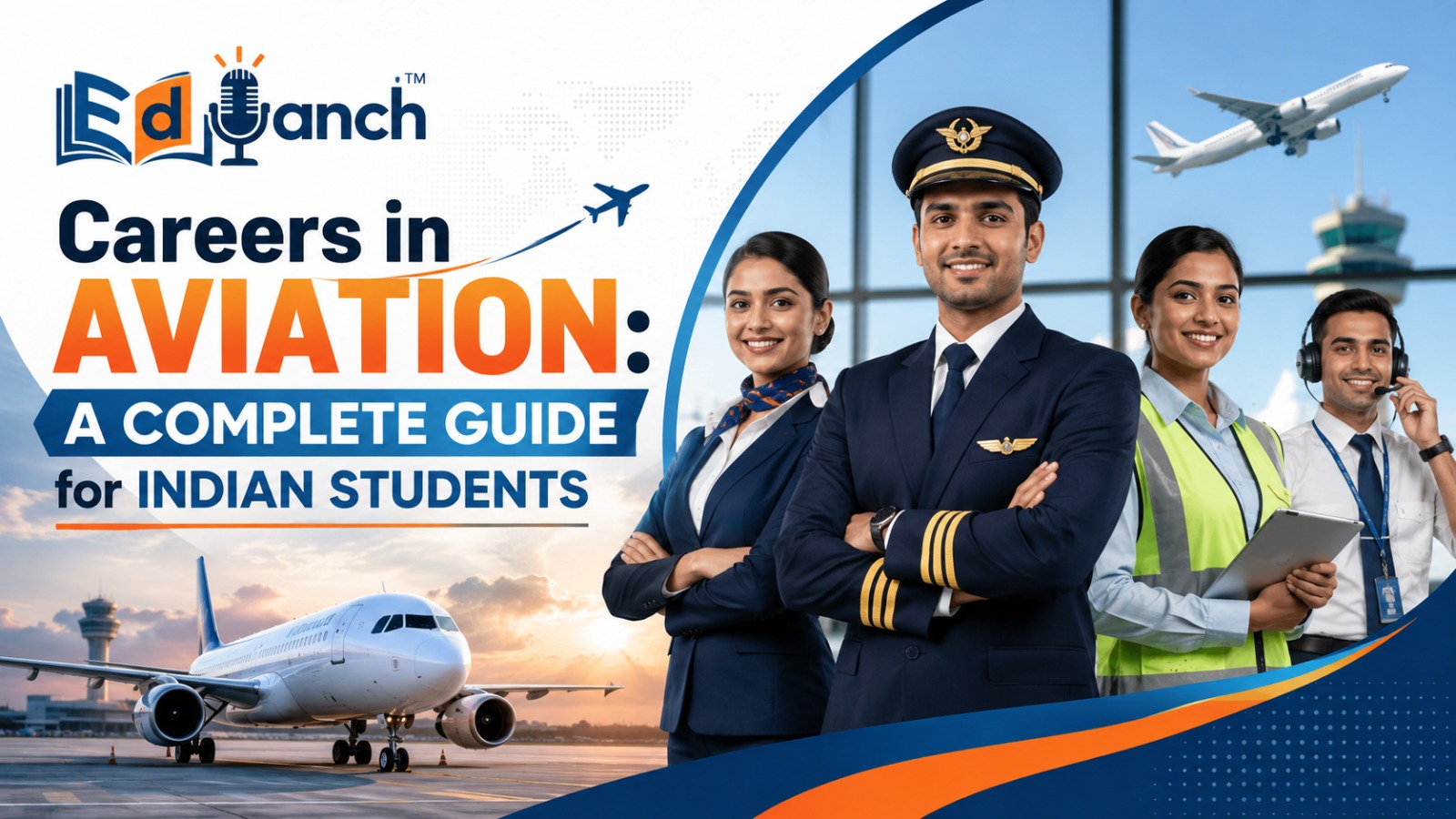
 This article explores diverse careers in aviation for Indian students, covering roles, qualifications, salaries, and growth opportunities across India's rapidly expanding aviation sector.




Introduction
Aviation is one of the most dynamic and aspirational industries in the world, and for Indian students today, it represents a sector full of genuine opportunity. India is currently among the fastest-growing civil aviation markets globally. With over 150 operational airports and a government commitment to expanding air connectivity through schemes like UDAN (Ude Desh ka Aam Naagrik), the demand for skilled aviation professionals across every level of the industry has never been stronger.
What many students do not realize is that careers in aviation go far beyond the cockpit. The industry supports thousands of professionals working in roles that span technical engineering, customer service, air traffic management, logistics, and corporate leadership. Whether a student comes from a science background or from commerce and arts, there is a meaningful place for them in this sector.
This guide is designed to help Indian students, parents, and career seekers understand what the aviation industry truly offers, what qualifications are needed, and how to make an informed decision about building a future in this field.
Understanding the Aviation Industry in India
India's civil aviation sector has seen remarkable growth over the past decade. According to the Ministry of Civil Aviation, India is projected to become the third-largest aviation market in the world by 2030. The number of domestic air passengers has crossed 150 million annually, and new airports are being developed and upgraded in cities across Tier 2 and Tier 3 India, including Ayodhya, Kushinagar, Jewar, and Shirasar.
The aviation industry in India is broadly divided into four segments. The first is airline operations, which includes the actual flying of aircraft and everything that supports it. The second is airport operations and management, which covers the day-to-day functioning of airport infrastructure. The third is Maintenance, Repair, and Overhaul (MRO), which is the technical backbone of aviation safety. The fourth is aviation education, training, and ancillary services such as cargo, ground handling, and hospitality.
Each of these segments generates a wide range of career opportunities. The Directorate General of Civil Aviation (DGCA), which is the primary regulatory body for civil aviation in India, oversees licensing, training standards, and safety regulations across all of these areas.
Key Career Paths in Aviation
Commercial PilotThe commercial pilot is perhaps the most iconic career in aviation. A pilot is responsible for safely operating an aircraft, navigating flight routes, communicating with air traffic controllers, and ensuring the well-being of every passenger and crew member on board.
To become a commercial pilot in India, a student must have completed Class 12 with Physics and Mathematics and must obtain a Commercial Pilot Licence (CPL) from a DGCA-approved flying school. The training involves completing a minimum number of flying hours, clearing written theory examinations, and passing a medical fitness test. Airlines such as IndiGo, Air India, Vistara, and SpiceJet regularly recruit fresh commercial pilots.
The earning potential is significant. Entry-level co-pilots at Indian airlines typically earn between Rs 1.5 lakh and Rs 2.5 lakh per month, while senior captains can earn upward of Rs 5 lakh to Rs 7 lakh monthly.
Cabin CrewCabin crew members are the face of any airline. Their responsibilities include ensuring passenger safety, conducting pre-flight safety briefings, serving meals and beverages, managing in-flight emergencies, and delivering a high standard of hospitality throughout the journey.
This is one of the most accessible career paths in aviation. A candidate who has completed Class 12 from any stream can apply. Airlines look for strong communication skills, a calm temperament, good physical fitness, and a confident personality. Dedicated cabin crew training programs, typically lasting three to six months, are offered by aviation training institutes and airlines themselves.
Cabin crew roles come with attractive benefits including travel privileges, accommodation allowances, and competitive pay packages. Starting salaries in India range from Rs 25,000 to Rs 60,000 per month depending on the airline and route profile.
Aircraft Maintenance Engineer (AME)Aircraft maintenance engineers are the technical professionals responsible for keeping every aircraft airworthy. They inspect, service, and repair aircraft systems including engines, hydraulics, avionics, and airframes. No aircraft is permitted to operate without clearance from a licensed AME.
Students who have completed Class 12 with Physics, Chemistry, and Mathematics are eligible to pursue an AME course approved by DGCA. The course typically spans two to four years and is highly hands-on. After completing the course and accumulating the required experience, candidates appear for DGCA licensing examinations.
AMEs are among the most in-demand professionals in Indian aviation today, particularly as MRO facilities expand in cities like Hyderabad, Bengaluru, and Nagpur. Salaries for licensed AMEs range from Rs 40,000 to over Rs 1.5 lakh per month based on specialization and experience.
Air Traffic Controller (ATC)Air traffic controllers are the professionals who manage the movement of all aircraft in Indian airspace. They coordinate takeoffs, landings, flight paths, and emergency responses, all in real time. It is one of the most critical and highly respected roles in aviation.
In India, the Airports Authority of India (AAI) is the primary employer of air traffic controllers. Selection is conducted through a competitive examination, and shortlisted candidates undergo rigorous training. A science background after Class 12 is essential, and most openings require a graduation degree. The career offers strong job security, government employee benefits, and salaries that are among the best in the public sector.
Aeronautical and Aerospace EngineerAeronautical and aerospace engineers design, develop, test, and improve aircraft, spacecraft, and related systems. This is a highly technical and specialized career path that typically requires a four-year B.Tech or B.E. degree in aeronautical or aerospace engineering from a recognized institution.
In India, students can pursue this degree through institutions such as IITs, NITs, and specialized aerospace universities. Career opportunities exist with aircraft manufacturers, defense research organizations like DRDO and HAL, ISRO, and private MRO companies. Starting salaries in this field range from Rs 5 lakh to Rs 12 lakh per year, with significant growth potential in research and senior engineering roles.
Airport Operations and ManagementAirport operations professionals are responsible for the seamless day-to-day functioning of an airport. This includes managing passenger flow, coordinating ground handling teams, overseeing baggage systems, maintaining compliance with regulatory standards, and ensuring that every departure and arrival runs on schedule.
Students can enter this field through diploma and degree programs in aviation management or airport operations. Both private aviation training institutes and business schools offer relevant programs. AAI also recruits airport operations personnel through structured competitive processes. Adani Airport Holdings, GMR Airports, and GVK Group are among the major private employers in this space, managing some of India's largest airports.
Ground Staff and Customer ServiceAirport ground staff roles cover a wide range of functions including check-in assistance, boarding gate management, baggage handling, customer service, and special assistance for passengers with disabilities. These are typically entry-level positions that offer a strong foundation for a long-term career in aviation.
The minimum requirement is a Class 12 pass certificate with good communication skills in English and Hindi. Grooming standards, customer orientation, and problem-solving ability are key selection criteria. Ground staff roles are offered by both airlines and ground handling companies such as Air India SATS, Bird Worldwide Flight Services, and Celebi Aviation.
Aviation Cargo and LogisticsAir cargo is a fast-growing segment of the Indian aviation industry, driven by the expansion of e-commerce, pharmaceutical exports, and perishable goods trade. Cargo managers, cargo agents, and logistics executives are responsible for managing the movement of freight through air transport networks, ensuring regulatory compliance, documentation accuracy, and timely delivery.
A background in commerce, logistics, or supply chain management is useful for this career path. Several certification programs in air cargo management are available from institutes accredited by the International Air Transport Association (IATA).
Qualifications and How to Get Started
One of the most important questions Indian students ask is which subjects to study in Class 11 and 12 to pursue aviation. The answer depends on the career path chosen.
For technical careers such as pilot, AME, aeronautical engineer, and ATC preparation, the science stream with Physics and Mathematics is essential. For service-oriented and management careers such as cabin crew, ground staff, airport operations, and cargo management, students from any stream, including arts and commerce are eligible.
Key steps to building a career in aviation in India include the following:
- Identify the specific role that aligns with your interests and academic background.
- Research DGCA-approved training institutes or universities offering relevant programs.
- Prepare for entrance examinations where applicable, such as those conducted by AAI or engineering entrance tests.
- Obtain the required certifications and licenses from DGCA or relevant aviation bodies.
- Build soft skills including communication, teamwork, and problem-solving, which are valued across all aviation roles.
Platforms like Edumanch can help students stay updated on aviation course options, admission cycles, scholarship opportunities, and career guidance tailored to the Indian education landscape.
Growth Outlook and Salary Overview
India's aviation sector is expected to generate over five lakh jobs directly and indirectly by 2030, according to industry estimates. New greenfield airports under development, expanding airline fleets, and the growing MRO sector are all contributing to this demand.
Below is a quick overview of approximate monthly salaries for common aviation roles in India:
- Commercial Pilot (First Officer): Rs 1.5 lakh to Rs 2.5 lakh
- Cabin Crew: Rs 25,000 to Rs 60,000
- Aircraft Maintenance Engineer: Rs 40,000 to Rs 1.5 lakh
- Air Traffic Controller (AAI): Rs 60,000 to Rs 1.2 lakh
- Airport Operations Executive: Rs 25,000 to Rs 60,000
- Aeronautical Engineer: Rs 40,000 to Rs 1 lakh
- Aviation Manager: Rs 80,000 to Rs 2.5 lakh
These figures vary by employer, city, experience, and type of operation.
Conclusion
Aviation is a sector where ambition, education, and the right training can genuinely transform a student's future. For India specifically, the timing could not be better. With airports expanding into cities that were previously unconnected, with airlines placing large aircraft orders, and with the government actively investing in aviation infrastructure, the number of quality jobs in this industry is set to grow considerably over the next decade.
The key for any student is to start with clarity. Understanding which role matches one's interests and subject background is the first step. From there, choosing the right training pathway, staying informed about DGCA regulations and industry developments, and consistently building both technical and interpersonal skills will lay the foundation for a rewarding career.
Education platforms like Edumanch are committed to simplifying exactly this kind of career decision-making for students and parents across India, offering reliable information about courses, institutions, and evolving opportunities in sectors like aviation.
Frequently Asked Questions
Q1: Which is the best career in aviation after 12th in India?
cabin crew, commercial pilot, and aircraft maintenance engineer are among the most accessible and rewarding careers in aviation after 12th in India, depending on a student's interest and subject background. Commerce and arts students can consider cabin crew or airport management, while science students have access to technical roles.
Q2: What is the salary of a pilot in India?
A commercial pilot in India can earn between Rs 1.5 lakh to Rs 7 lakh per month depending on the airline, type of aircraft operated, and years of flying experience. Entry-level co-pilots tend to start at the lower end of this range and grow significantly with accumulated flying hours and rank.
Q3: Is aviation a good career option in India?
Yes, aviation is a strong career choice in India today. The rapid expansion of airport infrastructure, the government's UDAN scheme, and growing domestic and international passenger traffic are creating consistent demand for trained aviation professionals across all categories of roles.
Q4: What qualifications are needed to become an air traffic controller in India?
Candidates need a science background after Class 12, followed by a relevant graduation degree. The Airports Authority of India conducts its own competitive selection examination and training program for air traffic controllers. Strong analytical ability and the capacity to work under pressure are essential personal qualities.
Q5: Does aviation require a science stream after 10th?
For technical roles such as commercial pilot, aircraft maintenance engineer, and aeronautical engineer, the science stream with Physics and Mathematics is mandatory. For cabin crew, ground staff, airport hospitality, and aviation management roles, students from commerce and arts streams are equally eligible.
Resources
- Directorate General of Civil Aviation (DGCA), Ministry of Civil Aviation, Government of India: Official regulatory body for civil aviation in India; provides licensing information, approved training organizations, and regulatory updates.
- Airports Authority of India (AAI): Manages over 130 airports in India and publishes recruitment notifications for ATC officers and other aviation professionals.
- Ministry of Civil Aviation, Government of India: Official source for policy updates, the UDAN scheme, and aviation sector growth data.
- International Air Transport Association (IATA): Global aviation body offering recognized certification programs in cargo management, ground operations, and aviation management.
- National Career Service Portal, Ministry of Labour and Employment, Government of India: Lists aviation-related job openings and vocational training opportunities across India.
Interlinking Keywords:
aviation courses in India, DGCA approved flying schools, cabin crew training, airport management degree, UDAN scheme, careers after 12th science, aeronautical engineering colleges India, AAI recruitment
Last reviewed by:
Edumanch Editorial Team on August 12, 2026
Disclaimer:
The information provided in this article is for general educational and career guidance purposes only. Salary figures, eligibility criteria, and regulatory requirements may change over time. Readers are advised to verify current information directly with the relevant regulatory bodies such as DGCA, AAI, and respective educational institutions before making any career or academic decisions. Edumanch does not guarantee employment outcomes.














.png)
.png)
.png)

.png)
.png)

.png)

.png)