 Friday, October 09, 2026
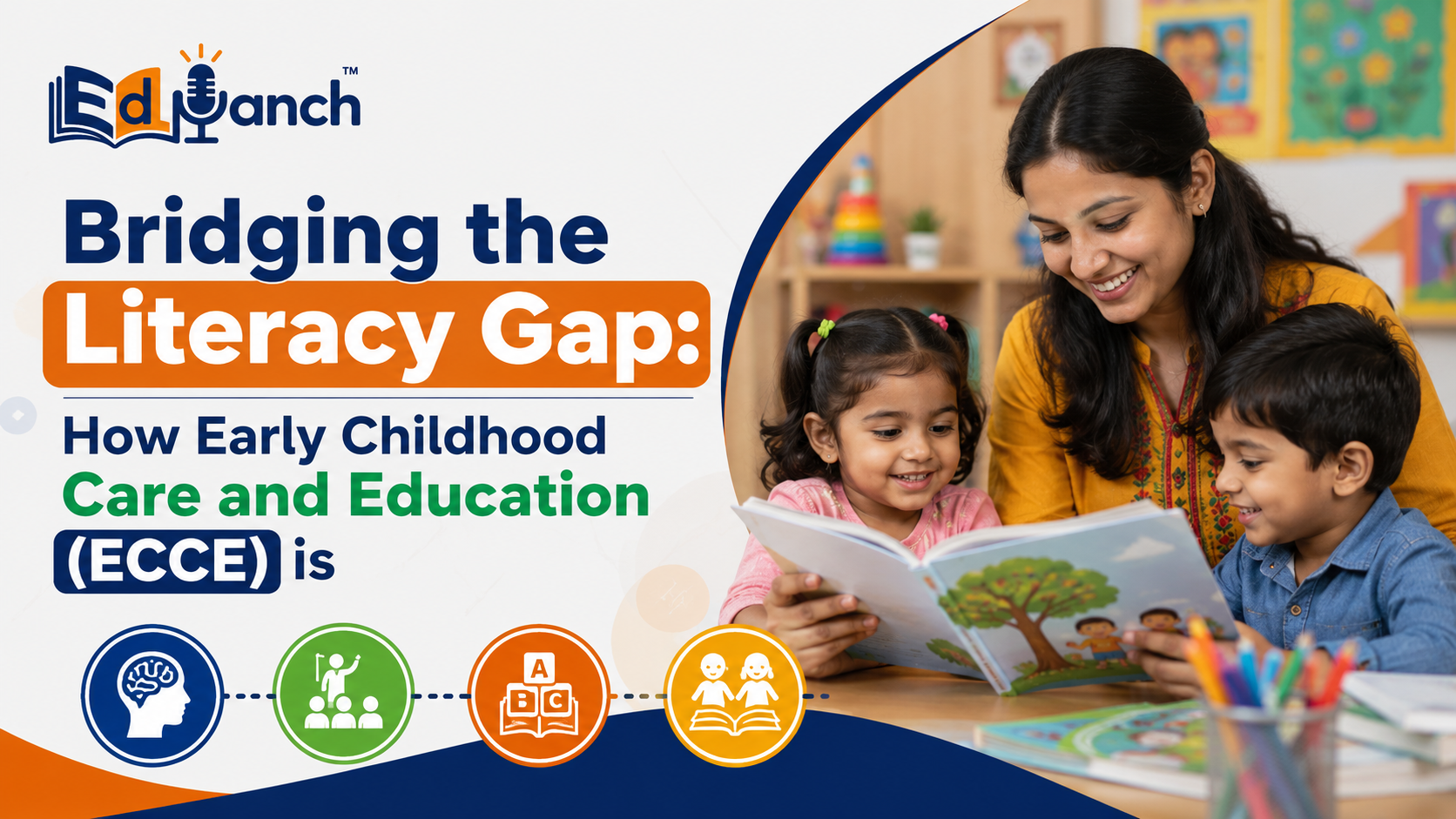
 Early childhood is the foundation of lifelong learning, with more than 85% of brain development occurring before the age of six. Investing in quality early childhood education, cognitive development, and nurturing environments strengthens learning outcomes, school readiness, and long-term academic and career success.




The structural trajectory of an individual's lifelong learning capacity is decisively locked in before they ever step into a formal primary school classroom. Neuroscientific research confirms that over 85% of a child’s cumulative brain development occurs prior to the age of six. This critical window represents an unmatched period of cognitive plasticity, where neural pathways governing language acquisition, logical reasoning, and social-emotional stability form their structural foundations.
Historically, formal education policies overlooked this early window. Early childhood spaces were frequently split into two unaligned extremes: informal, unregulated daycares focused purely on basic babysitting, or intense pre-schools that forced young children into rigid, textbook-heavy rote memorization. This systemic gap fractured childhood development along economic lines, creating a widening literacy gap before children even entered Grade 1.
[ THE EARLY COGNITIVE GAP CONTRAST ]
│
┌──────────────────────┴──────────────────────┐
▼ ▼
[ THE UNALIGNED EXTREMES ] [ THE UNIFIED ECCE MODEL ]
• Pure daycares: Baby-sitting focus • Systemic play-based pedagogy
• Rigid pre-schools: Rote memorization stress • Fluid cognitive mapping arrays
• Result: Widen childhood literacy gaps • Result: Universal foundational literacy
Fixing this educational imbalance requires looking past traditional, desks-and-chalkboard teaching setups. True structural transformation is being achieved through the comprehensive evolution of Early Childhood Care and Education (ECCE)—shifting global pedagogy toward flexible, multi-level, and play-based learning frameworks that bridge developmental gaps and establish universal foundational literacy early.
1. The Multi-Tiered Developmental Roadmap
Modern ECCE frameworks, such as the guidelines established under India's National Education Policy (NEP) 2020, dismantle the old boundaries separating preschool from early primary schooling. The evolution unifies care and learning across a continuous, five-year Foundational Stage designed around specific childhood cognitive milestones.
[ THE FOUNDATIONAL STAGE COGNITIVE LIFECYCLE ]
[ LAYER 1: UNSTRUCTURED FLUIDITY ] ──► Ages 3 to 5: Anganwadis & Pre-schools focus on sensory exploration.
[ LAYER 2: GUIDED DISCOVERY ] ──► Age 5 (Balvatika): Transitional play-led preparation for school loops.
[ LAYER 3: FORMAL SYNTHESIS ] ──► Ages 6 to 8: Classes 1 & 2 blend structured learning with activity grids.
2. The Core Drivers Transforming Modern ECCE Pedagogy
The Shift to Toy-Based and Play-Led PedagogyForcing a four-year-old child to silently copy abstract alphabets from a blackboard is an inefficient way to teach reading. Modern ECCE replaces this stress-inducing approach with Toy-Based and Play-Led Pedagogy.
By interacting with physical wooden blocks, traditional puzzles, hand puppets, and regional games, children naturally decipher complex spatial ratios, build rich language vocabularies, and master problem-solving skills. Learning is transformed from passive, anxious memorization into an active, joyful process of discovery.
Universal Foundational Literacy and Numeracy (FLN)The evolved ECCE framework places a non-negotiable emphasis on achieving universal Foundational Literacy and Numeracy (FLN) by the time a child exits Grade 3. Educational systems are restructuring curricula to track clear, milestone-driven outputs rather than raw page-completion scores.
[ THE FOUNDATIONAL LITERACY & NUMERACY (FLN) ARCS ]
Oral Language Fluency ──► Phonemic sound tracking & collaborative storytelling.
Decoding Competency ──► Letter-sound matching & basic sight-word reading.
Mathematical Thinking ──► Shape sorting, pattern tracking, and counting arrays.
Programs are designed around core pillars like oral language development, phonemic awareness (matching letters to sounds), and basic mathematical thinking (sorting shapes and spotting patterns). This approach ensures every child can read with comprehension and execute basic addition and subtraction loops before advancing to higher grades.
Strengthening Grassroots Delivery NetworksTo successfully bridge the literacy gap across socio-economic divides, governments are heavily modernizing public, decentralized community health and child care infrastructure, such as the national Anganwadi network.
Anganwadi workers and early educators are being trained via comprehensive Continuous Professional Development (CPD) programs. These modules arm frontline staff with digital tracking tools, child-psychology primers, and vibrant learning kits (Jaadui Pitara), transforming local childcare spaces into high-performance hubs for early childhood cognitive development.
Comparative Matrix: Legacy Preschool Systems vs. Evolved ECCE Ecosystems
The matrix below contrasts the rigid limitations of historical preschool setups with the flexible, high-performance learning strategies built into modern ECCE models.
|
Educational Performance Metric |
Legacy Preschool / Daycare Systems |
Evolved Modern ECCE Ecosystems |
Long-Term Student Advantage |
|---|---|---|---|
|
Pedagogical Strategy |
Heavy reliance on abstract textbook copying and rote drills. |
Play-led, activity-based, and toy-pedagogy models. |
Fosters genuine conceptual clarity while protecting childhood curiosity. |
|
Curricular Architecture |
Rigidly split; preschools operate completely detached from schools. |
Unified 5-year Foundational Stage (Ages 3 to 8). |
Ensures a smooth, anxiety-free developmental shift into formal classes. |
|
Language Acquisition |
Enforcing immediate instruction in complex, alien languages. |
Mother tongue or local regional language instruction. |
Accelerates early neural language loops and builds deep self-confidence. |
|
Evaluation Interface |
Stressful, paper-based pass/fail examinations. |
Continuous, formative, and 360-degree holistic mapping. |
Tracks actual cognitive milestone growth without emotional burnout. |
|
Frontline Skill Profile |
Unregulated personnel with minimal structural training support. |
Certified, CPD-aligned educators equipped with digital grids. |
Delivers equitable, high-standard early learning to vulnerable rural sectors. |
3. Actionable Strategies for Educational and Institutional Leaders
- Deploy the Jaadui Pitara (Magic Box) Systemic Array: Move your early childhood classrooms completely away from traditional paper worksheets. Integrate vibrant, multi-sensory learning toolkits packed with localized toys, custom flashcards, storybooks, and physical math counters to stimulate child cognitive development across multiple dimensions.
- Implement Native Language Instruction Patterns: Ensure that foundational reading and storytelling are conducted primarily in the child’s native mother tongue or local regional language. Using familiar household vocabulary lines speeds up early reading comprehension, anchors self-identity, and builds a strong bridge for learning secondary languages later.
- Transition to Formative, Multi-Dimensional Progress Auditing: Eliminate outdated, high-pressure competitive exams for young children. Train your teaching teams to maintain continuous, multi-dimensional progress cards that track a child's developmental journey across physical, cognitive, socio-emotional, and artistic domains through gentle daily observation.
Frequently Asked Questions (FAQs)
Q1. What exactly does the term Early Childhood Care and Education (ECCE) encompass?ECCE refers to a highly integrated public health and educational framework designed to support the holistic development of children from birth to age eight. It combines essential nutritional care and physical healthcare with flexible, play-based learning modules to optimize early cognitive brain development.
Q2. Why is the age window from 3 to 6 years considered the most critical phase for literacy?Neuroscientific data confirms that more than 85% of a child’s cumulative brain development occurs prior to the age of six. During this window, the brain builds neural connections at an unmatched rate, making it the most critical period to establish language fluency, spatial reasoning, and social foundations.
Q3. How does the 5-year Foundational Stage structure the early school timeline?The unified Foundational Stage brings continuity to early learning by mapping a single, fluid 5-year curriculum across five distinct steps: 3 years of early childhood preschool care (Anganwadis or Balvatika), followed directly by Class 1 and Class 2, creating a smooth transition into primary school.
Q4. What is the core objective of the Foundational Literacy and Numeracy (FLN) mandate?The core objective of the national FLN mandate is to ensure that every single child across the school grid achieves the non-negotiable ability to read with complete comprehension, write fluently, and execute basic mathematical calculations (like addition and subtraction) by the time they exit Grade 3.
Q5. How does toy-based pedagogy help a child learn advanced mathematical concepts?Toy-based pedagogy utilizes physical, concrete items (like sorting blocks, puzzles, and counting beads) to represent abstract ideas. Interacting with these objects allows children to naturally decipher geometric shapes, observe pattern logic, and understand numeric values through hands-on play.
Q6. Why is teaching in the mother tongue prioritized during early childhood loops?When children learn in their native household language, their brains can process complex concepts and understand story structures instantly without the added cognitive burden of translating unfamiliar words, which vastly accelerates reading comprehension and language acquisition.
Q7. What exactly does a "360-Degree Holistic Report Card" track?A 360-degree report card moves past traditional, isolated academic grades to map a child's complete growth profile. It combines detailed teacher observations, child self-evaluations, and peer feedback to track progress across physical health, cognitive thinking, emotional regulation, and social collaboration.
Q8. How are Anganwadi centers being upgraded to support modern ECCE goals?Under updated education reforms, Anganwadis are undergoing high-impact infrastructure upgrades. They are being equipped with modern, non-toxic educational play materials, vibrant learning modules, and digital tools, while workers receive intensive professional training to function as certified early childhood educators.
Q9. Can high-pressure competitive exams harm a child's early educational development?Yes, severely. Subjecting young children to formal, paper-based pass/fail testing models creates toxic school anxiety, triggers early academic burnout, and can stunt cognitive growth by forcing classrooms into dry, memory-based rote learning rather than true conceptual understanding.
Q10. How long does it take to see an increase in classroom engagement after adopting play-based ECCE?The human childhood brain responds with immense speed and joy to active, play-based learning environments. By replacing rigid desk-drills with interactive toy toolkits, localized storytelling, and sensory games, an institution can observe a significant rise in student attendance, high engagement levels, and faster learning gains within 4 to 6 weeks of execution.














.png)
.png)
.png)

.png)
.png)

.png)

.png)