 Thursday, October 08, 2026
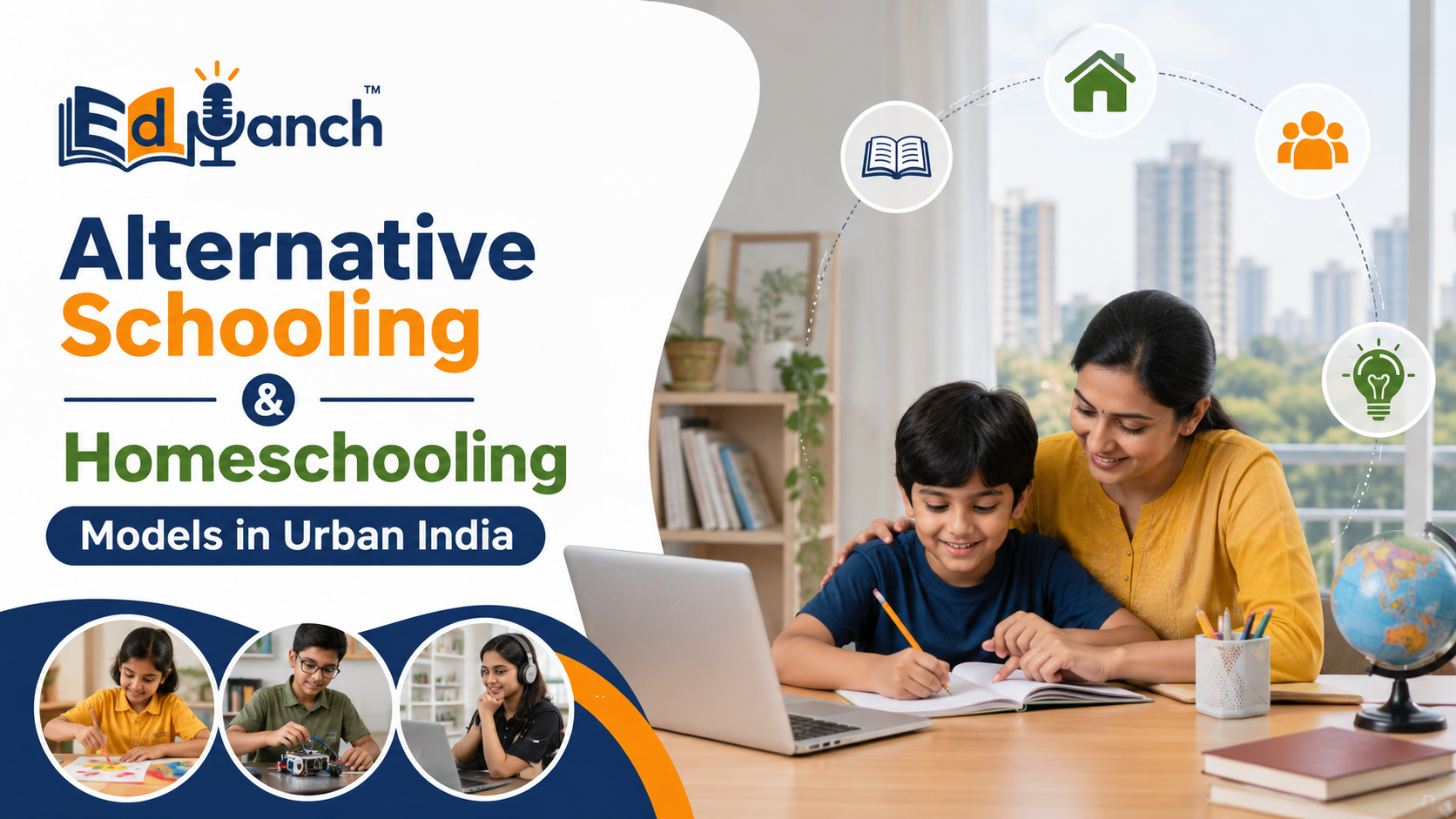
 Urban India's education landscape is evolving as more families explore alternative schooling and homeschooling models that prioritize personalized learning, creativity, and holistic development over traditional rote-based education. These approaches offer greater flexibility, learner-centric experiences, and skills aligned with the demands of the 21st century.




The primary education ecosystem in urban India is undergoing a profound cultural and structural disruption. For generations, the standard path for middle-to-high-income families was rigidly locked: enroll a child early in a conventional school affiliated with central boards like CBSE, ICSE, or various state boards, and enter a highly competitive, textbook-heavy environment optimized for high pass percentages and rapid rote reproduction.
However, urban centers—including major tech and commercial hubs like Bengaluru, Mumbai, Pune, and Delhi-NCR—are witnessing an aggressive shift in parental priorities. Robust enrollment audits confirm an unpredicted, secular rise in alternative schooling frameworks and formal homeschooling models.
[ THE DIVERGENT PRIMARY EDUCATION PATHWAYS ]
│
┌──────────────────────────┴──────────────────────────┐
▼ ▼
[ THE CONVENTIONAL ROTATION ] [ THE ALTERNATIVE HYBRID MODEL ]
• Rigid, exam-driven board metrics • Child-centric, play-led mastery
• Intense competitive tutoring pressure • Asynchronous learning schedules
• Fixed stream choices (Science/Arts) • Interdisciplinary skill arrays
This structural migration away from standard classrooms is driven by a deep parental dissatisfaction with the rigid testing cultures of legacy systems. Recognizing that standard desk drills frequently cause adolescent anxiety, lack soft-skill development, and treat young minds as simple memory-storage units, urban parents are building custom educational pathways.
Supported by the flexible, multi-level recommendations of the National Education Policy (NEP) 2020, families are actively leveraging progressive teaching philosophies to nurture conceptual understanding, child autonomy, and authentic cognitive growth.
1. Deconstructing the Alternative Schooling Matrix
Alternative education spaces do not follow uniform blueprints; they deploy distinct, child-centric environments optimized to match a learner's natural developmental velocity.
[ THE CHILD-CENTRIC PEDAGOGY PIPELINE ]
│
┌────────────────────────┴────────────────────────┐
▼ ▼
[ THE WALDORF ECOSYSTEM ] [ THE MONTESSORI CORE ]
• Artistic, multi-sensory environment blocks • Self-directed, tactical learning labs
• Age-appropriate organic developmental loops • Cross-age grouping social frameworks
• Integrated handcrafts & emotional discovery • Tangible math and spatial analytics
Developed around the core principles of Rudolf Steiner, the Waldorf model rejects early abstract reading and textbook testing entirely. Instead, early years are structured around multi-sensory exploration, artistic expression, physical handcrafts, and oral storytelling. By anchoring learning inside practical, physical contexts, Waldorf ecosystems insulate young children from high academic anxiety, fostering creative and emotional development during critical developmental stages.
The Montessori Framework: Individualized Tactical ProgressionBuilt upon the observation metrics of Dr. Maria Montessori, this approach transforms the classroom from a rigid desk layout into a self-directed learning laboratory. Utilizing mixed-age grouping arrays, children naturally choose independent activities from a curated selection of tactical, sensory materials. The educator operates strictly as an adaptive guide rather than a lecturer, allowing a student to master advanced logical reasoning, mathematical concepts, and vocabulary lines at their unique pace.
2. The Mechanics of the Modern Indian Homeschooling Framework
For families opting out of institutional schooling altogether, homeschooling has evolved from an unstructured experiment into a highly organized, tech-enabled model.
- Open-School Certification Highways: Homeschooled students in India are no longer structurally locked out of formal higher education credentials. Parents routinely leverage the National Institute of Open Schooling (NIOS) network, utilizing its specialized Open Basic Education (OBE) programs to clear standard Class 10 and Class 12 exams comfortably from home.
- The Rise of Asynchronous Digital Collectives: Homeschooling no longer implies social isolation. Urban parents utilize collaborative digital platforms and community hubs to form local cooperatives. These pods meet regularly to organize shared laboratory training blocks, group athletic activities, art programs, and specialized language circles, combining tailored individual reading schedules with essential social collaboration.
Comparative Matrix: Conventional Board Classrooms vs. Alternative/Homeschool Grids
The matrix below contrasts the structural boundaries of historical schooling setups with the adaptive advantages of modern alternative learning grids.
|
Educational Domain Matrix |
Conventional Board Schooling Systems |
Alternative Schooling & Homeschool Networks |
Last-Mile Structural Advantage |
|---|---|---|---|
|
Pedagogical Strategy |
Heavy reliance on textbook reproduction and rote drills. |
Experiential, project-led, and multi-sensory styles. |
Fosters genuine conceptual clarity over short-term test memory. |
|
Learning Pace Axis |
Rigid; group instruction must match the average speed of the class. |
Asynchronous, self-directed individual tracking maps. |
Prevents academic burnout by matching child cognitive maturity. |
|
Language & Text Medium |
Enforced textbook consumption in isolated languages early. |
Narrative, local storytelling, and practical application. |
Promotes structural comprehension and deep critical processing. |
|
Evaluation Interface |
Stressful, high-stakes periodic written examinations. |
Continuous, formative portfolios and 360 Progress Cards. |
Tracks true milestone development without inducing child stress. |
|
Social Environment |
Age-restricted, large classrooms with high competitive friction. |
Mixed-age cooperative pods and community circles. |
Encourages cross-age collaboration, building authentic emotional intelligence. |
3. Actionable Strategic Roadmap for Families and Educators
To successfully transition a child from a conventional classroom into an alternative learning environment without risking long-term primary academic development, families must implement a structured protocol:
- Execute a Thorough Learner Compatibility Audit
Phase 1
Avoid shifting schools on impulse. Spend a dedicated observation block evaluating your child's natural learning archetype—noting whether they learn best through tactical hands-on play, visual storytelling, or self-paced reading—to ensure perfect alignment before selecting an alternative pedagogy. - Deploy a Centralized Asynchronous Portfolio System
Phase 2
Ditch uncoordinated paper note files. Build a live, digital portfolio dashboard inside your home knowledge management platform to systematically document your child's weekly projects, creative writing blocks, mathematics logs, and physical art samples, tracking cognitive milestone growth transparently. - Establish Interoperable Open-School (NIOS) Alignment early
Phase 3
Insulate your long-term higher education eligibility parameters safely. Register your child natively within the open education network portals early, aligning their independent self-directed project milestones with verified national open-school curricula to ensure clean, stress-free certification transitions down the road.
Actionable Strategy: Your Community Governance Plan
- Link Student Learning Portfolios with Digital ABC Frameworks Natively: Ensure your alternative home learning framework coordinates with national educational platforms. Integrating a child's tracking profiles with the digital Academic Bank of Credits (ABC) using their unique APAAR ID preserves their lifetime educational journey, avoids tracking gaps, and simplifies university admissions.
- Form Localized Micro-Schooling Collective Pods: Do not let your home education system feel like an isolated island. Partner with three to five like-minded families in your immediate neighborhood to form a local learning collective, pool resources to share the costs of mobile lab kits, and take turns leading specialized vocational workshops.
- Conduct Semi-Annual Formative Progress Audits: Keep a continuous, objective eye on structural skill progression. Appoint a certified alternative child counselor or utilize independent educational metrics to evaluate your child's reading comprehension, logical math fluency, and socio-emotional maturity twice a year to verify system health.
Frequently Asked Questions (FAQs)
Q1. Is homeschooling legally recognized by the government in India?Yes, exceptionally well. Under the policy parameters of the Right to Education (RTE) Act and the comprehensive guidelines of the National Education Policy (NEP) 2020, parents have the absolute legal freedom to select alternative home education pathways, provided they align with recognized validation boards like the NIOS.
Q2. What exactly are the core structural differences between Waldorf and Montessori school models?The Waldorf method focuses heavily on artistic expression, delayed formal reading, and emotional imagination within a group setting led by a teacher. The Montessori method emphasizes individual child autonomy, child-directed task choices, and physical tactical manipulation of specialized math and vocabulary toys inside mixed-age rooms.
Q3. How can a homeschooled child comfortably secure a formal Class 10 or Class 12 board certificate?Homeschooled students access formal national board credentials by registering directly as private candidates with the National Institute of Open Schooling (NIOS). The NIOS offers flexible, self-paced, open-book examination tracks that carry equal weight for entrance exams like JEE, NEET, or global college admissions.
Q4. Do alternative schooling models place a child at a disadvantage for highly competitive national engineering or medical tests?No, not at all. Because alternative pedagogies prioritize deep conceptual understanding, logic tracking, and independent problem-solving over raw rote memorization, their students frequently perform well on application-focused competitive testing patterns.
Q5. What exactly does an asynchronous learning schedule mean for a student?An asynchronous learning schedule completely removes the fixed, daily time boundaries of the traditional school bell. It allows a student to spend consecutive hours deeply absorbed in a complex physics experiment or creative writing project without being interrupted, matching their organic attention span.
Q6. How do homeschooling families successfully resolve socialization needs for their children?Modern homeschooling networks avoid isolation by forming active, local geographic cooperatives. These families meet regularly to coordinate collaborative team sports, neighborhood volunteer initiatives, scientific field trips, and theatrical arts circles, offering rich cross-age social connections.
Q7. Why is early instruction in a child's native mother tongue emphasized in alternative systems?Learning in a familiar household language allows the childhood brain to process advanced concepts, understand narrative logic, and build vocabulary lines instantly, without the cognitive drag of translating words, which accelerates early reading fluency.
Q8. What parameters are actively monitored on a 360-Degree Holistic Report Card?A holistic progress card replaces traditional percentage marks with detailed observations of a child's complete developmental growth. It tracks physical coordination milestones, logical reasoning abilities, emotional resilience parameters, artistic innovation indices, and collaborative social capabilities.
Q9. How long does it take for a child's academic stress levels to decline after moving to alternative education?The psychological shift is visible within days of changing the environment. By replacing rigid desk routines, constant competitive testing, and daily homework stress with active play, localized storytelling, and self-guided projects, parents can observe a profound drop in child anxiety within 4 to 6 weeks of active execution.
Q10. What metrics should parents monitor to ensure a home learning framework remains highly effective?Parents should continuously monitor the velocity of their child's reading comprehension levels, their logical problem-solving stamina during unexpected everyday scenarios, their enthusiasm to sign up for advanced personal research projects, and their general emotional balance during daily home routines.











.png)
.png)
.png)
.png)
.png)
.png)
.png)